Case Study & Journal
Sitecore Healthcare Platform Modernization Case Study
PPrem M.5 Min Read
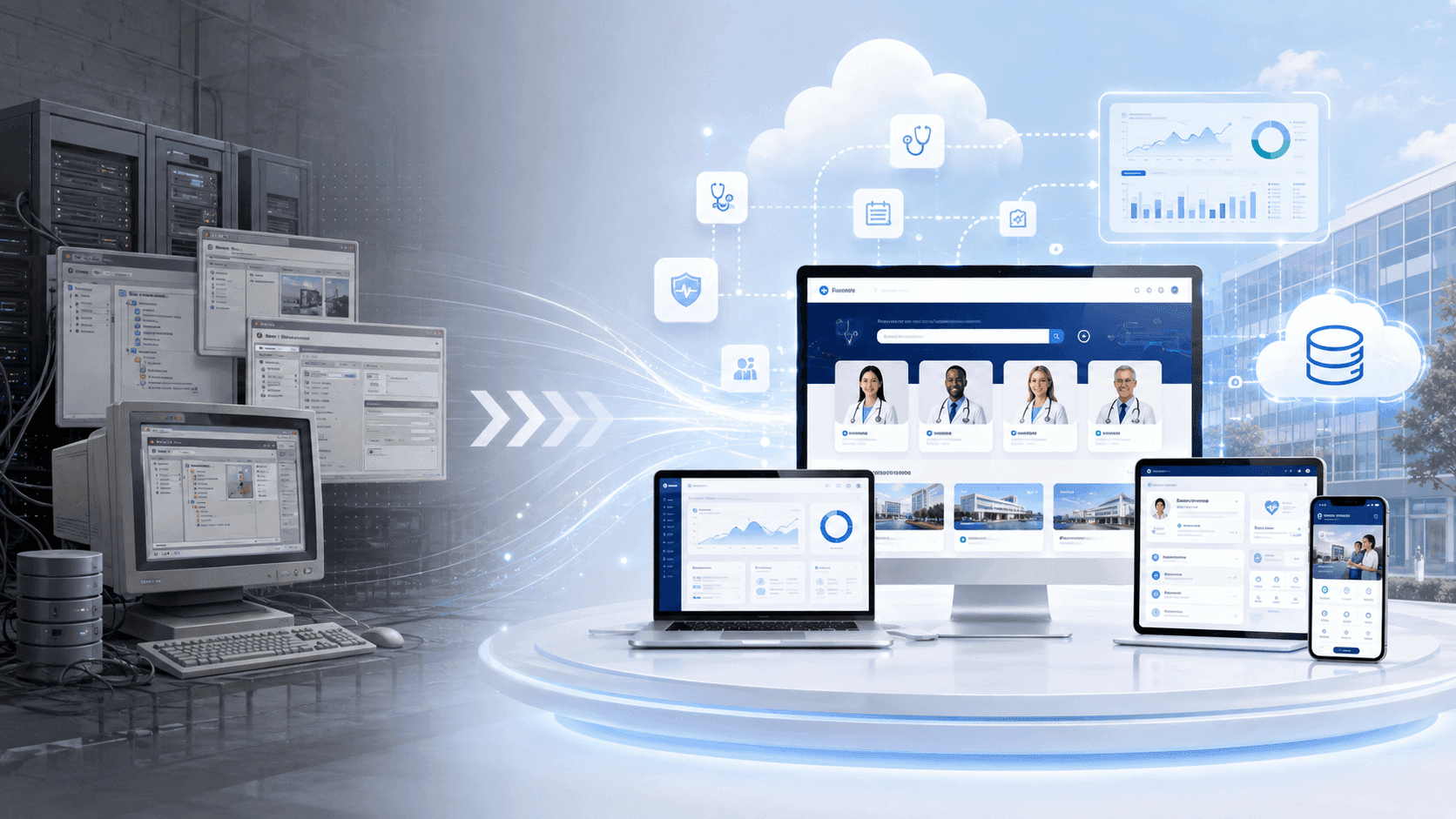
Enterprise healthcare platforms often become business-critical long before their technology stack becomes outdated. When that happens, modernization is not simply a website redesign—it requires protecting existing content and integrations while improving security, performance, infrastructure, search, usability, and long-term maintainability.
Murmu Software Infotech contributed to the modernization of a large-scale healthcare information platform built on Sitecore XP. The engagement covered ongoing Sitecore maintenance, an upgrade from Sitecore 8.1 to Sitecore 10.3, frontend modernization, Solr search improvements, multi-environment CM/CD architecture, custom APIs, and location-based healthcare provider discovery.
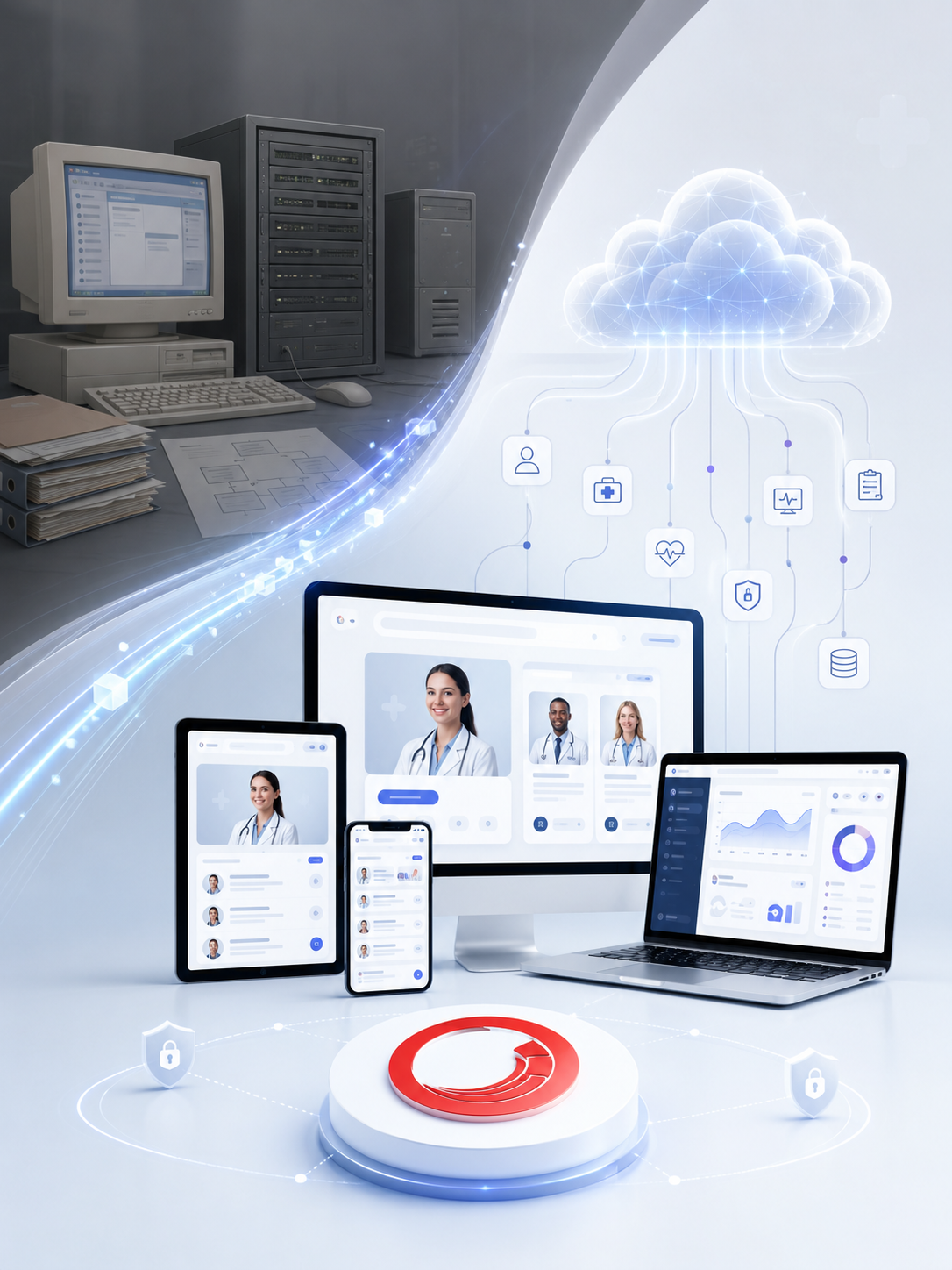
Upgrade legacy Sitecore infrastructure, modernize search and integrations, improve digital experiences, and build a scalable foundation for evolving healthcare requirements.
The platform acted as a centralized digital information ecosystem for healthcare members and other users. It supported organizational information, member healthcare benefits, healthcare initiatives, board information, provider and practitioner discovery, and appointment-related journeys.
Over time, the existing Sitecore 8.1 implementation accumulated several modernization challenges.
The application relied on older .NET dependencies, an aging Solr implementation, legacy frontend libraries, and components requiring security and maintenance attention. Bootstrap 3 and older jQuery dependencies also limited the ability to deliver a consistent modern experience across devices.
Infrastructure was another concern. The platform required a clearer multi-environment deployment model capable of supporting development, quality assurance, pre-production, and production operations with separate Sitecore Content Management and Content Delivery responsibilities.
Provider discovery also required improvement. Users needed a more useful way to find healthcare practitioners by location, view providers geographically, and connect search experiences with appointment-related workflows.
The modernization therefore had to address the platform as an enterprise digital ecosystem, not simply a collection of webpages.
Our team followed a phased modernization approach that allowed the existing platform to continue evolving while strengthening its technology foundation.
The work combined Sitecore CMS maintenance, platform upgrading, frontend redevelopment, search optimization, API integration, deployment architecture, and healthcare-specific feature development.
This approach helped preserve existing business functionality while reducing technical debt and creating a more maintainable foundation for future digital initiatives.
A major milestone was upgrading the platform from Sitecore 8.1 to Sitecore 10.3.
The upgrade involved more than installing a newer CMS version. Our work included Sitecore database migration, .NET framework and dependency updates, configuration and patch updates, a compatible Solr upgrade, and regression testing across the solution.
For an enterprise healthcare platform with existing content, search functionality, integrations, and custom business features, this type of upgrade required careful coordination across application and infrastructure layers.
The result was a modernized Sitecore XP foundation with improved maintainability and a stronger security posture compared with the legacy implementation.
To improve operational scalability and environment consistency, we designed and configured a structured Sitecore deployment model covering:
DEV → QA → PREPROD → PROD
QA and pre-production environments used Content Management and Content Delivery roles, while production was configured with a Content Management server and multiple Content Delivery instances.
The work also included Solr configuration for CM/CD servers, environment-specific setup, deployment automation, production rollout, and knowledge-transfer activities.
This architecture created clearer separation between content authoring and public delivery while supporting a more controlled enterprise release process.
Modernization also extended to the user-facing experience.
The frontend moved from Bootstrap 3 to Bootstrap 5.3, legacy jQuery dependencies were updated, landing pages were redesigned, and responsive behavior was improved across different screen sizes.
Marketing-oriented pages were made editable through Sitecore, helping content teams manage important digital content through the CMS rather than relying on development changes for every update.
The project also delivered new and enhanced experiences including board-member pages, promotional sections, procurement pages, and modern landing-page components.
One of the platform's most important healthcare-specific enhancements was provider and practitioner discovery.
The solution combined healthcare search functionality with Google Maps, Power BI, Azure APIs, and token-based authorization. Users could search for healthcare providers, discover practitioners by location, visualize options geographically, and move through appointment-related experiences.
Custom Sitecore and .NET APIs were also developed to support integrations with member portals, provider portals, and mobile applications.
These integrations demonstrate an important role for an enterprise CMS: Sitecore was not operating as an isolated publishing system. It functioned within a broader healthcare digital ecosystem connecting content, search, portals, mobile experiences, analytics, mapping, and backend services.
Beyond CMS modernization, the project included specialized functionality such as an insurance late-penalty calculator.
The calculator helped members understand late-joining penalties and relevant medical-plan information through a guided digital experience.
Building business-specific tools directly into the platform allowed the website to serve not only as an information channel but also as a practical self-service experience for healthcare members.
The modernization transformed an aging Sitecore implementation into a more scalable, maintainable, and user-focused enterprise healthcare platform.
Key improvements included a newer Sitecore technology foundation, stronger deployment architecture, updated frontend frameworks, improved responsive experiences, enhanced provider discovery, better integration capabilities, optimized search, and greater control over CMS-managed marketing content.
Importantly, the project addressed modernization across the CMS, codebase, infrastructure, search, APIs, user experience, and operational workflows rather than treating each challenge independently.
Legacy Sitecore platforms do not always require an immediate complete rebuild. Depending on business goals, the right path may include an XP upgrade, performance and security improvements, search modernization, integration redevelopment, frontend modernization, or a phased roadmap toward headless architecture and XM Cloud.
Murmu Software Infotech helps enterprises with Sitecore upgrades, CMS modernization, healthcare digital platforms, Sitecore search, integrations, performance optimization, XM Cloud migration, and ongoing Sitecore engineering.
Sitecore healthcare platform modernization involves upgrading legacy Sitecore technology, improving architecture, search, APIs, frontend frameworks, content management and healthcare-specific digital experiences while preserving critical business functionality.
Yes. A legacy Sitecore 8.1 implementation can be modernized toward Sitecore 10.3 through a planned upgrade involving database migration, .NET dependency updates, Sitecore configuration changes, compatible Solr upgrades, integration validation and regression testing.
The project included a Sitecore 8.1 to 10.3 upgrade, CM/CD architecture, multi-environment deployment, Solr modernization, Bootstrap and jQuery updates, custom APIs, healthcare provider search, Google Maps, Power BI and Azure API integrations.

Sitecore can support provider discovery by integrating structured healthcare data, search technologies, location services and external APIs. In this project, provider search incorporated Google Maps, Power BI, Azure APIs and location-based practitioner discovery.
Legacy Sitecore implementations can accumulate outdated dependencies, security risks, performance limitations, inconsistent responsive experiences and difficult deployment processes. Modernization can improve maintainability, usability, architecture and integration capabilities.
Sitecore CM/CD architecture separates Content Management environments used by authors from Content Delivery environments serving public users. This separation supports more controlled publishing, deployment and scalable production delivery.
Yes. Custom Sitecore and .NET APIs can integrate CMS-managed information with member portals, provider portals, mobile applications and other enterprise systems using secure API and authorization patterns.
Yes. Sitecore solutions can integrate with external platforms such as Google Maps and Power BI. In this healthcare implementation, those integrations supported provider discovery, geographic experiences and healthcare information workflows.
Not necessarily. Depending on business goals, an organization may first modernize Sitecore XP through upgrades, infrastructure improvements, search optimization, integrations and frontend modernization before considering a phased headless or XM Cloud migration.
Yes. Murmu Software Infotech provides Sitecore development, legacy platform modernization, upgrades, search solutions, API integrations, performance optimization, healthcare digital platform development and XM Cloud migration services.