Sanity CMS Development Company in India
In This Article
- Build AI-Ready Headless Platforms in 2026
- Why Businesses Are Choosing Sanity Headless CMS
- What Should a Sanity CMS Development Company Deliver?
- Content Strategy and Schema Architecture
- Custom Sanity Studio Development
- Sanity and Next.js Development
- CMS Migration
- Integrations and Ongoing Support
- Moving Beyond Headless to an AI-Native CMS
- Why Murmu Software Infotech?
- Proven Through Our Own Website Migration
- How to Choose the Right Sanity CMS Agency in India
- Build Content Infrastructure for the AI Era
Build AI-Ready Headless Platforms in 2026
Businesses no longer need a content management system that only stores website pages. They need structured content infrastructure that can support websites, mobile applications, ecommerce storefronts, multilingual campaigns, AI assistants and emerging generative-search experiences.
A capable Sanity CMS development company in India can help an organization design that infrastructure, migrate legacy content and build a flexible digital platform using Sanity CMS, Next.js, GROQ APIs and AI-powered content operations.
Sanity currently positions its platform as a content operating system for the AI era. Its structured Content Lake, customizable Studio, Content Agent and automation capabilities can power websites, applications and agentic experiences from one content source.
Why Businesses Are Choosing Sanity Headless CMS
Traditional CMS platforms frequently combine content, templates and presentation within one system. That approach can work for a straightforward website, but it can become restrictive when a business needs multiple frontends, regional websites, mobile applications or advanced integrations.
Sanity uses a headless, API-first architecture. Content is managed independently from the frontend and can be delivered to Next.js websites, React applications, mobile apps, commerce platforms and other digital channels.
This gives organizations several practical advantages:
- Reusable structured content across multiple channels
- Custom editorial experiences inside Sanity Studio
- Greater frontend design and technology flexibility
- Real-time collaboration and visual editing
- Multilingual and multi-region publishing
- Easier integration with CRM, commerce and analytics systems
- Structured content that can support AI applications
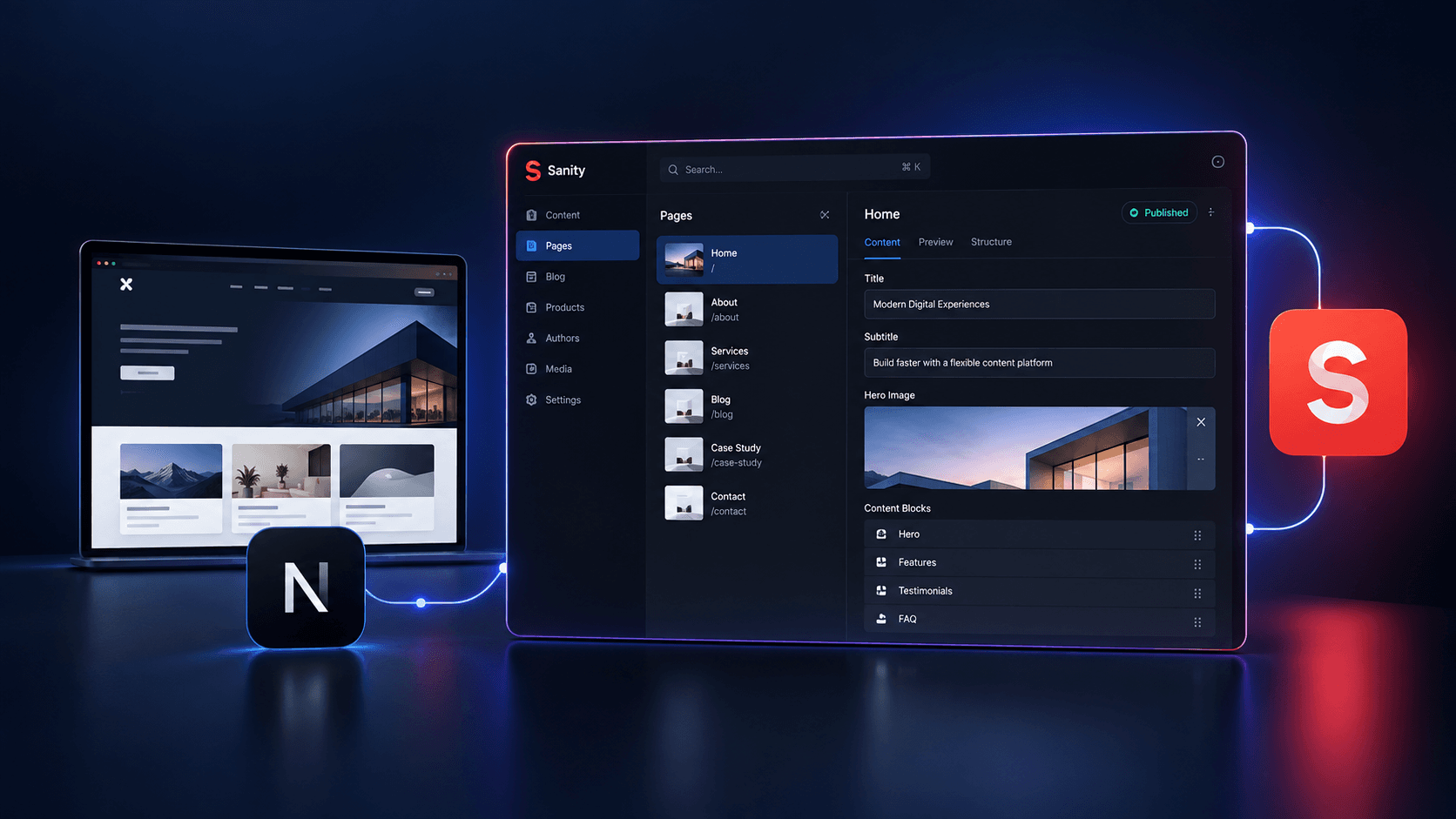
Sanity Studio can also be customized with schema-as-code, React components, validations, dashboards, workflow-specific navigation and visual editing tools.
What Should a Sanity CMS Development Company Deliver?
A Sanity implementation should not begin by creating random schemas or replicating the structure of an old website. It should start with business requirements, editorial workflows, customer journeys and future delivery channels.
An experienced Sanity CMS agency in India should provide the following capabilities.
Content Strategy and Schema Architecture
The agency should identify reusable entities such as services, products, industries, locations, FAQs, case studies, authors, campaigns and calls to action.
These should be modelled as structured, connected content rather than copied repeatedly across individual pages. Strong schema architecture makes future publishing, translation and automation considerably easier.
Custom Sanity Studio Development
Marketing and content teams need a Studio experience aligned with how they actually work.
This can include custom desk structures, reusable page builders, field-level validation, preview panes, approval controls, role-based access, content quality indicators and SEO configuration.
Build Your AI-Ready Sanity Platform With Proven Experts
Sanity and Next.js Development
Sanity manages structured content while Next.js delivers the customer-facing experience. A specialist team should understand server rendering, static generation, caching, revalidation, previews, image optimization and GROQ data fetching.
Technical teams beginning a new implementation can review this practical guide on how to configure Sanity CMS in a Next.js project.
CMS Migration
Migration involves more than transferring text.
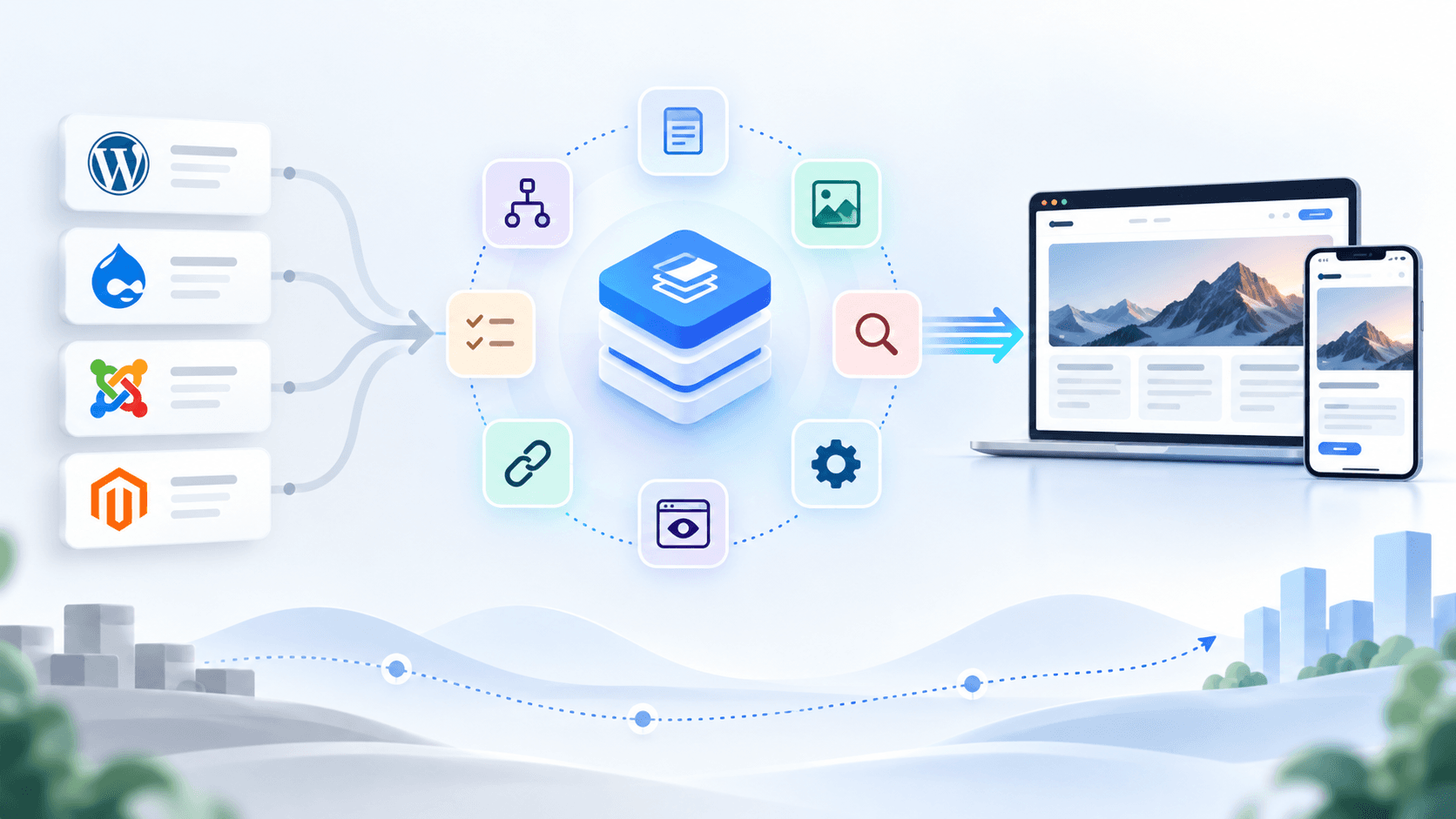
A proper Sanity CMS migration should address content auditing, field mapping, media transfer, metadata, internal links, structured relationships, URL preservation, redirects and editorial validation.
Integrations and Ongoing Support
Sanity may need to connect with Shopify, CRM platforms, payment systems, search services, analytics tools, marketing automation, internal APIs or mobile applications.
The development partner should also provide post-launch support, schema improvements, dependency updates, GROQ optimization and continuous platform enhancement.
Moving Beyond Headless to an AI-Native CMS
AI readiness is becoming an important distinction between an ordinary headless implementation and a future-ready content platform.
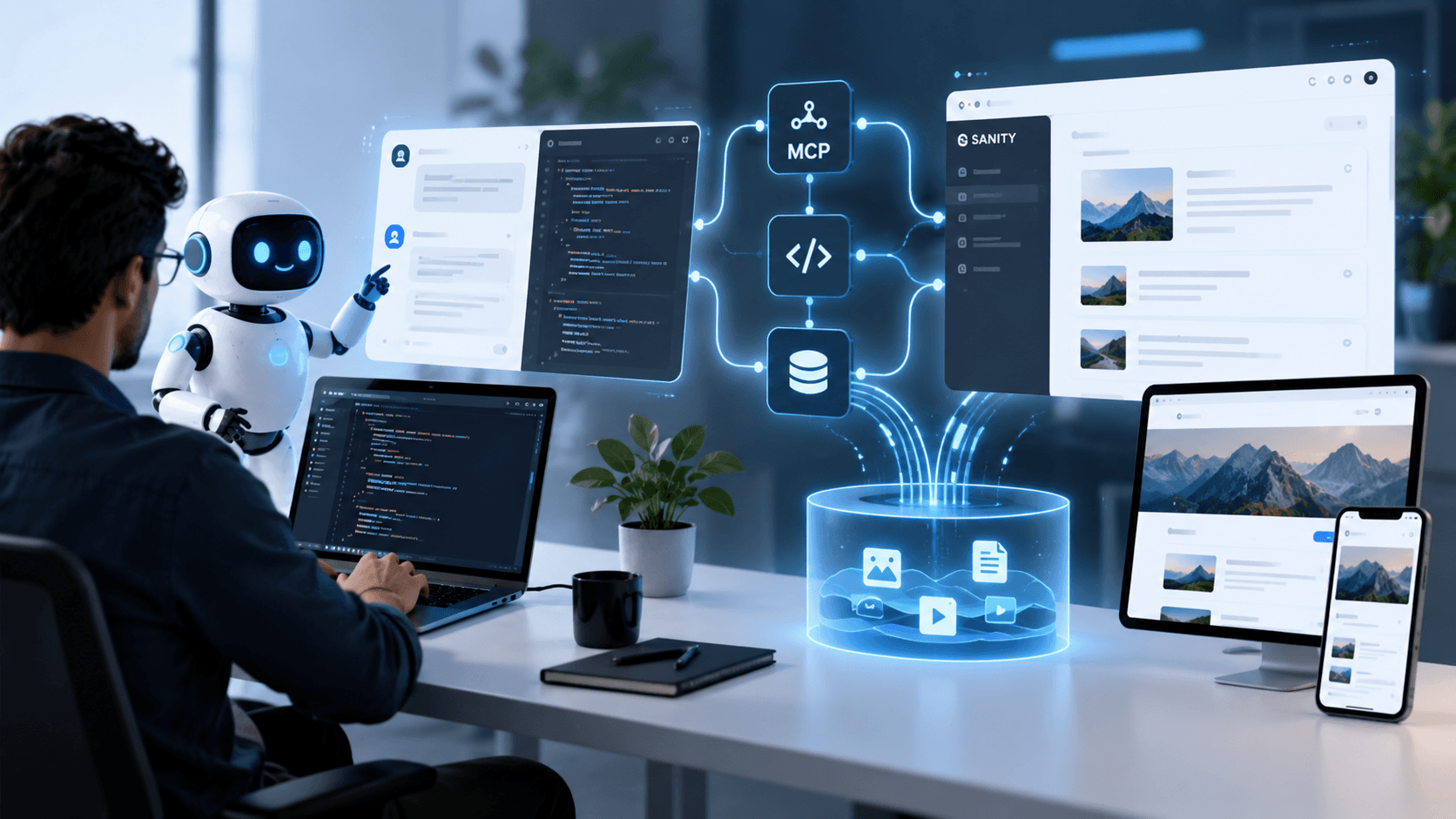
Sanity Content Agent can work with structured content to support content transformation, auditing, enrichment and large-scale editorial operations. Sanity’s hosted MCP Server allows compatible AI assistants to understand schemas, execute GROQ queries and perform controlled content operations without teams manually supplying the entire content context.
An AI-native Sanity implementation can support:
- AI-assisted service-page and blog creation
- Content summaries and metadata generation
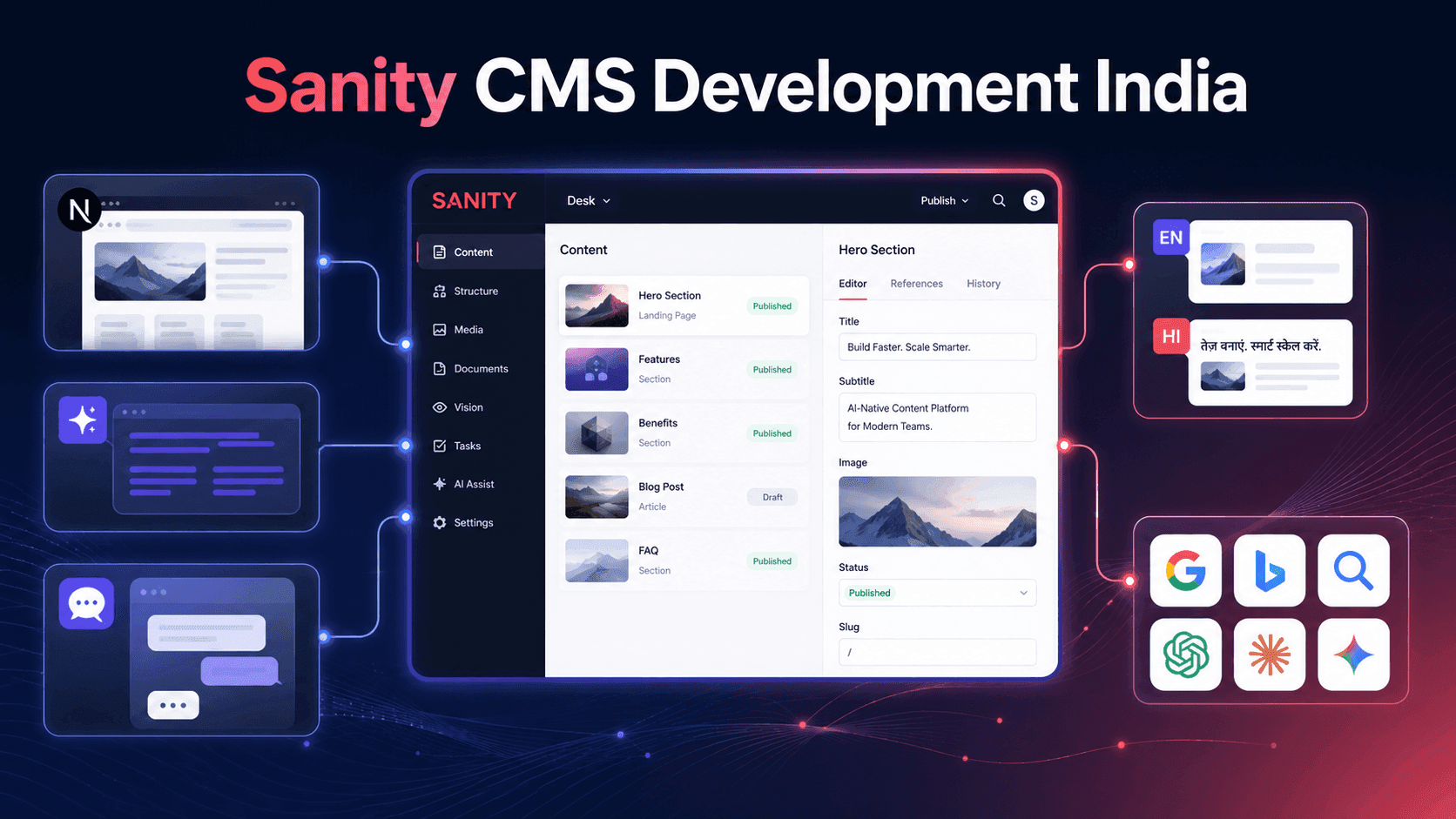
- English, Hindi and regional-language workflows
- Field-level AI translation controls
- Content audits and enrichment
- SEO, AEO and GEO configuration
- Structured FAQs and direct-answer fields
- AI chatbots connected to current CMS content
- Reduced dependence on hardcoded knowledge bases
Explore MSI’s broader approach to AI-native Headless CMS and content automation with Sanity CMS.
Why Murmu Software Infotech?
Murmu Software Infotech combines Sanity CMS expertise with Next.js, React, TypeScript, GROQ, API integration and AI development capabilities.
Our Sanity services include:
- Content discovery and architecture
- Sanity Studio setup and customization
- Next.js website and application development
- GROQ query and API development
- WordPress and legacy CMS migration
- Multilingual content workflows
- AI Content Agent implementation
- Sanity MCP Server integration
- AI chatbot knowledge retrieval
- SEO, AEO and GEO-ready schemas
- Support, maintenance and dedicated developers
For enterprise decision-makers evaluating architecture, governance and scalability, our strategic guide to Sanity CMS and Next.js development explains the wider business considerations.
Teams that want a better editorial experience can also explore our guide to real-time visual editing with Sanity Presentation and Next.js App Router.
Modernize Your Content Operations With Sanity And AI
Proven Through Our Own Website Migration
We did not limit our Sanity expertise to client proposals. We migrated the official Murmu Software Infotech website from a developer-dependent Next.js and .NET content architecture to Sanity CMS and Next.js.
Before migration, even smaller content changes could require two to four hours and developer involvement. The new platform introduced structured content, independent publishing, multilingual operations, AI-assisted workflows and MCP-based chatbot knowledge retrieval. Content changes can now be completed in seconds or minutes by authorized team members.
The complete implementation is documented in our Sanity and Next.js website migration case study.
How to Choose the Right Sanity CMS Agency in India
Before selecting a partner, ask:
- Can the team demonstrate a production Sanity implementation?
- Does it understand structured content modelling and GROQ?
- Can it build a customized Studio for non-technical editors?
- Does it have strong Next.js and frontend engineering expertise?
- Can it manage migration, integrations and multilingual content?
- Does it understand AI content operations and MCP architecture?
- Will it provide training and post-launch support?
- Can it connect the technical roadmap to measurable business goals?
The lowest development quote does not automatically produce the lowest long-term cost. Poor schema design, weak migration planning and difficult editorial workflows can create expensive redevelopment later.
Build Content Infrastructure for the AI Era
Choosing a Sanity CMS development company in India should be a strategic platform decision—not simply a CMS installation task.
The right implementation can give marketing teams more control, help developers build faster, support multilingual expansion and create structured content that can power websites, applications, search engines and AI experiences.
Planning a Sanity migration, Next.js platform or AI-native content operation? Partner with Murmu Software Infotech to assess your existing system and build a scalable Sanity CMS roadmap.
Frequently Asked Questions
What does a Sanity CMS development company do?
A Sanity CMS development company designs structured content models, customizes Sanity Studio, builds frontend applications, creates GROQ queries, manages migrations and integrates external business systems. It may also implement multilingual workflows, AI content operations, MCP integrations and ongoing support.
Why hire a Sanity CMS development company in India?
An Indian Sanity development company can provide access to Sanity, Next.js, React, TypeScript, GROQ and AI expertise through flexible project and dedicated-development models. Businesses should assess proven implementations, communication, architecture quality and post-launch support rather than selecting solely on price.
What Sanity CMS services does Murmu Software Infotech provide?
Murmu Software Infotech provides Sanity Studio development, schema modelling, Next.js frontend development, GROQ APIs, CMS migration, visual editing, multilingual workflows, AI Content Agent implementation, MCP-powered knowledge retrieval, integrations, maintenance and dedicated Sanity developers.
Can an existing WordPress or legacy website migrate to Sanity?
Yes. Migration may include a content audit, schema mapping, content transformation, media transfer, metadata preservation, internal-link updates, URL redirects and editorial validation. The new Sanity architecture should improve content reuse rather than simply reproduce the limitations of the old CMS.
Why combine Sanity CMS with Next.js?
Sanity CMS manages structured and reusable content, while Next.js delivers the customer-facing website or application. The combination supports custom design, modern rendering, reusable components, visual preview, API-driven delivery and content distribution across multiple channels.
How does Sanity Content Agent improve content operations?
Sanity Content Agent can support content audits, enrichment, bulk updates and other structured content operations through conversational instructions. It helps marketing and editorial teams reduce repetitive work while keeping content inside governed CMS workflows.
How can Sanity MCP Server support an AI chatbot?
Sanity MCP Server allows compatible AI systems to interact with Sanity projects and structured content. In a chatbot architecture, relevant CMS information can be retrieved according to a user query instead of placing the entire knowledge base inside a hardcoded system prompt.
Can Sanity CMS support multilingual websites?
Yes. Sanity schemas can support document-level or field-level localization, translation status, language-specific URLs and regional publishing. Custom AI-assisted workflows can translate entire pages or selected fields while retaining editorial review before publication.
Can Sanity CMS support SEO, AEO and GEO?
Yes. Sanity can store metadata, canonical URLs, schema fields, FAQs, summaries, key facts, entities and direct answers as structured content. These fields make optimization easier to manage, although visibility still depends on content quality, authority, crawlability and overall search relevance.
How much does Sanity CMS development cost and take?
Cost and duration depend on design complexity, content models, page components, migration volume, integrations, multilingual requirements and AI features. A focused marketing website may take several weeks, while a multi-brand or enterprise platform requires a longer discovery, development and migration programme.