Headless CMS Migration Case Study: Sanity + Next.js Website & AI Content Platform
In This Article
- The Challenge: Developers Were Part of Every Content Update
- The Solution: Sanity as the Structured Content Layer
- Faster Editorial Workflows
- Next.js Remained the Experience Layer
- Building an AI-Ready Content Architecture
- Stronger SEO and Content Structure
- Business Impact
- Planning a Sanity + Next.js Migration?
Modern websites are no longer just collections of pages. They increasingly need to support marketing campaigns, SEO, landing pages, blogs, structured business information, AI assistants, multiple channels, and frequent content updates.
Murmu Software Infotech experienced this challenge directly.
Our previous website used Next.js with custom .NET APIs and an internally developed administration layer. While technically functional, even small content changes frequently required developer involvement. Marketing and content teams could not move at the speed needed for publishing, SEO, campaigns, and ongoing website growth.
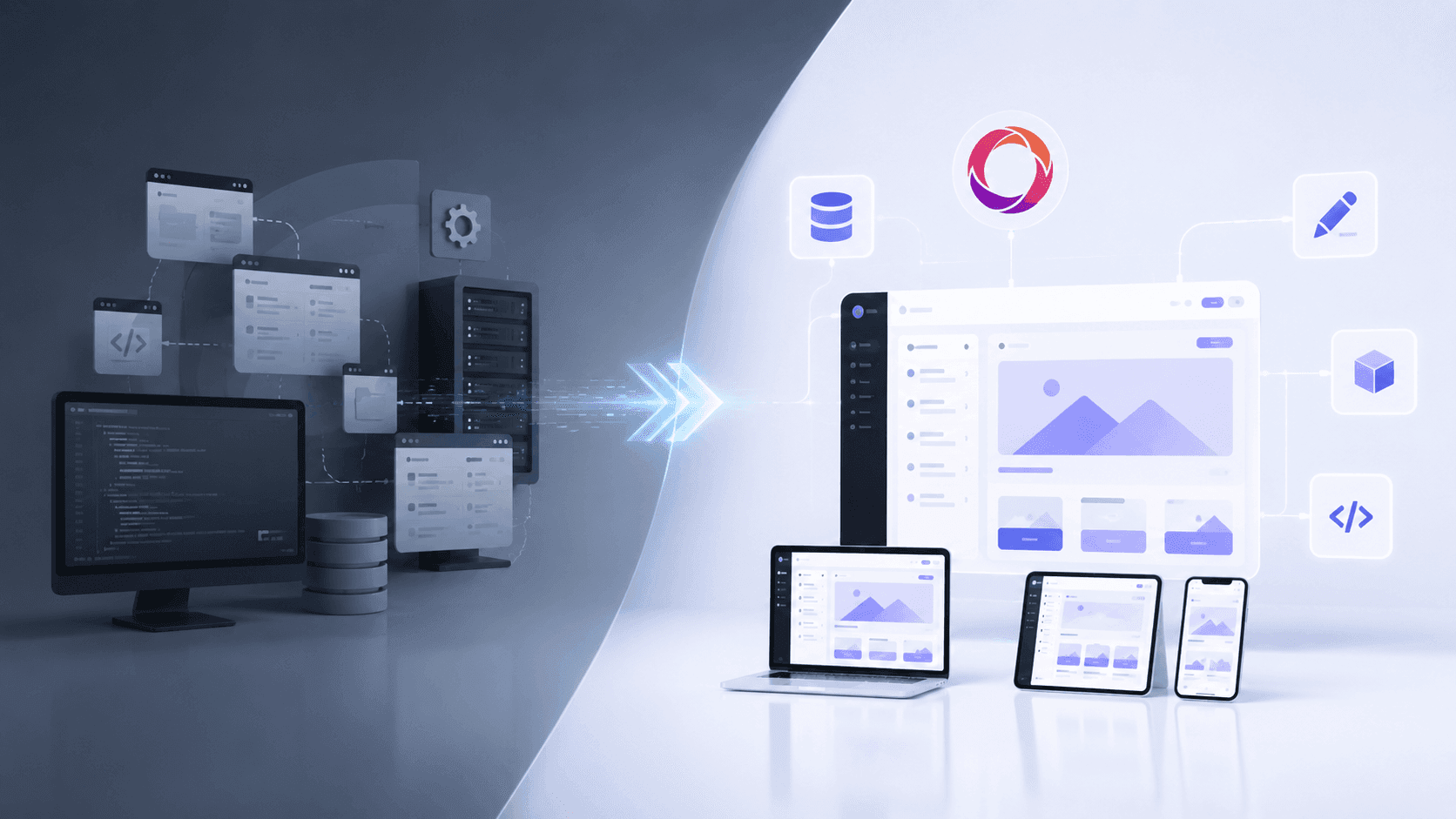
We therefore migrated our own production website to a headless architecture using Sanity and Next.js, transforming the website from a developer-driven publishing system into a structured content and AI-ready digital platform.
Modernize Content with Sanity
Move beyond developer-dependent publishing with structured Sanity content, Next.js delivery, faster workflows, and an AI-ready headless architecture.
The Challenge: Developers Were Part of Every Content Update
Before the migration, routine website updates could take approximately 2–4 hours.
A seemingly simple change could involve communicating requirements to a developer, updating backend structures or content, testing the change, deploying it, and verifying the result.
The custom administration system also had limited flexibility for evolving content requirements.
As our website expanded across services, case studies, blogs, offers, industries, SEO landing pages, and dynamic experiences, this model created increasing friction.
The central problem was not Next.js itself.
The problem was that content and application logic were too closely connected.
Marketing needed greater publishing independence, while developers needed to focus on product engineering rather than routine content maintenance.
Modernize Your Website with Sanity and Next.js Today
The Solution: Sanity as the Structured Content Layer
We redesigned the architecture around Sanity as the content platform while continuing to use Next.js for the frontend experience.
The new model became:
Sanity CMS → Structured Content → GROQ → Next.js → Website / Digital Experiences
Website content was migrated into structured Sanity schemas instead of being embedded inside custom APIs or page-specific administration logic.
This created reusable content models for areas such as:
- Service pages
- Blog articles
- Case studies
- FAQs
- Calls to action
- SEO metadata
- Business information
- Reusable website sections
Sanity’s Content Lake stores content as structured, queryable data, while GROQ allows applications to request precisely the content required for each experience.
Faster Editorial Workflows
One of the most visible improvements was publishing speed.
The previous workflow often required hours for relatively small updates. After migration, many routine content changes could be created and published within seconds or minutes, depending on the update.
This significantly reduced routine developer dependency.
Content and marketing teams could update copy, metadata, sections, articles, and other structured content directly through the CMS rather than placing every change into the development queue.
Modern Sanity + Next.js architecture also supports live content updates and visual editing workflows where editors can preview changes and connect rendered content back to the corresponding Studio fields.
Next.js Remained the Experience Layer
Migrating to a headless CMS did not mean replacing the frontend technology.
Next.js remained responsible for rendering the public website.
This separation allowed us to keep full development control over UI, components, routing, responsive behavior, technical SEO, integrations, and application functionality while giving content teams independent control over structured information.
GROQ queries retrieve only the required content from Sanity, keeping the relationship between content and frontend components explicit and maintainable.
This architecture also gives us a stronger foundation for caching, revalidation, live content, and future frontend evolution. Sanity’s official Next.js tooling supports these patterns directly.
Building an AI-Ready Content Architecture
The migration created another important opportunity: our website content became structured knowledge that could be consumed beyond the website itself.
Our AI chatbot was moved toward a CMS-driven architecture and connected with MCP-based content access so it could use current structured website information as part of its knowledge workflow.
This is strategically important.
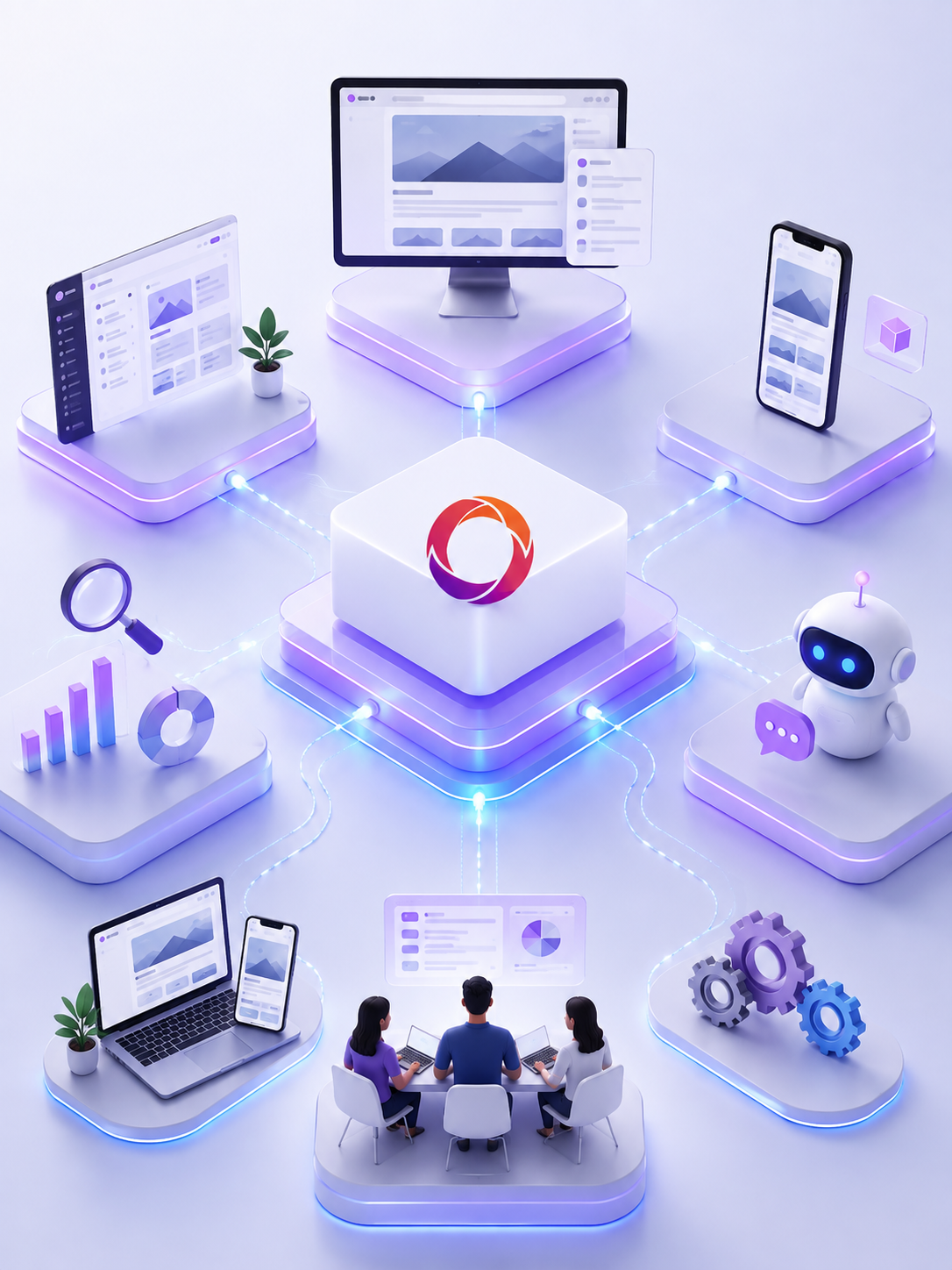
Instead of maintaining one knowledge source for the website and another manually prepared knowledge base for AI, structured CMS content can become reusable context for:
Website → Search → AI Assistant → Content Automation → Future Agents
Sanity now officially supports MCP access for AI tools as well as Content Agent capabilities for analyzing, creating, updating, and working with schema-aware content.
The migration therefore evolved from a CMS project into an AI-ready content operations architecture.
Build an AI-Ready Headless Content Platform That Scales
Stronger SEO and Content Structure
The previous case study claimed the migration improved SEO performance. Without publishing before-and-after organic-search measurements for this migration specifically, a more accurate conclusion is that the new architecture created a stronger SEO operating foundation.
Structured fields can now independently manage titles, descriptions, FAQs, internal content relationships, reusable metadata, and other search-focused information.
This makes SEO improvements easier to implement without modifying frontend code for every editorial change.
Business Impact
The migration changed how our teams operate.
It:
- Reduced routine content-update time from hours to seconds/minutes
- Reduced developer involvement in ordinary publishing
- Created reusable structured content
- Improved collaboration between development and marketing
- Established a more flexible SEO content model
- Connected website knowledge with AI-oriented workflows
- Created a foundation for future content automation and personalization
Most importantly, the website is no longer simply a frontend connected to an administration system.
It has become a structured digital content platform capable of serving humans, search engines, applications, and AI systems from the same content foundation.
Planning a Sanity + Next.js Migration?
Murmu Software Infotech provides Sanity CMS development, Next.js headless websites, CMS migration, structured content modeling, GROQ development, visual editing, AI content workflows, MCP integrations, and ongoing headless platform support.
Whether you are migrating from WordPress, a custom CMS, legacy APIs, or another enterprise platform, we can help redesign your content architecture around faster publishing, reusable structured data, modern frontend delivery, and AI-ready content operations.
Talk to our Sanity team to turn your website into a scalable content and AI platform.
Frequently Asked Questions
What is a Sanity and Next.js headless CMS architecture?
A Sanity and Next.js headless architecture separates structured content management from frontend rendering. Sanity manages reusable content and APIs, while Next.js controls pages, components, routing, SEO and the public digital experience.
Why migrate a custom website to Sanity CMS?
Migrating to Sanity can reduce routine developer dependency, introduce structured content models, give editors more control, simplify reusable content management and create a stronger foundation for web, search and AI-driven experiences.
What was Murmu Software Infotech using before Sanity?
The previous website used Next.js with custom .NET APIs and an internally developed administration layer. Routine content updates frequently required developer involvement.
How much faster did routine content updates become after the migration?
The documented case study states that routine content changes previously took approximately 2–4 hours, while many updates after the Sanity migration could be completed in seconds or minutes.
What role does GROQ play in a Sanity Next.js website?
GROQ is Sanity's query language for retrieving structured content. It allows Next.js applications to request the specific documents, fields and relationships required by individual pages and components.
Can non-technical teams manage content in Sanity?
Yes. Structured schemas and Sanity Studio can allow trained marketing and content teams to update copy, metadata, articles, case studies, FAQs and reusable sections without requiring developers for routine publishing.
Can Sanity support live editing with Next.js?
Yes. Sanity supports Visual Editing, preview workflows and live content updates with Next.js so editors can preview drafts, click rendered content to edit the source field and see changes reflected quickly.
How can Sanity support AI-powered websites?
Structured Sanity content can be reused as context for AI assistants, automation and agent workflows. Sanity also supports MCP-based access that allows compatible AI tools to query and work with structured project content.
Is Sanity suitable for SEO-focused websites?
Yes. Sanity can model SEO titles, descriptions, FAQs, structured facts, internal relationships and other search-focused fields independently, while Next.js controls technical rendering, metadata output, routing and frontend performance.
Can Murmu Software Infotech migrate websites to Sanity and Next.js?
Yes. Murmu Software Infotech provides Sanity CMS migration, structured content modeling, Next.js development, GROQ implementation, Visual Editing, AI content workflows, MCP integrations and ongoing headless CMS support.