Sanity CMS Agency India
In This Article
- Choosing the Right Partner for AI-Ready Headless Development
- What Does a Sanity CMS Agency Do?
- Why Businesses Choose Sanity CMS
- What to Expect From a Sanity CMS Agency in India
- 1. Strategic Content Modelling
- 2. Custom Sanity Studio Development
- 3. Next.js and GROQ Expertise
- 4. Safe CMS Migration
- From Headless CMS to AI-Native Content Operations
- Multilingual Content and Visual Editing
- How to Choose the Right Sanity CMS Agency
- Why Murmu Software Infotech?
- Build a Content Platform Ready for AI
Choosing the Right Partner for AI-Ready Headless Development
Businesses are no longer evaluating content management systems only for publishing website pages. Modern content must support landing pages, mobile applications, ecommerce experiences, multilingual campaigns, AI chatbots, search engines and generative AI platforms.
This shift has increased demand for an experienced Sanity CMS agency in India that can combine content strategy, custom Sanity Studio development, Next.js engineering, GROQ expertise, CMS migration and AI-powered content operations.
A capable agency should not simply install Sanity and reproduce an old website. It should build structured content infrastructure that improves publishing speed, reduces operational friction and prepares the business for future digital channels.
What Does a Sanity CMS Agency Do?
A Sanity CMS agency plans, develops and maintains digital platforms powered by Sanity’s structured-content architecture.
Its responsibilities may include:
- Content discovery and architecture
- Schema and structured-content modelling
- Custom Sanity Studio development
- Next.js or React frontend development
- GROQ query development
- CMS and content migration
- Real-time previews and visual editing
- Multilingual workflows
- CRM, ecommerce and third-party integrations
- AI content automation
- Support and continuous optimization
Sanity maintains an official agency directory for organizations seeking implementation help, best practices or improvements to existing projects. Listed agencies commonly provide services such as content strategy, custom integrations, migrations, product development, website management and ongoing support.
However, official partner status should be considered alongside production experience, technical depth, relevant case studies and the agency’s ability to understand the client’s business.
Why Businesses Choose Sanity CMS
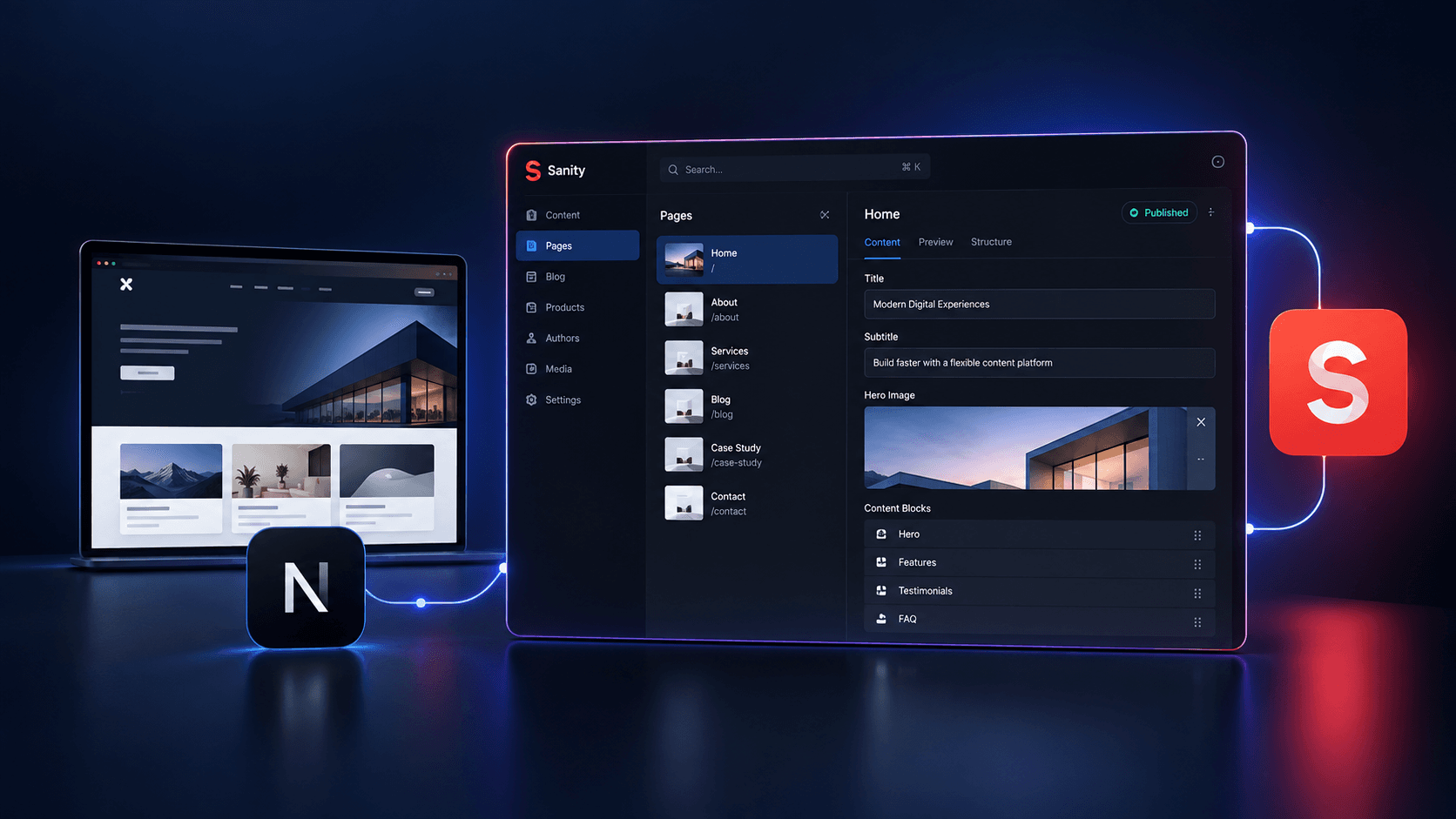
Sanity separates content management from the frontend presentation layer. Teams manage structured content in Sanity Studio, while frameworks such as Next.js deliver that content across websites, applications and other digital channels.
Unlike rigid page-based systems, Sanity allows developers to define reusable content types, relationships, validation rules and editorial experiences in code. Sanity Studio can also be customized with React components, workflow-specific navigation, visual editing, permissions, comments, tasks and scheduled content releases.
This architecture can give businesses:
- Greater control over content structure
- Reusable content across multiple channels
- Faster campaign and landing-page creation
- Flexible multilingual publishing
- Better separation between content and design
- Easier integration with business systems
- A stronger foundation for AI applications
Sanity and Next.js are frequently combined because Sanity provides structured content and a customizable editorial environment, while Next.js supports flexible rendering, modern frontend experiences and scalable content delivery.
What to Expect From a Sanity CMS Agency in India
1. Strategic Content Modelling
The agency should begin by understanding the business, users, editorial teams and future delivery channels.
Instead of creating a separate block of duplicated content for every page, it should identify reusable entities such as:
- Services
- Industries
- Products
- Locations
- Case studies
- FAQs
- Authors
- Testimonials
- Calls to action
- SEO and AI optimization fields
Good content modelling reduces duplication and allows the same information to be reused consistently across websites, applications, chatbots and marketing campaigns.
Build Your AI-Ready Sanity Platform With Proven Experts
2. Custom Sanity Studio Development
A default Studio configuration may be sufficient for a small project, but business platforms often require a tailored editorial experience.
A specialist agency can create:
- Reusable page-building sections
- Custom document structures
- Field-level validation
- Content previews
- SEO, AEO and GEO fields
- Approval and publishing workflows
- Role-based editorial access
- Custom translation tools
- Content-quality indicators
The objective should be to help content and marketing teams work independently without exposing them to unnecessary technical complexity.
3. Next.js and GROQ Expertise
Sanity projects require more than general React knowledge.
The development team should understand GROQ, Sanity’s query language, as well as Next.js caching, rendering, revalidation, previews and deployment. Industry agency-selection guides increasingly recommend verifying GROQ fluency, schema architecture, frontend integration experience, publishing workflows and long-term maintainability before hiring a Sanity partner.
Organizations evaluating their architecture can explore this strategic guide for enterprise leaders using Sanity CMS and Next.js.
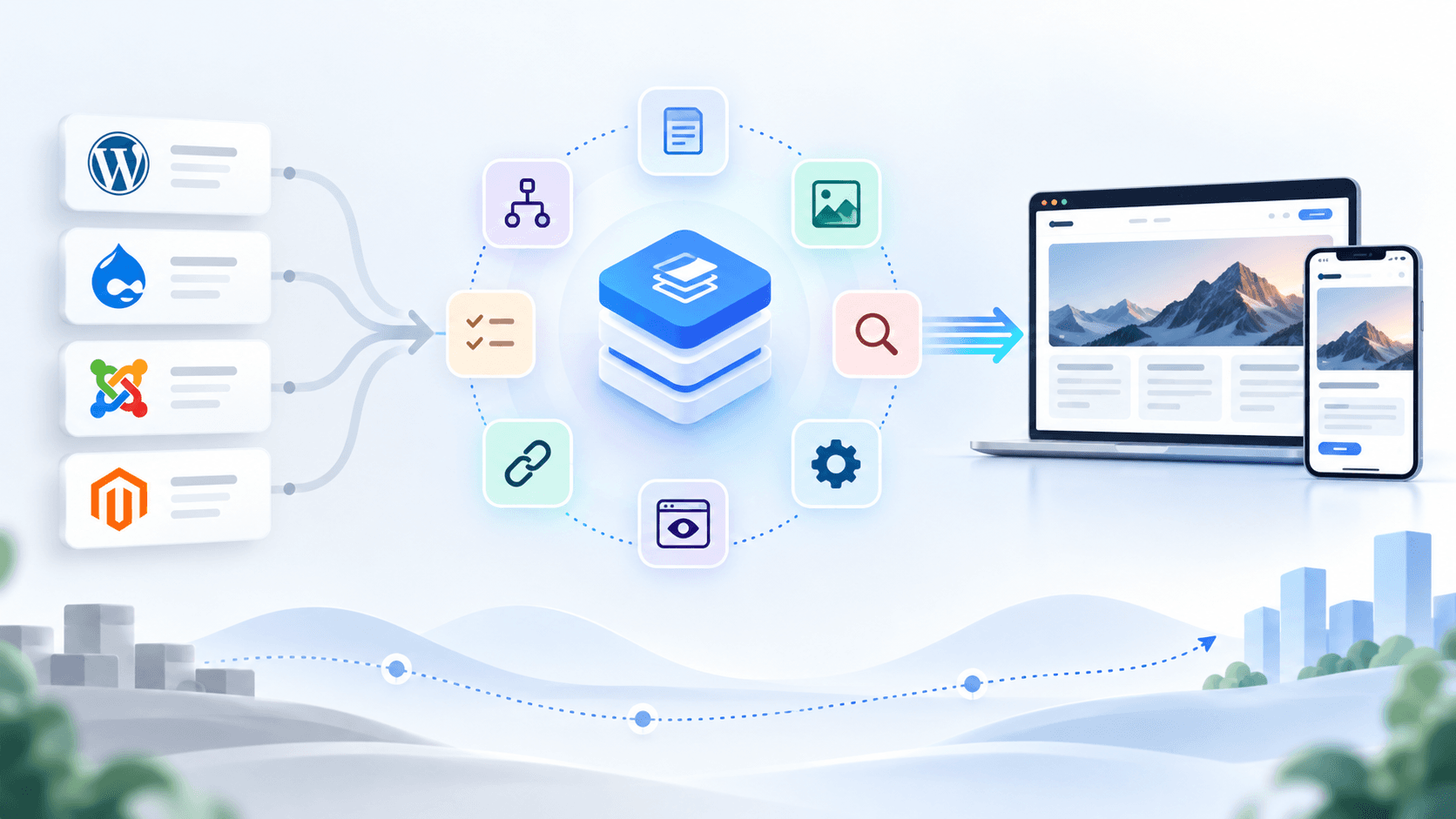
4. Safe CMS Migration
Migrating to Sanity is not simply a copy-and-paste exercise.
A complete migration may involve:
- Existing-content audit
- Schema mapping
- Content cleaning and transformation
- Image and document migration
- Metadata preservation
- Internal-link updates
- URL redirect planning
- Localization mapping
- Content validation
- Post-launch quality assurance
The agency should also challenge weaknesses in the existing content structure rather than transferring them directly into the new system.
From Headless CMS to AI-Native Content Operations
AI capabilities are now becoming an important differentiator when selecting a Sanity CMS agency.
Sanity Content Agent can work with structured content to find, audit, translate, enrich and bulk-edit content through conversational instructions. Its operations remain schema-aware and can follow human review and approval workflows.
A well-designed AI-native implementation can help teams:
- Generate first drafts for service pages and blogs
- Create summaries and metadata
- Identify missing SEO information
- Translate selected documents or fields
- Standardize tone and terminology
- Audit outdated or incomplete content
- Prepare answer-ready FAQs
- Manage SEO, AEO and GEO configurations
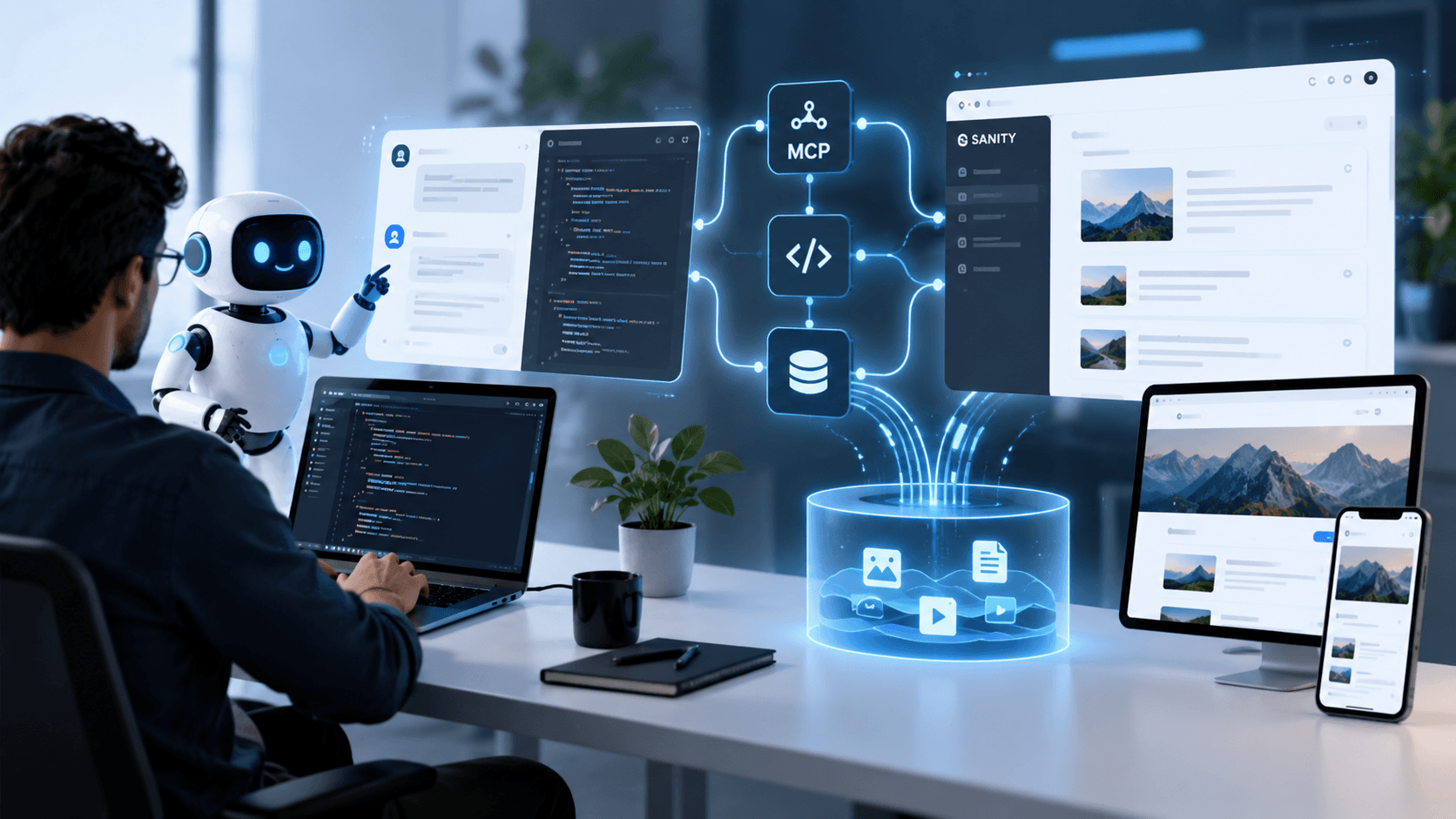
Sanity MCP Server can also connect compatible AI tools to Sanity projects and structured content. This makes it possible to build AI assistants and chatbot workflows that retrieve current CMS information instead of relying entirely on large hardcoded knowledge bases.
Learn more about AI-native Headless CMS and content automation with Sanity CMS.
Transform Content Operations With India’s Sanity CMS Specialists
Multilingual Content and Visual Editing
Businesses expanding across regions need more than automatic translation.
A Sanity implementation can support field-level or document-level localization, language-specific publishing, translation status and editorial review. Sanity also supports AI-assisted translation patterns while allowing teams to retain governance over what is translated.
Visual editing is equally important for marketing teams. By combining Sanity Presentation with Next.js, editors can preview content in context and select website elements for editing without losing the benefits of a decoupled architecture.
Technical teams can explore the complete guide to real-time visual editing with Sanity Presentation and Next.js App Router.
How to Choose the Right Sanity CMS Agency
Before selecting an agency, ask these questions:
- Can it demonstrate a production Sanity implementation?
- Does the team understand GROQ and structured-content modelling?
- Can it customize Sanity Studio for marketers and editors?
- Does it have strong Next.js and frontend engineering experience?
- Can it protect URLs, metadata and SEO during migration?
- Has it implemented multilingual workflows?
- Does it understand Content Agent, MCP and AI-ready architecture?
- Can it integrate CRM, commerce, analytics and internal APIs?
- Does it provide documentation, training and post-launch support?
- Can it explain business outcomes rather than only technical features?
The strongest agencies combine schema expertise, frontend performance, scalable publishing, API-first architecture and maintainable workflows. Choosing only by hourly cost can lead to poor content models, editor frustration and expensive redevelopment later.
Why Murmu Software Infotech?
Murmu Software Infotech provides Sanity CMS, Next.js, GROQ and AI content platform development for startups, agencies, growing companies and enterprises.
Our capabilities include:
- Sanity Studio configuration and customization
- Structured schema architecture
- Next.js website and application development
- CMS migration and integrations
- Real-time visual editing
- English and Hindi content workflows
- AI-assisted content operations
- MCP-powered chatbot knowledge retrieval
- SEO, AEO and GEO content configuration
- Dedicated developers and ongoing support
We also migrated our official website to Sanity CMS and Next.js. The implementation introduced structured content, GROQ-powered delivery, live editing, AI-assisted workflows and MCP-based chatbot knowledge retrieval. It reduced routine content-update time from hours to seconds or minutes and enabled non-technical teams to manage content more independently.
Review the complete Sanity CMS and Next.js website migration case study.
For buyers comparing closely related commercial terms, our guide to choosing a Sanity CMS development company in India provides additional implementation and evaluation guidance.
Build a Content Platform Ready for AI
Choosing a Sanity CMS agency in India should not be treated as a basic website-development decision.
The right partner can help transform disconnected pages and manual workflows into structured content infrastructure that supports marketing, development, multilingual publishing, search visibility and AI-powered customer experiences.
Planning a Sanity migration or AI-native content platform? Partner with Murmu Software Infotech to assess your current CMS, define the right architecture and build a scalable roadmap for the AI era.
Frequently Asked Questions
What does a Sanity CMS agency do?
A Sanity CMS agency plans, develops and maintains structured-content platforms using Sanity. Services may include content modelling, Sanity Studio customization, Next.js development, GROQ queries, migration, integrations, multilingual workflows, AI automation and ongoing support.
Why choose a Sanity CMS agency in India?
A Sanity CMS agency in India can provide specialized Sanity, Next.js, React, TypeScript, GROQ and AI development expertise through flexible engagement models. Buyers should evaluate production experience, architecture quality, communication, case studies and post-launch support—not price alone.
What Sanity CMS services does Murmu Software Infotech provide?
Murmu Software Infotech provides content architecture, schema development, custom Sanity Studio, Next.js frontend development, GROQ APIs, visual editing, CMS migration, multilingual workflows, AI Content Agent, MCP integration, chatbot knowledge retrieval and ongoing support.
Can you migrate WordPress or a legacy CMS to Sanity?
Yes. Migration can include content auditing, schema mapping, transformation scripts, media transfer, metadata preservation, internal-link updates, URL redirects, multilingual mapping, testing and editorial validation.
Why combine Sanity CMS with Next.js?
Sanity provides structured, reusable content and a customizable editorial environment. Next.js provides a flexible frontend for websites and applications. Together, they support modern rendering, visual previews, reusable components, performance optimization and API-driven delivery.
How does Sanity Content Agent help content teams?
Sanity Content Agent understands content schemas, structure and relationships. Teams can use conversational instructions to find, audit, update and improve content without manually editing every document or writing GROQ queries.
How can Sanity MCP Server support an AI chatbot?
Sanity MCP Server enables compatible AI assistants to interact with Sanity projects. In a chatbot solution, relevant CMS information can be retrieved dynamically instead of storing the complete knowledge base inside a large hardcoded system prompt.
Can Sanity CMS manage multilingual content?
Yes. Sanity can support field-level or document-level localization, translated URLs, language-specific publishing and editorial review. Custom workflows can allow editors to translate complete pages or selected fields while preserving brand and technical fields.
Can Sanity CMS support SEO, AEO and GEO?
Yes. Sanity schemas can store SEO metadata, canonical URLs, summaries, entities, key facts, FAQs and direct answers as structured content. These fields simplify content management for traditional search, answer engines and generative AI platforms.
How much does Sanity CMS development cost?
The cost depends on content-model complexity, frontend design, migration volume, integrations, languages, AI workflows and support requirements. A focused marketing website requires less investment than a multilingual, multi-brand or enterprise content platform.