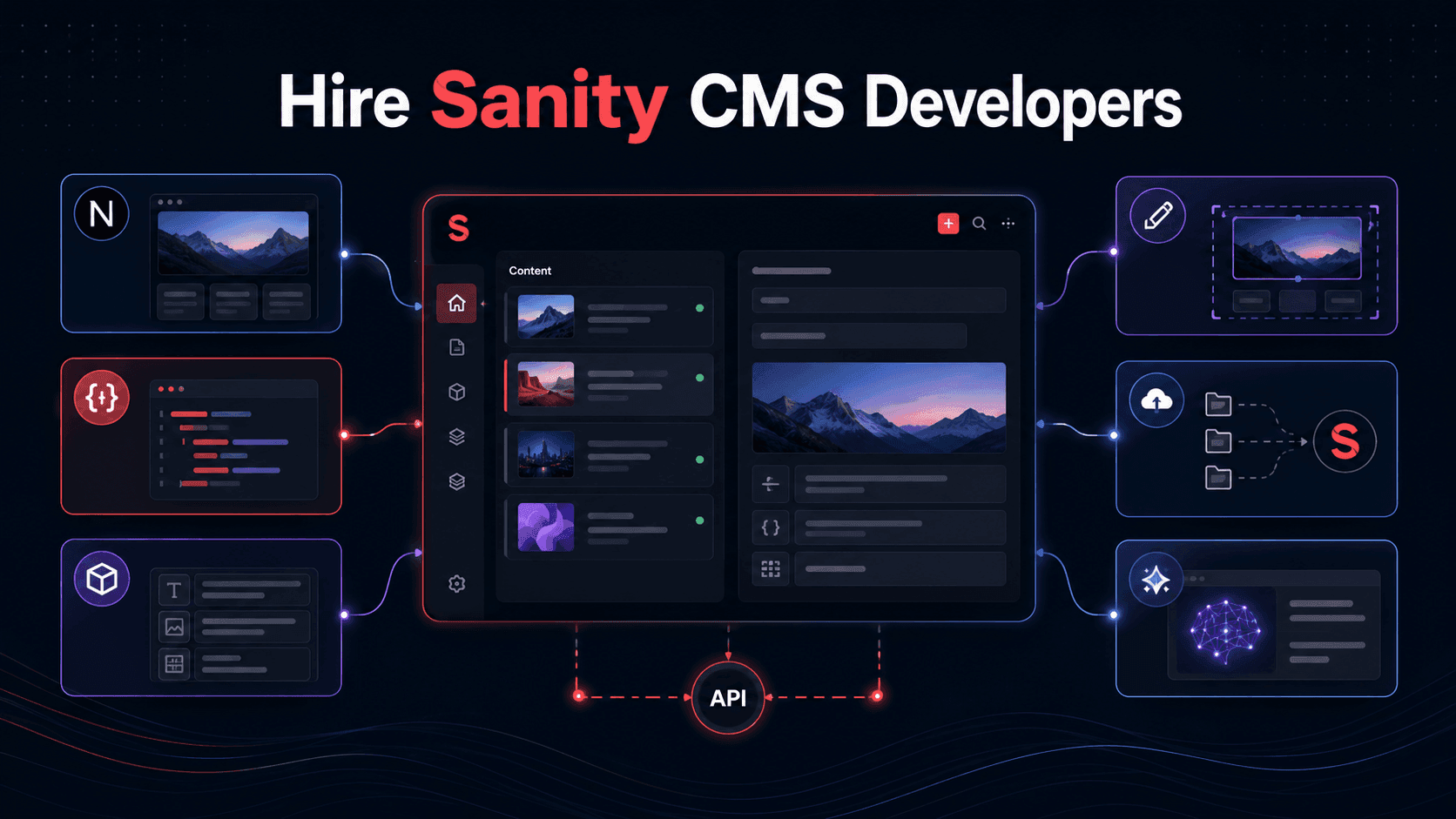
Hire Sanity CMS Developers to Build
In This Article
- Migrate and Scale AI-Ready Content Platforms
- What Does a Sanity CMS Developer Do?
- When Should You Hire Sanity CMS Developers?
- You are building a new headless website
- Your existing Sanity project needs improvement
- Your internal team has a bandwidth gap
- You are migrating from another CMS
- You want an AI-ready content platform
- Essential Skills to Evaluate Before Hiring
- Sanity schema and content-modelling expertise
- Sanity Studio customization
- GROQ development
- Next.js and React experience
- Migration and SEO knowledge
- Communication and ownership
- Freelancer, Dedicated Developer or Sanity Agency?
- Hire AI-Ready Sanity CMS Developers
- Why Hire Sanity Developers from Murmu Software Infotech?
- Questions to Ask Before Hiring
- Build a Platform Your Teams Can Grow With
Migrate and Scale AI-Ready Content Platforms
Hiring the right Sanity CMS developers is not simply about finding someone who can connect a CMS to a website. A capable Sanity developer must understand structured content architecture, custom editorial workflows, GROQ queries, frontend frameworks, migration planning, integrations and the growing role of AI in content operations.
Businesses often hire dedicated Sanity developers when their internal engineering team lacks specialist expertise, has limited delivery capacity or needs ongoing ownership of an existing platform. Competitor service models commonly include project-based hiring, team augmentation, part-time or full-time developers and monthly retainers for continuous schema, frontend and integration work.
What Does a Sanity CMS Developer Do?
A Sanity CMS developer designs and develops the content infrastructure behind websites, applications, ecommerce platforms and AI-powered experiences.
Typical responsibilities include:
- Planning structured content models
- Creating documents, objects, fields and references
- Customizing Sanity Studio
- Writing and optimizing GROQ queries
- Integrating Sanity with Next.js or React
- Building reusable page components
- Implementing preview and visual-editing workflows
- Migrating content from legacy CMS platforms
- Connecting CRM, ecommerce and external APIs
- Configuring multilingual content
- Supporting AI content operations and chatbot knowledge
- Maintaining and improving the platform after launch
Sanity uses code-defined schemas and a React-based customizable Studio, so strong JavaScript, TypeScript, React and data-modelling experience is particularly valuable. Sanity’s own engineering materials also emphasize solution design, scalable APIs, accessibility, security, code quality and readable, composable development.
When Should You Hire Sanity CMS Developers?
You are building a new headless website
A specialist can design the schema, configure Sanity Studio and connect the CMS to a modern frontend such as Next.js. This is especially useful for corporate websites, SaaS platforms, ecommerce storefronts, publishing systems and multi-brand websites.
Your existing Sanity project needs improvement
You may already use Sanity but struggle with duplicated schemas, slow GROQ queries, confusing editorial navigation, limited previews or difficult page creation.
An experienced developer can audit the implementation, simplify the content model and improve both developer and editor experience.
Your internal team has a bandwidth gap
Hiring a dedicated developer allows your existing team to retain product ownership while adding specialist execution capacity. This model is commonly used for schema changes, new content types, frontend development and ongoing platform improvements.
You are migrating from another CMS
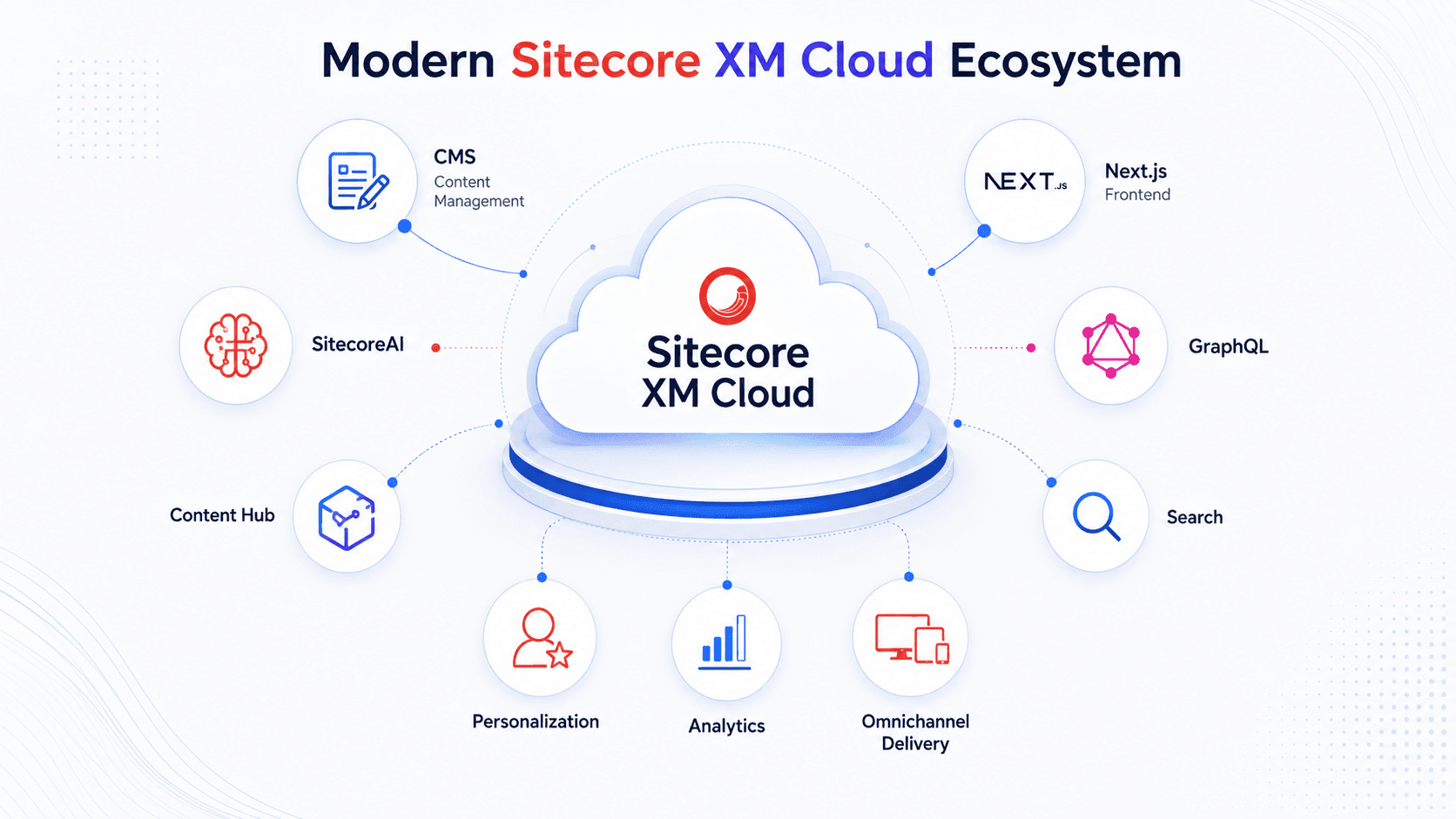
WordPress, Drupal, Contentful, Sitecore and custom systems can be migrated to Sanity, but the work requires more than copying pages. Developers must map content types, transform rich text, migrate assets, preserve metadata, rebuild relationships and protect URLs.
Explore our complete approach to Sanity CMS migration services.
You want an AI-ready content platform
Modern Sanity implementations can support AI-assisted content creation, translation, enrichment, SEO configuration and dynamic knowledge retrieval.
The developer should understand how structured content can support AI Content Agent, MCP-powered applications, chatbots and other intelligent workflows—not only traditional website publishing.
Essential Skills to Evaluate Before Hiring
Sanity schema and content-modelling expertise
A developer should know how to convert business concepts into reusable, connected content types.
Instead of hardcoding the same testimonial, FAQ or call to action into multiple pages, the developer should model reusable entities and references that can be managed centrally.
Sanity Studio customization
The best Sanity implementations are designed for editors as well as developers.
Look for experience with:
- Custom desk structures
- Reusable page builders
- Validation rules
- Custom input components
- Preview configurations
- Role-based access
- Multilingual workflows
- SEO, AEO and GEO fields
GROQ development
GROQ allows developers to filter, join and reshape structured Sanity content. A strong candidate should be able to write maintainable queries for pages, navigation, related content, references, localization and search.
Next.js and React experience
Many Sanity projects use Next.js for frontend delivery. The developer should understand App Router, server and client components, caching, revalidation, metadata, image optimization, Draft Mode and deployment.
Businesses requiring a complete frontend and CMS implementation can review our Sanity Next.js development services.
Hire Dedicated Sanity Developers for Faster, AI-Ready Delivery
Migration and SEO knowledge
A CMS migration can damage search visibility if URLs, metadata, internal links and redirects are mishandled.
Your developer should understand:
- Old-to-new URL mapping
- Permanent redirects
- Metadata preservation
- Canonical URLs
- Structured data
- Sitemap updates
- Post-launch crawl validation
Communication and ownership
Technical skill alone is not enough.
The developer should communicate progress clearly, document decisions, participate in code reviews and understand how engineering decisions affect marketing, editorial and business teams. Agency-review resources similarly recommend assessing production experience, communication, maintainability and long-term ownership—not relying only on hourly cost or directory profiles.
Freelancer, Dedicated Developer or Sanity Agency?
A freelancer can be suitable for a clearly defined, short-term task such as fixing a GROQ query or adding one schema.
A dedicated developer is often better when you need someone to work continuously with your internal team, understand the existing codebase and take responsibility for ongoing delivery.
A Sanity agency or extended team may be more suitable when the project requires several capabilities at once:
- Content strategy
- Sanity development
- Next.js frontend engineering
- UI/UX
- Migration
- Quality assurance
- DevOps
- AI integration
- Long-term support
The right model depends on scope, technical risk and how much internal oversight your organization can provide.
Hire AI-Ready Sanity CMS Developers
The role of a Sanity developer is expanding.
Businesses increasingly need developers who can structure content not only for pages but also for AI assistants, answer engines and automated content workflows.
An AI-ready Sanity developer may implement:
- AI-assisted service-page and blog creation
- Automated metadata and summaries
- English, Hindi and multilingual translation
- Field-level translation controls
- Structured FAQs and direct answers
- SEO, AEO and GEO configurations
- Content audits and enrichment
- MCP-powered chatbot knowledge retrieval
- Website, mobile and omnichannel delivery
Murmu Software Infotech provides AI-native Headless CMS and content automation with Sanity CMS, combining structured content, Next.js, GROQ, Content Agent workflows and MCP-connected AI experiences.
Extend Your Team With Proven Sanity and Next.js Experts
Why Hire Sanity Developers from Murmu Software Infotech?
Our Sanity developers work across the complete implementation lifecycle:
- Discovery and content architecture
- Sanity Studio development
- Next.js and React frontend engineering
- GROQ query development
- Legacy CMS migration
- Visual editing and previews
- Multilingual content workflows
- AI Content Agent implementation
- MCP-powered chatbot integration
- SEO, AEO and GEO configuration
- Maintenance and continuous improvement
We also applied this expertise to our own official website.
Murmu Software Infotech migrated from a developer-managed Next.js and .NET API architecture to Sanity CMS and Next.js. The implementation introduced structured content, GROQ-powered delivery, live editing, AI-assisted workflows and MCP-based chatbot knowledge retrieval. Routine updates that previously took two to four hours can now be completed in seconds or minutes by authorized content users.
Read the complete Sanity CMS and Next.js migration case study.
Questions to Ask Before Hiring
Before selecting a developer, ask:
- Can you show a production Sanity implementation?
- How would you model our services, products and reusable content?
- How do you optimize GROQ queries?
- Have you worked with Next.js App Router?
- Can you implement visual editing and Draft Mode?
- How would you protect SEO during migration?
- Can you build multilingual editorial workflows?
- Have you implemented Content Agent or MCP integrations?
- How do you document schemas and technical decisions?
- What support is available when the developer is unavailable?
Build a Platform Your Teams Can Grow With
The right Sanity developer should do more than complete development tickets.
They should help your organization create structured, maintainable content infrastructure that enables marketers to publish faster, developers to build confidently and AI systems to access reliable business knowledge.
Planning a new Sanity platform, migration or ongoing development engagement? Hire Sanity CMS developers from Murmu Software Infotech to extend your team and build a scalable, multilingual and AI-ready digital platform.
Frequently Asked Questions
What does a Sanity CMS developer do?
A Sanity CMS developer designs structured content models, customizes Sanity Studio, builds GROQ queries, integrates APIs, connects modern frontends such as Next.js, implements previews and publishing workflows, and supports migrations, multilingual content, SEO, AEO, GEO and AI-powered content operations.
Why hire dedicated Sanity CMS developers?
Hiring dedicated Sanity CMS developers gives you focused technical expertise for faster implementation, continuous enhancements, content-model improvements, integrations and long-term support without building a full in-house CMS team.
What skills should a Sanity developer have?
A strong Sanity developer should understand Sanity Studio, schemas, GROQ, Content Lake, APIs, TypeScript, React and preferably Next.js. Experience with content modelling, migrations, localization, visual editing, SEO, integrations and AI workflows is also valuable.
Can I hire Sanity and Next.js developers together?
Yes. Hiring Sanity and Next.js developers together provides end-to-end delivery covering content architecture, Sanity Studio, GROQ and APIs, frontend development, metadata, previews, caching, deployment and ongoing optimization.
Can Sanity developers migrate an existing CMS?
Yes. Sanity developers can migrate content from WordPress, Drupal, legacy CMS platforms and custom systems. A migration typically includes content auditing, schema mapping, transformation scripts, media migration, metadata preservation, redirects, validation and frontend integration.
Can Sanity developers implement AI Content Agent?
Yes. Sanity developers can configure AI-assisted content workflows using Sanity Content Agent, including content creation, enrichment, summarization, translation, optimization and structured content operations aligned with the project's schemas and editorial requirements.
Can a Sanity developer connect an AI chatbot through MCP?
Yes. A Sanity developer can integrate Sanity's MCP capabilities with compatible AI applications so structured CMS content can be retrieved and used as current contextual knowledge for chatbots, assistants and content automation workflows.
Can Sanity developers build multilingual websites?
Yes. Sanity supports flexible multilingual architectures using document-level or field-level localization. Developers can implement language-specific content, translation workflows, localized metadata, regional publishing controls and multilingual Next.js websites.
How much does it cost to hire a Sanity developer?
The cost of hiring a Sanity developer depends on experience, project complexity, location and engagement model. Pricing may be hourly, monthly dedicated-resource based or fixed-project based, with migration, AI integrations and enterprise workflows typically requiring more senior expertise.
How should I choose a Sanity CMS developer?
Choose a Sanity CMS developer based on proven experience with structured content modelling, Sanity Studio, GROQ, Next.js, migrations, integrations and deployment. Also evaluate communication, code quality, documentation, AI and multilingual experience, and their ability to support the platform after launch.