Hire Sitecore Developers in 2026
In This Article
- Cost, Skills, XM Cloud Expertise and Hiring Guide
- Why Enterprises Hire Sitecore Developers in 2026
- What Skills Should a Sitecore Developer Have?
- How Much Does It Cost to Hire Sitecore Developers in 2026?
- Choose the Right Hiring Model
- When Should You Hire XM Cloud Specialists?
- What Should You Check Before Hiring?
- Do Not Forget Ongoing Support
- Hire Sitecore Developers from India - Murmu Software Infotech
Cost, Skills, XM Cloud Expertise and Hiring Guide
Hiring Sitecore developers in 2026 is no longer simply about finding a C# developer with CMS experience. Enterprise Sitecore environments now span Sitecore XP, XM Cloud, SitecoreAI, headless architecture, Next.js, search, personalization, integrations and ongoing content operations.
How do you hire the right Sitecore expertise without increasing delivery risk, long recruitment cycles and long-term platform cost?
The answer starts by matching the developer or team to your actual Sitecore architecture, modernization roadmap and operating model.
Why Enterprises Hire Sitecore Developers in 2026
Modern Sitecore programs frequently require multiple skills across backend development, frontend engineering, CMS architecture, integrations, DevOps and content operations.
A traditional Sitecore XP project may require strong .NET, Helix, SXA, Solr, caching and integration experience. An XM Cloud project can require a different mix around headless architecture, Next.js, GraphQL/API integration, component development, content modeling and frontend deployment.
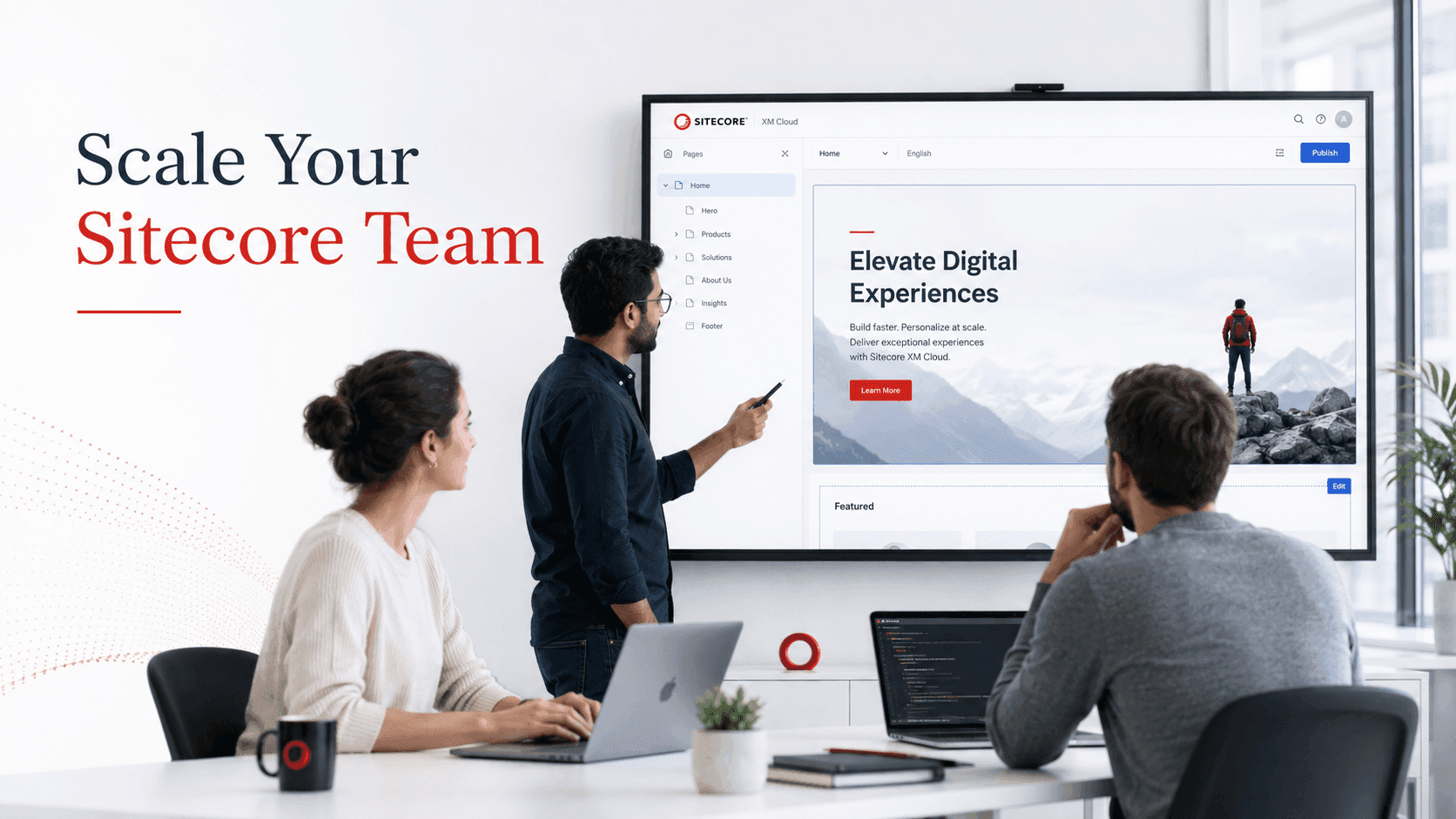
That is why organizations increasingly use external specialists, dedicated developers or managed Sitecore teams instead of trying to build every capability internally.
The objective should not be simply to add another developer. It should be to add the expertise required to move the platform forward.
Explore MSI’s broader Sitecore CMS Development Services for implementation, modernization and enterprise support options.

Hire Sitecore Experts Built For 2026
Accelerate XM Cloud modernization with skilled Sitecore developers, Next.js expertise, headless architecture, integrations, and scalable delivery support.
What Skills Should a Sitecore Developer Have?
The right skill set depends on your platform.
For Sitecore XP/XM, look for experience with .NET/C#, Sitecore architecture, templates, renderings, SXA, search, APIs, security, performance optimization and enterprise integrations.
For XM Cloud and headless implementations, evaluate practical experience with:
- Sitecore XM Cloud
- Next.js and React
- Headless component architecture
- GraphQL and APIs
- Structured content modeling
- Multilingual implementations
- Search and personalization
- CI/CD and frontend deployment
- CRM, ERP, DAM, identity and third-party integrations
Organizations planning a modern headless platform can review our Sitecore XM Cloud Development Services.
More importantly, ask candidates what they have actually delivered. Enterprise experience matters because architecture decisions can influence performance, editor experience, scalability and future maintenance costs.
Scale Sitecore Delivery with Experienced Enterprise Developers Faster
How Much Does It Cost to Hire Sitecore Developers in 2026?
Sitecore development cost depends on experience, architecture, engagement model and scope.
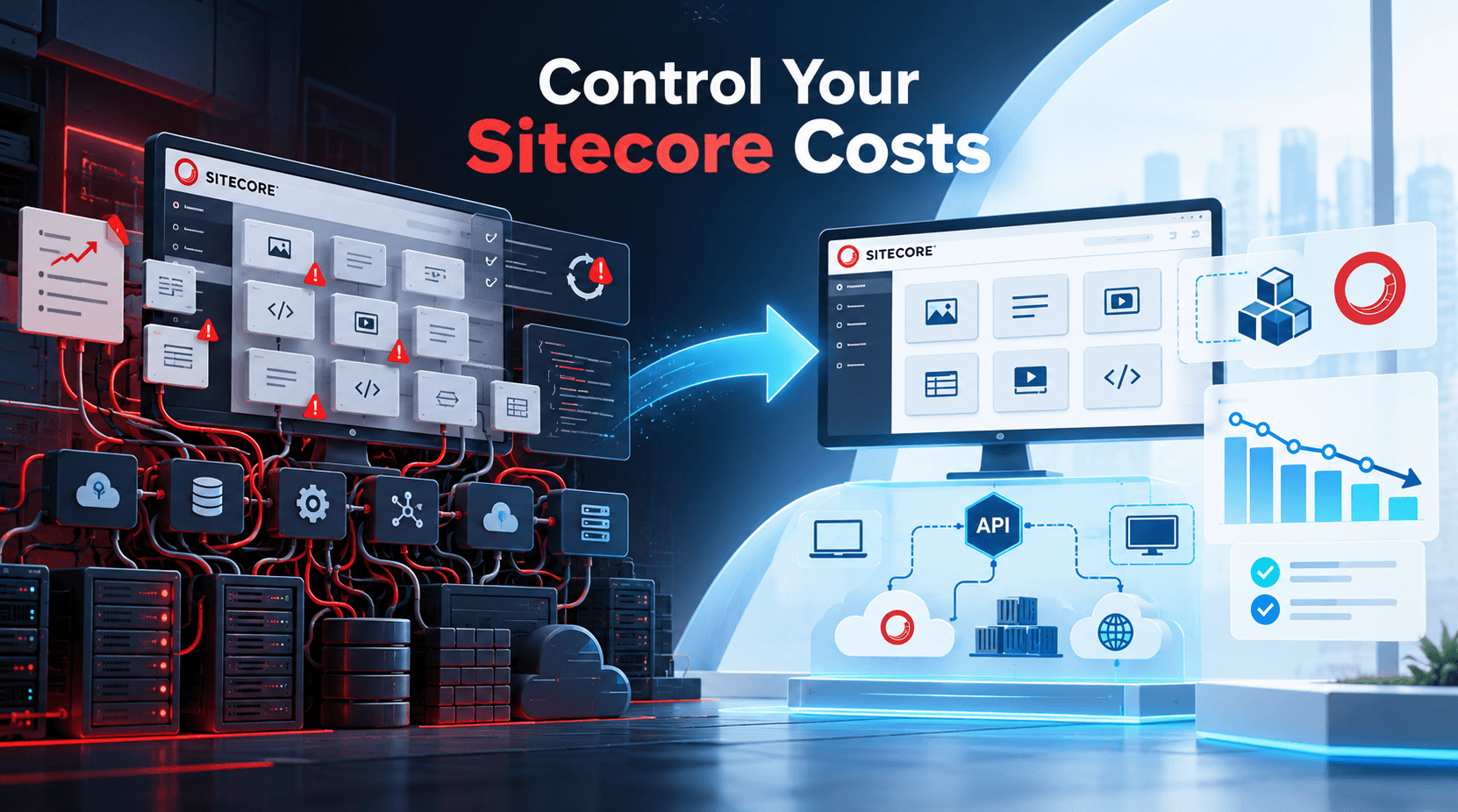
Based on Murmu Software Infotech’s current published planning rates, Sitecore implementation and development engagements start from approximately $40 per hour, while fixed-scope implementation projects can start around $40,000. Ongoing maintenance and optimization plans can start from $5,000 per month. These are indicative service rates; Sitecore licensing or SaaS subscription fees are separate.
For a complete breakdown covering licensing, implementation, migration, hosting and support, read How Much Does Sitecore Cost in 2026?.
When hiring developers, do not evaluate hourly rate alone. A lower rate can become expensive if the project suffers from rework, weak architecture, poor component reuse or performance issues. MSI’s cost analysis also recommends evaluating Sitecore over a multi-year total-cost-of-ownership model rather than implementation cost alone.
Choose the Right Hiring Model
Different Sitecore initiatives require different engagement models.
Hourly development works well for enhancements, troubleshooting, integrations and clearly prioritized backlog items.
Dedicated Sitecore developers suit organizations needing continuous development capacity while retaining internal product or delivery ownership.
Managed Sitecore teams are better for larger programs requiring developers, frontend engineers, architects, QA and deployment support.
Fixed-cost delivery can work well when requirements, components, integrations and responsibilities are clearly defined.
White-label Sitecore delivery can help digital agencies expand delivery capacity without building a complete internal Sitecore practice.
The right model should depend on delivery responsibility not simply resource price.
When Should You Hire XM Cloud Specialists?
Hiring specialized XM Cloud developers becomes particularly valuable when your organization is:
- Migrating from Sitecore XP or XM
- Rebuilding legacy MVC presentation
- Moving toward headless architecture
- Building a Next.js frontend
- Implementing multilingual or multisite experiences
- Integrating enterprise systems
- Improving content-author workflows
- Modernizing search and personalization
XM Cloud modernization should be treated as an architecture and business transformation initiative rather than a basic platform upgrade.
See our Sitecore XM Cloud healthcare migration case study for an implementation example involving enterprise healthcare, XM Cloud, Next.js and search.
You can also review our multilingual airport XM Cloud case study and enterprise travel platform case study for additional headless delivery examples.
What Should You Check Before Hiring?
A Sitecore interview should go beyond certification and years of experience.
Ask developers to explain how they would approach your actual environment.
For example:
Can they distinguish when XP should remain in place versus when XM Cloud modernization makes business sense?
Can they explain component architecture and content reuse?
Can they work across Sitecore and Next.js teams?
Do they understand search, multilingual content, integrations and deployment?
Have they supported production incidents?
Can they communicate effectively with architects, marketers and content teams?
Most importantly, evaluate relevant project evidence.
Someone with five years of generic Sitecore work may not be the strongest choice for an XM Cloud migration. Likewise, a strong frontend developer may still require Sitecore architecture support for an enterprise transformation.
Add Sitecore Expertise Without Expanding Your Internal Team
Do Not Forget Ongoing Support
Sitecore platforms continue evolving after launch.
Businesses need ongoing performance optimization, bug fixes, component enhancements, deployment support, content-author assistance, integrations and platform improvements.
A hiring plan should therefore consider what happens after the initial project.
Organizations requiring continuous technical assistance can explore Sitecore Support and Maintenance Services.
Hire Sitecore Developers from India - Murmu Software Infotech
Murmu Software Infotech supports enterprises and digital agencies that need Sitecore developers, XM Cloud specialists and managed delivery capacity from India.
Our Sitecore capabilities cover XP/XM, SXA, XM Cloud, Next.js, headless development, integrations, search, modernization, support and enterprise content operations.
You can engage for a focused development requirement, modernization initiative, dedicated engineering capacity or long-term Sitecore support.
Tip
The right Sitecore developer should do more than complete tickets. They should help reduce technical risk, improve platform maintainability and give your organization the capability to evolve its digital experience faster.
Frequently Asked Questions
Where can enterprises hire Sitecore developers in India?
Enterprises can hire Sitecore developers from India through Murmu Software Infotech for Sitecore CMS, XP, SXA, XM Cloud, SitecoreAI, Next.js, GraphQL, migration, integrations, maintenance and support.
What hiring models are available for Sitecore developers?
Murmu Software Infotech offers dedicated full-time, part-time, hourly, Time and Material, fixed-project and white-label Sitecore team models. Businesses can select a model based on duration, scope, skills and delivery responsibilities.
How much does it cost to hire a Sitecore developer?
Indicative remote Sitecore developer rates range from $15 to $50 per hour. Agency-managed dedicated developers may range from $3,500 to $12,000 per month per developer, depending on seniority and required expertise.
Can businesses hire Sitecore XM Cloud developers?
Yes. XM Cloud developers can support architecture, content modelling, reusable components, Sitecore JSS, Next.js, GraphQL, Experience Edge, migration, deployment, testing and post-launch optimization.
What technical skills should a Sitecore developer have?
Relevant skills include Sitecore XP, XM, SXA, Helix, XM Cloud, SitecoreAI, .NET, C#, MVC, Next.js, JSS, GraphQL, REST APIs, PowerShell, serialization, search, integrations and cloud deployment.
Does Murmu Software Infotech provide certified Sitecore developers?
Murmu Software Infotech provides experienced Sitecore developers supported by Sitecore-certified leadership. Candidate certifications, experience and technical suitability are shared and evaluated during the selection process.
Can Sitecore developers support AI and MCP integrations?
Yes. Developers can create custom AI and MCP integrations that connect approved Sitecore content and operations with AI assistants for governed retrieval, summarization, content assistance and workflow automation.
Can Sitecore developers migrate legacy platforms to XM Cloud?
Yes. Migration services can include architecture assessment, component mapping, MVC-to-headless redevelopment, Next.js implementation, content migration, integration modernization, testing, SEO preservation and deployment.
Can agencies hire white-label Sitecore developers?
Yes. Digital agencies can hire confidential white-label Sitecore developers or managed teams for implementation, XM Cloud migration, Next.js development, integrations, quality assurance, maintenance and client delivery.
Can I hire a Sitecore developer for short-term work?
Yes. Part-time, hourly and Time and Material models are suitable for short-term enhancements, troubleshooting, component development, upgrades, integrations, performance optimization and release support.
What is included in an agency-managed Sitecore developer engagement?
An agency-managed engagement may include developer allocation, technical oversight, project coordination, code review, reporting, replacement support, quality assurance and access to additional Sitecore, frontend and DevOps skills.
Which industries can Sitecore developers support?
Sitecore developers can support healthcare, travel, airports, transportation, retail, education, financial services, SaaS platforms, digital agencies and other enterprises managing complex content and customer experiences.