Sitecore Development Services for US and UK Enterprises Moving Toward XM Cloud
In This Article
- For many US and UK enterprises, Sitecore modernization is no longer simply an upgrade project.
- Start With Your Existing Sitecore Estate
- Legacy Sitecore Does Not Always Need Immediate Replacement
- Moving From XP, XM and SXA Toward XM Cloud
- Next.js Becomes a Strategic Part of Modernization
- Treat XM Cloud Migration as Re-Architecture
- Content and Template Assessment
- Component Modernization
- Frontend Development
- Integration Refactoring
- Content Migration
- SEO Migration
- Testing and Cutover
- Do Not Ignore SEO During Sitecore Modernization
- Build an AI-Ready Architecture, Not Just a Cloud Website
- Choose a Partner That Can Support Both Generations
- Modernize Sitecore Around Your Business Roadmap
For many US and UK enterprises, Sitecore modernization is no longer simply an upgrade project.
Organizations running mature Sitecore XP, XM, or SXA environments may be dealing with years of custom components, .NET code, integrations, search configurations, content dependencies, infrastructure decisions, and technical debt. At the same time, digital teams increasingly want faster releases, modern frontend development, cloud delivery, better performance, and an architecture prepared for AI-driven digital experiences.
That is where modern Sitecore development services need to bridge two worlds: maintaining today's enterprise platform while building a practical path toward XM Cloud and the evolving SitecoreAI ecosystem.
The right strategy is rarely "replace everything." It is to determine what should stay, what should change, and what should be rebuilt for the next generation of the platform.
Start With Your Existing Sitecore Estate
Before planning Sitecore XM Cloud development, enterprises should understand what they already have.
A typical legacy Sitecore estate may contain:
- Sitecore XP or XM
- SXA components and page designs
- Custom .NET renderings
- JSS applications
- Solr search
- Personalization rules
- Multisite and multilingual structures
- CRM, ERP, DAM, PIM, and commerce integrations
- Custom APIs and middleware
- Analytics and marketing technology connections
Migrating without documenting these dependencies creates unnecessary risk.
A modernization assessment should identify reusable functionality, obsolete customizations, content dependencies, integration requirements, SEO-critical URLs, security concerns, and technical debt.
US enterprises evaluating their broader platform requirements can also review these Sitecore development services for US businesses for additional context around legacy and modern Sitecore engineering.

Modernize Sitecore for What’s Next
Move from legacy Sitecore toward modern cloud, Next.js, scalable integrations, stronger SEO, and AI-ready digital experiences.
Legacy Sitecore Does Not Always Need Immediate Replacement
Modernization should not automatically mean rewriting a functioning platform.
Some organizations still have stable XP, XM, or SXA environments that meet current business requirements. In those cases, targeted Sitecore CMS development can improve performance, reduce technical debt, modernize components, strengthen integrations, or prepare the platform for a later cloud transition.
The key question is not:
"Is our Sitecore implementation old?"
It is:
"Does our current architecture support where the business needs to go next?"
An experienced Sitecore migration company should be capable of recommending staged modernization when that approach makes more technical and commercial sense than immediate replacement.
Moving From XP, XM and SXA Toward XM Cloud
Moving toward XM Cloud changes more than hosting.
Traditional Sitecore implementations often combine content management, rendering, infrastructure, custom backend logic, and frontend delivery within a closely connected architecture.
Modern Sitecore architecture increasingly separates those responsibilities.
A simplified modernization direction can look like:
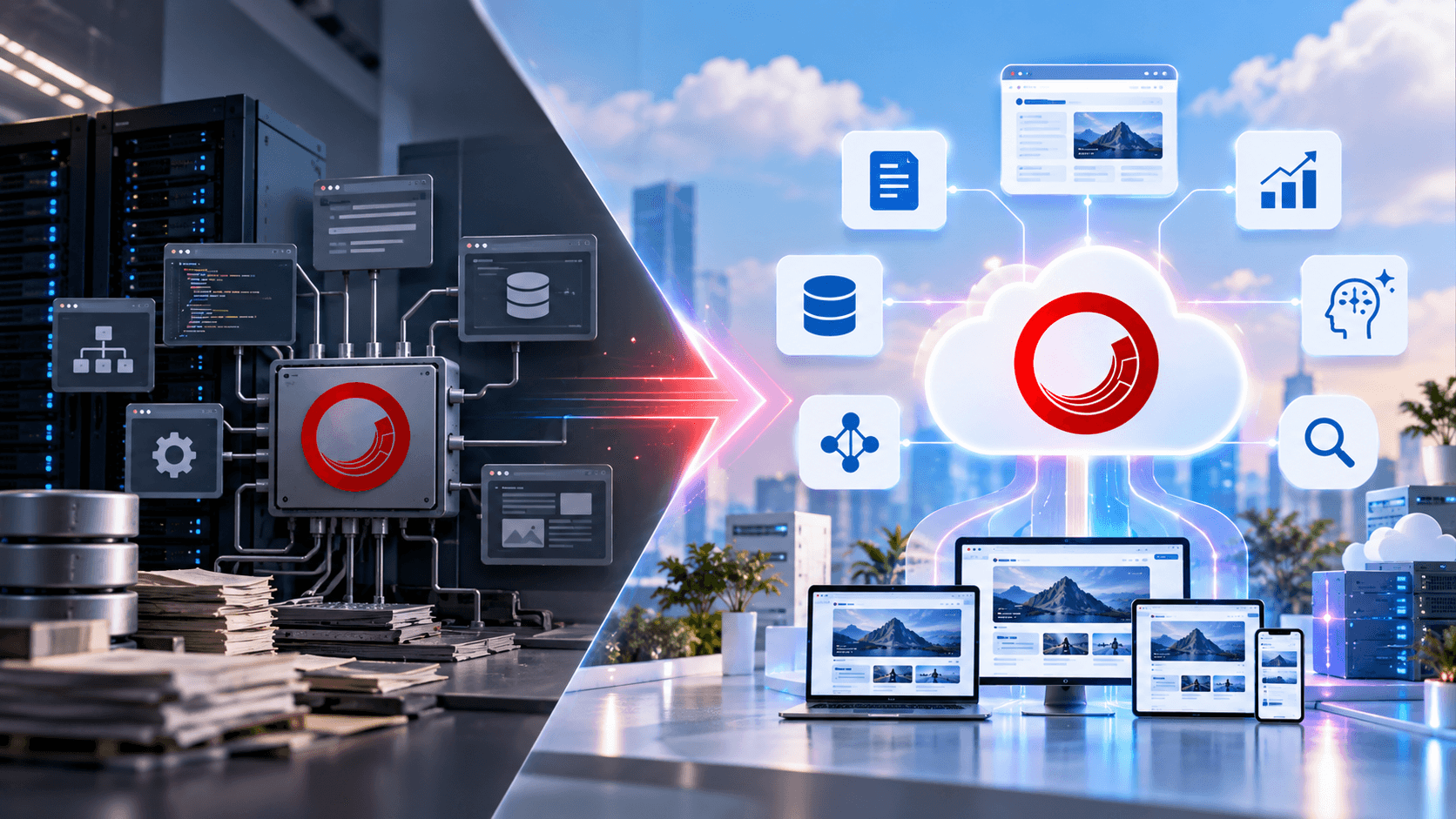
Sitecore content platform → APIs/Experience Edge → Next.js frontend → enterprise services
This separation gives frontend teams greater flexibility while allowing content teams to continue managing structured content and page experiences centrally.
For UK organizations evaluating this direction, this guide to Sitecore development for UK enterprises covers XM Cloud, headless development, integrations, and long-term platform support.
Next.js Becomes a Strategic Part of Modernization
Frontend architecture becomes especially important during Sitecore CMS modernization.
Instead of tightly coupling the public website to traditional Sitecore rendering infrastructure, enterprises can use Next.js to create a faster, more independently deployable presentation layer.
This can improve:
- Frontend development flexibility
- Deployment speed
- Caching strategies
- Performance optimization
- Component reuse
- Responsive experiences
- Integration with modern development workflows
But moving to Next.js should not simply recreate every legacy component exactly as it exists today.
Migration is an opportunity to consolidate duplicate components, remove obsolete functionality, simplify content models, and build a cleaner design system.
Treat XM Cloud Migration as Re-Architecture
One of the biggest mistakes enterprises can make is approaching XM Cloud like a traditional version upgrade.
A successful migration may require several parallel workstreams:
Content and Template Assessment
Identify content types, templates, fields, workflows, page structures, media, languages, and publishing dependencies.
Component Modernization
Determine which SXA or legacy renderings should be recreated as reusable headless components.
Frontend Development
Build the modern presentation layer using Next.js and the appropriate Sitecore frontend tooling.
Integration Refactoring
Review connections to CRM, DAM, PIM, commerce, identity, search, analytics, and business APIs.
Content Migration
Move required content while eliminating obsolete or duplicated information.
SEO Migration
Preserve valuable URLs, metadata, canonical signals, structured data, internal links, redirects, and indexability.
Testing and Cutover
Validate content, functionality, accessibility, integrations, performance, analytics, SEO, and editorial workflows before production launch.
This staged approach makes modernization measurable instead of turning migration into one large technical gamble.
Protect Your Sitecore Rankings Before Moving to XM Cloud
Do Not Ignore SEO During Sitecore Modernization
Enterprise CMS migrations can create major organic-search risks when SEO is considered only after development.
Your Sitecore XM Cloud development partner should account for SEO during architecture and migration planning.
That includes:
- Existing URL inventories
- 301 redirect mapping
- Metadata preservation
- Canonical URLs
- XML sitemaps
- Structured data
- Crawlable HTML
- Internal links
- Hreflang
- Core Web Vitals
- Image optimization
- JavaScript rendering
- Analytics and conversion tracking
A technically successful migration can still become a commercial failure if high-value organic traffic disappears after launch.
Build an AI-Ready Architecture, Not Just a Cloud Website
Sitecore's platform direction is increasingly centered on connected content, data, personalization, search, and AI-enabled workflows.
That makes structured content particularly important.
Enterprises should design content models that are reusable, semantically clear, API-accessible, and suitable for delivery across websites, applications, search engines, answer engines, and AI experiences.
An AI-ready architecture should also reduce unnecessary dependency on page-specific content structures.
The goal is to make enterprise content easier to discover, reuse, personalize, and distribute as digital channels continue to evolve.
Choose a Partner That Can Support Both Generations
Enterprises often need legacy and modern Sitecore expertise at the same time.
During modernization, your environment may temporarily include XP, SXA, .NET, Solr, JSS, Next.js, cloud services, APIs, and modern Sitecore tooling simultaneously.
That makes partner selection important.
Look for experience across:
- Sitecore XP and XM
- SXA
- Legacy .NET implementations
- Headless architecture
- Next.js
- Modern Sitecore frontend development
- Experience Edge
- API integrations
- Content migration
- CI/CD and DevOps
- Performance optimization
- Technical SEO
- Production support
The partner should be able to maintain your current environment while building the next one.
Modernize Sitecore Around Your Business Roadmap
The best modernization strategy is not necessarily the fastest migration.
It is the path that reduces technical risk while improving development velocity, content operations, platform performance, and long-term flexibility.
For US and UK organizations evaluating modernization, migration, headless development, or long-term engineering support, work with a Sitecore development company for US, UK and European enterprises that understands both established Sitecore architecture and the modern cloud ecosystem.
Your legacy implementation contains years of business knowledge.
Modernization should preserve what creates value, remove what creates friction, and build an architecture ready for what comes next.
Frequently Asked Questions
What are Sitecore development services?
Sitecore development services include solution architecture, CMS development, component engineering, integrations, Sitecore XP and XM support, SXA development, XM Cloud modernization, Next.js development, migration, DevOps, performance optimization, testing and ongoing technical support.
Can Sitecore XP be migrated to XM Cloud?
Yes, but moving from Sitecore XP to XM Cloud is generally a modernization and re-architecture project rather than a simple version upgrade. Enterprises should assess components, content, integrations, personalization, URLs, frontend architecture and custom functionality before defining the migration approach.
What is Sitecore XM Cloud development?
Sitecore XM Cloud development focuses on building cloud-based headless digital experiences with structured content, modern frontend technologies such as Next.js, APIs, Experience Edge and reusable components. XM Cloud now forms part of Sitecore's broader SitecoreAI platform direction.
Is XM Cloud now SitecoreAI?
Sitecore now positions XM Cloud as the core platform within SitecoreAI. XM Cloud terminology continues to appear in documentation, tooling and engineering assets, so both terms remain relevant when discussing existing and modern Sitecore implementations.
Does an enterprise need to replace its existing Sitecore XP implementation immediately?
Not necessarily. If the existing platform remains stable and aligned with business requirements, targeted upgrades, performance improvements, component modernization and technical debt reduction may provide additional runway while the organization prepares a longer-term cloud strategy.
What should a Sitecore XM Cloud migration include?
A migration should typically include discovery, architecture assessment, content inventory, component analysis, frontend modernization, integration planning, content migration, redirect mapping, SEO validation, QA, performance testing, user acceptance testing and production cutover.
Why is Next.js important for modern Sitecore development?
Next.js enables Sitecore teams to build a decoupled frontend that can be developed and deployed independently from the CMS. It supports modern rendering, performance optimization, reusable components and integration with headless Sitecore architectures.
How can Sitecore migration affect SEO?
A Sitecore migration can affect rankings when URLs, redirects, metadata, canonicals, structured data, internal links, hreflang, rendering or page performance change. Technical SEO should therefore be included in migration planning, implementation and post-launch monitoring.
How do I choose a Sitecore XM Cloud development partner?
Look for proven experience with legacy Sitecore and modern cloud architecture, including XP, XM, SXA, Next.js, integrations, migration, DevOps, SEO, performance and production support. The partner should be able to explain a phased modernization strategy rather than automatically recommending a full rewrite.
What makes a Sitecore architecture AI-ready?
An AI-ready Sitecore architecture uses structured reusable content, clear metadata, API-accessible content models, scalable integrations and modern delivery patterns. This makes content easier to reuse across websites, search, personalization systems, answer engines and AI-powered digital experiences.