Sitecore CMS
Sitecore Cost and Pricing Guide for UK Companies
GGovind Murmu5 Min Read
For UK companies evaluating Sitecore, one of the first questions is usually simple:
How much does Sitecore cost?
The answer is less simple.
Sitecore is an enterprise digital experience platform rather than a fixed-price website builder. The final investment can include platform subscription or licensing, implementation, developers, migration, integrations, frontend hosting, support and continuous improvement.
Current third-party procurement datasets illustrate how widely Sitecore contracts can vary. One 2026 benchmark reports a median annual contract value of about $60,944, while another reports much higher average spending among large enterprises. These figures should be treated as market context not official Sitecore pricing because actual commercial terms depend heavily on products, usage and enterprise requirements.
For UK decision makers, the better question is:
What will Sitecore cost to implement, operate and evolve over five years?
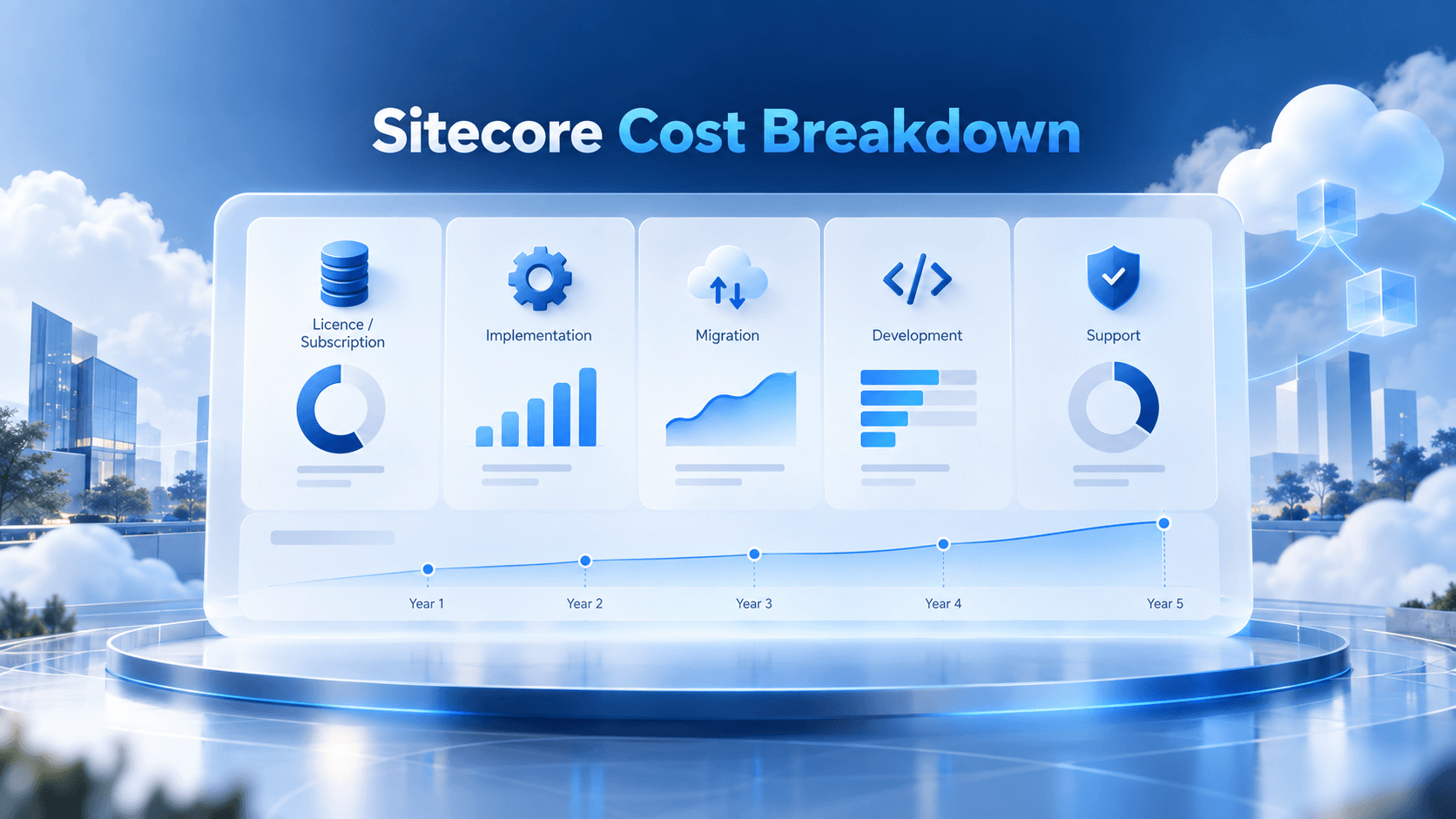
A realistic Sitecore budget should normally consider six cost categories:
Looking only at the licence can significantly underestimate total platform ownership.
Estimate Sitecore licensing, implementation, migration, development and support costs before committing to your UK digital experience platform.
Sitecore does not operate like a simple £49-per-user SaaS product with one public price for every customer.
Commercial terms can vary according to the products purchased, usage levels and contract structure. Current Sitecore legal documentation defines different SaaS products and licensing metrics across the platform portfolio.
Variables that can influence a quote include:
UK companies should therefore request a commercial quote based on a clearly documented architecture rather than attempting to estimate licensing from a generic online figure.
There is another important 2026 consideration: Sitecore states that XM Cloud has become the core platform within SitecoreAI, with existing XM Cloud customers moving into the newer platform model.
So when comparing Sitecore XM Cloud pricing, confirm exactly which SitecoreAI capabilities, usage allowances and services are included in the proposed commercial package.
Licence cost is only the beginning.
Sitecore implementation may include:
Independent implementation estimates vary substantially according to complexity, with published examples ranging from tens of thousands of dollars into several hundred thousand dollars for complex enterprise programmes.
Rather than selecting an implementation partner purely on the lowest initial quote, UK companies should assess what architecture, testing, migration and post-launch work is actually included.
For new builds or major modernization projects, Sitecore CMS development services can be evaluated against a clearly defined implementation scope.
Developer cost becomes another major TCO component when the platform requires continuous enhancement.
A Sitecore team may need skills across:
UK public-sector marketplace data provides one useful reference point: one listed Sitecore development service currently shows rates between £300 and £700 per user per day. This is one supplier's rate card not an industry wide price but it illustrates why development capacity should be budgeted separately from platform licensing.
Companies with an internal delivery team may reduce reliance on large project engagements by choosing to hire Sitecore developers for specific backlogs, modernization work or ongoing engineering capacity.
Migration cost depends heavily on what already exists.
Moving a simple content website is very different from modernizing a multi-brand Sitecore XP platform containing years of custom modules, integrations and content.
Migration budgeting should consider:
Content volume: How many pages, media assets and languages need moving?
Customizations: Which existing modules, pipelines and business rules need rebuilding?
Frontend modernization: Does MVC need to move toward JSS or Next.js?
Integrations: Are CRM, ERP, DAM, PIM, identity or analytics platforms connected?
SEO: Are URLs, redirects, metadata and structured data being preserved?
The greater the technical debt in the current platform, the more important a pre-migration assessment becomes.
Enterprise platforms require ongoing attention.
Support budgets may cover:
This cost should be planned before launch rather than treated as an unexpected expense later.
Businesses operating an existing platform can use Sitecore development support for continuous maintenance, optimisation and technical delivery.
A useful planning formula is:
5-Year Sitecore TCO = Platform Cost + Implementation + Migration + Integrations + Development + Hosting + Support + Internal Team Cost + Future Upgrades
Break this into two categories.
Include:
Year 1 is often the most capital-intensive because it contains the transformation work.
Model:
Multiply recurring costs across the remaining years and add realistic roadmap investment.
This exposes something a licence-only comparison misses: a slightly higher-quality implementation may produce a lower five-year cost if it reduces technical debt, developer dependency and repeated rework.
Before asking for pricing, document:
Providing these details makes competing quotations much easier to compare.
A better decision comes from understanding the full commercial and technical architecture.
Compare the platform subscription, implementation, migration, developer requirements, hosting, support and future roadmap across five years not simply the first invoice.
Understand Sitecore licence, implementation, developer, support and migration cost before making a long-term platform decision.
Sitecore cost in the UK depends on the products selected, platform usage, implementation scope, websites, integrations, migration complexity, development requirements and support model. Companies should evaluate the complete platform investment rather than relying on a single licence figure.
Sitecore pricing can depend on the products and services purchased, applicable licensing or subscription metrics, usage requirements and commercial terms. Implementation, migration, developers, hosting, integrations and ongoing support should be budgeted separately when calculating total cost.
Sitecore implementation cost varies according to architecture, number of websites, components, languages, integrations, personalization, search, frontend development, testing, DevOps and migration requirements. Complex enterprise implementations generally require a detailed discovery and technical scope before a reliable estimate can be produced.
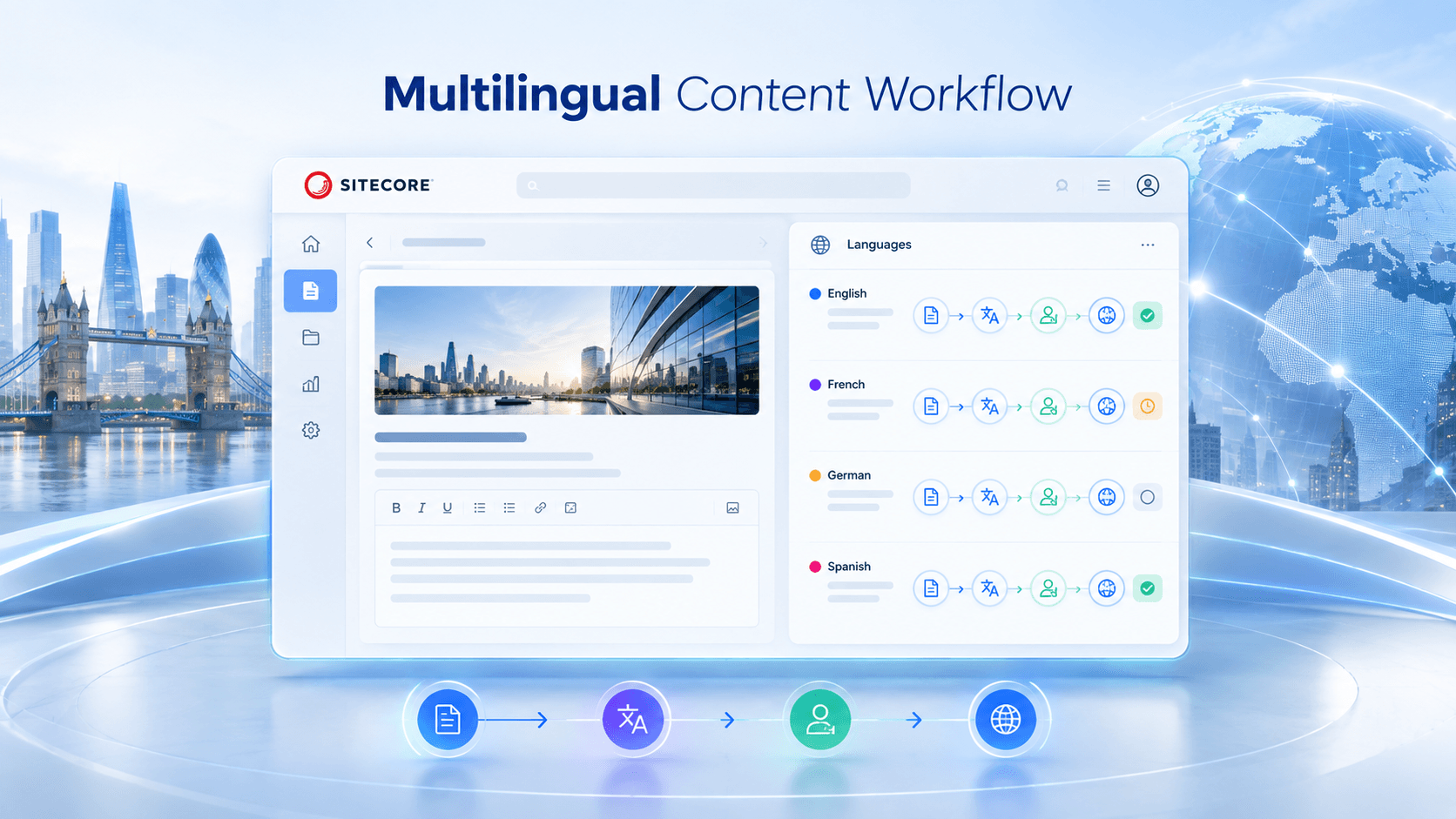

Sitecore total cost of ownership can include platform licensing or subscription, implementation, migration, integrations, development, frontend hosting, internal team costs, ongoing support, optimization and future modernization or upgrade work.
Calculate Sitecore 5-year cost by combining initial platform, implementation, migration and integration expenses with recurring subscription, hosting, development, support and optimization costs across Years 2 to 5. Include expected roadmap investment to avoid underestimating long-term ownership.
Sitecore developer cost depends on seniority, engagement model, location, project duration and required expertise. Specialist skills such as SitecoreAI, XM Cloud, JSS, Next.js, SXA, migration, integrations and architecture can affect development rates.
Sitecore migration cost depends on content volume, existing customizations, integrations, languages, media, SEO requirements and whether the frontend must be modernized. Moving a heavily customized XP or XM platform to a modern headless architecture can require significantly more work than a straightforward content migration.
Sitecore support budgets may cover production troubleshooting, bug fixes, monitoring, deployment assistance, performance optimization, integration maintenance, component development, technical debt reduction and continuous platform improvements.
Sitecore can be appropriate for organizations that need enterprise content management, multiple websites or markets, complex integrations, personalization and scalable digital experience capabilities. The business case should compare expected value, implementation complexity and five-year ownership cost against alternative platforms.
Document the required Sitecore products, websites, expected usage, languages, integrations, content volume, migration requirements, personalization, search, development model and support expectations before requesting a quote. A defined architecture makes commercial and implementation estimates easier to compare.