Custom Software Development for Businesses That Have Outgrown Excel, WhatsApp and Ready-Made Tools
In This Article
- Why Businesses Outgrow Excel, WhatsApp and Ready-Made Software
- How Custom Software Development Connects Business Operations
- What Business Software Development Should Include
- Ready to Replace Manual Work With Connected Workflows?
- MSI's Custom Web Application Development Approach
- Custom CRM and ERP Software Use Cases by Industry
- Business Automation Software Development: Real Project Proof
- Custom Software Development Cost and Timeline Factors
- Build Custom Business Software Before Manual Work Becomes the Bottleneck
- Frequently Asked Questions
- What is custom software development?
- When has a business outgrown Excel?
- Can custom software integrate with existing business tools?
- Do small businesses need custom software?
- What affects custom software development cost?
Outgrown Excel, WhatsApp and disconnected tools? Learn how custom software development can unify CRM, ERP, workflows, reporting and automation.
Excel works. WhatsApp works. Ready-made SaaS tools work.
Until the business grows faster than the tools supporting it.
When sales teams maintain separate spreadsheets, approvals happen inside WhatsApp groups, operations copy information between systems and management waits for manually prepared reports, the problem is no longer just productivity. The business lacks a connected operating system.
That is where custom software development can become a practical growth investment.
Why Businesses Outgrow Excel, WhatsApp and Ready-Made Software
Most growing businesses do not deliberately create fragmented operations.
They start small. Excel tracks customers or stock. WhatsApp handles communication. Another application manages billing. A CRM handles leads. Employees gradually add more tools whenever a new requirement appears.
Eventually, the business may face duplicate data entry, multiple versions of records, missed approvals, difficult audits, slow reporting and excessive dependency on employees who know where information is stored.
The issue is not that Excel or WhatsApp are bad tools. They simply were not designed to become the central workflow engine for a growing company.
Businesses reaching this stage should evaluate whether custom software development can create a more structured operational foundation.
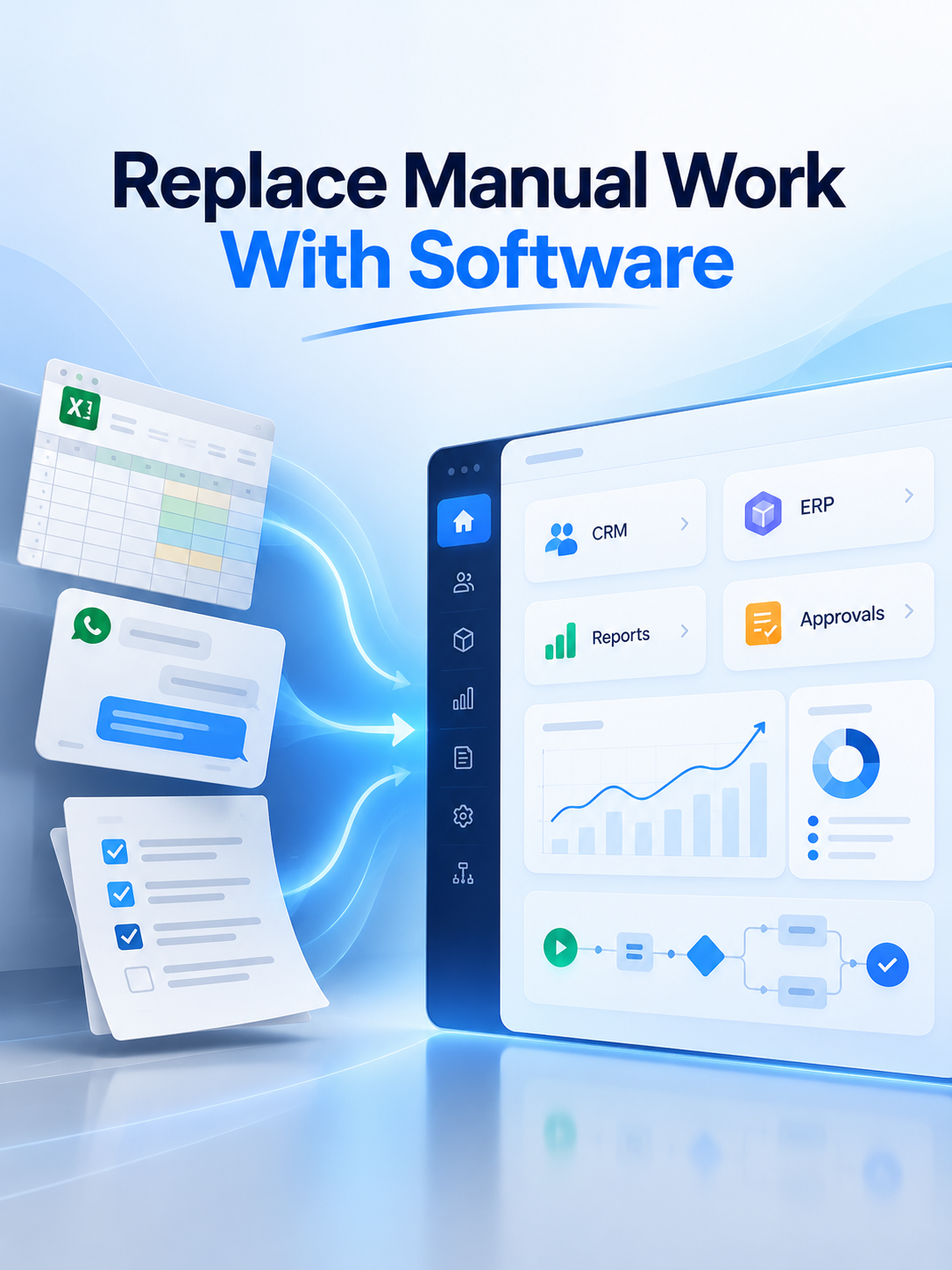
Replace Manual Work With Software
Build custom CRM, ERP, dashboards and workflow automation around your operations to reduce errors, improve visibility and scale confidently.
How Custom Software Development Connects Business Operations
Custom software does not necessarily mean replacing every application.
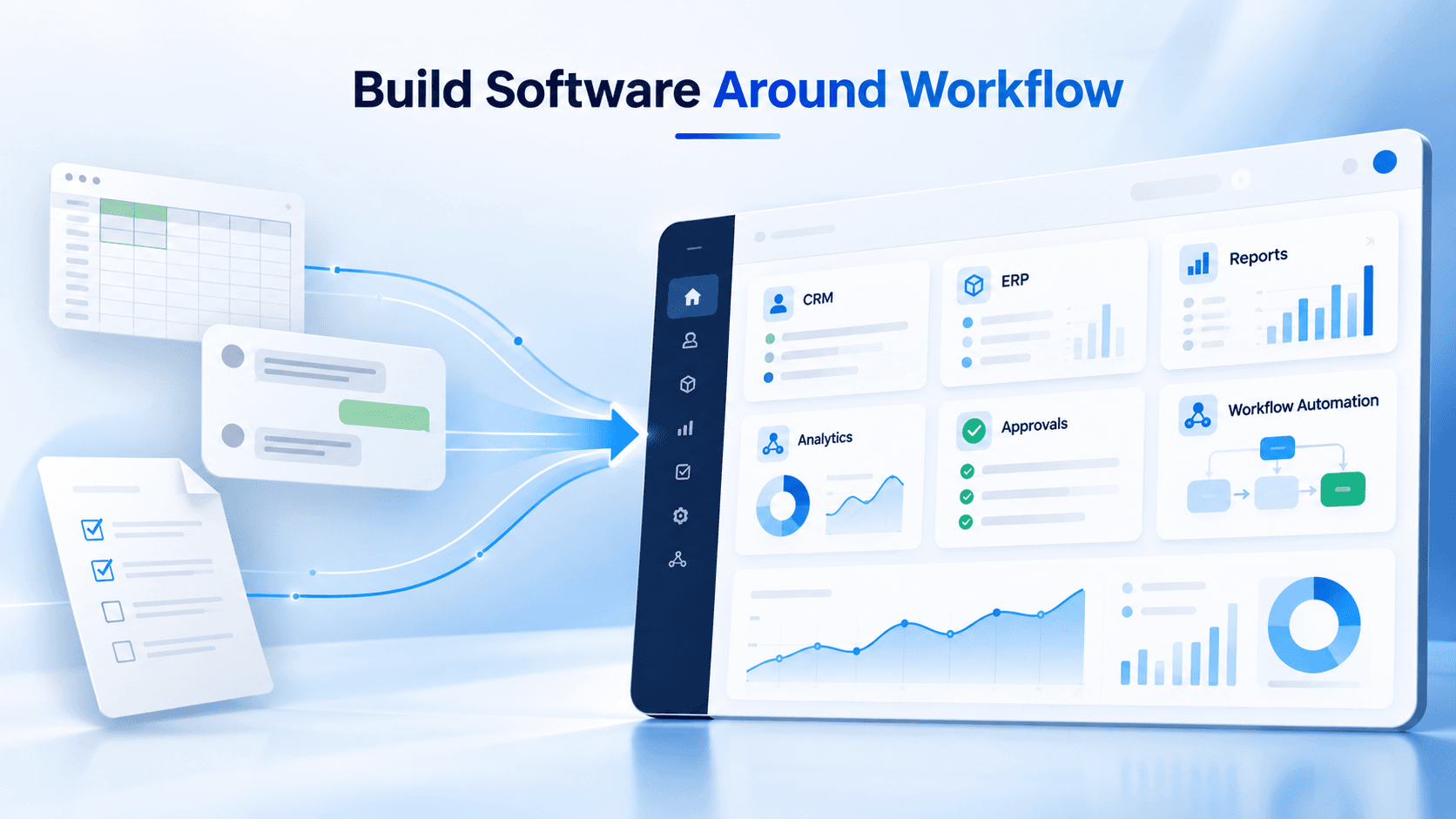
A better strategy may be to preserve systems that already work and build a business-specific platform around the workflows that create operational complexity.
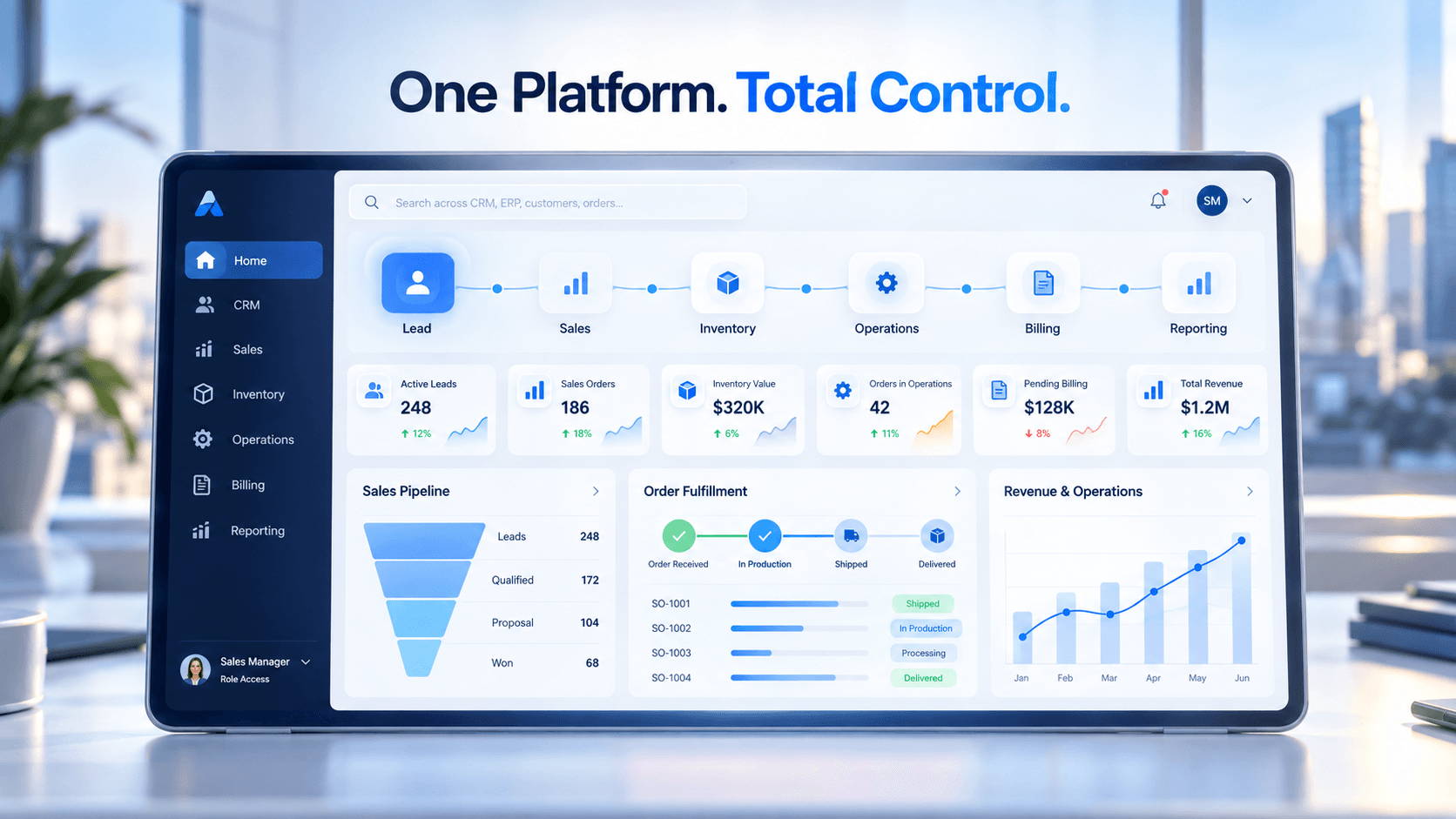
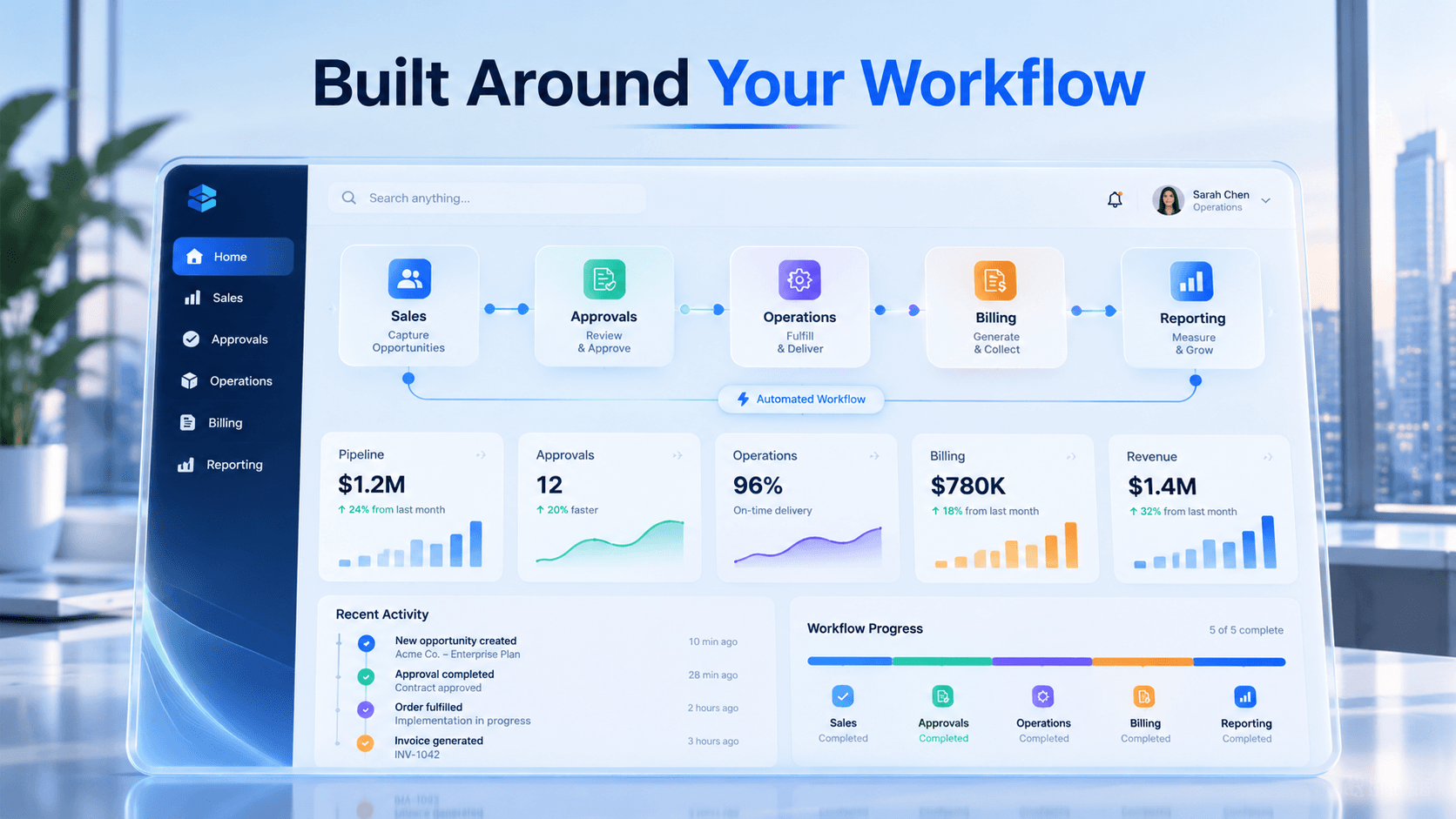
A custom web application can become the central layer connecting customers, sales, operations, finance, inventory, approvals and management reporting.
Instead of employees moving information manually between five applications, APIs and automated workflows can synchronize data while dashboards provide management with a consistent operational view.
This approach is especially valuable when standard software forces the business to change a process that provides competitive or operational advantage.
What Business Software Development Should Include
The right business software development project should begin with the workflow, not a feature catalogue.
Depending on the business, the platform may include:
- Custom CRM software for leads, customers, follow-ups and sales pipelines
- Custom ERP software for purchasing, inventory, operations and finance workflows
- Approval and escalation workflows
- Customer, vendor, dealer or employee portals
- Dashboards and management reporting
- Billing, order and inventory management
- Role-based access and audit history
- Notifications and task automation
- API integrations with existing CRM, ERP, payment or communication systems
- Mobile applications for employees, customers or field teams
The objective is not simply to digitize existing forms. It is to redesign how information moves through the organization.
Build Custom Software That Fits Your Growing Business Workflow
Ready to Replace Manual Work With Connected Workflows?
If spreadsheets, disconnected applications and manual reporting are becoming operational bottlenecks, MSI can help map the workflow and design a system around the way your business actually operates.
MSI's Custom Web Application Development Approach
Effective custom web application development starts before coding.
MSI's approach focuses on understanding existing workflows, users, bottlenecks, approvals, reports, integrations and future growth requirements.
The solution can then be divided into practical modules and delivery phases rather than attempting to build every possible feature at once.
This is particularly important for growing SMEs and enterprises because software must be usable by the people performing the work—not only technically impressive.
A phased approach also allows high-priority workflows to be implemented first while additional automation, integrations and analytics are introduced as the platform evolves.
Custom CRM and ERP Software Use Cases by Industry
Different industries outgrow generic software for different reasons.
Manufacturers may require quotation, costing, production, purchase, inventory and approval workflows connected together.
Retailers and distributors may need integrated POS, stock, purchasing, reporting and multi-location control. Businesses with these requirements can also explore retail POS, billing, ERP and inventory software.
Healthcare businesses may need appointment, patient, billing, laboratory, pharmacy and operational workflows connected through a controlled platform. See MSI's healthcare software development services.
Service companies, agencies and growing enterprises may instead need custom CRM, project workflows, customer portals, employee approvals or management dashboards.
The common requirement is the same: software should fit the operating model rather than forcing the operating model to fit the software.
Business Automation Software Development: Real Project Proof
Business automation becomes much easier to understand through actual workflow problems.
In one Salesforce and SAP integration case study, MSI developed middleware to synchronize CRM and ERP processes while supporting monitoring, retries and structured integration workflows.
Another expense claim management case study demonstrates how an Excel-driven reimbursement process could be transformed into centralized submissions, rules, approvals, dashboards and audit tracking.
A membership and community management application similarly shows the shift from manual member records and scattered communication toward a centralized web platform.
These examples illustrate an important principle: custom software creates the most value when it removes specific operational friction.
Custom Software Development Cost and Timeline Factors
There is no meaningful single price for custom software.
Cost and timeline depend on workflow complexity, modules, number of user roles, integrations, mobile requirements, reporting, data migration, security, UI/UX requirements and deployment architecture.
A focused internal workflow application may require significantly less development than a multi-module enterprise software development project integrating CRM, ERP, mobile applications and external systems.
Businesses planning an initial budget can use MSI's software development project cost calculator to estimate a potential cost range and delivery timeline before detailed discovery.
Turn Manual Business Processes Into Connected Automated Software
Build Custom Business Software Before Manual Work Becomes the Bottleneck
The strongest reason to build custom software is not because custom technology sounds more advanced.
It is because operational complexity has reached the point where existing tools are slowing the business down.
If teams repeatedly copy information, search WhatsApp conversations, maintain parallel spreadsheets, wait for manual reports or adapt important processes around software limitations, it may be time to create a connected operational platform.
The goal is simple: one system built around the workflow, data and decisions that matter to your business.
Frequently Asked Questions
What is custom software development?
Custom software development creates applications around a company's specific workflows, users, integrations, reporting and operational requirements instead of relying entirely on generic software.
When has a business outgrown Excel?
Common signs include duplicate spreadsheets, manual consolidation, broken formulas, weak access control, repetitive data entry and difficulty producing reliable real-time reports.
Can custom software integrate with existing business tools?
Yes. Where supported by the existing platforms, APIs, webhooks or middleware can connect CRM, ERP, billing, payments, communication and other business systems.
Do small businesses need custom software?
Not every small business does. Custom software becomes more relevant when unique workflows, manual work, disconnected systems or growth make generic tools inefficient.
What affects custom software development cost?
Major factors include features, modules, integrations, users, platforms, data migration, security, workflow complexity, reporting, UI/UX and long-term scalability.
Frequently Asked Questions
When should a business move from Excel to custom software?
A business should consider custom software when spreadsheets require frequent manual updates, duplicate data entry, complex formulas, manual consolidation, multiple versions or extensive employee knowledge to operate reliably.
Why do growing businesses outgrow WhatsApp for operations?
WhatsApp is useful for communication but is not designed for structured workflows, approvals, audit trails, centralized reporting, role-based access or reliable business process management.
What is custom software development?
Custom software development is the process of designing and building software around a company's specific workflows, users, integrations, reporting needs and operational requirements.
What types of custom business software can be developed?
Businesses can build custom CRM systems, ERP platforms, customer portals, employee applications, approval systems, dashboards, billing platforms, inventory systems, reporting tools and workflow automation solutions.
Is custom software better than ready-made software?
Custom software is not always better. Ready-made software works well for standardized requirements, while custom software is more suitable when unique workflows, integrations, reporting or scalability requirements cannot be handled efficiently by standard tools.
Can custom software integrate with existing CRM and ERP systems?
Yes. Custom applications can integrate with supported CRM, ERP, payment, accounting, communication and third-party platforms through APIs, middleware, webhooks and other integration methods.
What are the benefits of business automation software?
Business automation software can reduce repetitive manual work, improve process consistency, centralize data, accelerate approvals, improve reporting visibility and reduce dependency on individual employees.
How much does custom software development cost?
Custom software development cost depends on features, workflow complexity, integrations, user roles, platforms, data migration, security, reporting requirements, UI and deployment architecture.
How long does custom software development take?
Development timelines depend on project scope and complexity. A focused workflow application may be delivered faster than a large multi-module CRM, ERP or enterprise platform requiring extensive integrations and migration.
How should a business start a custom software project?
Start by documenting current workflows, bottlenecks, users, data sources, approval steps, reports and integration requirements. Prioritize the highest-value workflows and implement the platform in manageable phases.