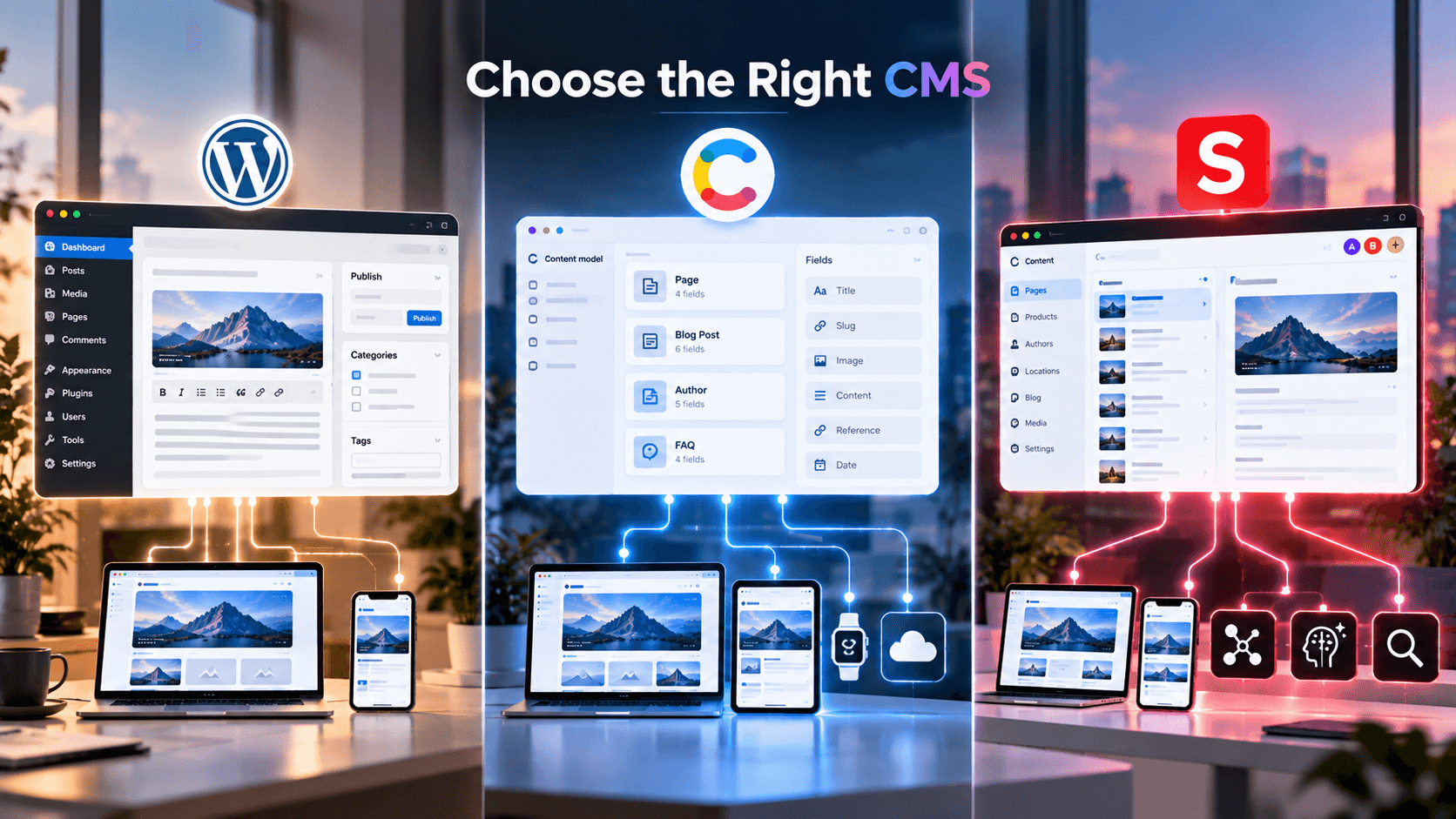
Sanity CMS vs WordPress vs Contentful: What Should Growing Businesses Choose?
In This Article
- Choosing a CMS becomes harder as a business grows.
- WordPress: Familiar and Practical for Website-Led Businesses
- Contentful: Structured Headless CMS With Enterprise Maturity
- Sanity: Structured Content With Greater Workflow Customization
- Sanity CMS vs WordPress vs Contentful: Quick Comparison
- Compare Content Workflow Before Features
- Compare total cost, not only the subscription to CMS
- Developer Experience Matters as You Scale
- Which CMS Is Better for AI Readiness?
- When Should You Choose Sanity CMS?
- Choosing a Headless CMS Development Partner
Choosing a CMS becomes harder as a business grows.
A platform that is perfect for a five-page marketing website may not scale well when you need to add multiple markets, content for the product catalog, localization, mobile experience, integrations, personalization, or AI-powered search.
That is why decision-makers comparing Sanity CMS vs WordPress or Sanity vs Contentful should focus on more than just the features.
The right choice should be made considering how teams produce content, where this content will be used, how much flexibility you will need, and what to expect from the platform in a few years' time.
Here is a practical comparison of headless CMS for growing businesses.
WordPress: Familiar and Practical for Website-Led Businesses
WordPress remains attractive because content teams understand the publishing model, its ecosystem is extensive, and businesses can launch conventional websites without designing an entirely new content architecture.
It can work well when your main requirement is:
- A corporate website
- Blog publishing
- Landing pages
- Standard marketing content
- Familiar visual editing
- A large plugin ecosystem
The challenge appears as digital requirements expand.
Custom post types, plugins, themes, page builders, integrations, security updates, and custom development can create increasing operational complexity.
WordPress can also operate headlessly, but businesses then need to decide whether maintaining WordPress as the content backend provides enough advantage compared with adopting a platform designed around structured content and API delivery from the beginning.
Contentful: Structured Headless CMS With Enterprise Maturity
Contentful takes a different approach.
It is built around structured content and API-driven delivery rather than traditional website templates.
That makes it suitable for organizations managing content across websites, applications, ecommerce experiences, regional properties, and other channels.
Its standardized hosted interface and established enterprise capabilities can appeal to larger organizations seeking predictable governance and established processes.
For growing businesses, however, the decision often comes down to how much customization they need around editorial workflows and development.
Contentful gives teams a structured headless foundation, while Sanity takes a more code-configurable approach to content models and the editorial interface.
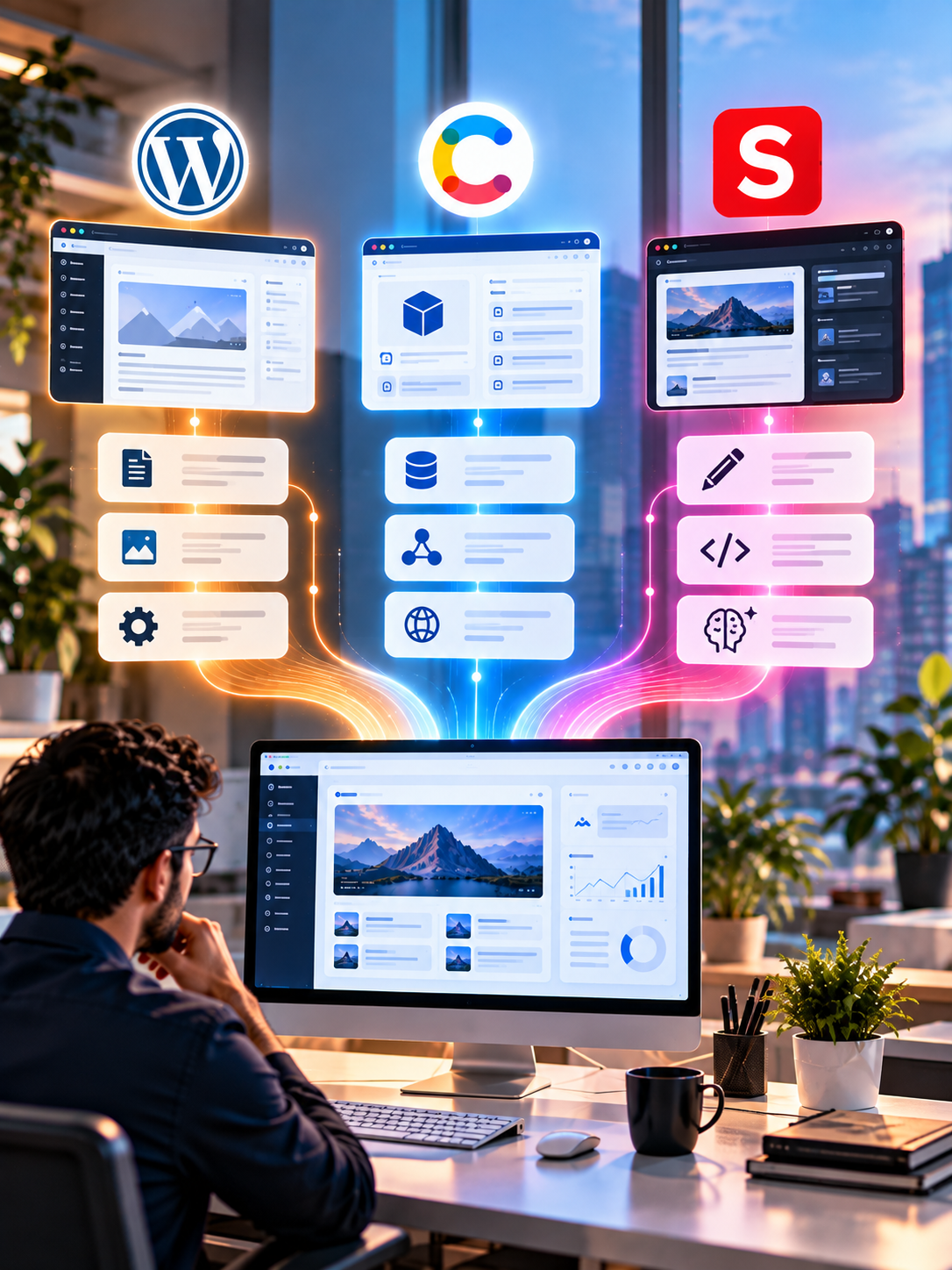
Choose a CMS That Scales
Build a flexible content platform with structured data, Next.js performance, faster workflows, and architecture ready for future growth.
Sanity: Structured Content With Greater Workflow Customization
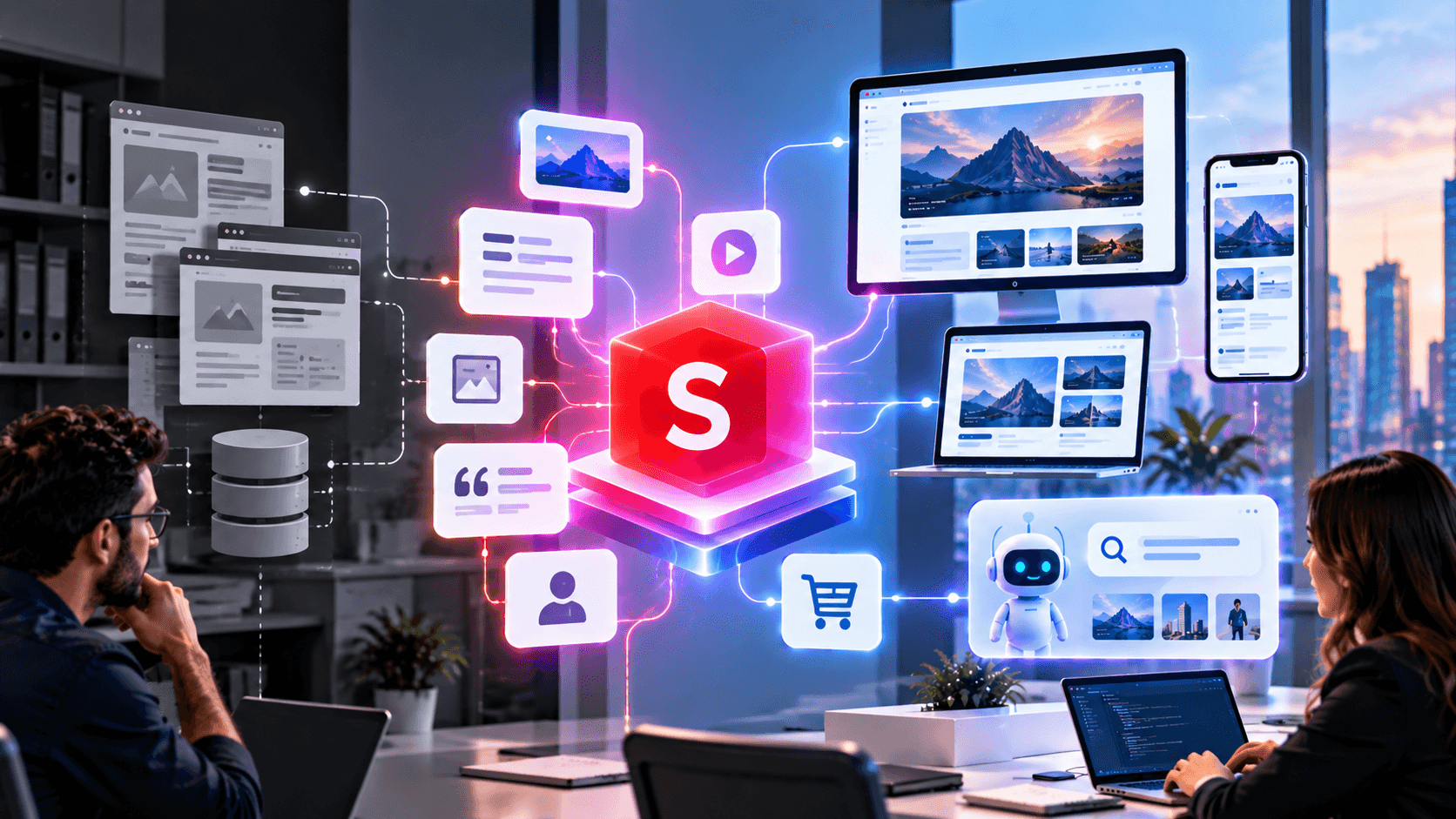
Sanity is also often headless, but their philosophy focuses more on viewing content as structured, reusable data.
Rather than forking over all your data to a database that's then turned into a webpage, companies can create their own database entries for:
- Products
- Services
- Authors
- Locations
- FAQs
- Testimonials
- Case studies
- Industries
- SEO information
- Calls to action
These can all be referenced in sites and other applications, landing pages, and search features, and AI-friendly systems.
Sanity Studio can be tweaked to match your company's actual workflow, instead of shoving everyone into a CMS administration space.
Companies weighing the pros and cons should check out these sanity cms development services for US businesses to explore structured content, Next.js, migrations, and AI-friendly architecture.
Sanity CMS vs WordPress vs Contentful: Quick Comparison
| Factor | WordPress | Contentful | Sanity |
|---|---|---|---|
| Traditional website publishing | Strong | Headless-focused | Headless-focused |
| Structured content | Possible | Strong | Strong |
| Editorial familiarity | High | Structured interface | Highly customizable |
| Content reuse | Moderate to strong | Strong | Strong |
| Developer flexibility | High with customization | Strong | Very strong |
| Frontend freedom | Theme or headless | Headless | Headless |
| Custom editorial workflows | Plugin/custom development | Configurable | Highly customizable |
| Next.js fit | Possible | Strong | Strong |
| Multi-channel delivery | Possible | Strong | Strong |
| AI-ready content architecture | Requires deliberate modelling | Strong foundation | Strong foundation |
The table should not be interpreted as a universal winner.
The important question is which architecture matches your operating model.
Compare Content Workflow Before Features
Your editors will use the CMS far more often than executives selecting it.
Before choosing a platform, map the real workflow:
Who creates content?
Who approves it?
How many markets use it?
Does information repeat across pages?
Do multiple teams edit the same content?
Does the same content need to reach websites, applications, product interfaces, or AI systems?
WordPress may be simpler for a conventional website publishing team.
Contentful provides structured workflows within a standardized SaaS experience.
Sanity can be especially compelling when businesses want the editorial workspace customized around their own content operations.
For UK teams considering that model, these Sanity CMS development services for UK businesses provide further implementation guidance.
Compare total cost, not only the subscription to CMS
The cost of CMS is often underestimated.
Only the subscription to the platform is not enough; businesses should also consider
the expenses related to hosting,
development and plugins/add-ons,
migration and maintenance,
integrations, and support.
While WordPress software may be cheap or even free to install, a complex site with extensive functionality may require additional investments in premium extensions, hosting, maintenance, security, and development. At the same time, the headless CMS may reduce the complexity of the frontend part and thus the cost of developing and maintaining it, but the overall cost of the system may still be high due to the need for complex frontend programming.
The CMS such as Sanity or Contentful, which uses the SaaS (software as a service) subscription model, have costs that vary depending on the chosen plan, number of users, specific CMS tools, and enterprise needs. Therefore, when comparing the cost of different solutions, it is essential to look at the value of a three-year contract rather than the cheapest available option.
Find CMS SEO Risks Before Your Next Migration Begins
Developer Experience Matters as You Scale
Growing companies eventually discover that CMS decisions affect engineering velocity.
WordPress developers typically work across PHP, themes, plugins, APIs, and frontend technologies depending on the architecture.
Contentful gives developers established APIs and an ecosystem designed around headless delivery.
Sanity combines schema-as-code configuration with GROQ queries and a customizable Studio built around modern web development patterns.
That can be particularly useful for teams working with React and Next.js.
If your roadmap includes extensive custom content relationships, unusual workflows, or multiple frontend applications, developer flexibility deserves significant weight in the decision.
Which CMS Is Better for AI Readiness?
No CMS automatically makes a company visible in AI search.
AI readiness depends on content quality, entity clarity, accessibility, authority, metadata, technical implementation, and how easily machines can retrieve useful information.
However, structured content provides an important foundation.
Instead of burying a product, service, person, FAQ, or location inside one large webpage, structured CMS platforms allow those concepts to exist as explicit entities with relationships.
That content can then be reused through APIs for:
- AI assistants
- Search experiences
- Recommendation engines
- Knowledge applications
- Websites
- Mobile products
- Answer-engine experiences
This is one reason businesses evaluating long-term content architecture increasingly consider headless platforms.
When Should You Choose Sanity CMS?
You should seriously evaluate Sanity when your business needs structured reusable content, customized editorial workflows, multiple digital channels, Next.js development, sophisticated integrations, or an architecture designed to evolve.
A Sanity CMS migration can make particular sense when your current CMS has accumulated duplicated content, developer-dependent workflows, rigid templates, or growing plugin and maintenance complexity.
But migration should not simply replicate your old CMS.
Audit your content first, redesign the content model, protect existing SEO signals, and migrate only what creates value.
Choosing a Headless CMS Development Partner
While selecting the right platform is important, choosing a proficient partner is even more so.
A competent headless CMS development partner will assist in considering content architecture, frontend requirements, migration, SEO, integrations, editorial experience, deployment, and maintenance prior to development commencing.
For businesses selecting Sanity CMS as their preferred CMS, experience with Sanity Studio, schema design, GROQ, Next.js, visual editing, APIs, migration, technical SEO, and ongoing optimization is required.
US, UK, and European companies launching a new implementation or CMS migration could collaborate with a Sanity CMS development company to design the architecture, migration approach, frontend, integrations, and content workflows in tandem with the new headless CMS.
The best CMSs are not the ones with the most features.
They provide the right amount of structure to your content and development team for the present while still allowing you to build what you need for the future.
Frequently Asked Questions
Is Sanity CMS better than WordPress?
Neither platform is universally better. WordPress is often practical for conventional website publishing and familiar editorial workflows, while Sanity is designed around structured content, API delivery and customizable editorial experiences. Sanity may be a stronger fit when a business needs multiple channels, reusable content or a modern headless architecture.
What is the main difference between Sanity and Contentful?
Both are headless content platforms, but their approaches differ. Contentful provides a more standardized SaaS editing environment, while Sanity emphasizes schema-as-code content modelling, GROQ querying and a highly customizable Sanity Studio editing experience.
Which CMS is best for a growing business?
The right CMS depends on the business model. WordPress can suit website-led organizations, Contentful can suit structured enterprise headless requirements, and Sanity can suit businesses that need reusable structured content, customized workflows, multiple channels and strong developer flexibility.
Is Sanity CMS good for Next.js?
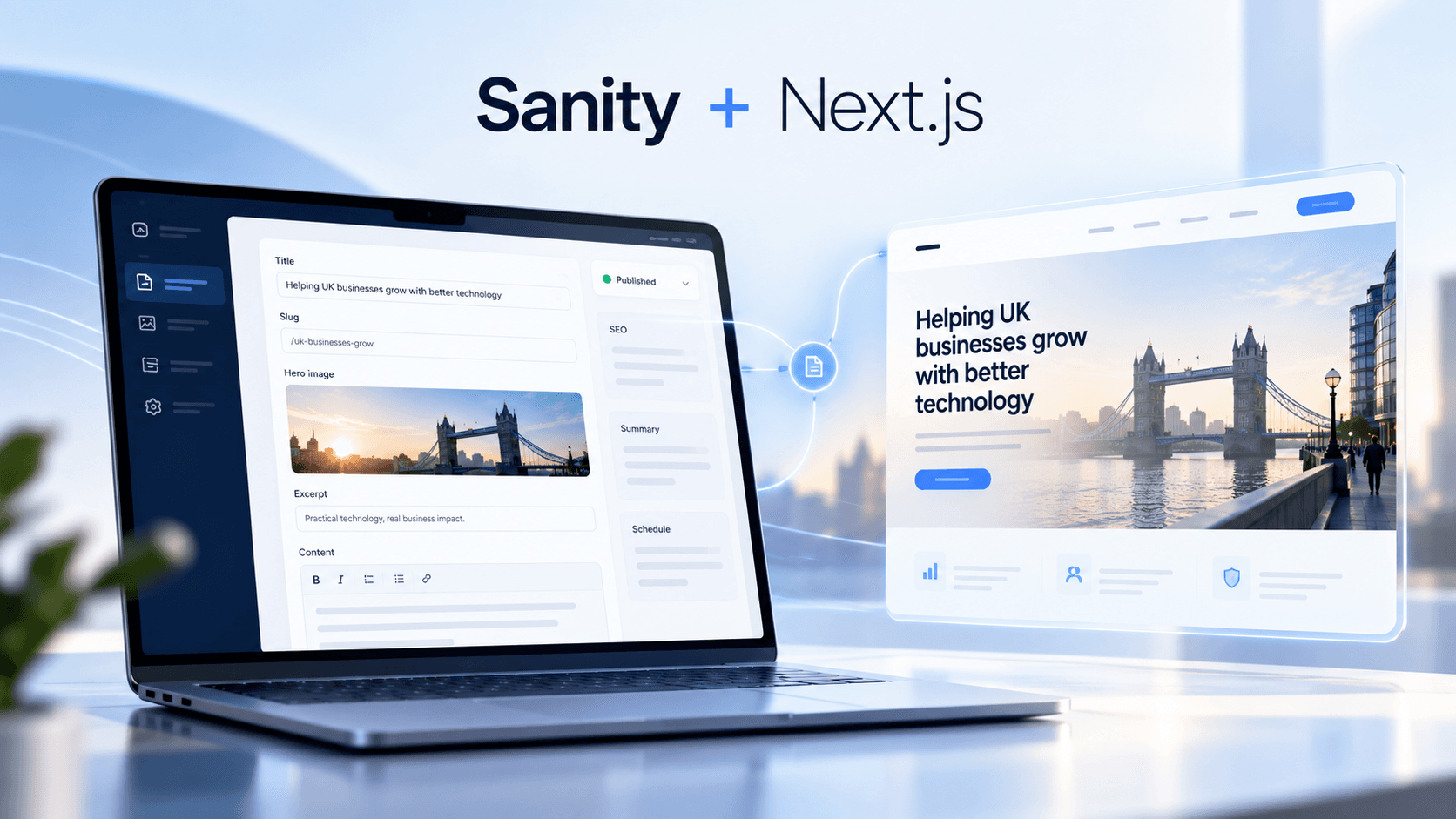
Yes. Sanity is commonly paired with Next.js because Sanity manages structured content while Next.js handles frontend rendering, routing, components and application functionality. The architecture gives developers significant control over frontend performance and user experience.
Is Sanity CMS good for SEO?
Sanity can support strong SEO when developers implement crawlable rendering, editable metadata, canonical URLs, structured data, sitemaps, internal linking and performance optimization. The CMS itself does not guarantee rankings.
Is WordPress cheaper than Sanity or Contentful?
Initial software or subscription costs do not represent total ownership cost. Businesses should compare hosting, development, plugins or add-ons, maintenance, security, migration, integrations and support over several years before deciding which platform is less expensive.
Should I migrate WordPress to Sanity CMS?
Consider migrating when WordPress has become restrictive because of duplicated content, plugin complexity, developer-dependent workflows, multiple digital channels or the need for more structured content. A straightforward website with simple publishing requirements may not require migration.
How difficult is a Sanity CMS migration?
Migration complexity depends on content volume, existing schemas, URLs, media, integrations, frontend architecture and SEO requirements. A typical migration includes content auditing, schema design, transformation, import, frontend development, redirect mapping, validation and launch monitoring.
Which CMS is better for AI-ready content?
Structured headless platforms can provide a strong foundation because services, products, FAQs, people and other entities can be modelled explicitly and exposed through APIs. Actual AI visibility also depends on content quality, authority, accessibility, metadata and technical implementation.
How do I choose a headless CMS development partner?
Look for experience in content architecture, CMS implementation, frontend frameworks, migration, integrations, SEO, performance and long-term support. For Sanity projects, also evaluate Sanity Studio customization, schema design, GROQ, Next.js and visual editing expertise.