Sanity CMS
Sanity CMS Development Services for US Businesses
PPrem M.6 Min Read
US businesses need websites that do more than display information. Modern digital platforms must support marketing campaigns, mobile applications, ecommerce, multilingual content, AI assistants and continuous growth.
However, traditional content management systems often create bottlenecks. Marketing teams depend on developers for routine updates, content becomes fragmented across channels, and integrating new technologies requires additional engineering.
This is where Sanity CMS development services can help.
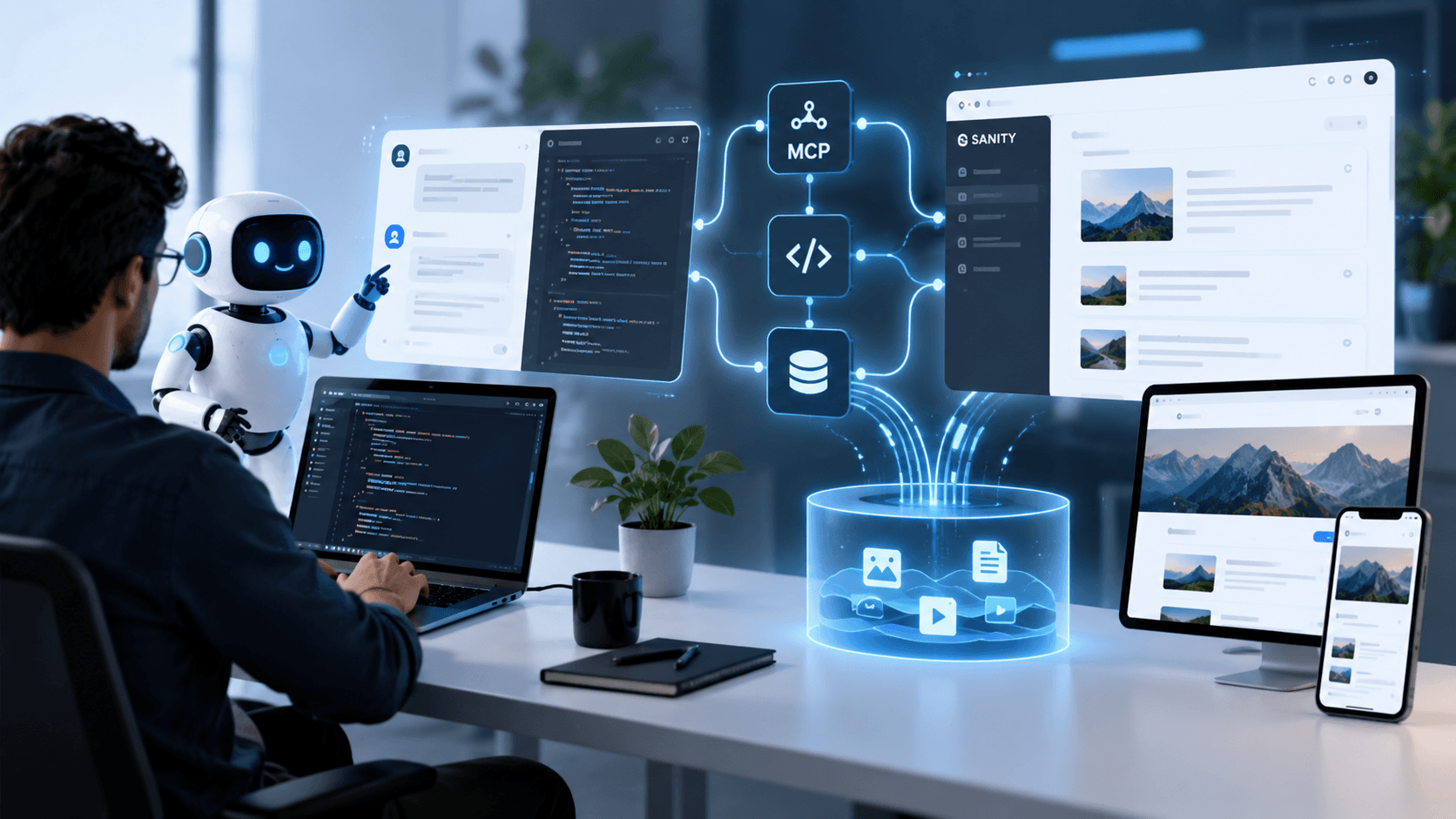
Sanity combines structured content, customizable editorial workflows and API-driven delivery. When paired with Next.js and AI-ready content architecture, it provides a foundation for modern websites, applications and connected digital experiences.
For US startups, SaaS companies, digital agencies and enterprises, choosing the right Sanity development company means building a content platform that supports current business requirements and future expansion.

Unlike traditional page-centric platforms, headless CMS architecture separates content management from frontend presentation.
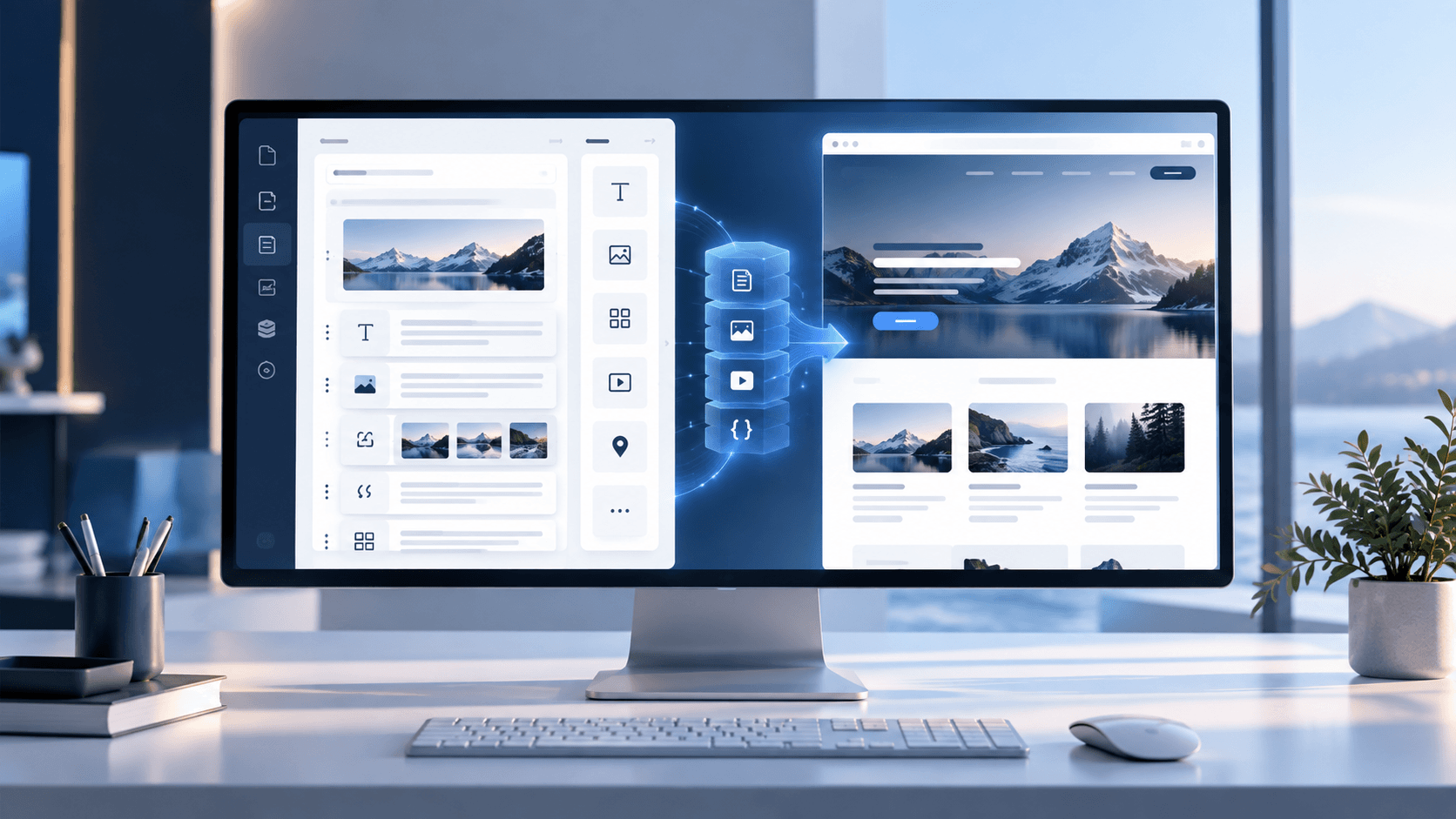
Content is stored as structured, reusable information rather than being locked inside individual website pages. Businesses can publish it across websites, mobile applications, customer portals and other digital channels through APIs.
Sanity offers several important capabilities:
Structured content models that reduce duplication and improve consistency.
Customizable Sanity Studio experiences aligned with editorial workflows.
API-driven content delivery for modern web and mobile applications.
Collaborative editing, content releases and configurable publishing processes.
Integration opportunities for ecommerce, CRM, automation and AI applications.
For enterprises managing multiple brands, regions or digital products, this separation allows content operations to evolve without rebuilding every frontend experience.
Sanity+1
A professional Sanity CMS development agency should deliver more than installation and configuration.
The objective is to create a complete content architecture aligned with business operations, editorial requirements and customer experiences.
Every business manages content differently.
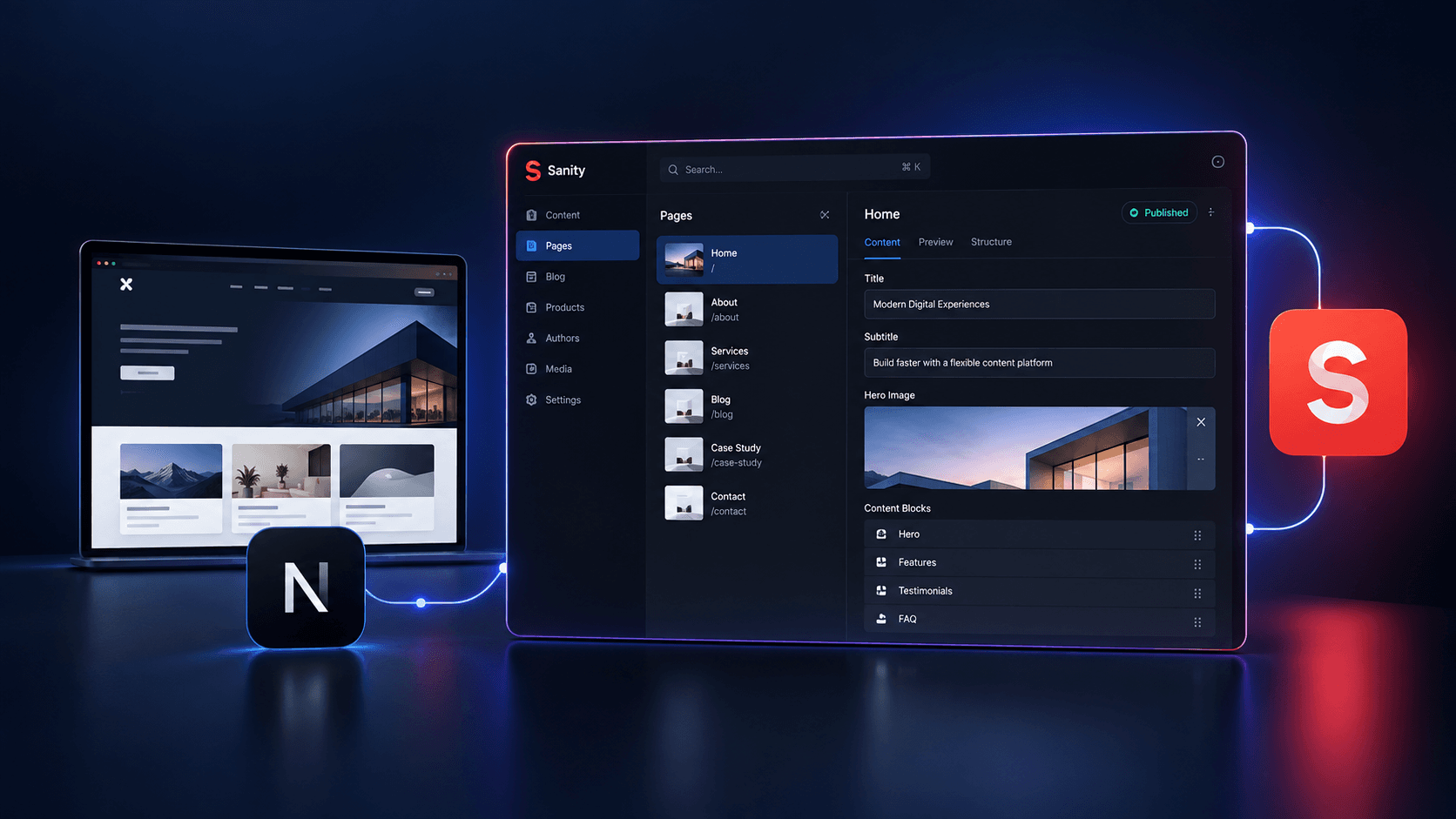
Custom Sanity Studio development allows organizations to create structured schemas, reusable components, custom editing interfaces, validation rules and tailored publishing workflows.
For example, a multi-location healthcare organization could manage hospital profiles, doctors, departments, services, FAQs and location-specific information through a centralized content platform.
Marketing teams gain greater publishing control while developers maintain consistent content structures.
Combining Sanity with Next.js allows businesses to build custom websites while managing their content independently.
Next.js handles the frontend experience, routing, rendering and application functionality. Sanity manages structured content, media and editorial operations.
With properly implemented caching, revalidation and server rendering, this architecture can support fast, SEO-friendly websites.
Visual Editing can also allow content teams to preview changes directly within the website experience.
Sanity Docs+1
Explore our Sanity + Next.js development services for custom websites, SaaS marketing platforms and enterprise applications.
Modern websites rarely operate independently.
Sanity can connect with ecommerce platforms, CRMs, analytics services, payment gateways, search solutions and custom business applications.
For example, an ecommerce business could manage editorial and marketing content in Sanity while maintaining commerce transactions within its existing system.
Custom GROQ queries, APIs and integrations make structured content available wherever the business needs it.
AI-ready content architecture is becoming an important consideration for businesses modernizing their digital platforms.
Sanity enables developers to organize content into defined entities, fields and relationships, making information easier to retrieve, reuse and process programmatically.
Businesses can introduce AI-assisted content generation, translation, summarization, metadata suggestions and editorial automation.
For example, a structured service-page document might contain its service description, target audience, key facts, frequently asked questions, location information and SEO metadata.
These fields can support websites, search interfaces and retrieval-based AI applications without requiring separate copies of the same information.
Human editorial review remains essential for accuracy, brand consistency and sensitive business information.
Search visibility now extends beyond conventional search-result listings. Businesses also want their content to provide useful answers in AI-assisted discovery experiences.
Sanity can support this strategy through structured content models containing descriptive titles, metadata, factual summaries, FAQs, author information and relevant internal relationships.
Three complementary disciplines are involved:
SEO Search Engine Optimization: Create useful, technically accessible pages with appropriate metadata, internal links and content that satisfies search intent.
AEO Answer Engine Optimization: Provide clear, self-contained answers to important customer questions, supported by relevant context.
GEO Generative Engine Optimization: Make authoritative information understandable and easy to retrieve, with original expertise, factual accuracy and clear entity relationships.
Sanity provides the content-management foundation, while frontend engineering, editorial quality and technical SEO determine how effectively that content is published.
Structured fields alone do not guarantee search rankings or AI citations.
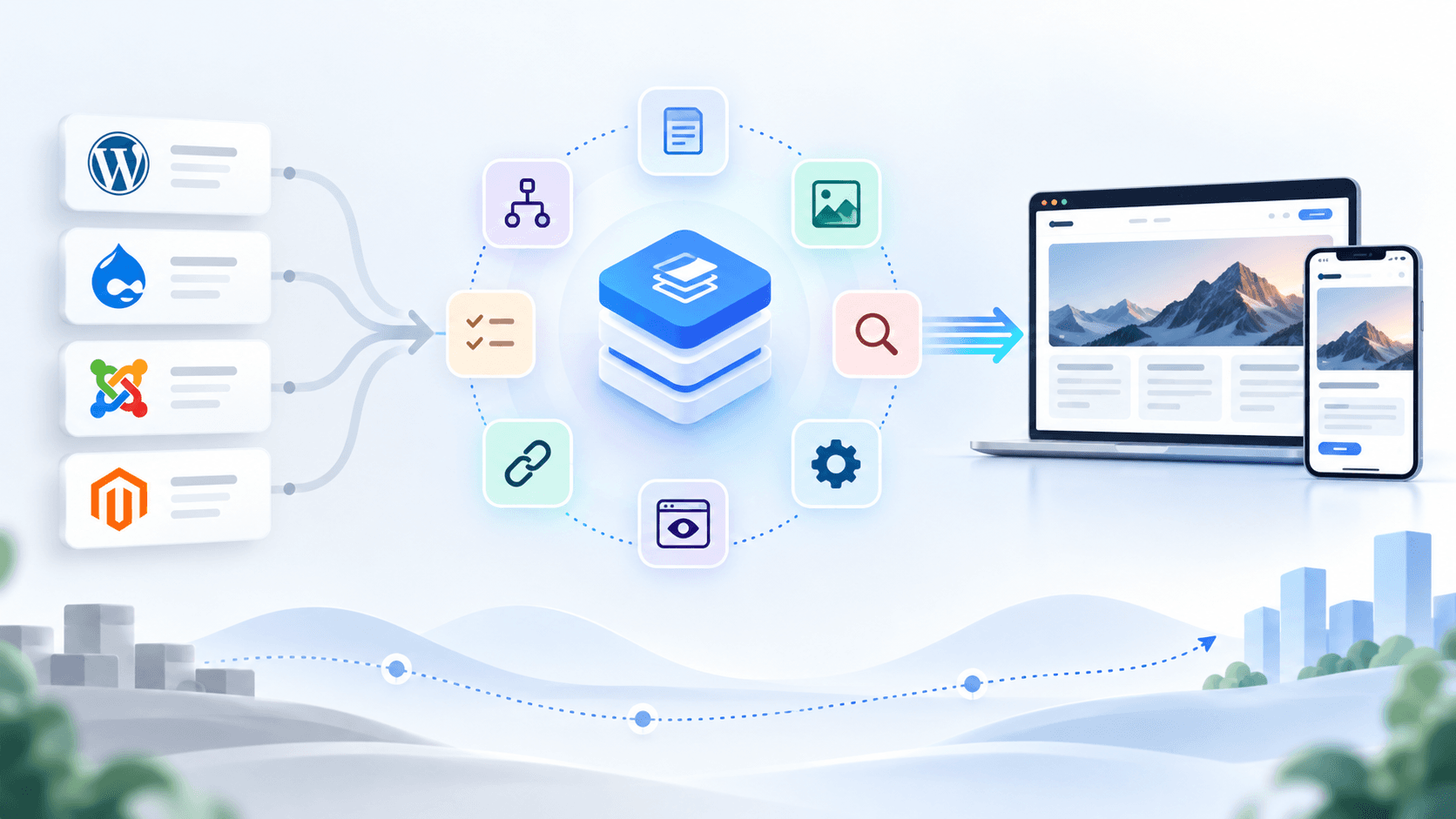
Legacy CMS migration requires more than transferring articles between platforms.
Businesses must evaluate existing content models, URLs, media, metadata, internal links, integrations and editorial processes before migration.
A structured migration typically involves content auditing, schema mapping, data transformation, frontend development, redirect planning, validation and a controlled launch.
Maintaining important URLs where practical, testing redirects and verifying canonical tags help protect existing organic-search visibility.
A phased migration may be appropriate for larger websites that cannot interrupt normal publishing operations.
Explore our headless CMS development services to plan a flexible content architecture.
At Murmu Software Infotech, we migrated our own website from a developer-dependent content administration system to Sanity CMS with Next.js.
Previously, routine content updates often required developer involvement and could take approximately two to four hours.
After the migration, many routine changes could be completed in seconds or minutes through structured editorial workflows.
We also introduced reusable content models, multilingual publishing capabilities, AI-ready fields and content access for AI-oriented workflows.
This experience demonstrates how CMS modernization can change the relationship between marketing and engineering teams.
Read our Sanity + Next.js migration case study .
When evaluating Sanity development services providers, look beyond technology lists and promotional claims.
Ask prospective partners to demonstrate relevant projects, explain their content architecture, show customized Studio workflows and discuss how they handle migrations, integrations and ongoing support.
For US companies working with an offshore Sanity development agency, clear technical ownership, communication, milestone demonstrations and documented delivery processes are particularly important.
A flexible engagement may begin with a CMS audit, discovery workshop, migration assessment or small development project before expanding into a dedicated team.
At Murmu Software Infotech, our Sanity CMS development services cover content modeling, Studio customization, Next.js engineering, integrations, migration, AI content workflows and ongoing support.
Build a content platform that gives your marketing team more control while allowing your engineering team to focus on delivering business value.
Sanity CMS development services include structured content modeling, custom Sanity Studio development, API integration, Next.js website development, migration, AI content workflows and ongoing platform support.
Sanity allows businesses to manage structured content centrally and distribute it across websites, mobile applications and other channels. Customizable workflows help marketing and development teams collaborate.
Development costs depend on content complexity, frontend requirements, integrations, migration scope and support needs. A technical discovery process helps define requirements and prepare an accurate project estimate.
Yes. Sanity manages structured content and APIs, while Next.js handles frontend rendering, routing and application functionality. The integration supports custom websites, visual editing and performance optimization.
Yes. Developers can customize schemas, editing interfaces, validation, document organization and publishing workflows to suit different departments, industries and content-management requirements.
Sanity supports structured SEO metadata, FAQs, reusable facts and answer-ready content. Effective search visibility also requires accessible frontend rendering, original content, technical SEO and ongoing optimization.
Yes. Sanity can support AI-assisted content creation, translation, summarization and enrichment through supported tools and integrations. Human review and appropriate permissions remain important for reliable publishing.
A carefully planned migration can help preserve organic-search visibility through URL mapping, redirects, metadata preservation, content validation and technical testing. However, search rankings cannot be guaranteed.
Sanity supports enterprise content architectures, customizable editorial workflows, structured data and multichannel delivery. Organizations should assess plan-specific security, access-control, governance and support requirements.
Evaluate relevant case studies, Sanity Studio expertise, Next.js capabilities, integration experience, migration methodology, communication and ongoing support. Request technical discussions and examples of completed work.