Healthcare Tech
Medical ERP and Diagnostic LIMS Software for US Healthcare Operations
PPrem M.5 Min Read
Managing a modern healthcare organization involves more than patient appointments and medical records. Clinics, diagnostic centers and healthcare groups must coordinate doctors, laboratory technicians, patient information, billing, test results and administrative operations.
When these activities depend on disconnected applications, spreadsheets and manual processes, staff face duplicated work, delayed reporting and limited operational visibility.
Medical ERP and diagnostic LIMS software can connect these workflows within a centralized digital healthcare ecosystem.
For US clinics, pathology laboratories and multi-location healthcare organizations, custom medical ERP development offers an opportunity to streamline daily operations while integrating existing electronic health records, diagnostic equipment and patient engagement platforms.
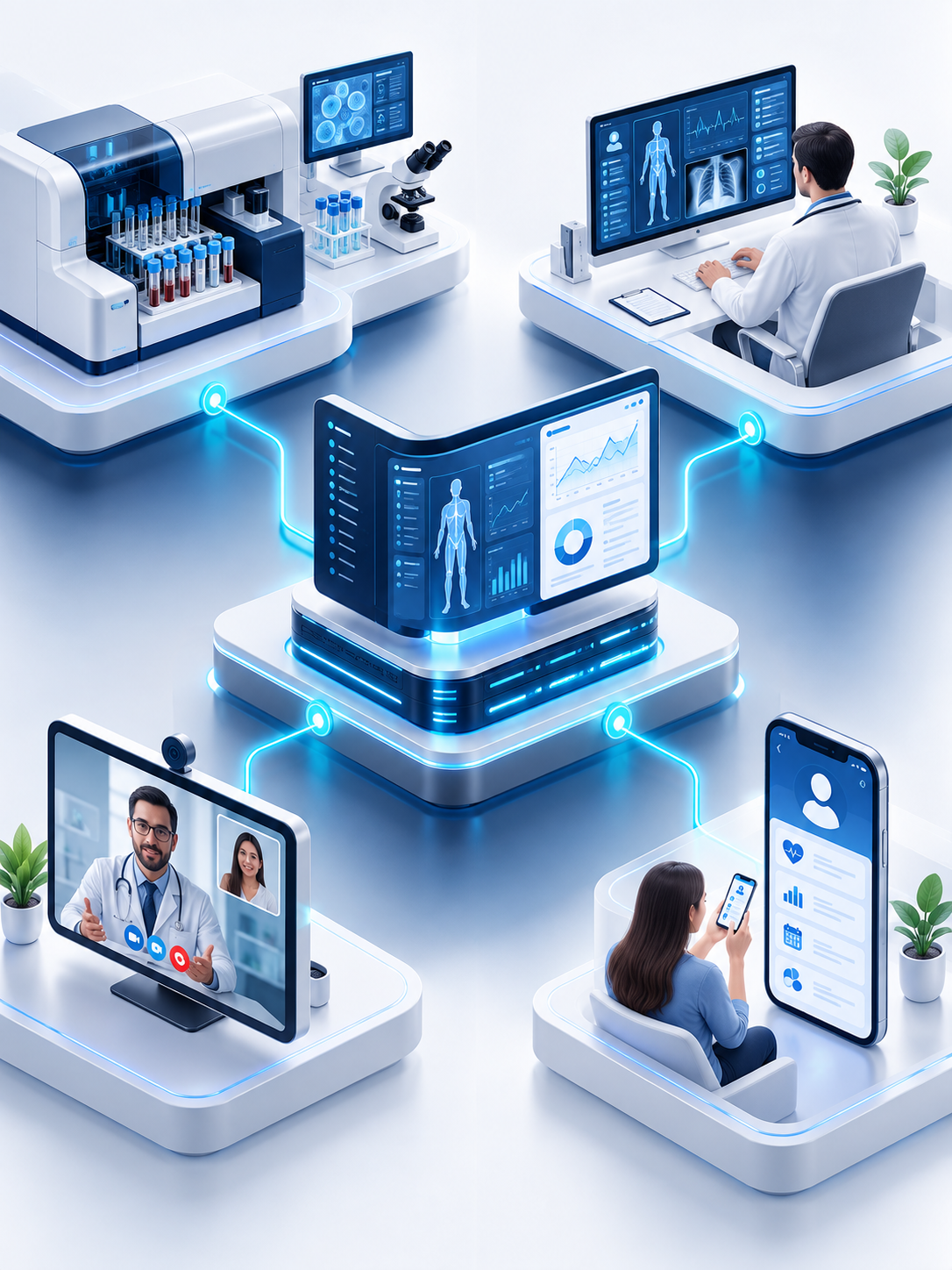
Build a unified medical ERP connecting appointments, diagnostic laboratories, billing, patient reports and telemedicine for efficient healthcare operations.
Medical ERP software connects administrative, financial and operational processes across a healthcare organization.
Instead of managing appointments, diagnostic orders, inventory, billing and reporting through separate systems, an integrated platform gives authorized staff a coordinated view of operations.
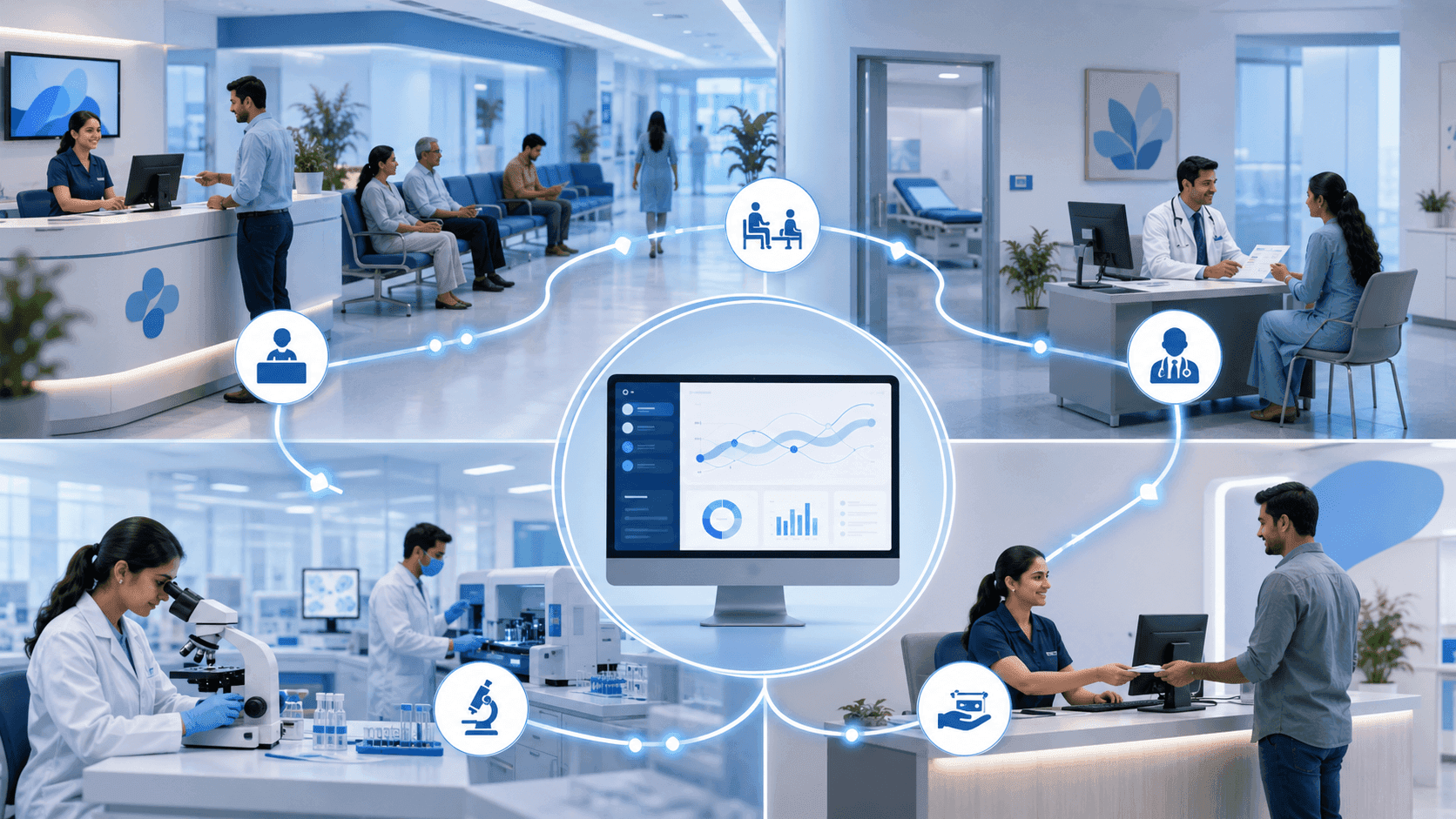
A typical medical ERP workflow connects patient registration, appointment scheduling, doctor consultations, laboratory requests, diagnostic reporting, billing and follow-up care.
For multi-location healthcare groups, it can also coordinate procurement, reagent inventory, supplier management, equipment maintenance and financial reporting.
The objective is not necessarily to replace existing EHR or laboratory systems. A modern ERP architecture can integrate them while reducing fragmented administrative workflows.
Explore our healthcare software development services for connected clinical and operational applications.
A diagnostic lab management system helps laboratories manage the patient testing journey, from receiving an order to releasing an authorized diagnostic report.
For pathology laboratories, the underlying LIMS or clinical LIS functionality should provide traceability throughout the specimen lifecycle.
Patient Registration & Test Booking
Patient details, appointments and test orders
Sample Collection & Barcode Tracking
Unique specimen IDs, timestamps and collection status
Laboratory Processing
Technician assignments, instrument results and quality checks
Result Verification & Approval
Authorized review, critical-result handling and audit history
Report Delivery & Billing
Secure result access, clinical communication and payment tracking
An online diagnostic lab management system can additionally support digital test booking, online payments, appointment notifications and secure patient report access.
For laboratories evaluating platform architecture, this technical guide to laboratory information management provides useful background on specimen tracking and quality workflows.
A pathology LIMS system should be designed around the laboratory's actual testing processes, operating scale and quality requirements.
Core modules can include patient registration and test ordering, specimen accessioning, barcode tracking, technician worklists, instrument integration, quality control, result verification and report distribution.
Additional modules can manage reagent inventory, equipment maintenance, test packages, billing, insurance-related workflows and operational analytics.
The distinction between an LIS and LIMS matters. Clinical laboratory information systems focus primarily on patient-related diagnostic workflows, while LIMS platforms are also widely used for broader sample and laboratory data management. The required functionality should reflect the laboratory's clinical responsibilities.
Different healthcare professionals need different information.
A doctor dashboard can display appointments, relevant patient histories, diagnostic requests, authorized results and consultation schedules.
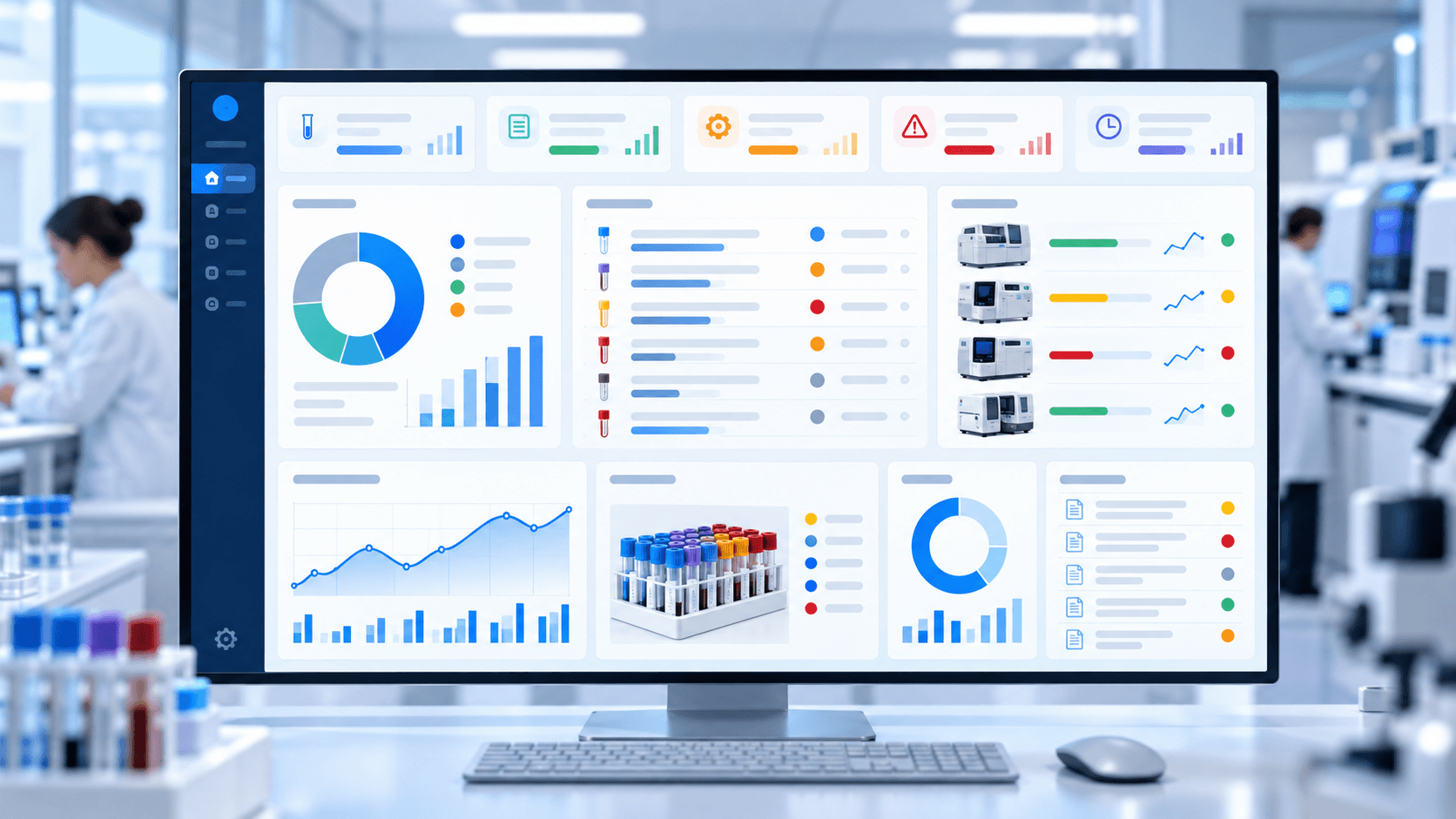
A laboratory dashboard can provide specimen status, pending tests, technician workloads, quality-control alerts and report approval queues.
An administrative dashboard can combine appointment volumes, billing status, laboratory turnaround times, reagent consumption and location-specific performance.
Role-based permissions should ensure that each user accesses only the information necessary for their responsibilities.
Medical ERP platforms can extend beyond physical healthcare facilities.
Integrating telemedicine and video consultation solutions allows doctors to manage virtual appointments, access relevant patient records, issue appropriate diagnostic requests and review authorized laboratory results.
Patients can schedule consultations, receive reminders, attend secure video appointments and access their reports through a connected portal.
This creates a coordinated experience between online consultations, physical clinics and diagnostic laboratories.
Healthcare organizations should select video technology and vendors that meet applicable HIPAA requirements, including business associate agreements where required.
Connected healthcare platforms can provide operational visibility that isolated applications cannot.
Administrators can analyze appointment demand, diagnostic test volumes, reporting turnaround times, laboratory workloads, billing activity and resource utilization.
Automation can support appointment reminders, specimen status updates, inventory alerts, task assignments and pending-report notifications.
AI-assisted capabilities may help summarize operational information or identify workflow bottlenecks, provided sensitive data is appropriately protected and clinically significant decisions remain subject to qualified human oversight.
US healthcare organizations should incorporate security and regulatory requirements during the initial architecture phase.
Relevant considerations include HIPAA privacy and security requirements, applicable CLIA laboratory standards, audit logging, access controls, encryption, backup and recovery, and vendor agreements.
For system interoperability, HL7 and FHIR can support standardized clinical data exchange, while appropriate laboratory terminology and coding support consistent diagnostic communication.
Compliance requires more than software features. Organizations must assess applicable obligations, validate workflows, establish policies and verify that deployed systems operate as intended.
At Murmu Software Infotech, we developed a centralized lab management solution connecting diagnostic test bookings, specimen tracking, technician workflows, report generation, billing and patient report access.
The project also includes barcode-based specimen tracking, administrative visibility and digital report approval workflows.
Our diagnostic LIMS software case study demonstrates how these components can be organized into a connected laboratory management platform.
For US healthcare groups planning custom medical ERP development, the starting point should be a detailed workflow assessment covering existing systems, clinical responsibilities, integration requirements and operational priorities.
Medical ERP and diagnostic LIMS software can provide the operational foundation for connected clinics, laboratories and healthcare groups.
Whether the requirement is an independent diagnostic center management system or a multi-location healthcare platform, successful implementation begins with clear workflows, reliable interoperability, appropriate security controls and architecture that supports future expansion.
Murmu Software Infotech provides custom healthcare software development, diagnostic applications, telemedicine integration and enterprise workflow engineering for organizations modernizing their digital operations.
Medical ERP software connects healthcare administration, appointments, billing, procurement, inventory, finance and operational reporting. It can integrate with clinical systems and laboratory software.
A diagnostic lab management system manages laboratory test orders, patient registration, specimen collection, barcode tracking, testing workflows, quality control, authorized reports and operational dashboards.
LIMS primarily emphasizes specimen and laboratory workflow management. Clinical LIS platforms are designed around patient-linked laboratory orders, results and reporting. Some modern products combine both capabilities.
Typical modules include test ordering, specimen accessioning, barcode tracking, laboratory worklists, instrument interfaces, quality control, reagent inventory, result review, report authorization and audit trails.
Yes. Integration can connect appointments, test orders, operational data, billing and inventory with laboratory processing and reporting while maintaining appropriate clinical and financial data boundaries.
Yes. An online diagnostic platform can support appointment scheduling, test packages, collection bookings, payment workflows, notifications and secure access to authorized laboratory reports.
Yes. Telemedicine integration can connect follow-up appointments, authorized diagnostic reports, secure video consultations and clinician documentation through appropriately secured healthcare systems.
A clinical LIMS or LIS can support applicable CLIA workflows such as quality control, traceability, result review and documentation. Compliance also depends on laboratory procedures, personnel, validation and certification.
Cost depends on the number of clinics and laboratories, user roles, specimen workflows, instrument interfaces, billing, telemedicine, integrations, security requirements, data migration and deployment model.
Evaluate healthcare software experience, clinical workflow knowledge, LIS integration, laboratory traceability, security architecture, interoperability, testing, regulatory requirements, technical documentation and post-launch support.