Patient Mobile App Case Study: Appointments, Records, Telemedicine & Digital Engagement
In This Article
- Healthcare journeys increasingly extend beyond hospital buildings.
- The Challenge: Too Much Patient Dependency on Manual Support
- The Solution: One Mobile Journey Across Healthcare Services
- Secure Patient Profiles and Family Access
- Doctor Discovery and Appointment Booking
- Medical Records, Reports and Prescription Access
- Digital Payments
- Telemedicine as Part of the Same Patient Journey
- Notifications and Follow-Up Automation
- Business Value
- From Mobile App to Connected Patient Platform
Healthcare journeys increasingly extend beyond hospital buildings.
Patients expect to search for doctors, book appointments, access reports, review prescriptions, make payments, receive reminders and connect with healthcare providers directly from their smartphones.
Yet many hospitals and clinics still depend on phone calls, reception teams, paper records and disconnected digital systems.
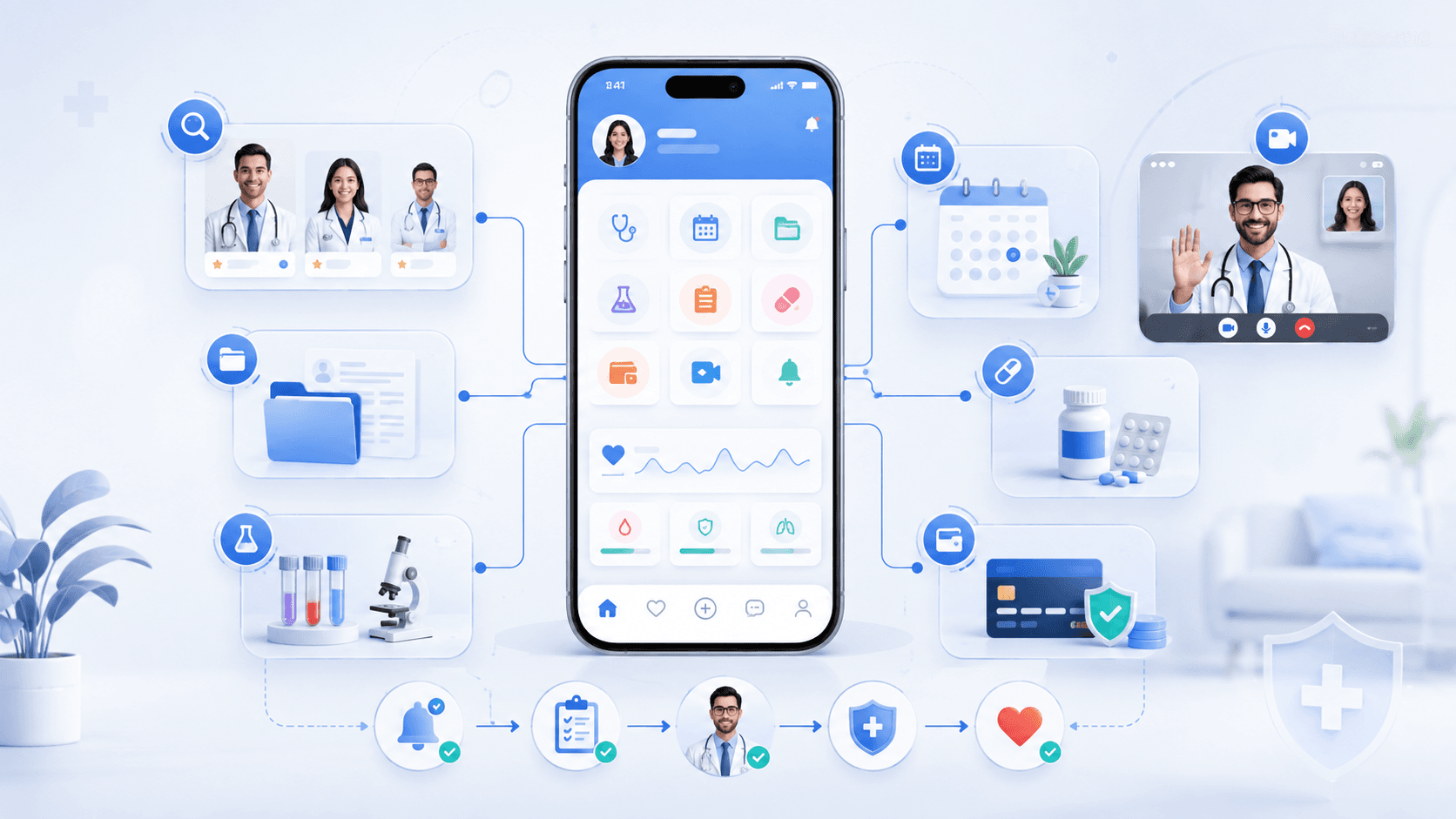
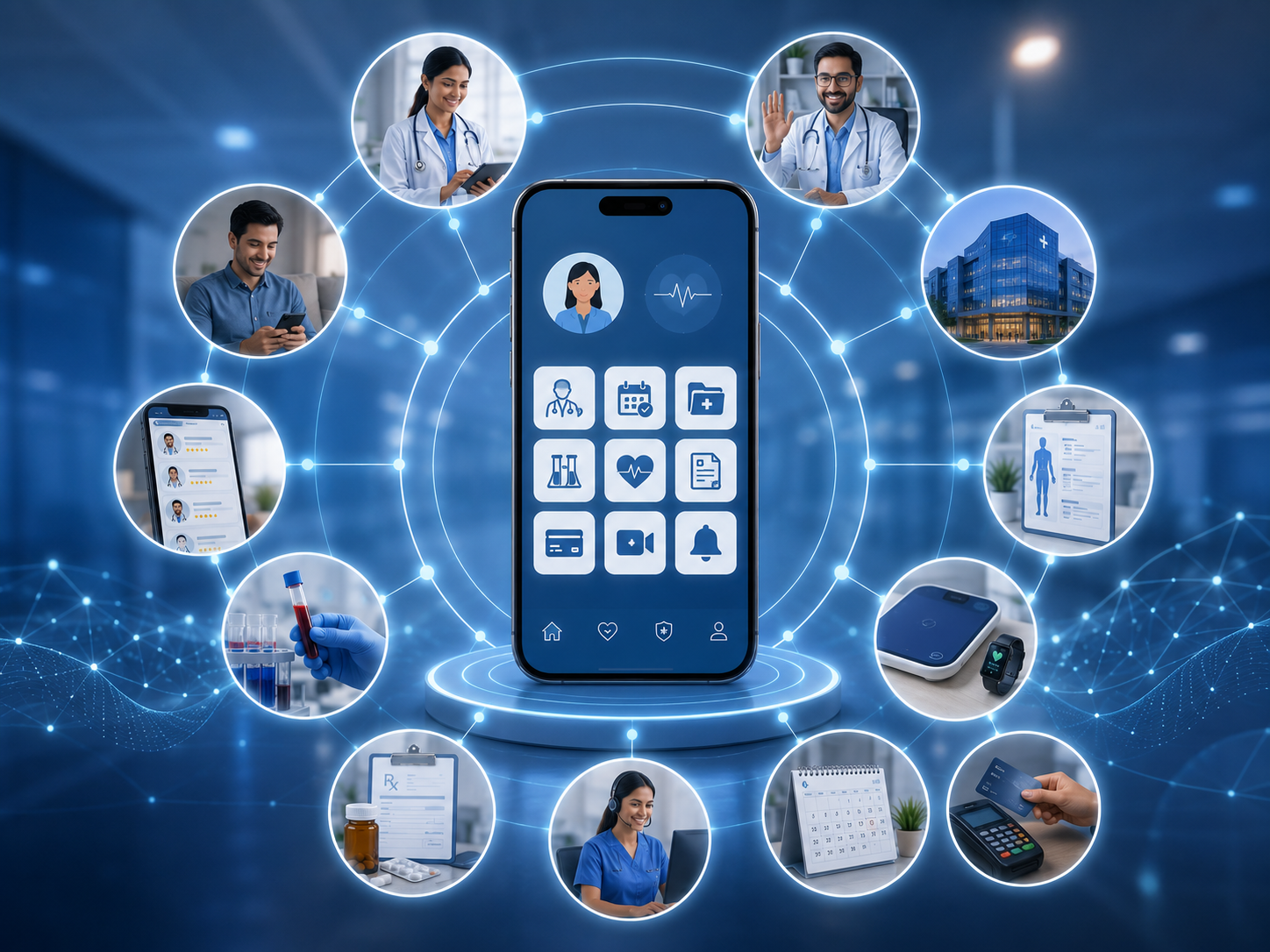
Murmu Software Infotech developed a Patient Mobile App designed for hospitals, clinics, diagnostic centers and healthcare providers to create one connected digital patient experience. The platform brings together secure patient access, doctor discovery, appointments, medical records, lab reports, prescriptions, payments, telemedicine, notifications and follow-up workflows within one mobile application.
The goal was not simply to launch another healthcare app.
It was to give patients a digital front door to ongoing healthcare services.
Build Better Digital Patient Journeys
Connect appointments, records, reports, payments, telemedicine, reminders, and follow-ups through one secure mobile experience built around patient convenience and engagement.
The Challenge: Too Much Patient Dependency on Manual Support
Before digitization, many common healthcare interactions required staff involvement.
Patients called reception teams to find doctors, confirm appointment availability, request reports, ask about prescriptions or follow up after consultations.
The case study identifies several recurring challenges:
- Manual appointment coordination
- Fragmented medical information
- Weak patient communication
- Missed follow-ups
- Limited mobile convenience
- High reception dependency
- Lack of a direct digital engagement channel
The bigger problem was therefore not only convenience.
It was the absence of a continuous digital relationship between patient and healthcare provider.
The Solution: One Mobile Journey Across Healthcare Services
The app was structured around the complete patient journey:
Secure Login → Doctor Search → Appointment → Consultation → Reports → Prescription → Payment → Telemedicine → Reminder → Follow-Up
Instead of requiring patients to move between phone calls, websites, paper documents and independent systems, the app brings major patient-facing workflows into one experience.
This creates a stronger model:
Patient Self-Service + Hospital Workflow Integration + Ongoing Digital Engagement
Build a Patient App That Simplifies Every Care Journey
Secure Patient Profiles and Family Access
The platform provides secure patient login, profile management, personal healthcare information and family-account support.
Family access is particularly valuable because healthcare journeys are often managed collectively parents manage children’s appointments, adults assist elderly relatives, and caregivers coordinate medical information.
The stronger design principle is:
one secure account experience, with clearly controlled access to the right patient information.
For production deployments, access control, authentication, encrypted communication, privacy settings and device/session security should be treated as core architecture not optional enhancements.
Doctor Discovery and Appointment Booking
The app allows patients to review doctor specialization, experience, availability and consultation information before booking. It also supports doctor-wise appointments, department selection and available appointment slots.
A streamlined journey becomes:
Select Specialty → Review Doctor → View Availability → Choose Slot → Confirm Appointment
This reduces unnecessary reception dependency and gives patients more control over when and how they access care.
I recommend replacing blanket “real-time appointment scheduling” language with “current slot availability” or “synchronized appointment availability” unless actual synchronization latency has been measured.
Medical Records, Reports and Prescription Access
The mobile app gives authorized patients access to consultation history, digital records, diagnostic reports and prescription history.
This is one of the strongest patient-experience improvements.
Instead of repeatedly contacting the hospital for information, patients can access relevant records through a central mobile interface.
The value is not simply digitization.
It is continuity:
Consultation → Report → Prescription → Follow-Up
Lab reports can be viewed or downloaded, while prescription history remains connected to previous consultations.
Digital Payments
The platform also supports consultation payments, online billing and payment-gateway integration.
That turns the mobile app into more than a healthcare-information portal.
Patients can complete another important part of the care journey without moving into disconnected payment processes.
For future versions, billing history, receipts, refunds and insurance-related payment journeys could strengthen this experience further where relevant.
Telemedicine as Part of the Same Patient Journey
Video consultation and telehealth workflows are included within the documented solution.
This is strategically important because telemedicine becomes more useful when it is not isolated.
A connected experience can become:
Book Appointment → Pay → Join Consultation → Receive Prescription → Review Reports → Get Follow-Up Reminder
That gives the hospital a much stronger digital-care model than operating a separate video-call application.
Connect Appointments, Records, Payments and Telemedicine in One App
Notifications and Follow-Up Automation
The app supports appointment reminders, report alerts, prescription notifications, follow-up scheduling and treatment reminders.
These automated touchpoints can reduce manual communication work and help patients stay aware of important next steps.
However, claims such as “improved treatment compliance” or “reduced missed appointments” should ideally be supported with measured before/after data.
A stronger evidence-based statement is:
automated reminders create a better foundation for consistent follow-up communication.
Business Value
The strongest defensible outcomes are:
- Reduced dependence on reception teams
- Faster access to patient-facing information
- More convenient appointment workflows
- Better continuity across records and prescriptions
- Stronger digital communication
- Expanded access through telemedicine
- Scalable patient self-service
The live case study reports improved engagement, reduced reception workload, better digital convenience and stronger follow-up management after introducing the app.
For future versions of the case study, I recommend publishing measurable KPIs such as:
app adoption rate, monthly active patients, appointment completion rate, report-view rate, notification engagement, digital payment usage, telemedicine utilization and reception calls avoided.
From Mobile App to Connected Patient Platform
The current article lists future opportunities including HMS integration, healthcare CRM, AI appointment systems, AI assistants, wearables, e-prescriptions and multi-location healthcare operations.
These should remain clearly labeled as future expansion unless already deployed.
Murmu Software Infotech develops Patient Mobile Apps, HMS platforms, telemedicine systems, healthcare CRM, doctor/staff apps and connected digital-health solutions.
The opportunity is bigger than giving patients a mobile app. It is creating one secure digital relationship that connects discovery, appointments, records, payments, virtual care and ongoing engagement throughout the patient journey.
Frequently Asked Questions
What is a patient mobile app for hospitals?
A patient mobile app is a secure digital platform that allows patients to access healthcare services such as doctor discovery, appointment booking, medical records, lab reports, prescriptions, payments, telemedicine and follow-up communication from a mobile device.
What features should a hospital patient app include?
A hospital patient app can include secure login, patient and family profiles, doctor discovery, appointment booking, medical records, lab reports, prescription history, online payments, telemedicine, notifications and follow-up reminders.
Can patients book doctor appointments through a mobile app?
Yes. The documented platform supports doctor-wise booking, department selection and appointment slot availability so patients can request or schedule consultations digitally.
Can patients access medical records from a hospital app?
Yes. Authorized patients can access consultation history, digital patient records and relevant healthcare information through the mobile application.
Can patients view lab reports on a mobile app?
Yes. The documented solution supports online report viewing, report downloads and access to diagnostic history.
Can a patient app show prescription history?
Yes. Patients can access previous prescriptions, medicine history and consultation-linked prescription information through the app.
Can a hospital patient app support online payments?
Yes. The platform includes consultation payments, online billing support and secure payment-gateway integration.
Can telemedicine be integrated into a patient mobile app?
Yes. Video consultations, online doctor interaction and telehealth workflows can be integrated into the same patient journey alongside appointments, records and follow-ups.
Can patient apps send appointment and follow-up reminders?
Yes. Push notifications can support appointment reminders, report alerts, prescription notifications, follow-up scheduling and other approved healthcare communication.
Who develops patient mobile apps for hospitals and clinics?
Murmu Software Infotech develops patient mobile apps, Hospital Management Systems, telemedicine platforms, healthcare CRM, doctor and staff apps, and connected digital-health solutions.