How to Hire Sitecore Developers Without Getting It Wrong
In This Article
- Hire a Developer or Outsource the Whole Project?
- Match the Skills to Your Sitecore Version
- Questions to Ask Before You Hire Sitecore Developers
- Real Examples: What Hired Sitecore Developers Deliver
- How Much Does It Cost to Hire Sitecore Developers?
- Use the Trial Properly
- Red Flags to Watch For
- Why Hire Sitecore Developers from Murmu Software Infotech
- Ready to Add Sitecore Expertise to Your Team?
Hiring a Sitecore developer is harder than hiring a regular web developer. The talent pool is smaller, the platform has changed a lot in the last few years, and a résumé that says Sitecore can mean anything from building XM Cloud components to editing content in an old XP site.
If you plan to hire Sitecore developers in 2026, this guide will help you avoid the most common and costly mistakes. We’ll cover which skills you actually need, what to ask in screening, what it costs, and how Murmu Software Infotech handles hiring for clients in the US, UK and UAE.
Hire a Developer or Outsource the Whole Project?
Start here, because it changes everything else.
Hire a dedicated developer if you already have a project manager or tech lead, a clear backlog, and you mainly need more hands. A good example is an agency that has won a Sitecore retainer but doesn’t have a Sitecore specialist on staff.
Outsource a full project if you’re planning an XP to XM Cloud migration or a new build with no internal Sitecore team. A migration needs architecture decisions, testing and a cutover plan. One developer, however good, won’t cover all of that.
Many companies get this wrong in the first week. They hire one developer for a migration, then wonder why it stalls.
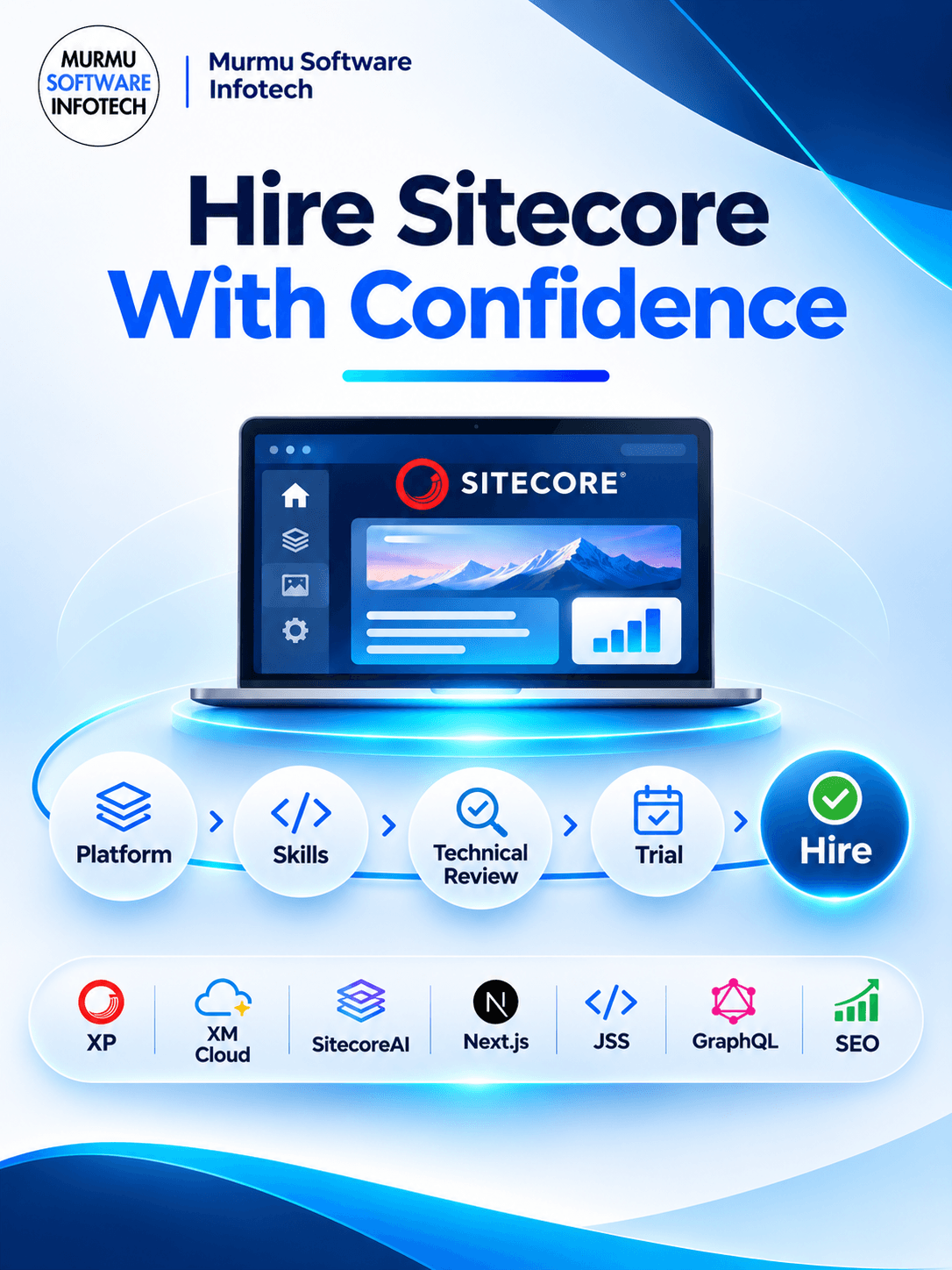
Hire Sitecore Expertise With Confidence
Match Sitecore developers to your platform, skills, migration needs and delivery model before costly technical mismatches create rework.
Match the Skills to Your Sitecore Version
Sitecore developer isn’t one skill set. Before you shortlist anyone, check which version you’re on:
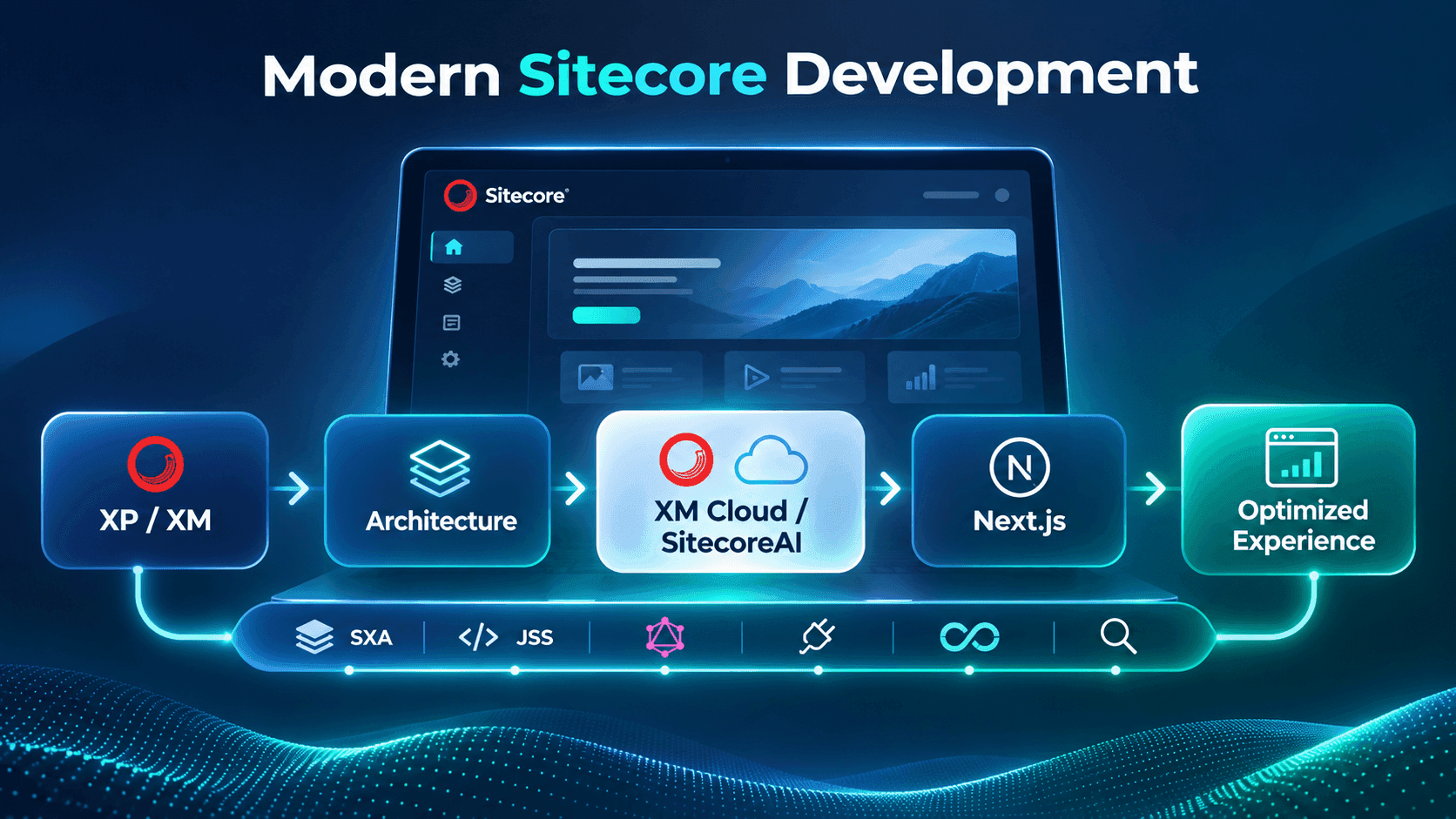
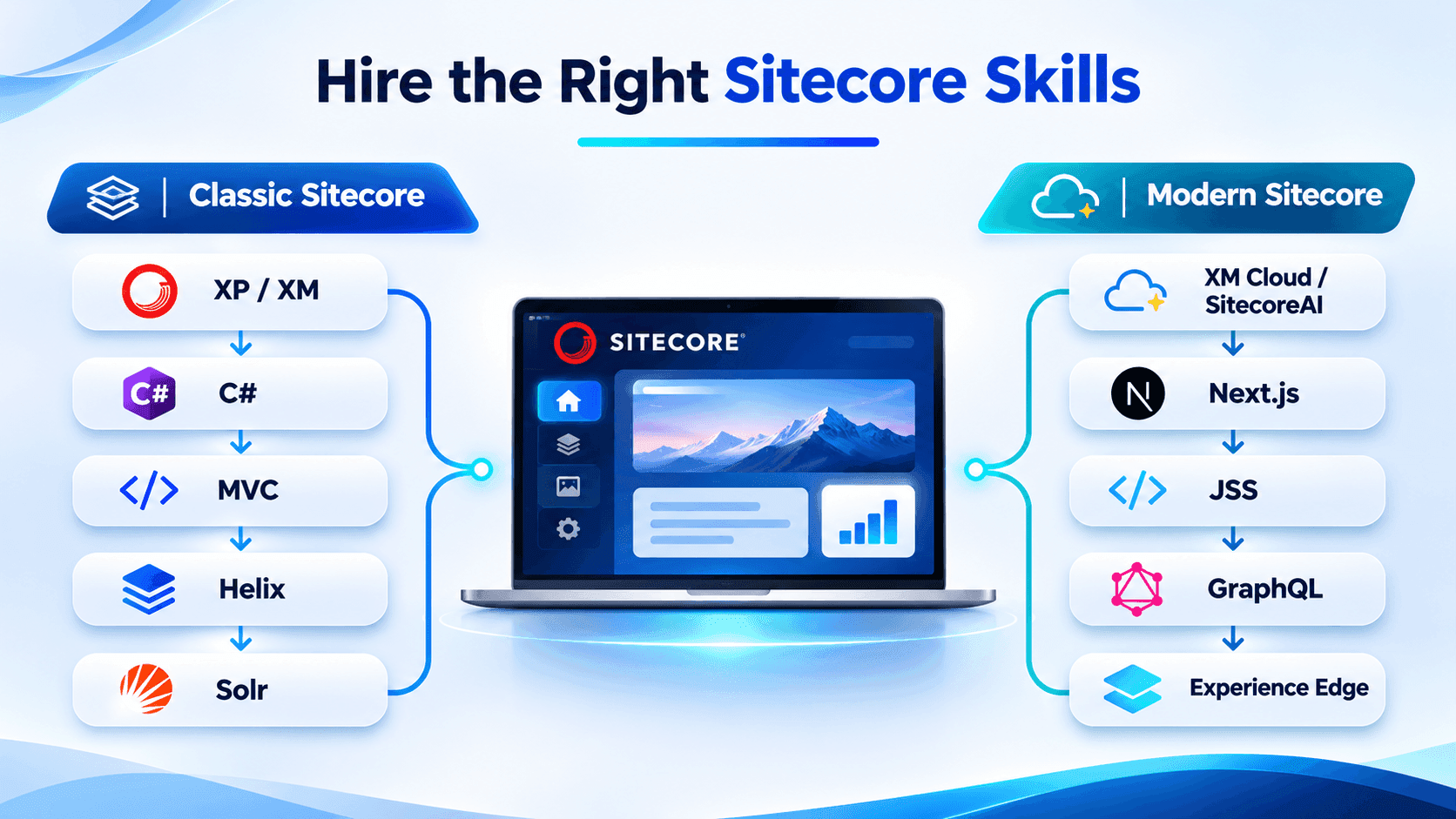
- Sitecore XM Cloud or SitecoreAI: look for Next.js, React, JSS or Content SDK, GraphQL and Experience Edge. Headless experience matters more than years of classic Sitecore.
- Sitecore XP or XM (classic): look for C#, ASP.NET MVC, Helix architecture, Solr and Sitecore pipelines.
- SXA sites: look for experience with SXA components, rendering variants and page designs.
- Migration projects: you need both. Someone who understands your old MVC code and can rebuild it as headless components.
A strong XP developer may struggle on an XM Cloud project, and the reverse is also true. Ask for work on your version specifically.
Find Sitecore SEO Risks Before Your Developers Touch Production
Questions to Ask Before You Hire Sitecore Developers
You don’t need to be technical to screen well. These questions reveal a lot:
- Tell me about a Sitecore project on our version. What did you build yourself? Vague answers like we without details are a warning sign.
- How would you handle SEO during a migration? A good developer will mention redirects, metadata and URL structure without being prompted.
- How do you make components easy for content editors? Sitecore is built for marketers. If the developer only talks about code, your editors will suffer.
- What’s your branching and deployment process? You want to hear about Git, pull requests, code review and CI/CD.
- How many hours overlap with our working day? For US, UK and UAE teams working with India-based developers, agree on this before signing.
Real Examples: What Hired Sitecore Developers Deliver
Here’s what Sitecore engineers at Murmu Software Infotech have worked on in real client projects:
- Enterprise airport platform: multilingual XM Cloud and Next.js experience with reusable components and GraphQL content delivery, serving international travellers in several languages.
- Travel and booking platform: XM Cloud, JSS and Next.js connected to booking APIs, so content-driven pages and live travel services work together in one journey.
- Healthcare modernisation: moved a healthcare site from Sitecore XP to XM Cloud using Next.js, GraphQL and Sitecore Search, giving the client a modern architecture and faster content delivery.
Notice the skills in each project: headless front ends, integrations and search. That’s the profile most companies need in 2026, and it’s what you should look for when hiring.
How Much Does It Cost to Hire Sitecore Developers?
Many vendors hide rates until after a sales call. Here are Murmu Software Infotech’s published rates:
- Hourly developers: $25–40 per hour. Good for urgent fixes, sprint backlogs and short projects.
- Dedicated monthly developers: from $3,000 per month. Good for ongoing XM Cloud work, modernisation and product enhancements with predictable costs.
Compare that with hiring locally, where you also pay recruitment fees, benefits, equipment and the cost of a long hiring cycle. Sitecore licensing is always separate, and a full migration is quoted on its own scope.
Before signing, confirm in writing the included hours, time-zone overlap, notice period and who owns the code. Most hiring disputes come from these four points.
Protect Rankings Before Your Next Sitecore Development Sprint
Use the Trial Properly
Murmu Software Infotech offers a one-day free trial for qualified engagements. To get real value from it:
- Give the developer a real but small task from your backlog, like fixing a component or building a simple rendering.
- Give access to a test environment only, never production.
- Judge code quality, communication and how they ask questions, not just whether the task got finished.
One day of real work tells you more than three rounds of interviews.
Red Flags to Watch For
- Promises of 24/7 coverage from a single developer.
- No questions about your Sitecore version or backlog before quoting.
- Unwillingness to let you speak to the actual developer.
- Contracts that don’t mention code ownership or confidentiality.
Why Hire Sitecore Developers from Murmu Software Infotech
Murmu Software Infotech is an India-based software company with 5+ years of experience, 55+ projects and 25+ developers. Our Sitecore engineers work across XM Cloud, SitecoreAI, XP, XM, SXA, JSS and Next.js, and join your team inside your own tools, sprints and code review process. Agencies can also hire through white-label arrangements and keep full ownership of the client relationship.
Ready to Add Sitecore Expertise to Your Team?
The right hire saves months of rework. The wrong one costs you a migration. If you want to hire Sitecore developers who understand both modern XM Cloud builds and classic XP platforms, talk to Murmu Software Infotech and start with a one-day trial.
Frequently Asked Questions
Can I hire a Sitecore developer for a few weeks only?
Yes. The hourly model suits short projects, urgent fixes and sprint backlogs without a long-term commitment.
Can your developers work on legacy Sitecore XP and Helix sites?
Yes. Our team supports XP, XM, SXA, MVC and Helix implementations, including upgrades and migration planning.
Can digital agencies hire white-label Sitecore developers?
Yes. Branding, confidentiality, source-code access and handover terms are agreed in writing before work starts.
How do I get started?
Share your Sitecore version, backlog, required skills, expected duration and preferred working hours. We’ll suggest a suitable developer profile and check trial eligibility.
How do I hire the right Sitecore developer?
Start by matching the developer to your exact Sitecore version and project type. XM Cloud and SitecoreAI projects need strong Next.js, React, JSS or Content SDK, GraphQL and Experience Edge skills, while classic XP or XM projects require C#, ASP.NET MVC, Helix, Solr and Sitecore pipeline experience.
How much does it cost to hire a Sitecore developer?
The supplied guide lists Murmu Software Infotech Sitecore developers at approximately $25 to $40 per hour, with dedicated monthly developers starting from about $3,000 per month. Full migrations and implementation projects require separate scoping.
Should I hire one Sitecore developer or outsource the full project?
Hire a dedicated developer when you already have a technical lead, backlog and delivery process. Outsource the full project when you need architecture, QA, DevOps, migration planning, testing and production cutover.
What skills should an XM Cloud developer have?
Look for practical experience with Next.js, React, Sitecore JSS or Content SDK, GraphQL, Experience Edge, headless architecture, integrations and modern deployment workflows.
What skills should a Sitecore XP developer have?
Classic Sitecore XP or XM development commonly requires C#, ASP.NET MVC, Helix architecture, Solr, Sitecore pipelines, configuration and experience maintaining traditional Sitecore implementations.
What should I ask during a Sitecore developer interview?
Ask what they personally built on your Sitecore version, how they would protect SEO during migration, how they make components editor-friendly, how they use Git and CI/CD, and how much working-hour overlap they can provide.
How do I protect SEO when hiring developers for a Sitecore migration?
Make sure the developer understands URL mapping, redirects, metadata, canonical tags, structured data, internal links and crawlability. SEO ownership should be agreed before migration work begins.
Can I hire a Sitecore developer for a short-term project?
Yes. Hourly engagements can work well for urgent fixes, sprint backlogs, component work and short projects without requiring a long-term commitment.
Can agencies hire white-label Sitecore developers?
Yes. White-label arrangements let agencies retain branding, client ownership and project management while external Sitecore specialists provide engineering capacity.
What are the biggest red flags when hiring Sitecore developers?
Warning signs include no questions about your Sitecore version, vague project examples, refusing access to the actual developer, unrealistic coverage promises and contracts that do not clearly define confidentiality, code ownership or working hours.