Healthcare Digital Transformation Case Study: Hospital Workflow, HMS & AI Consulting
In This Article
- The Healthcare Transformation Challenge
- Transformation Objective
- Our Healthcare Digital Transformation Approach
- 1. Hospital Workflow and Gap Analysis
- 2. HMS and Healthcare Software Roadmap
- 3. OPD and Patient Journey Optimization
- 4. AI and Healthcare Automation Strategy
- Telemedicine, CRM and Patient Engagement
- Scalable Healthcare Technology Architecture
- Transformation Roadmap
- Business Value
- From Hospital Digitization to Connected Healthcare
- Planning Your Hospital’s Digital Transformation?
Digital transformation in healthcare is not simply about replacing paper with software. For hospitals, clinics and healthcare groups, successful modernization requires connecting patients, doctors, departments, operations, technology and management through well-designed digital workflows.
Murmu Software Infotech developed a healthcare digital transformation consulting framework to help healthcare organizations identify operational gaps, modernize workflows, plan scalable healthcare technology and prepare for AI-assisted automation.
The objective was to create a practical transformation roadmap that could improve daily hospital operations while providing a foundation for future growth, integration and digital patient experiences.
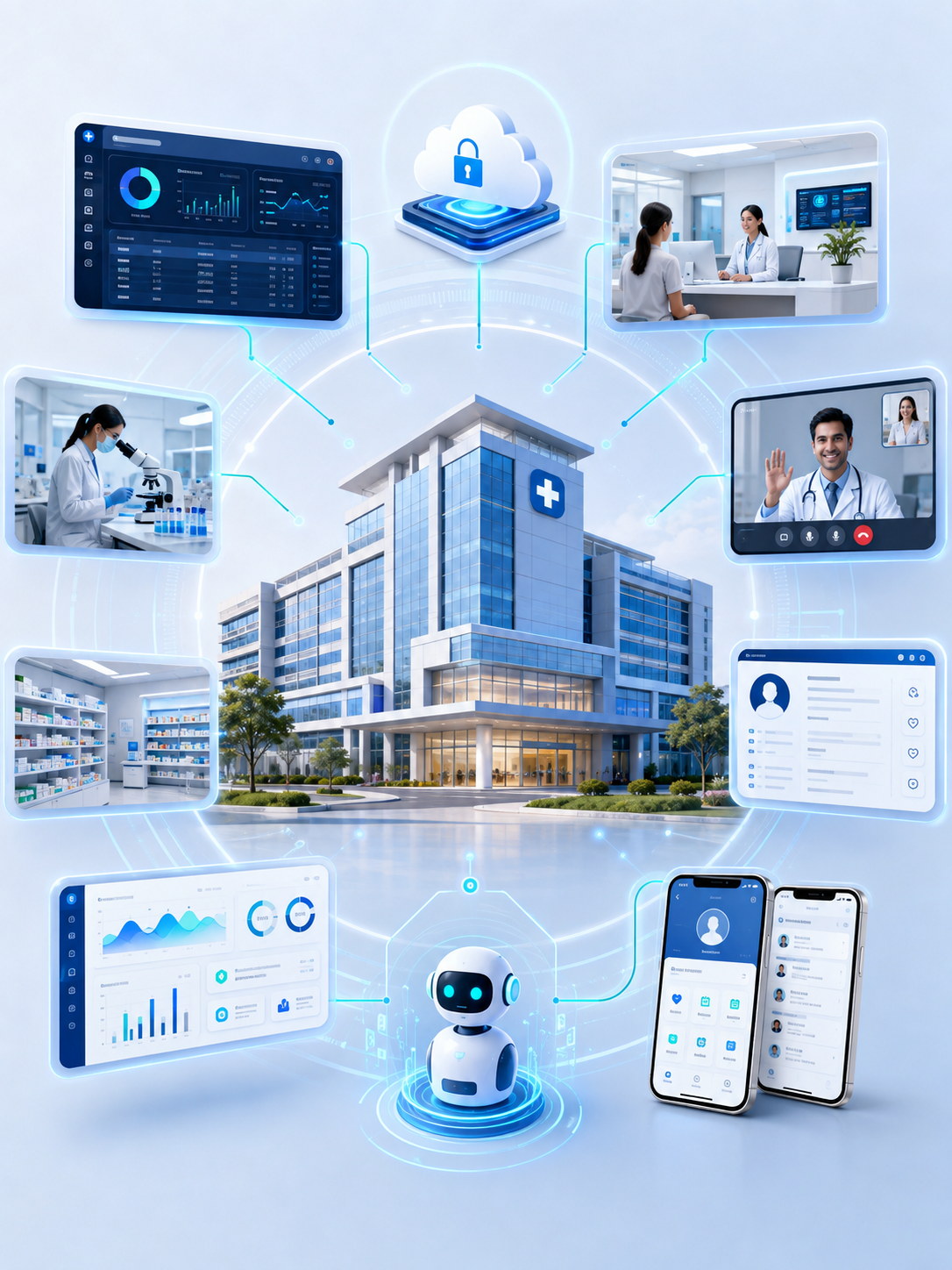
Transform Your Hospital With Confidence
Build a practical roadmap for smarter workflows, connected systems, AI automation, and better patient experiences across your hospital.
The Healthcare Transformation Challenge
Many healthcare organizations operate with a combination of manual processes, legacy applications and disconnected department-level systems.
Patient registration may operate separately from appointments. OPD queues may depend on manual coordination. Billing, laboratory, pharmacy, follow-ups and patient communication may use different workflows or applications. Hospital leadership can consequently struggle to gain one consistent view of operational performance.
Common challenges identified in the consulting process included:
- Manual and repetitive administrative work
- Long or poorly coordinated patient journeys
- Disconnected hospital departments
- Limited operational visibility
- Inefficient appointment and OPD workflows
- Weak patient follow-up and communication
- Legacy systems with limited scalability
- Lack of a structured AI and automation strategy
The challenge was therefore not merely choosing new software. It was understanding what should be digitized, what should be automated, which systems should connect, and how transformation should be phased without disrupting healthcare operations.
Transform Your Hospital Operations With a Clear Digital Roadmap
Transformation Objective
The consulting engagement focused on creating a connected digital healthcare strategy covering operational workflows, patient journeys and technology infrastructure.
The goals were to reduce unnecessary manual processes, improve coordination between departments, optimize OPD and appointment journeys, strengthen patient engagement and define a scalable architecture for future hospital software.
Another important objective was to identify where AI could create genuine operational value rather than introducing AI without a clear healthcare use case.
Our Healthcare Digital Transformation Approach
1. Hospital Workflow and Gap Analysis
Transformation began with understanding how the hospital actually operates.
Patient registration, appointments, OPD movement, doctor scheduling, billing and departmental dependencies were mapped to identify bottlenecks and repetitive activities.
Instead of starting with a predefined software product, the process began with business and healthcare workflows. This helped establish which problems required process redesign, software configuration, integration or automation.
2. HMS and Healthcare Software Roadmap
The next stage translated operational requirements into a structured Hospital Management System and healthcare software roadmap.
Modules and workflows could be prioritized according to operational importance instead of attempting a disruptive all-at-once implementation.
The roadmap considered areas such as patient registration, appointments, OPD/IPD workflows, billing, laboratory, pharmacy, administration, reporting and future integration requirements.
This approach creates a clearer path from existing operations toward a connected digital hospital ecosystem.
3. OPD and Patient Journey Optimization
Outpatient operations are one of the most visible parts of the hospital experience.
The consulting framework evaluated appointment scheduling, queue management, doctor availability, patient movement and communication to identify opportunities for a smoother journey.
A digitally connected workflow can support a patient journey such as:
Appointment → Registration → Queue → Consultation → Investigation → Billing → Follow-Up
The objective is to reduce avoidable administrative friction while giving patients and staff clearer visibility throughout the journey.
4. AI and Healthcare Automation Strategy
AI opportunities were evaluated around practical operational use cases rather than replacing clinical judgment.
Potential areas included appointment assistance, patient FAQs, automated reminders, follow-up communication, workflow routing and operational analytics.
This creates an incremental AI strategy in which hospitals can first establish reliable digital processes and data flows, then introduce intelligent automation where it provides measurable operational value.
Telemedicine, CRM and Patient Engagement
Digital transformation should extend beyond activity inside the hospital.
The strategy therefore included telemedicine and digital consultation planning for organizations seeking to provide remote access to healthcare services.
Healthcare CRM and patient-engagement workflows were also considered for appointment reminders, follow-ups, communication, retention and ongoing patient relationships.
Connecting these experiences with core hospital systems helps move the organization from isolated software applications toward a more complete digital patient lifecycle.
Scalable Healthcare Technology Architecture
A transformation roadmap must also prepare the hospital for future systems and integrations.
Architecture consulting therefore addressed cloud readiness, application architecture, integration requirements, security considerations and future scalability.
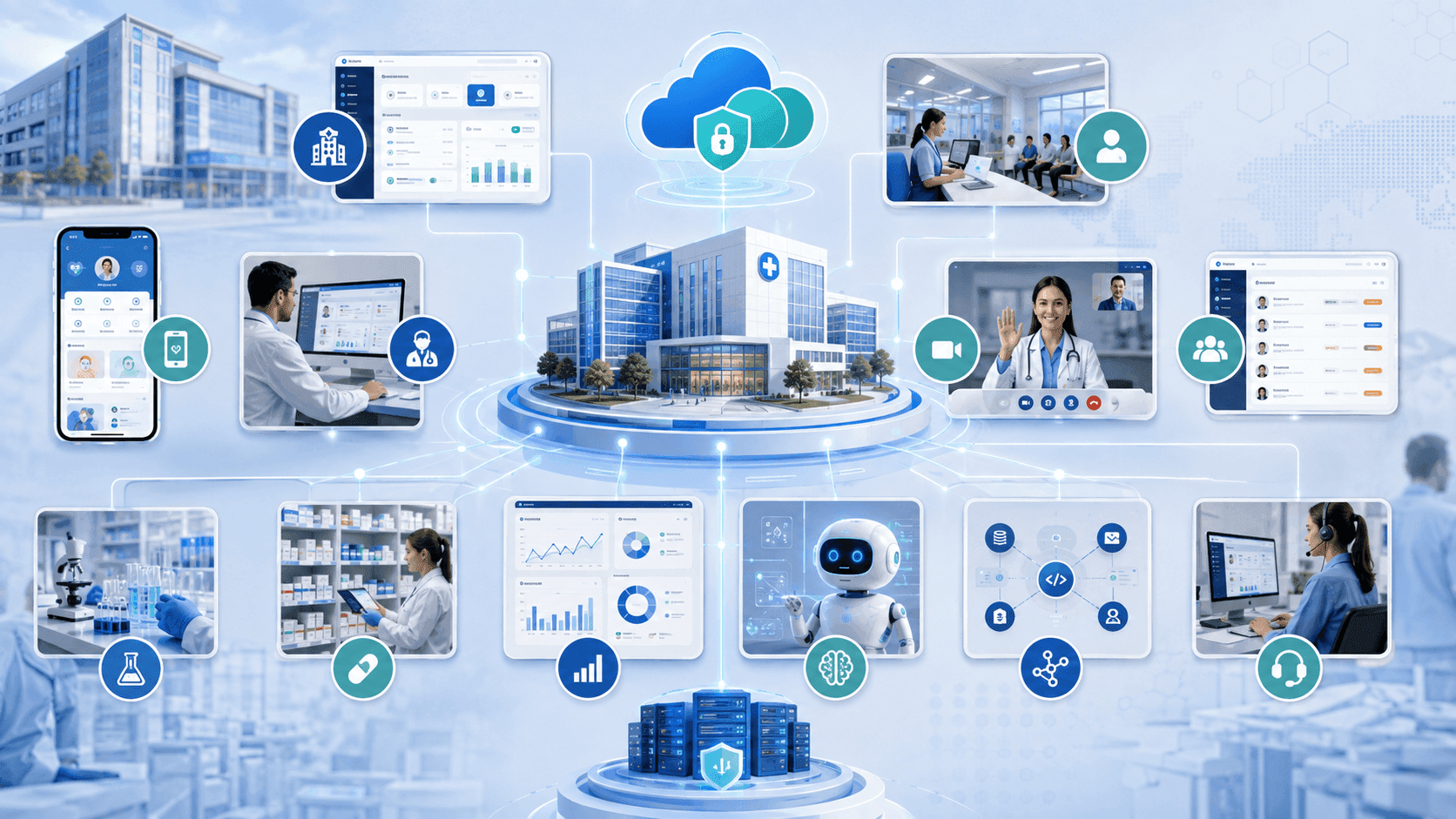
A modern healthcare ecosystem may eventually connect:
HMS + Patient Portal + Mobile App + Telemedicine + CRM + LIMS + Pharmacy + Analytics + AI + External APIs
The goal is not to deploy every component immediately. The goal is to ensure that systems introduced today do not prevent the organization from scaling tomorrow.
Ready to Modernize Healthcare Workflows, Systems, and Patient Experience
Transformation Roadmap
The consulting journey can be summarized as:
Hospital Workflow Assessment
↓
Operational Gaps Identified
↓
Department Workflows Mapped
↓
Digital Priorities Defined
↓
HMS and Software Roadmap Created
↓
AI & Automation Opportunities Identified
↓
Technology Architecture Planned
↓
Phased Implementation Strategy Prepared
This phased approach reduces transformation risk and gives hospital leadership a clearer understanding of priorities, dependencies and technology investment.
Business Value
The consulting framework was designed to create value across four important areas.
Operational efficiency: Digital workflows reduce repetitive administration and improve coordination between hospital teams.
Patient experience: Better appointment, queue, communication and follow-up processes can create a smoother healthcare journey.
Management visibility: Connected data and reporting give leadership stronger insight into hospital operations and future improvement opportunities.
Scalability: A planned technology architecture allows new departments, locations, digital channels and AI capabilities to be introduced more systematically.
These outcomes are described qualitatively on the existing case study; I recommend adding verified before-and-after metrics later if you have them rather than publishing unsubstantiated percentage improvements.
From Hospital Digitization to Connected Healthcare
Healthcare digital transformation succeeds when technology supports the way patients receive care and the way hospital teams actually work.
By combining workflow consulting, HMS planning, OPD optimization, telemedicine, healthcare CRM, AI automation and scalable technology architecture, Murmu Software Infotech helps hospitals move from fragmented processes toward connected, patient-centric digital operations.
The result is more than a software implementation roadmap it is a structured strategy for building a healthcare organization that is ready for automation, AI, new digital services and long-term growth.
Planning Your Hospital’s Digital Transformation?
Whether you are modernizing an existing hospital, replacing disconnected systems, introducing a new HMS, improving OPD operations or planning AI-enabled healthcare workflows, start with a clear transformation roadmap.
Frequently Asked Questions
What is healthcare digital transformation consulting?
Healthcare digital transformation consulting helps hospitals, clinics and healthcare groups evaluate existing workflows, technology and patient journeys and create a roadmap for digitization, system integration, automation, AI adoption and scalable healthcare technology.
How can digital transformation improve hospital operations?
Digital transformation can improve hospital operations by connecting departments, reducing repetitive administrative work, improving workflow visibility, streamlining appointments and OPD processes, strengthening patient communication and giving management better access to operational information.
What systems are commonly included in hospital digital transformation?
Hospital digital transformation may include HMS or HMIS, EMR, appointment systems, OPD and IPD workflows, billing, laboratory systems, pharmacy, patient portals, mobile applications, CRM, telemedicine, analytics, AI tools and third-party integrations.
How does an HMS support healthcare digital transformation?
A Hospital Management System can create a centralized foundation for patient registration, appointments, OPD and IPD operations, billing, laboratory, pharmacy, administration and reporting. It can also provide integration points for future digital healthcare services.
How can hospitals improve OPD efficiency through technology?
Hospitals can improve OPD efficiency by digitizing appointment scheduling, registration, queue management, doctor availability, patient routing, investigations, billing and follow-up communication to create a more connected patient journey.
How can AI be used in hospital digital transformation?
AI can support hospital operations through patient assistants, appointment automation, FAQ handling, follow-up reminders, workflow routing, document processing, operational analytics and other administrative use cases. Clinical AI should be introduced with appropriate governance, validation and human oversight.
Why should hospitals integrate CRM with healthcare systems?
Healthcare CRM can help hospitals manage patient communication, appointment reminders, follow-ups, feedback, campaigns and ongoing engagement. Integration with hospital systems can create a more consistent patient experience across clinical and non-clinical touchpoints.
What is a hospital digital transformation roadmap?
A hospital digital transformation roadmap is a phased plan that identifies operational gaps, prioritizes workflows, defines required software and integrations, establishes architecture and implementation priorities, and plans future capabilities such as automation, telemedicine and AI.
Should hospitals replace all legacy systems at once?
Not necessarily. A phased modernization approach can reduce operational risk by prioritizing high-impact workflows, integrating existing systems where practical and gradually replacing legacy technology according to business value, technical dependencies and implementation readiness.
Who should be involved in hospital digital transformation planning?
Hospital digital transformation should involve leadership, administrators, operations teams, IT teams, doctors, nursing representatives, finance teams and other departments affected by the workflows. Cross-functional participation helps ensure that technology supports real hospital operations.