Case Study & Journal
Healthcare Event Platform Case Study: Sitecore SXA Symposium Modernization
PPrem M.5 Min Read
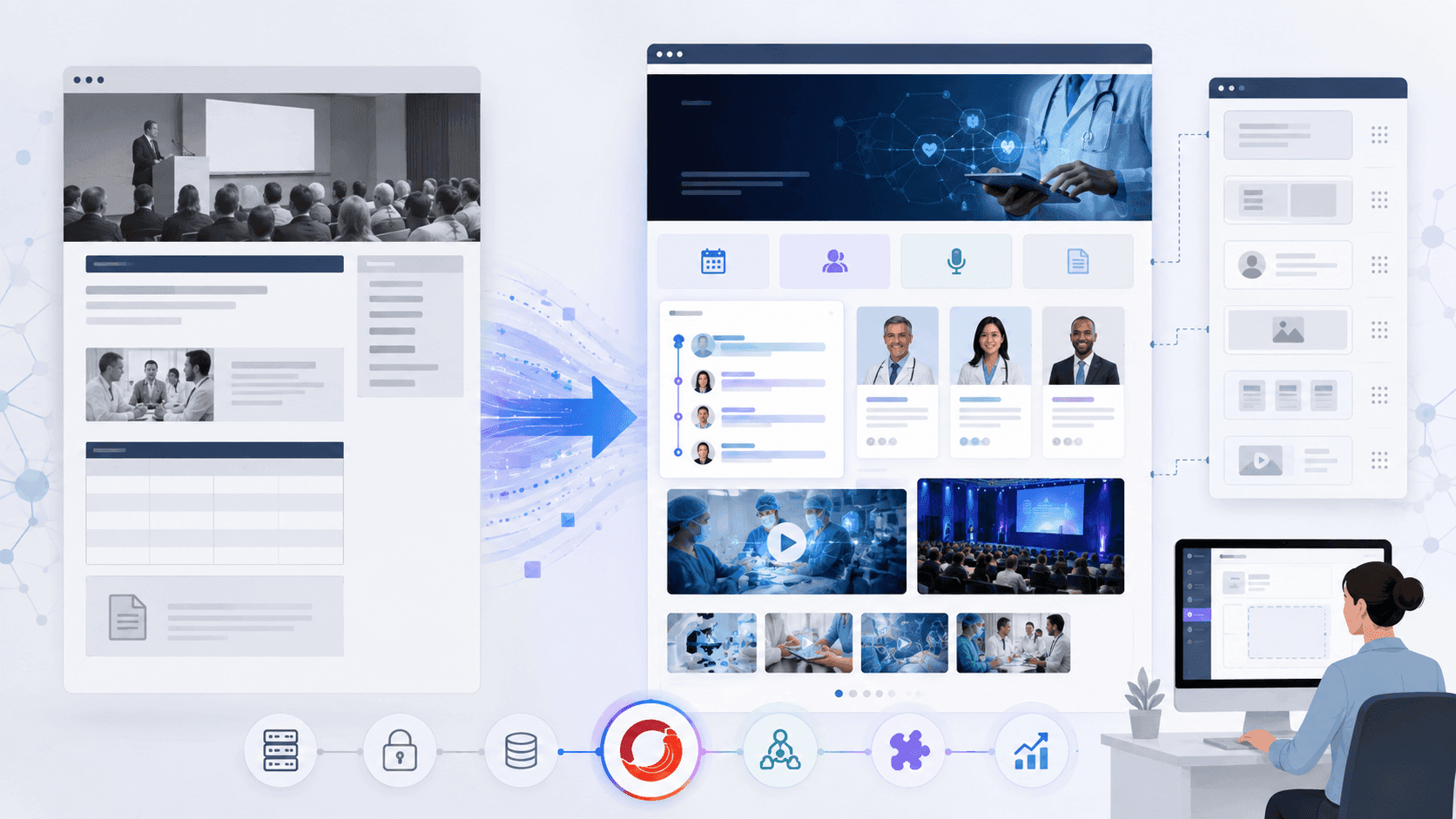
Healthcare symposium and conference websites operate very differently from ordinary corporate websites.
As an event approaches, content teams may need to publish agenda changes, speaker information, meeting locations, presentations, announcements, videos, galleries, testimonials, and post-event materials—often with very short turnaround times.
A legacy static website can make that difficult when every update depends on a developer.
Murmu Software Infotech contributed to the modernization of a large healthcare symposium and events platform by rebuilding its static .NET website with Sitecore Experience Platform and Sitecore SXA.
The objective was clear: transform a developer-dependent website into a reusable, content-driven platform that marketing and event teams could manage more independently.

Transform legacy healthcare platforms with scalable Sitecore architecture, reusable components, streamlined publishing workflows, integrations, and expert modernization support.
The existing platform was built as a static .NET website.
That architecture worked for relatively stable content, but became increasingly restrictive for an organization managing recurring healthcare symposiums and meetings.
Even routine updates such as changing an agenda, uploading a presentation, adding a speaker, or publishing an announcement required technical intervention.
This created three major challenges.
First, content teams depended heavily on developers for everyday publishing tasks.
Second, symposium periods generated high-frequency content requirements, where schedules, event communications, and materials needed to change rapidly.
Third, developer-dependent workflows made it difficult to publish information at the speed expected around live events.
The organization therefore needed more than a visual redesign. It needed a CMS architecture designed around editor autonomy and repeatable event publishing.
We redeveloped the platform using Sitecore SXA, creating reusable structures and components that could support multiple event-content scenarios.
SXA is particularly well suited to this type of requirement because its page designs and partial designs allow organizations to create reusable page structures rather than rebuilding layouts repeatedly. Sitecore’s own documentation describes SXA page designs as reusable combinations of partial designs that allow content authors to work within consistent layouts without having to construct every page structure manually.
For a symposium platform, that translates into a much more practical publishing model.
Instead of asking developers to build each agenda, speaker, media, or event page separately, content teams can work with predefined structures and reusable components.
The new platform combined Sitecore SXA capabilities with custom reusable components created around the event experience.
Components included:
These reusable components created a consistent design language while giving editors more flexibility over content.
This is one of the most important differences between a traditional static site and a component-driven enterprise CMS: developers build reusable capabilities once, while content teams reuse them across multiple pages and events.
The platform was structured around the types of content the healthcare organization needed to publish regularly.
Editors could manage:
Event schedules | Symposium programs | Meeting locations | Agenda updates | Board members | Speakers | Event communications
This shifted operational control closer to the teams actually responsible for the symposium content.
Instead of sending every change through development, editors could update structured Sitecore content and use approved page/component patterns.
That is particularly valuable when agendas or event information change close to the symposium date.
Healthcare events continue generating valuable content after individual sessions end.
Presentations, event videos, media galleries, and supporting materials can become long-term educational and engagement assets.
The modernized platform therefore included workflows for publishing:
This allowed the symposium platform to function not only as an event-information website, but also as a content repository for post-event engagement.
Dynamic sections were also implemented for speaker messages, meeting testimonials, talks, and healthcare-event communications.
This gave content teams a structured way to surface voices from speakers, participants, leadership, and event stakeholders without requiring one-off development for each communication.
These elements help transform an event platform from a schedule directory into a richer digital experience around the symposium.
Timing was especially important because the organization had an upcoming symposium.
The redevelopment was completed and launched within approximately two weeks, allowing the new Sitecore SXA platform to go live before the next event.
Rather than presenting this simply as “fast development,” the more important outcome is that the architecture and delivery process were aligned with a real event deadline.
Launching the CMS was only part of the work.
Marketing and publishing teams were trained to create pages, update event information, and manage symposium content using the new Sitecore workflows.
This is critical for CMS modernization.
A technically sophisticated platform delivers limited business value if editors still require developers for routine changes.
The SXA implementation therefore focused on both reusable architecture and practical content operations.
The modernization transformed a static healthcare event website into a structured, reusable Sitecore content platform.
The new model reduced routine developer dependency, enabled faster event-content publishing, simplified management of schedules and symposium materials, improved reuse across pages, and gave marketing teams greater control over ongoing updates.
Most importantly, the project demonstrates that Sitecore SXA modernization is not only a technology upgrade.
For event-driven organizations, it can fundamentally change how quickly content teams respond before, during, and after major conferences and symposiums.
Murmu Software Infotech provides Sitecore SXA development, Sitecore CMS modernization, reusable component engineering, content workflow implementation, healthcare platform development, migrations, upgrades, and ongoing Sitecore support.
Whether you are replacing a static legacy website, modernizing an existing Sitecore implementation, or building a content-heavy symposium, association, conference, or healthcare event platform, we can help design the CMS architecture around your publishing workflow.
Talk to our Sitecore team to build an event platform your content teams can actually operate at event speed.
A Sitecore SXA healthcare event platform uses reusable Sitecore components, page structures and content workflows to manage symposium schedules, agendas, speakers, presentations, media and event communications through an enterprise CMS.
Sitecore SXA helps organizations create reusable page structures and components so marketing and event teams can publish and update content without requiring developers to rebuild every page.
Murmu Software Infotech contributed to replacing a static .NET healthcare symposium website with a Sitecore SXA platform supporting event schedules, agendas, speaker information, presentations, media, testimonials and reusable publishing workflows.


Yes. Reusable components and CMS-managed page structures allow trained content teams to create pages, change agendas, publish announcements and manage event materials without requiring development work for routine updates.
Yes. The implemented platform allows content teams to manage symposium programs, meeting locations, event schedules, agenda changes, board members and speaker information.
Yes. The platform includes workflows for publishing presentations, event videos, media galleries and post-event materials so symposium content can remain useful after individual sessions end.
The implementation included hero sections, agenda blocks, speaker and testimonial sections, event schedules, presentation modules and media components alongside Sitecore SXA capabilities.
The documented redevelopment was completed in approximately two weeks and launched before the organization's upcoming healthcare symposium.
Yes. Marketing and publishing teams received training so they could create pages, publish event updates and manage symposium content more independently.
Yes. Murmu Software Infotech provides Sitecore SXA development, reusable component engineering, CMS modernization, event publishing workflows, healthcare platform development and ongoing Sitecore support.