Development / Cloud Computing
Sitecore XP/XM to XM Cloud Migration Strategy – Complete Enterprise Guide
PPrem Murmu2 Min Read
Migrating from Sitecore XP/XM to XM Cloud is not just an upgrade—it’s a complete transformation of your digital experience architecture.
With the shift to a SaaS-based, headless, and composable platform, organizations must rethink how content, personalization, and integrations are handled.
👉 This guide provides a step-by-step migration strategy to ensure a smooth transition.
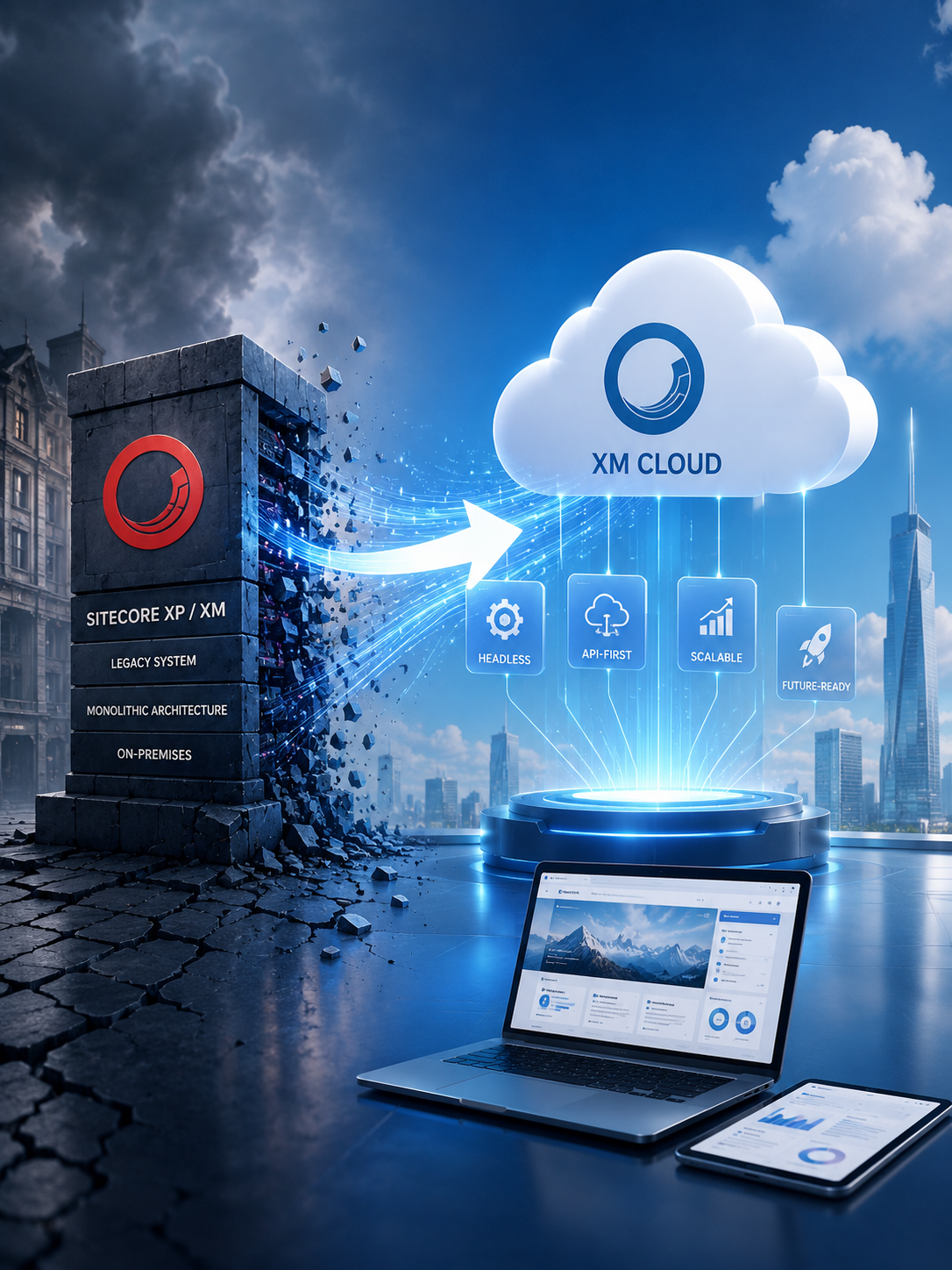
Move from legacy Sitecore XP or XM to a scalable, headless XM Cloud architecture with a proven enterprise migration strategy.
Migration to XM Cloud requires:
Current System Analysis
Content & Template Audit
👉 A proper assessment defines migration success
XM Cloud uses a headless, API-first architecture.
Key Changes:
👉 You must redesign:
Major Tasks:
👉 Legacy server-side logic must be restructured for headless delivery
Content migration is a critical step.
Approaches:
What Gets Migrated:
👉 Note:
Layouts and renderings often need manual rework
XM Cloud does NOT use traditional xDB.
You must:
👉 Personalization becomes API-driven and composable
Perform:
👉 Ensure everything works in real-world scenarios
Final Steps:
👉 XM Cloud handles infrastructure automatically.
After migration:
👉 Continuous improvement is key to ROI.
Solution: Refactor into APIs
Solution: Simplify templates
Solution: Use API-first approach
You should consider migration if:
Migrating to XM Cloud is a strategic move toward future-ready digital experience platforms.
The best strategy is a phased migration that begins with discovery and assessment, followed by architecture planning, code modernization, content migration, personalization redesign, testing, deployment, and post-migration optimization.
Yes. Sitecore XP can be migrated to XM Cloud, but the process requires more than moving content. XP-specific dependencies, server-side rendering, personalization, analytics, integrations, and legacy code should be assessed and redesigned for a modern headless architecture.
Yes. Sitecore XM environments can be migrated to XM Cloud. Content, media assets, users, templates, integrations, and frontend components should be assessed before migration, while legacy rendering logic often requires headless redevelopment.
No. XM Cloud migration is not a traditional lift-and-shift process. It usually requires architecture redesign, code refactoring, content restructuring, frontend modernization, and updates to personalization and integration strategies.
Before migration, assess the Sitecore version, modules, hosting environment, custom code, pipelines, integrations, content structure, templates, fields, workflows, media assets, and deployment processes.
Sitecore XM Cloud commonly uses a headless architecture with GraphQL APIs, Next.js or React frontends, Experience Edge, API integrations, modern CI/CD pipelines, and cloud-based deployment workflows.
Legacy server-side and XP-specific code is reviewed and refactored. Business logic can be moved into APIs, while presentation logic is redesigned for decoupled frontend applications such as Next.js or React.
Content migration can use Sitecore Content Serialization, migration tools, GUI or CLI workflows, PowerShell scripts, APIs, and controlled manual migration. Content items, media assets, and supported data should be validated after transfer.
Traditional XP personalization and xDB-dependent approaches must be reassessed. Organizations can redesign customer journeys using rule-based, API-driven, composable personalization with appropriate CDP, analytics, and external data integrations.
Enterprises should consider XM Cloud migration when they need a modern headless architecture, reduced infrastructure responsibility, faster scalability, improved deployment workflows, or a future-ready cloud-based digital experience platform.