B2B Ordering Portal for US Manufacturers and Wholesalers
In This Article
- B2B Ordering Portal for US Manufacturers, Wholesalers and Supplier Networks
- Why Manufacturers Need B2B Ordering Portals
- How Does a Wholesale Supplier Portal Work?
- Connected wholesale ordering workflow
- Dealer, Distributor and Customer Login
- Bulk Ordering and Customer-Specific Pricing
- Inventory, ERP and Payment Integration
- On-Premises Payment Gateway Solutions
- Admin Dashboard and Wholesale Reporting
- Custom Development and Dedicated Engineering Teams
- Build a Portal Around Your Distribution Workflow
B2B Ordering Portal for US Manufacturers, Wholesalers and Supplier Networks
A B2B ordering portal is a secure, self-service platform that allows manufacturers, wholesalers, dealers and distributors to manage wholesale purchasing online. It connects customer-specific catalogs, bulk pricing, purchase orders, inventory, ERP systems, payments and order tracking. Unlike ordinary ecommerce websites, B2B portals support negotiated contracts, credit terms, account permissions, bulk orders and complex supplier relationships.
For US manufacturers and wholesale distributors, relying on phone calls, emails and spreadsheets to process repeat orders can create avoidable delays, pricing discrepancies and manual administration.
A connected B2B ordering platform gives customers a convenient purchasing experience while keeping pricing, inventory and fulfillment aligned with existing business systems.
Murmu Software Infotech provides B2B Wholesale Distribution Portal Development for businesses seeking custom dealer portals, wholesale ordering and ERP-connected supplier networks.
Transform Your Wholesale Ordering Experience
Build a connected B2B portal with dealer logins, negotiated pricing, real-time inventory, automated orders and ERP integrations.
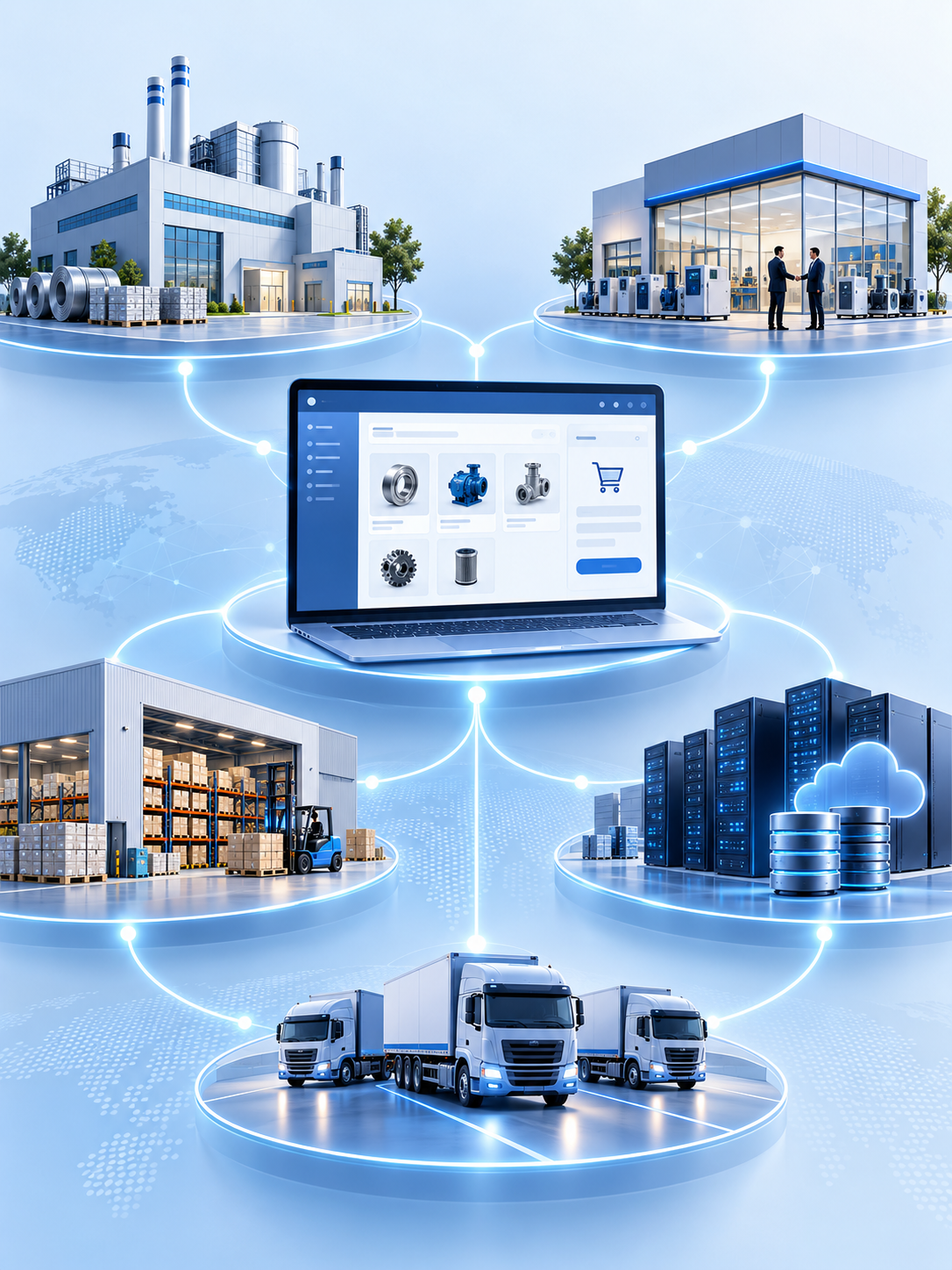
Connect Your Entire Wholesale Network
Why Manufacturers Need B2B Ordering Portals
Manufacturers and wholesalers manage purchasing relationships that ordinary online stores are not designed to handle.
Different distributors may have separate price agreements, credit limits, minimum order quantities, exclusive products and delivery locations.
When these rules are managed across disconnected systems, sales teams spend time confirming prices, processing routine orders and answering stock-availability questions.
A dedicated B2B portal can centralize those activities, giving authorized buyers access to their negotiated commercial terms and up-to-date account information.
It also creates a direct digital channel between manufacturers and their distributors without replacing the relationships managed by sales representatives.
Transform Your Wholesale Ordering Experience
How Does a Wholesale Supplier Portal Work?
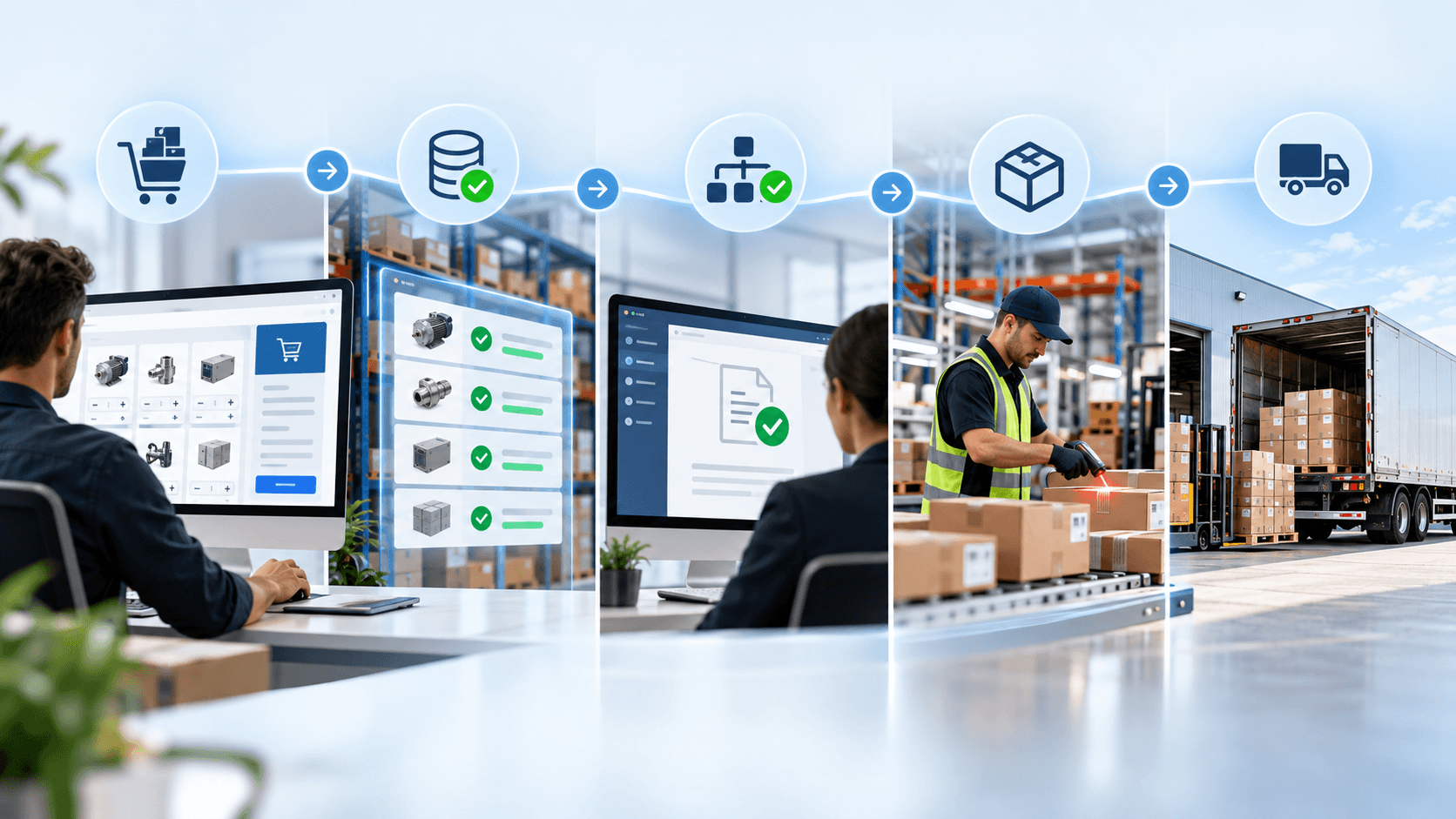
An integrated portal connects the complete wholesale purchasing journey.
Connected wholesale ordering workflow
Dealer or Distributor Login
Account-Specific Catalog and Pricing
Bulk Order or Quote Request
ERP Validation and Inventory Allocation
Payment, Credit Terms and Approval
Fulfillment, Invoice and Delivery Tracking
Illustrative workflow. Credit checks, approvals and payment collection depend on the customer's agreement and the ERP configuration.
Orders can be submitted directly to the existing ERP for appropriate validation and fulfillment. Buyers can then access their order history, invoices and shipment updates without repeatedly contacting the sales department.
Dealer, Distributor and Customer Login
Not every business customer should see the same catalog, prices or account information.
A well-designed portal uses role-based access for dealers, distributors, purchasing managers, sales representatives and administrators.
It can support multiple buyers under one company account, assigned spending limits, purchase approvals, territory-based catalogs and separate shipping addresses.
For large supplier networks, these permissions help maintain commercial confidentiality while allowing customers to purchase independently.
Bulk Ordering and Customer-Specific Pricing
Wholesale purchasing requires more than adding products to a shopping cart.
A manufacturing portal may need minimum order quantities, case-pack sizes, volume discounts, negotiated contract prices, customer-specific catalogs, repeat-order templates and purchase-order uploads.
For configurable industrial products, the ordering workflow may also require product configuration and quotation approval before the final order can be placed.
Pricing rules should originate from an agreed source of truth, usually the ERP or a dedicated pricing service, rather than being maintained independently in several disconnected applications.
Inventory, ERP and Payment Integration
An effective B2B ordering portal should connect with the manufacturer's existing ERP rather than create another disconnected database.
Integration can synchronize inventory availability, customer-specific pricing, purchase orders, order status, invoices and shipment information.
For businesses operating a mid-market manufacturing ERP, the portal can provide a modern customer-facing layer without replacing core manufacturing, purchasing or accounting systems.
When inventory is spread across multiple warehouses, customers can view appropriate stock availability, backorder options and estimated fulfillment dates.
Businesses requiring deeper inventory and financial integration can explore Retail Billing, ERP and Inventory Software .
On-Premises Payment Gateway Solutions
Some manufacturers require payment integrations that communicate securely with on-premises ERP or finance systems.
A suitable architecture can connect the portal to a private payment integration service while a payment processor handles authorized card transactions. Purchase orders, invoicing, ACH transfers and negotiated payment terms can also be supported.
An on-premises payment gateway should not be confused with ordinary ERP-to-payment integration. If the business intends to host payment processing or handle cardholder data internally, it needs a detailed security and PCI DSS assessment.
Using hosted payment collection and tokenization where appropriate can reduce exposure, although outsourcing payment processing does not remove all merchant compliance responsibilities.
Admin Dashboard and Wholesale Reporting
A central administration dashboard gives manufacturers visibility across customer accounts, dealer performance, orders, inventory and payments.
Useful reports include order volume, frequently purchased products, outstanding invoices, customer credit exposure, stock availability and order-processing exceptions.
Role-specific dashboards can give sales representatives, warehouse managers and financial administrators access to the information they need without exposing unrelated customer accounts.
Analytics can help identify recurring purchasing patterns and improve demand planning, provided inventory and order data remain synchronized with the underlying ERP.
Connect Dealers, Inventory and ERP
Custom Development and Dedicated Engineering Teams
Businesses should choose between an existing commerce platform and custom development based on their operational complexity.
A simpler wholesale business may be adequately served by adding B2B capabilities to an existing ecommerce platform.
Custom development becomes relevant when the business has complex pricing, multiple ERP systems, strict access controls, extensive integrations or unusual supplier workflows.
An offshore dedicated development team can support a phased rollout: begin with catalogs, account management and ordering, then introduce deeper ERP integrations, payment workflows, advanced reporting and additional supplier networks.
Murmu Software Infotech supports US businesses with custom software, ERP integrations and dedicated engineering capacity. Businesses evaluating broader technical delivery can explore its Software Development Company in Texas, USA services.
Build a Portal Around Your Distribution Workflow
A successful implementation begins by identifying how dealers, distributors, sales representatives and administrators currently place and process orders.
Document pricing rules, approval requirements, inventory ownership, ERP interfaces, payment methods and fulfillment procedures before development begins.
Then implement the portal in manageable phases, validating order accuracy, system integrations, access controls and the buyer experience before expanding.
Ready to Modernize Wholesale Ordering?
Connect your dealer network, catalogs, pricing, inventory and ERP through one purpose-built B2B ordering platform.
Frequently Asked Questions
What is a B2B ordering portal?
A B2B ordering portal is a secure self-service platform where approved business customers can access their catalogs, negotiated prices, bulk ordering, purchase orders, account information, invoices and order tracking.
Why do manufacturers need B2B ordering portals?
Manufacturers use B2B portals to automate routine ordering, serve dealers and distributors, manage complex pricing, improve inventory visibility and connect customer purchasing with ERP and fulfillment systems.
What features should a wholesale supplier portal include?
Core features include customer-specific catalogs, secure company accounts, contract pricing, bulk ordering, quick reordering, quote requests, purchase approvals, inventory visibility, payment options, ERP integration and reporting.
Can dealers and distributors have separate portal accounts?
Yes. Role-based access can provide different catalogs, prices, credit terms, spending limits, order permissions, shipping addresses and approval workflows for different companies and authorized users.
How does a B2B portal manage bulk orders and pricing?
The portal can support minimum order quantities, case packs, volume discounts, contract-specific rates, customer-specific catalogs, repeat orders and quotation approvals using defined pricing rules.
Can a B2B portal integrate with an existing manufacturing ERP?
Yes. API or middleware integration can exchange customer accounts, pricing, inventory, orders, invoices and fulfillment status with an existing ERP without requiring complete ERP replacement.
Can a B2B ordering portal support on-premises payment gateways?
Yes. A portal can integrate with on-premises payment services or local ERP payment workflows. Architecture, cardholder-data handling and PCI DSS obligations must be evaluated before implementation.
What payment methods can wholesale ordering portals support?
Depending on customer agreements and payment-provider capabilities, portals can support purchase orders, ACH transfers, invoices, approved credit terms and payment cards through appropriately secured integrations.
What should a B2B portal admin dashboard include?
Useful dashboards include orders, sales trends, dealer activity, inventory availability, frequently purchased products, pending approvals, outstanding invoices, customer credit exposure and fulfillment exceptions.
Can US manufacturers hire an offshore team for B2B portal development?
Yes. A dedicated offshore software team can develop and maintain a B2B portal, ERP integrations, payment workflows, dashboards and APIs through phased delivery and agreed collaboration processes.