Top ERP Software Solutions for Small & Medium Manufacturing Businesses

How Modern ERP Systems Are Helping SMB Manufacturers Scale Faster in 2026
Small and medium manufacturing businesses are under increasing pressure to improve efficiency, reduce operational costs, manage inventory accurately, and deliver products faster than ever before. As manufacturing becomes more competitive and technology-driven, traditional spreadsheets and disconnected systems are no longer enough to support sustainable growth.
This is why ERP software has become one of the most important investments for modern manufacturing businesses in 2026.
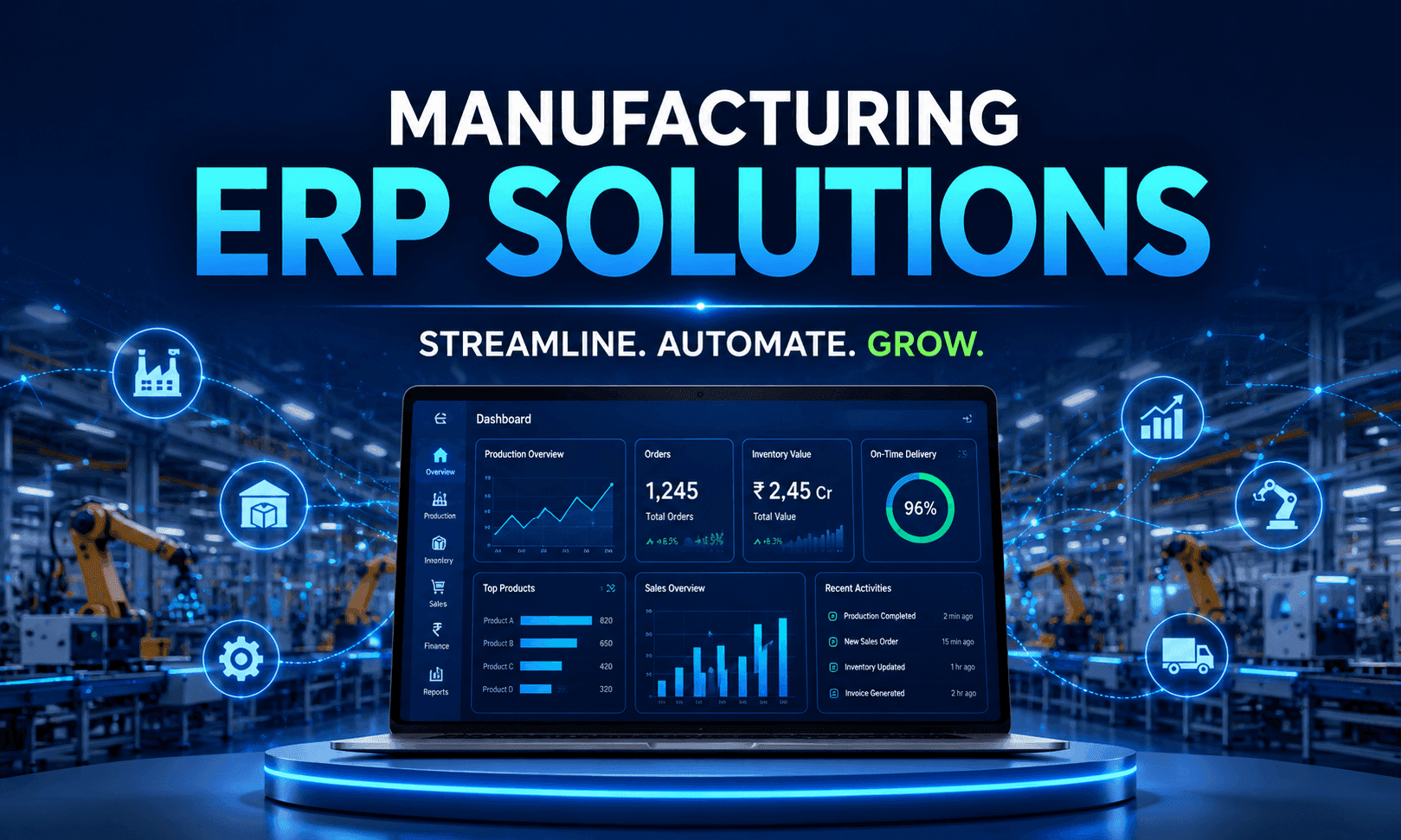
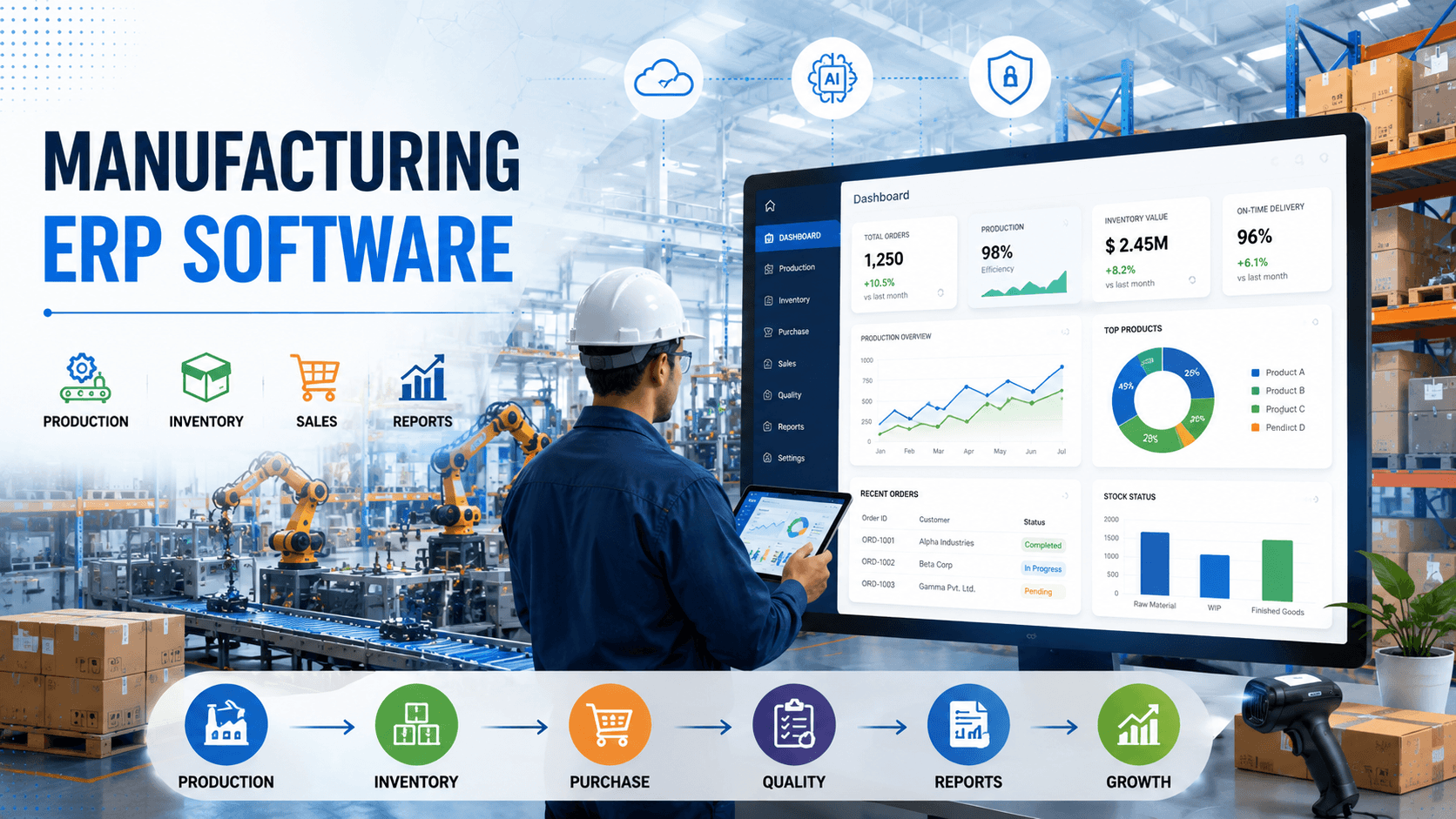
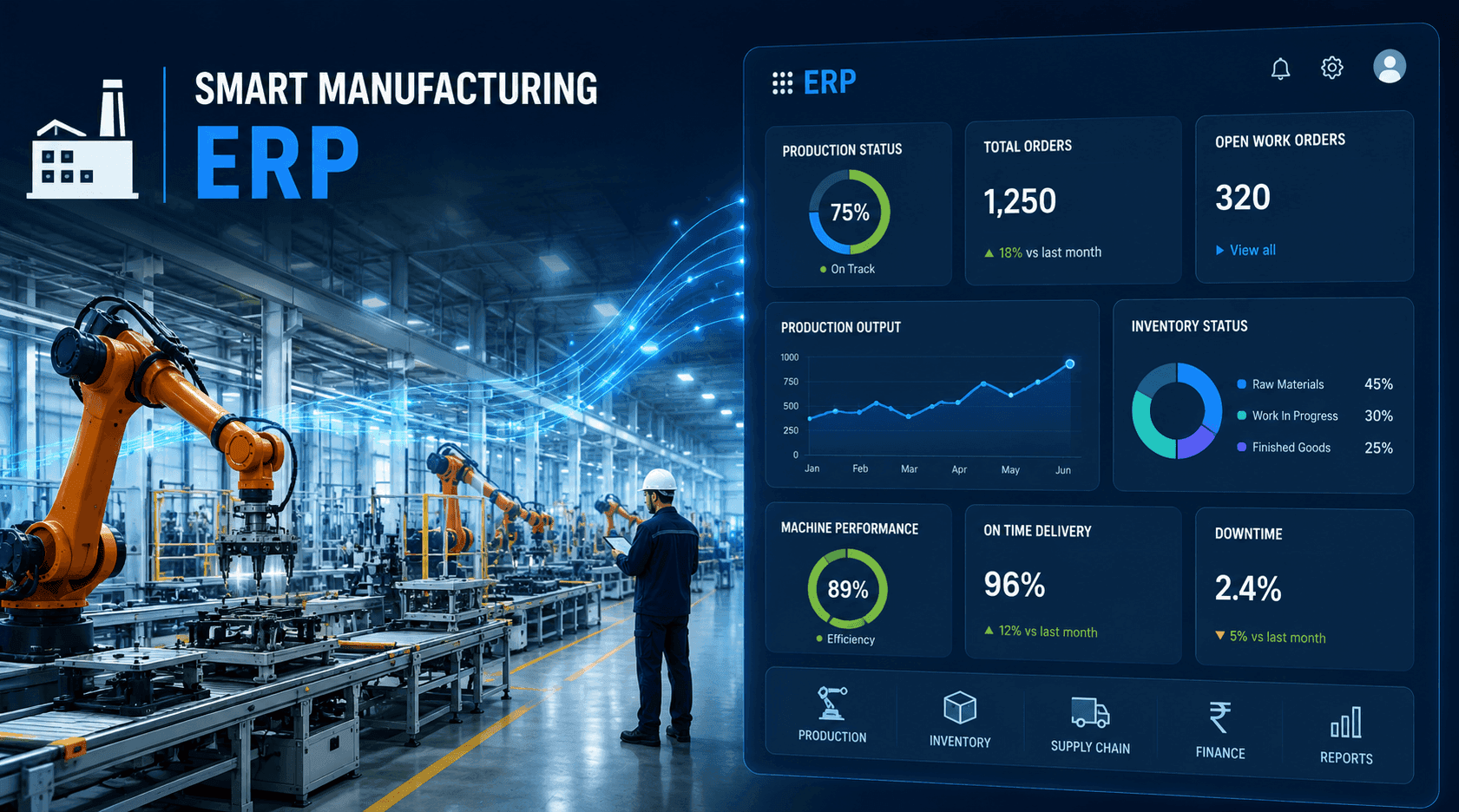
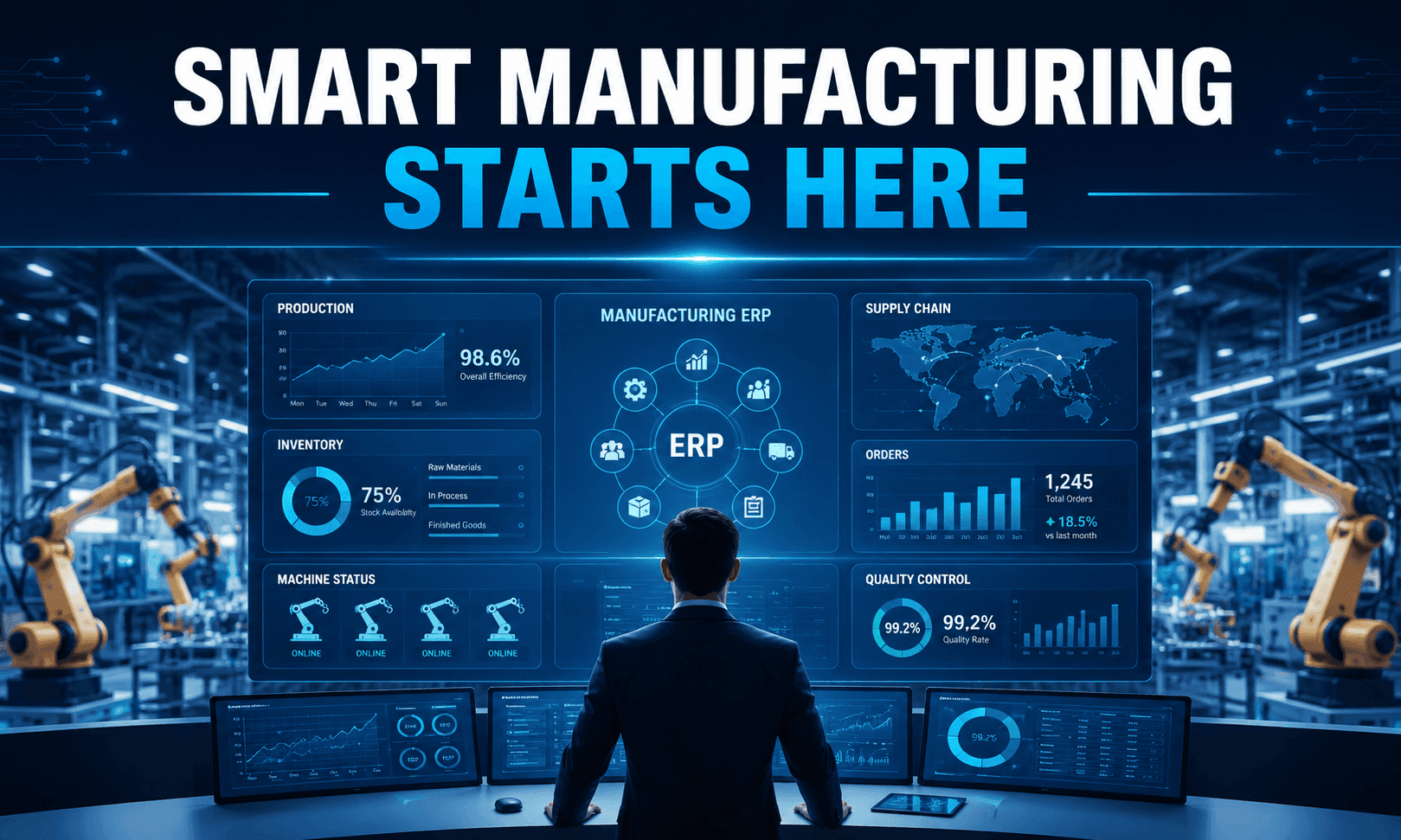
Todayβs manufacturing ERP solutions help organizations streamline operations, automate workflows, improve production planning, manage supply chains, and gain real-time visibility into business performance β all from a centralized platform.
For CEOs, CTOs, Managing Directors, IT Heads, Founders, Co-Founders, VPs, and business leaders, selecting the right ERP software can directly impact productivity, profitability, and long-term scalability.
In this guide, we explore the top ERP software solutions for small and medium manufacturing businesses, the key features to look for, and how ERP systems are transforming modern manufacturing operations.
What is Manufacturing ERP Software?
Manufacturing ERP software is an integrated business management system designed specifically for manufacturing companies.
It connects core business functions such as:
- Production planning
- Inventory management
- Procurement
- Supply chain management
- Accounting & finance
- CRM
- Warehouse operations
- Quality control
- HR & payroll
Instead of managing multiple disconnected tools, manufacturers can operate through one centralized system.
Modern ERP solutions also integrate AI, automation, IoT, and cloud technologies to support smart manufacturing environments.
Why Small & Medium Manufacturers Need ERP Software
Many growing manufacturing businesses struggle with:
- Manual processes
- Inventory inaccuracies
- Production delays
- Poor reporting visibility
- Supply chain inefficiencies
- Communication gaps between departments
ERP software helps solve these operational challenges by creating a unified digital ecosystem.
Key benefits include:
- Improved production efficiency
- Real-time operational visibility
- Better inventory management
- Faster decision-making
- Reduced operational costs
- Scalable growth infrastructure
For manufacturing SMBs, ERP is no longer optional β it is essential for digital transformation and competitive growth.
Key Features to Look for in Manufacturing ERP Software
Build a Smarter, Faster, and More Connected Manufacturing Business
Before selecting an ERP platform, manufacturing leaders should evaluate the following capabilities:
Production Planning & Scheduling
Efficient production management improves operational productivity and reduces downtime.
Inventory Management
Real-time inventory tracking helps reduce stock shortages and excess inventory costs.
Supply Chain Management
Integrated procurement and supplier management improve supply chain visibility.
Cloud Accessibility
Cloud ERP systems support remote access, scalability, and lower infrastructure costs.
AI & Automation
Automation streamlines repetitive tasks and improves business efficiency.
Reporting & Analytics
Advanced dashboards provide real-time business intelligence for leadership teams.
Scalability
ERP systems should support future business growth and expansion.
Top ERP Software Solutions for Small & Medium Manufacturing Businesses
1. SAP Business One
SAP Business One is one of the most widely adopted ERP solutions for small and mid-sized manufacturers.
Key Features
- Production management
- Inventory tracking
- Financial management
- Supply chain integration
- Real-time analytics
- Cloud deployment options
Best For
Growing manufacturing businesses looking for enterprise-grade scalability.
Why Manufacturers Choose It
SAP Business One offers strong operational visibility and supports multi-location manufacturing environments.
2. Microsoft Dynamics 365 Business Central
Microsoft Dynamics 365 Business Central is a powerful cloud ERP solution designed for modern manufacturing operations.
Key Features
- Production planning
- Warehouse management
- Financial reporting
- CRM integration
- AI-powered analytics
- Microsoft ecosystem integration
Best For
Manufacturers already using Microsoft technologies.
Why Manufacturers Choose It
Its cloud-first architecture and seamless integration with Microsoft tools improve operational collaboration and scalability.
3. Epicor ERP
Epicor ERP is specifically designed for manufacturing businesses and supports complex production environments.
Key Features
- Manufacturing execution systems
- Advanced scheduling
- Shop floor management
- Inventory optimization
- Supply chain visibility
- Industrial automation support
Best For
Mid-sized manufacturers with advanced operational requirements.
Why Manufacturers Choose It
Epicor provides industry-focused manufacturing capabilities and strong customization flexibility.
4. Oracle NetSuite ERP
Oracle NetSuite ERP is a cloud-based ERP platform known for scalability and real-time business intelligence.
Key Features
- Cloud ERP infrastructure
- Inventory & order management
- Procurement automation
- Financial management
- Real-time dashboards
- Multi-location support
Best For
Rapidly scaling manufacturing businesses.
Why Manufacturers Choose It
NetSuite offers excellent cloud scalability and centralized operational control.
5. Odoo Manufacturing ERP
Odoo ERP is a flexible and cost-effective ERP platform popular among SMB manufacturers.
Key Features
- Manufacturing management
- Inventory control
- CRM & accounting integration
- Open-source flexibility
- Workflow automation
- Customizable modules
Best For
Small manufacturers seeking affordable ERP solutions.
Why Manufacturers Choose It
Odoo offers modular flexibility and lower implementation costs compared to enterprise ERP systems.
6. Infor CloudSuite Industrial
Infor CloudSuite Industrial is a manufacturing-focused ERP solution built for operational efficiency and Industry 4.0 readiness.
Key Features
- Smart manufacturing tools
- AI-driven analytics
- Production optimization
- Predictive maintenance
- Supply chain management
- Cloud deployment
Best For
Manufacturers adopting Industry 4.0 technologies.
Why Manufacturers Choose It
Infor provides strong manufacturing intelligence and automation capabilities.
Cloud ERP vs On-Premise ERP for Manufacturers
Cloud ERP Benefits
- Lower infrastructure costs
- Faster deployment
- Remote accessibility
- Better scalability
- Automatic software updates
On-Premise ERP Benefits
- Greater infrastructure control
- Custom server management
- Internal data hosting
In 2026, most small and medium manufacturers are shifting toward cloud ERP solutions due to flexibility and lower maintenance costs.
How ERP Software Improves Manufacturing Operations
ERP systems create operational efficiency across the organization by:
- Centralizing data
- Automating workflows
- Improving production planning
- Enhancing inventory accuracy
- Streamlining procurement
- Supporting predictive analytics
For leadership teams, ERP enables data-driven strategic decision-making.
This is especially important in competitive manufacturing sectors where operational speed and visibility directly impact profitability.
Common ERP Implementation Challenges
While ERP systems offer significant benefits, implementation requires proper planning.
Common challenges include:
- Employee adoption resistance
- Data migration complexity
- Process standardization
- Integration with legacy systems
- Initial implementation costs
Working with experienced ERP implementation partners can significantly reduce deployment risks.
You can also explore our:
The Future of Manufacturing ERP in 2026
ERP systems are evolving rapidly with technologies like:
- Artificial Intelligence
- Machine Learning
- Industrial IoT
- Smart factory automation
- Predictive analytics
- Real-time operational intelligence
Modern ERP platforms are becoming intelligent business ecosystems rather than simple operational software.
Manufacturers adopting next-generation ERP solutions will gain a major competitive advantage in productivity, scalability, and digital transformation.
How to Choose the Right ERP Software for Your Manufacturing Business
Before selecting an ERP solution, business leaders should evaluate:
- Industry specialization
- Business size compatibility
- Customization flexibility
- Scalability
- Cloud capabilities
- Security standards
- Integration support
- Total cost of ownership
- Vendor expertise
The best ERP solution is one that aligns with long-term operational and business growth goals.
Final Thoughts
Manufacturing businesses in 2026 need more than traditional software systems to remain competitive. They need intelligent, scalable, and integrated ERP solutions that support automation, operational visibility, and digital transformation.
The right manufacturing ERP software can help small and medium businesses:
- Improve productivity
- Reduce operational costs
- Optimize inventory
- Enhance supply chain efficiency
- Scale operations faster
For CEOs, CTOs, IT Heads, and manufacturing decision-makers, ERP is now a strategic investment that drives long-term operational success.