The Future of Manufacturing is Data-Driven, Automated, and ERP-Powered
The manufacturing industry is entering a new era in 2026. Rising operational costs, increasing customer expectations, supply chain disruptions, and the demand for real-time visibility are forcing manufacturing companies to rethink how they operate. Traditional spreadsheets, disconnected systems, and manual processes are no longer enough to compete in a fast-moving industrial landscape.
This is where ERP software for manufacturing companies becomes a strategic necessity.
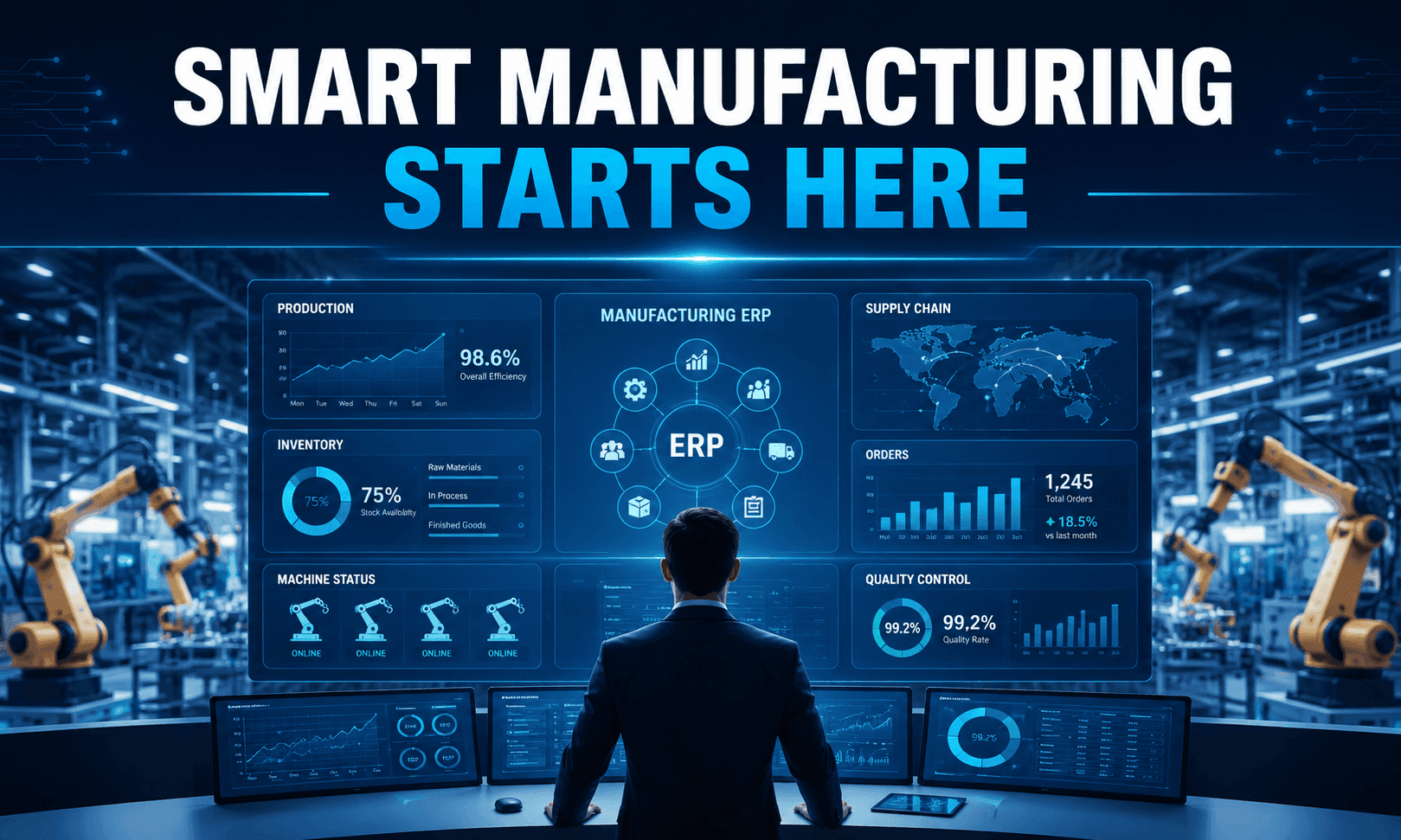
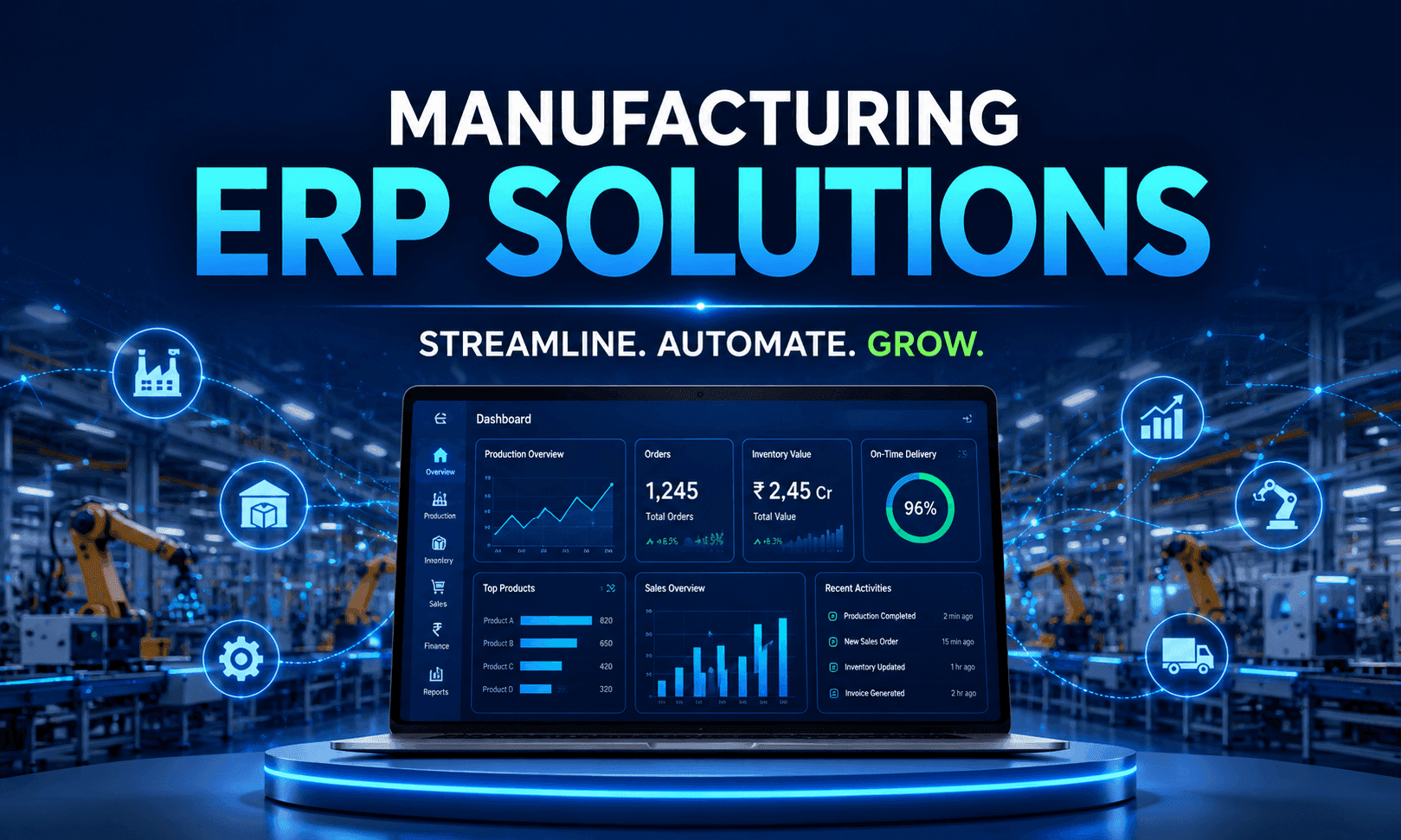
Modern ERP (Enterprise Resource Planning) systems are helping manufacturers streamline operations, improve production efficiency, reduce costs, optimize inventory, and make faster business decisions using real-time data. Whether you are a large enterprise, mid-sized manufacturer, or rapidly growing industrial business, ERP software is now the backbone of digital transformation.
For CXOs, CEOs, CTOs, Managing Directors, IT Heads, Project Delivery Managers, and business leaders, the question is no longer “Should we implement ERP?” but rather “How fast can we modernize our operations before competitors do?”
What is ERP Software in Manufacturing?
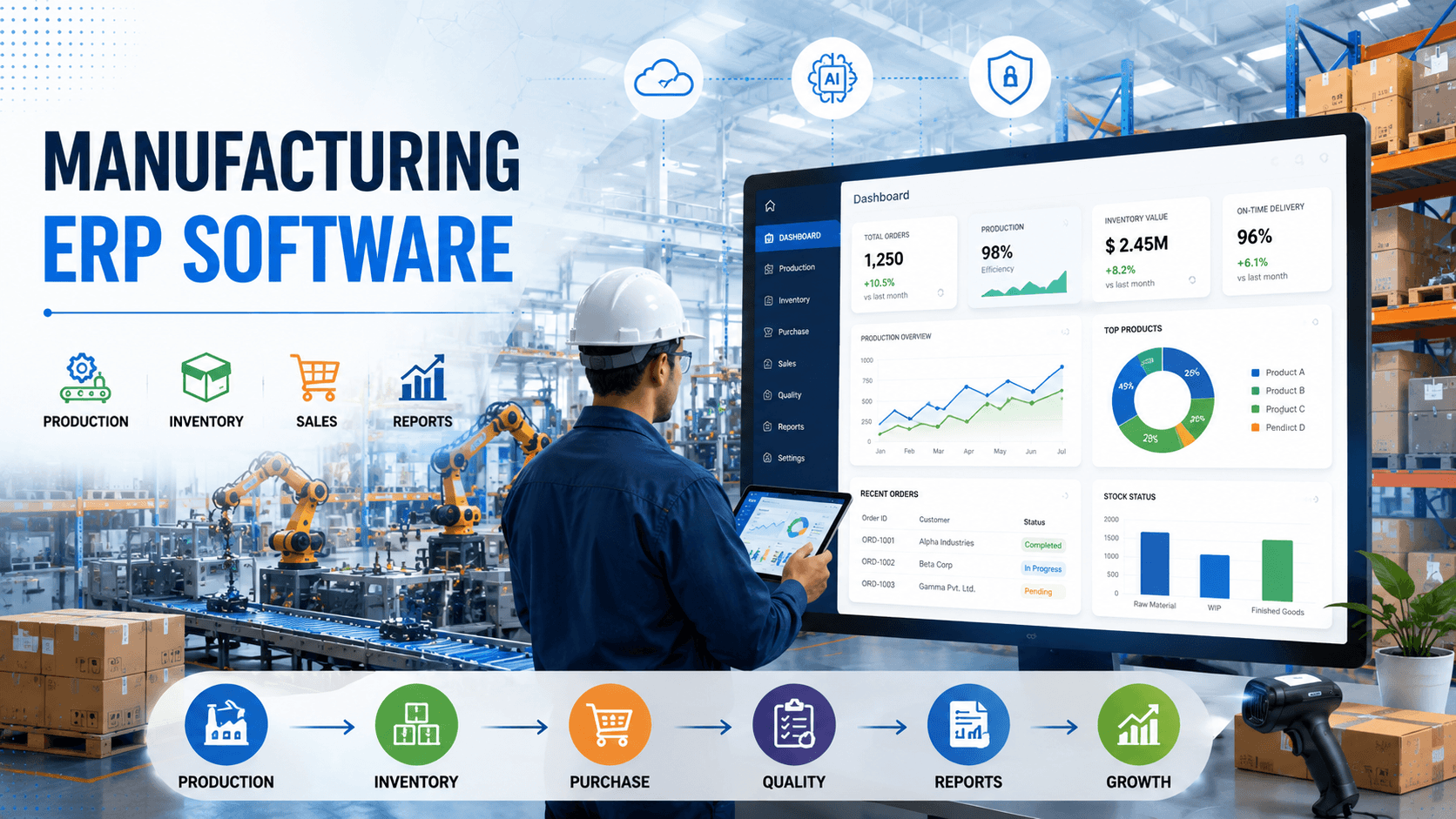
ERP software is an integrated business management system that connects all critical departments into one centralized platform. It enables manufacturers to manage:
Production Planning
Inventory Management
Procurement & Supply Chain
Sales & CRM
Finance & Accounting
Quality Control
Human Resources
Warehouse Management
Business Intelligence & Reporting
Instead of operating with disconnected tools, ERP provides a unified ecosystem where data flows seamlessly across departments.
In 2026, manufacturers are increasingly adopting cloud-based ERP solutions with AI-powered analytics, automation, predictive forecasting, and IoT integration to stay competitive.
Why Manufacturing Companies Need ERP Software in 2026
One of the biggest challenges manufacturing companies face is lack of operational visibility. Many businesses still rely on multiple systems, spreadsheets, and manual reporting methods.
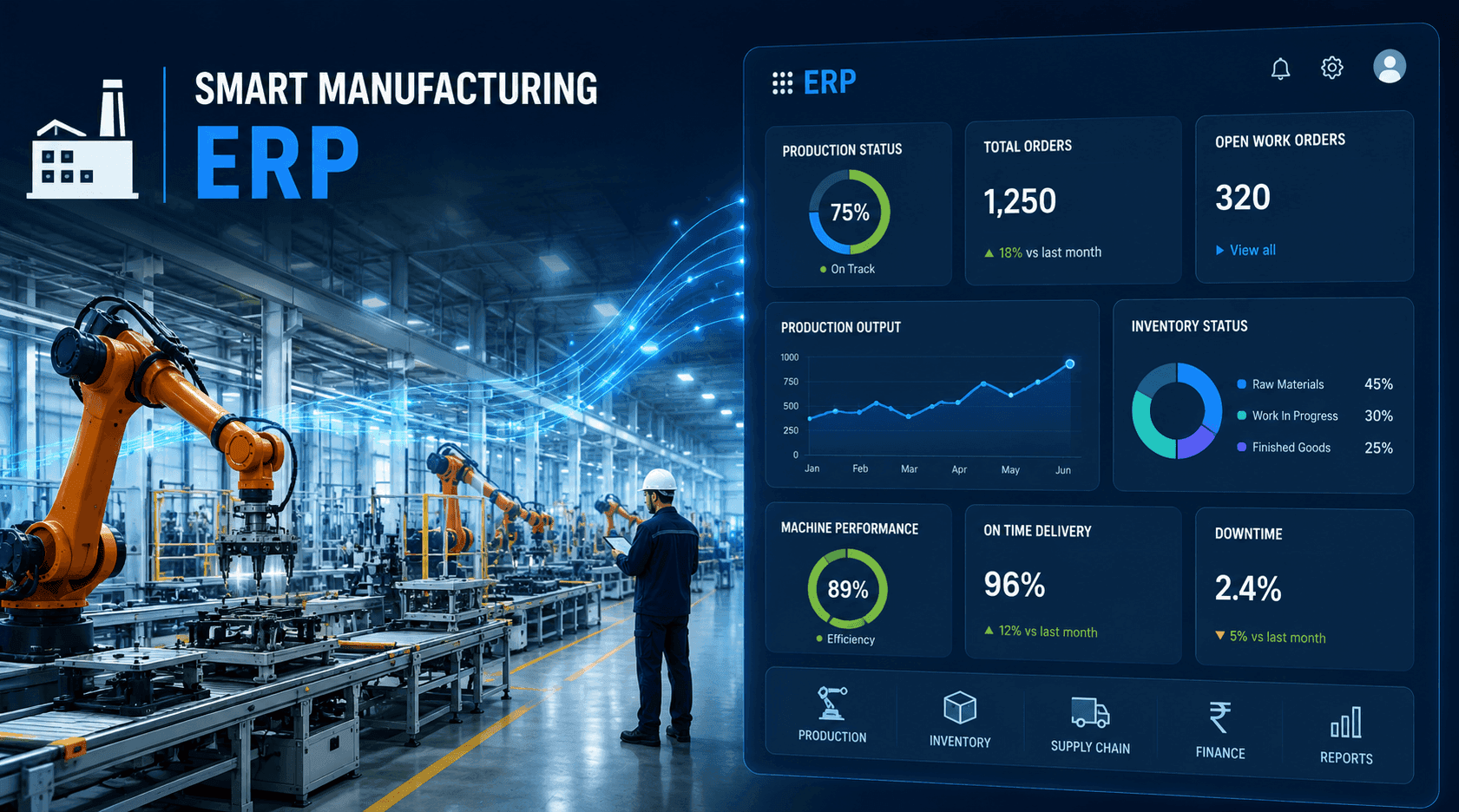
ERP software provides real-time dashboards and centralized reporting that help leadership teams monitor:
Production performance
Machine utilization
Inventory levels
Supply chain bottlenecks
Financial performance
Order tracking
Workforce productivity
For CEOs and Managing Directors, this visibility improves strategic decision-making and reduces operational blind spots.
With ERP, leadership teams no longer wait days for reports — they get actionable insights instantly.
2. Smarter Production Planning & Scheduling
In manufacturing, poor production planning directly impacts profitability.
ERP systems use automation and AI-driven forecasting to optimize:
Production schedules
Resource allocation
Machine availability
Material planning
Capacity management
This minimizes downtime, improves operational efficiency, and helps manufacturers deliver orders on time.
In 2026, manufacturers that fail to automate production workflows will struggle to meet customer expectations and delivery timelines.
3. Inventory Optimization & Reduced Waste
Inventory mismanagement is one of the biggest cost drivers in manufacturing.
Too much inventory leads to increased storage costs, while insufficient inventory causes production delays and missed deadlines.
ERP software helps manufacturers:
Track inventory in real time
Predict stock requirements
Reduce excess inventory
Avoid stock shortages
Improve warehouse efficiency
Manage batch and serial tracking
Advanced ERP platforms also provide predictive analytics to forecast demand trends more accurately.
This directly improves cash flow and operational efficiency.
4. Better Supply Chain Management
Global supply chains have become increasingly unpredictable. Delays, vendor disruptions, transportation issues, and raw material shortages can severely impact production.
Modern ERP systems improve supply chain resilience through:
Vendor management
Procurement automation
Real-time shipment tracking
Demand forecasting
Supplier performance monitoring
Automated purchase orders
For CTOs and Operations Heads, ERP enables proactive supply chain planning instead of reactive crisis management.
5. Data-Driven Decision Making
Manufacturing leaders need accurate data to make strategic decisions.
ERP software provides advanced analytics and business intelligence tools that help executives monitor KPIs such as:
Production efficiency
Cost per unit
Profit margins
Downtime analysis
Sales forecasting
Customer demand trends
In 2026, data-driven manufacturing companies will outperform competitors that still rely on intuition-based decision-making.
ERP transforms raw operational data into meaningful business intelligence.
6. Increased Automation & Reduced Manual Work
Manual processes slow down operations and increase the risk of human error.
ERP systems automate repetitive tasks such as:
Invoice generation
Procurement approvals
Inventory updates
Payroll processing
Production tracking
Order management
Automation improves accuracy, saves time, and allows teams to focus on higher-value business activities.
For large manufacturing enterprises, this operational efficiency translates into significant cost savings.
7. Improved Compliance & Quality Control
Regulatory compliance is becoming more complex across manufacturing sectors.
Manufacturing companies that embrace ERP software are gaining a major competitive advantage through:
Faster decision-making
Better operational efficiency
Lower production costs
Improved customer satisfaction
Greater scalability
Intelligent automation
Meanwhile, businesses still operating on outdated systems risk losing market share to more agile competitors.
ERP is no longer optional for modern manufacturing enterprises — it is a strategic business requirement.
Final Thoughts
The manufacturing industry in 2026 is becoming more complex, data-driven, and technology-focused than ever before. Businesses that continue relying on disconnected systems and manual processes will struggle to scale efficiently.
ERP software empowers manufacturing companies to streamline operations, improve visibility, automate workflows, optimize production, and drive sustainable growth.
For CEOs, CTOs, Managing Directors, IT Heads, and business leaders, investing in ERP is not just about improving operations — it is about future-proofing the organization for the next decade of industrial transformation.
Ready to Transform Your Manufacturing Operations?
If your manufacturing business is planning digital transformation in 2026, now is the right time to invest in a powerful ERP solution tailored to your operational needs.
Our team helps manufacturing companies implement scalable, intelligent, and future-ready ERP systems that improve productivity and drive measurable business growth.
Contact us today to schedule a free ERP consultation and discover how the right ERP strategy can transform your manufacturing business.
Frequently Asked Questions
What is Why Manufacturing Companies Need ERP Software in 2026?⌄
Discover why manufacturing companies need ERP software in 2026 to improve production planning, inventory management, automation, and operational efficiency. Learn how modern manufacturing ERP solutions help CEOs, CTOs, and business leaders scale faster, reduce costs, and drive digital transformation.