AI-Powered Manufacturing Quotation Software Mumbai: Protect Your Profit Margins
In This Article
- Manufacturing Quotation Software Mumbai Teams Need for Faster RFQs
- AI Costing Software Maharashtra: From RFQ to Approved Quote
- BOM Costing Automation Reduces Spreadsheet Inconsistency
- Product Cost Estimation Software Helps Protect Margins
- ERP Integration Keeps Manufacturing Costing Connected
- Manufacturing Approval Automation Reduces Quotation Delays
- Best Fit for AI Manufacturing Costing Software in Mumbai
- Cost Considerations for Manufacturing Costing Automation
- Why Murmu Software Infotech for Manufacturing Costing Automation
- Turn Every RFQ Into a Faster, Profitable Quotation
Manufacturing quotation software in Mumbai can automate RFQ costing, BOM calculations, approvals and margin analysis while integrating with your existing ERP.
For many manufacturers in Mumbai, Navi Mumbai and Thane, quotations are still done in Excel. Material rates are mined from one file, labour and machine hours from another, overheads calculated using old templates, and margin approvals via email/WhatsApp. By the time a quotation is ready for issue, cost might have changed. This leads to slower RFQ response, varying pricing, delayed approvals and margins leakage.
Modern manufacturing quotation software Mumbai businesses can use does not have to replace the ERP. It can add an intelligent costing and quotation layer around the systems already running procurement, inventory, finance and production.
Businesses planning broader software modernization can also explore MSI’s software development services in Mumbai.
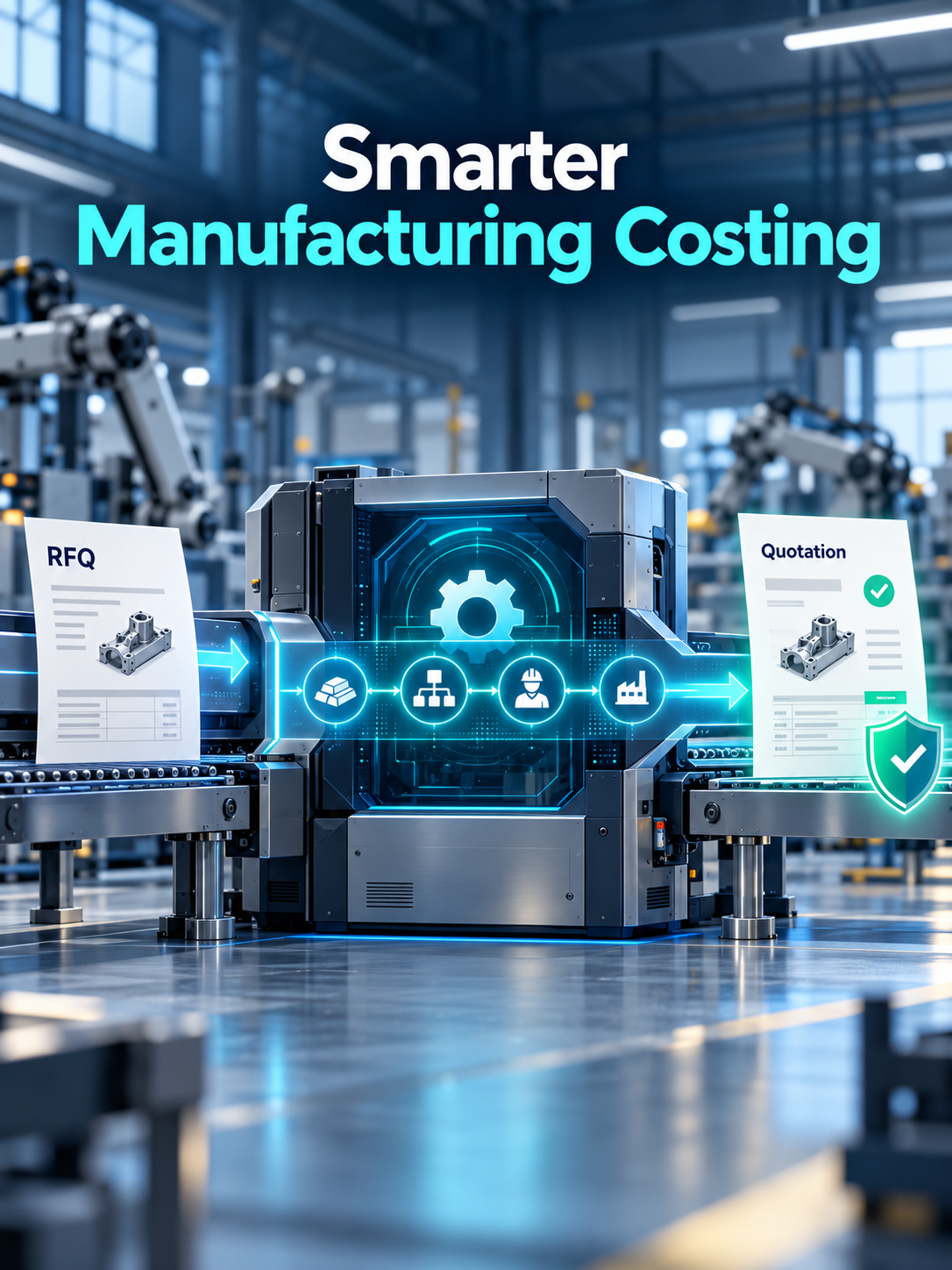
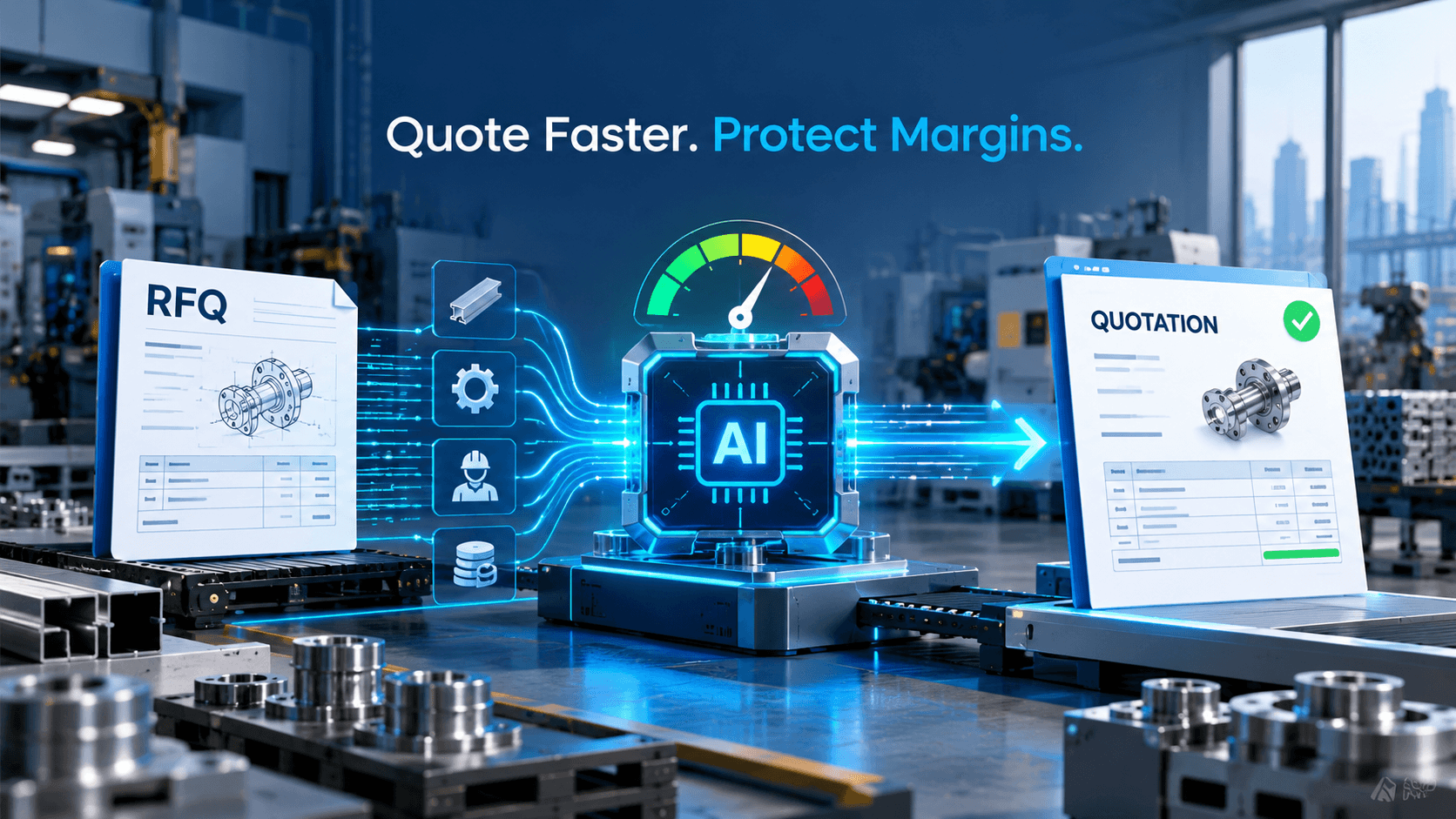
Quote Faster. Protect Every Margin.
Turn RFQs into consistent, margin-aware quotations with AI-assisted BOM costing, scenario analysis, approval workflows and ERP-connected manufacturing intelligence.
Manufacturing Quotation Software Mumbai Teams Need for Faster RFQs
A customer RFQ can look simple until the costing team starts calculating what it will actually take to deliver.
A realistic quotation may depend on:
- raw-material grades and current rates
- BOM quantities and wastage
- machine setup and production hours
- direct and indirect labour
- subcontracting or outside processes
- tooling, inspection and quality costs
- factory overheads
- packaging and logistics
- installation or service requirements
- target margin and customer discounts
When different estimators have their separate spreadsheets, the same product may have different selling prices according to who is preparing the quote.
A structured costing platform standardizes the inputs, calculation rules and approval workflow so teams can move from RFQ to commercial quotation with greater consistency.
AI Costing Software Maharashtra: From RFQ to Approved Quote
A practical AI-assisted workflow can look like:
RFQ → Requirement Analysis → BOM & Process Costing → Cost Validation → Margin Simulation → Approval → Customer Quotation
AI is most useful at the interpretation and decision-support stages, where it can help identify missing cost elements, interpret customer requirements, and summarize relevant cost drivers and scenarios.
Financial calculations should be controlled, with MSI's manufacturing costing approach using configurable, deterministic formulas for materials, labour, machines, overheads and selling price, while AI may support analysis and explanation.
This is important since manufacturers require repeatable numbers not an AI-generated guess.
Protect Margins and Quote Faster With AI Manufacturing Costing
BOM Costing Automation Reduces Spreadsheet Inconsistency
BOM costing becomes difficult when a quotation contains dozens or hundreds of components.
A BOM costing automation workflow can maintain quantities, unit rates, wastage, alternative materials and historical cost references in one structured process.
Rather than reworking each costing estimate from scratch, teams can leverage approved product templates and simply update the changed variables.
For example, if a customer has requested a change in quantity, the costing engine will be able to recalculate the consumption of materials, hours and unit economics. By contrast, if a material rate has been updated, the commercial teams will immediately understand the impact on the cost and therefore the required selling price.
MSI’s AI Product & Service Cost Calculator manufacturing case study demonstrates a workflow combining BOM, materials, machine costs, labour, manufacturing processes, overheads, quality, packaging, logistics, service costs, margin and quotation preparation.
Protect Margins and Quote Faster With AI Manufacturing Costing
Product Cost Estimation Software Helps Protect Margins
Fast quotations are valuable only when they remain commercially sound.
Good product cost estimation software should show the relationship between cost and selling price before a quotation leaves the business.
Teams should be able to answer questions such as:
What if steel increases by 7%?
What happens if quantity doubles?
Can we offer a 5% discount and retain the required margin?
Would another supplier improve unit economics?
Scenario analysis allows the team to test these changes without overwriting the original estimate.
This also helps avoid one common pricing problem: confusing markup with gross margin. Standardized calculation rules make pricing logic transparent and easier to approve.
ERP Integration Keeps Manufacturing Costing Connected
Manufacturers often already have useful information tucked inside ERP, procurement, CRM, inventory or production systems.
So replacing these platforms just to help improve quotation costing would cause undue disruption.
A better approach is to design the costing solution as an integration layer that pulls the required approved information such as:
material masters → supplier rates → BOMs → customer records → inventory data → historical quotations
Approved quotation data can then flow back into downstream workflows where appropriate.
MSI’s AI Manufacturing Cost Calculator solution is designed with ERP-ready integration options for procurement, production and financial systems.
Manufacturing Approval Automation Reduces Quotation Delays
Many quotation delays are not calculation problems they are approval problems.
A quote may wait for confirmation from procurement, costing, finance, sales or management.
Digital approval rules can route quotations according to business conditions. For example:
- margin below threshold → finance approval
- large discount → commercial-head approval
- unusual material rate → procurement review
- high-value quotation → management approval
- missing cost component → estimator review
This creates an auditable process while allowing normal quotations to move faster.
Turn Every RFQ Into a Faster, Profitable Quotation
Best Fit for AI Manufacturing Costing Software in Mumbai
This approach is particularly relevant for fabrication companies, engineering suppliers, industrial equipment manufacturers, component manufacturers, machine shops and make-to-order businesses.
It is most beneficial in scenarios where teams are dealing with a high volume RFQs, custom products, fluctuating material rates, complex BOMs or multiple approval stages.
The software does not need to be rolled out as an end-to-end automation solution right away. Manufacturers can start with one product family or quotation process, test calculation rules, compare results with past jobs and then scale up.
Cost Considerations for Manufacturing Costing Automation
Implementation cost depends on the actual manufacturing environment.
Key factors include:
- number of product categories
- BOM complexity
- costing formulas
- number of users and approvers
- historical quotation migration
- ERP/API availability
- supplier and material data quality
- scenario-analysis requirements
- quotation templates
- deployment and security requirements
A focused costing pilot will therefore cost less than a multi-plant platform integrated with ERP, procurement, CRM and production systems.
The safest approach is to scope one high-value quotation workflow first.
Why Murmu Software Infotech for Manufacturing Costing Automation
Murmu Software Infotech can help manufacturers structure costing intelligence around existing operational systems rather than forcing an unnecessary platform replacement.
The workflow can combine AI-assisted RFQ interpretation, BOM costing, materials, labour, machine time, overhead rules, scenario comparison, margin controls, approvals and quotation generation. MSI’s existing manufacturing costing case study provides a practical reference architecture for this approach.
Turn Every RFQ Into a Faster, Profitable Quotation
CTA: Request Costing Demo
Start by reviewing the AI Manufacturing Cost Calculator and then request a manufacturing costing discussion.
Frequently Asked Questions
What is manufacturing quotation software?
Manufacturing quotation software structures product costing and quotation preparation using inputs such as materials, BOM quantities, machine time, labour, processes, overheads, logistics and target margins.
How does AI manufacturing costing software work?
AI can interpret RFQ requirements, identify relevant cost components and explain cost drivers, while configured calculation rules determine material, labour, machine, overhead and selling-price values.
Can manufacturing quotation software integrate with an existing ERP?
Yes. Integration can connect approved ERP, procurement, CRM, inventory or production data depending on available APIs, security requirements and project scope.
What is BOM costing automation?
BOM costing automation calculates material and component costs using quantities, rates, wastage and production volumes through standardized formulas instead of repeated manual spreadsheet calculations.
How can costing software protect manufacturing profit margins?
It provides visibility into total and unit costs, applies target margin or markup rules and supports scenario analysis before a commercial quotation is approved.
Can the software handle changing raw-material prices?
Yes. Scenario analysis can model different material rates and show their impact on product cost, selling price and target margin without changing the original estimate.
Can quotation approval workflows be automated?
Yes. Quotations can be routed for approval based on margin thresholds, discounts, quotation value, unusual cost inputs or other business-specific rules.
Can historical estimates be reused?
Yes. Historical costing records can help estimators reference similar products, previous quantities, material prices, manufacturing processes and selling prices.
Who should use AI manufacturing costing software in Mumbai?
It can suit fabrication units, engineering suppliers, component manufacturers, industrial equipment companies, machine shops and make-to-order manufacturers handling frequent or complex RFQs.
How much does manufacturing costing software cost?
Cost depends on product complexity, costing rules, users, approval workflows, ERP integrations, historical data, customization, deployment requirements and the scope of the initial pilot.