Telemedicine Software Development
In This Article
- Build a Secure, Scalable Virtual Care Platform
- What Is Telemedicine Software Development?
- Core Features of a Telemedicine Platform
- Patient registration and secure access
- Doctor search and appointment scheduling
- Secure online video consultation
- Digital notes and prescriptions
- Payments and revenue management
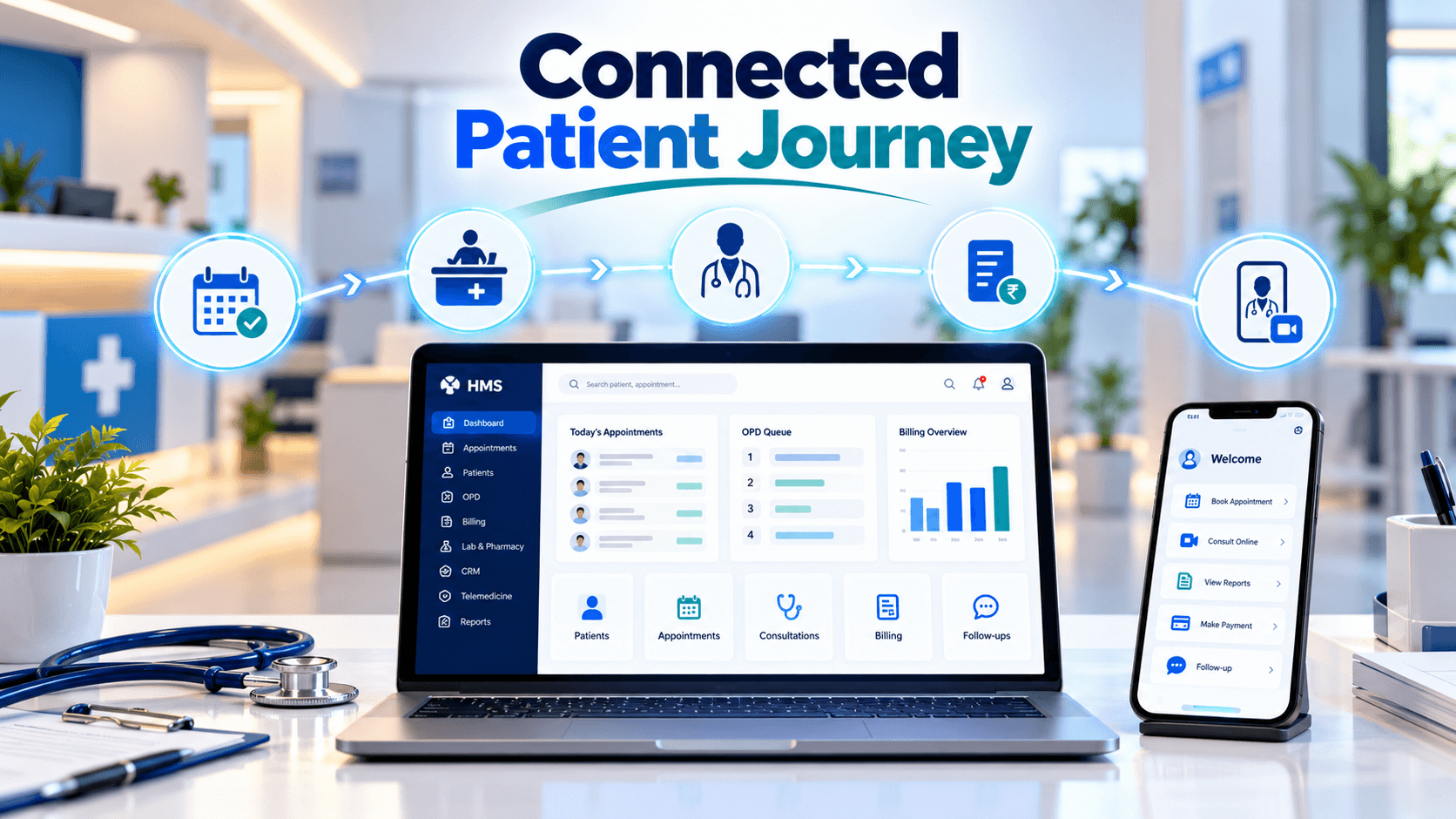
- Telemedicine as Part of Complete Healthcare Software
- HMS and EMR integration
- Healthcare CRM integration
- OPD and queue integration
- LIMS, pharmacy and diagnostic integration
- Healthcare marketing website and CMS
- Telemedicine MVP Development
- AI Opportunities in Telemedicine
- Security and Compliance Considerations
- What Affects Telemedicine Software Development Cost?
- Our Telemedicine Development Experience
- Choose the Right Telemedicine Software Development Company
- Build Your Telemedicine Platform
Build a Secure, Scalable Virtual Care Platform
Telemedicine is no longer limited to a doctor and patient joining a video call. Modern healthcare organizations need a connected virtual-care platform that manages the complete journey—from doctor discovery and appointment booking to consultation, payment, digital prescription and follow-up care.
For hospitals, clinics, doctor networks and digital health startups, custom telemedicine software development can expand patient access, create online consultation services and connect remote care with existing hospital operations.
However, a successful platform must combine clinical workflows, patient-friendly experiences, secure communication, healthcare integrations and scalable architecture. Leading telemedicine solutions commonly support real-time and asynchronous communication, appointment scheduling, virtual waiting rooms, patient portals, e-prescriptions, payments, remote monitoring and EHR or EMR integration.
What Is Telemedicine Software Development?
Telemedicine software development is the process of designing and building secure web and mobile platforms through which patients and healthcare professionals can communicate and deliver remote care.
Depending on the healthcare model, a telemedicine platform may support:
- Online doctor discovery and appointments
- Secure video and audio consultations
- Patient registration and medical profiles
- Virtual waiting rooms
- Digital prescriptions
- Consultation notes
- Online consultation payments
- Secure patient-doctor messaging
- Patient portals and mobile applications
- Follow-up reminders
- Remote patient monitoring
- Healthcare analytics
- HMS, EMR, EHR, CRM and LIMS integrations
The objective is not simply to digitize a consultation. It is to create a smooth workflow for patients, doctors, hospital staff and administrators.
Core Features of a Telemedicine Platform
Patient registration and secure access
Patients should be able to register, verify their account, maintain profile information and securely access appointments, prescriptions and consultation history.
A simplified onboarding process is essential. Complicated registration, unclear navigation or too many booking steps can reduce platform adoption.
Launch Your Secure Telemedicine Platform and Scale Virtual Care
Doctor search and appointment scheduling
Patients should be able to search by doctor, specialty, department, service type or availability.
An effective scheduling module includes:
- Doctor profiles
- Available consultation slots
- Consultation fees
- Appointment confirmation
- Rescheduling and cancellation
- Automated reminders
- Calendar synchronization
Scheduling should also provide hospital teams with visibility into doctor availability, waiting patients and appointment status. Competitor research consistently treats scheduling, reminders and virtual waiting-room management as foundational telemedicine capabilities.
Secure online video consultation
The video consultation should be connected to a confirmed appointment instead of relying on manually shared meeting links.
A professional online video consultation platform may include:
- Appointment-controlled consultation rooms
- Doctor and patient identity validation
- Audio and video controls
- Secure in-consultation messaging
- Document and image sharing
- Mobile and browser access
- Connection-quality monitoring
- Consultation status tracking
Different healthcare specialties may also require asynchronous communication, image sharing or store-and-forward workflows in addition to real-time video consultations.
Digital notes and prescriptions
Doctors require a focused consultation interface where they can review patient information, add observations, prepare structured notes and generate digital prescriptions.
Patients should then be able to access prescriptions, instructions and follow-up recommendations through their portal or application.
The doctor must remain responsible for reviewing and approving all clinical documentation and prescriptions.
Payments and revenue management
Online payment integration enables hospitals and healthcare providers to collect consultation fees during the booking process.
The platform may support:
- Consultation-fee configuration
- Payment gateway integration
- Payment confirmation
- Digital receipts
- Refund tracking
- Transaction reporting
- Insurance or claim integrations where applicable
Connecting booking, payment and consultation status gives management clearer visibility into telemedicine revenue and service utilisation.
Telemedicine as Part of Complete Healthcare Software
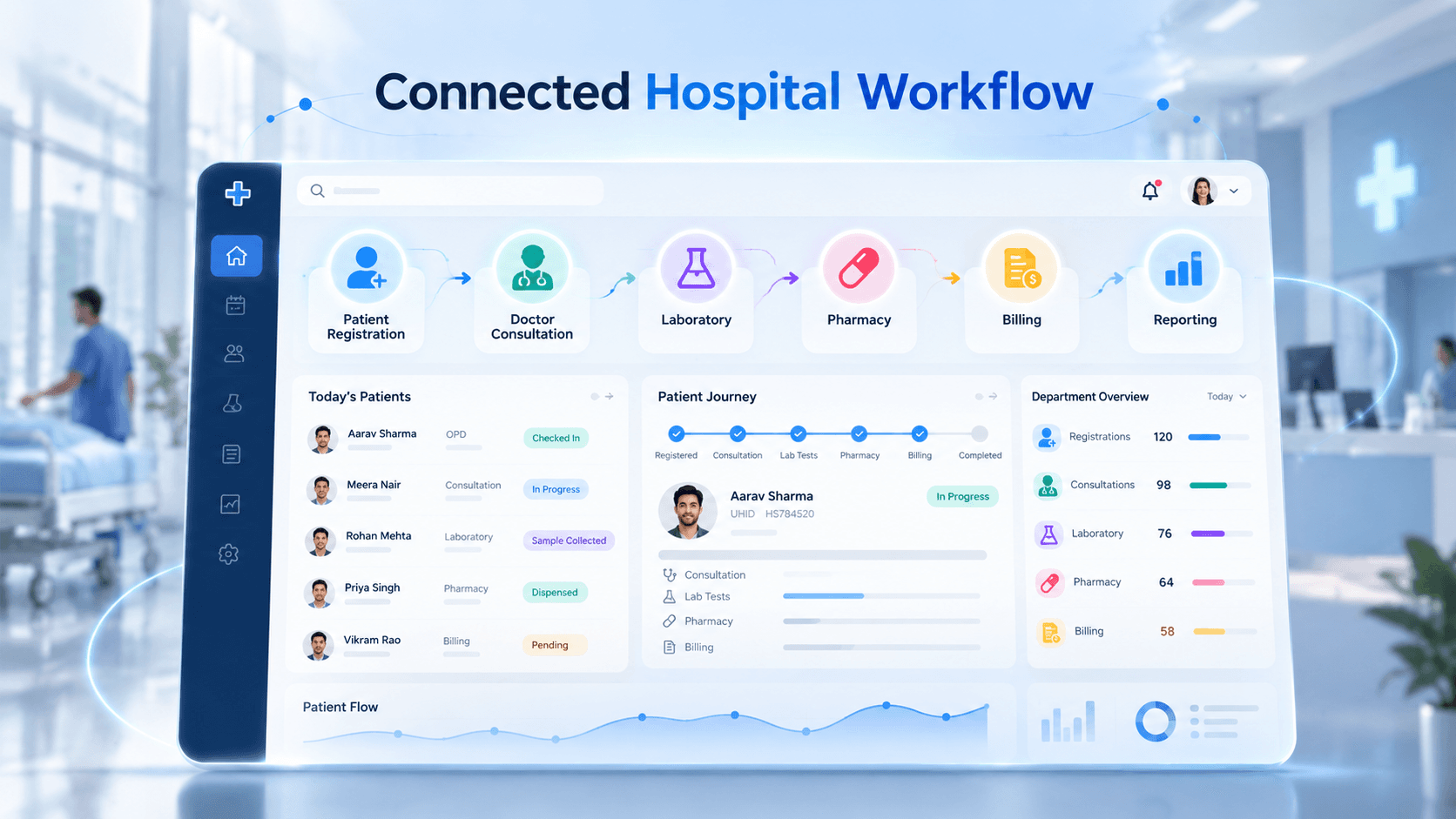
A standalone telemedicine application can solve remote consultation requirements, but greater value is created when it becomes part of a connected healthcare ecosystem.
Murmu Software Infotech’s complete digital healthcare platform combines telemedicine with HMS, healthcare CRM, OPD automation, patient applications, AI-assisted workflows and hospital management capabilities.
HMS and EMR integration
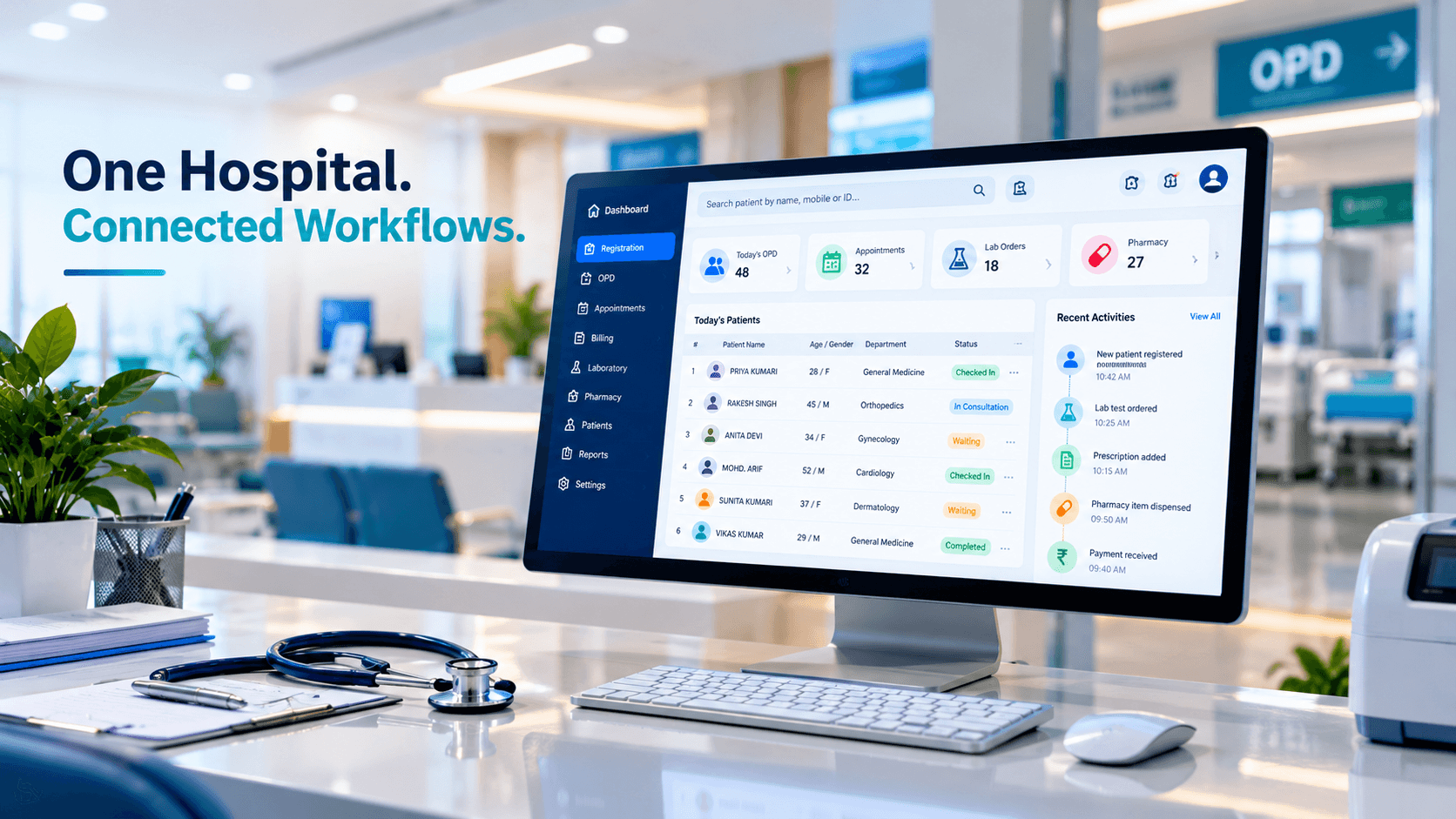
Connecting telemedicine with hospital management software allows doctors to review relevant patient history and update consultation records without maintaining separate data silos.
Explore our Hospital Management System case study to understand how patient registration, appointments, consultation, billing, laboratory and administrative workflows can operate through a centralized platform.
Healthcare CRM integration
A healthcare CRM can manage:
- Website and campaign enquiries
- Appointment reminders
- Missed-appointment follow-ups
- Patient communication
- Feedback collection
- Repeat consultation reminders
- Preventive healthcare campaigns
This helps hospitals maintain the patient relationship before and after the video consultation.
OPD and queue integration
Hospitals offering both physical and virtual consultations can combine online appointments with OPD queues, doctor schedules and virtual waiting rooms.
This creates one coordinated workflow for walk-in patients, scheduled hospital visits and telemedicine consultations.
LIMS, pharmacy and diagnostic integration
Telemedicine platforms can connect with laboratory and pharmacy systems so doctors can request tests, review available reports and manage follow-up care.
Integration feasibility depends on the APIs, data structure and interoperability capabilities of the existing systems.
Healthcare marketing website and CMS
A healthcare marketing website can become the digital entry point for telemedicine.
Patients can discover doctors, explore treatments, book online appointments and begin a virtual consultation journey directly from the website.
Large healthcare groups may also require an enterprise CMS for doctor directories, multilingual content, treatment libraries, provider search and personalized experiences. Our Sitecore XM Cloud healthcare platform case study demonstrates an enterprise healthcare website and portal with headless CMS architecture, healthcare search and personalization.
Telemedicine MVP Development
Hospitals and healthcare startups do not need to build every advanced feature during the first release.
A focused telemedicine MVP development scope can begin with:
- Patient and doctor registration
- Doctor availability and appointment booking
- Secure video consultation
- Basic medical records
- Consultation notes and digital prescriptions
- Online payments
- Patient, doctor and administrator dashboards
AI, remote monitoring, insurance integration, multi-location management and advanced analytics can be introduced after the core workflow has been validated.
An MVP-first approach helps teams test patient adoption, doctor workflows, booking completion, consultation delivery and operational requirements before expanding the platform.
AI Opportunities in Telemedicine
AI can support virtual-care workflows through:
- Guided patient intake
- Patient-history summarization
- Voice-to-consultation notes
- Documentation drafting
- Follow-up instruction generation
- Appointment assistance
- Multilingual patient support
- Operational analytics
Our AI Assistant for Doctors in HMS case study follows one essential principle: AI assists doctors; it does not replace clinical judgement. Doctors remain responsible for diagnosis, prescription approval and patient-care decisions.
Build Connected Telehealth Software for Better Care and Growth
Security and Compliance Considerations
Security must be planned from the discovery and architecture stages.
Depending on the market and use case, a telemedicine solution may require:
- Encryption in transit and at rest
- Role-based access control
- Multi-factor authentication
- Audit logs
- Patient consent management
- Secure session handling
- Backup and recovery
- Data-retention policies
- Vendor and infrastructure assessments
- Security and penetration testing
In the United States, HIPAA’s Security Rule requires applicable regulated entities to implement administrative, physical and technical safeguards for electronic protected health information. India’s Telemedicine Practice Guidelines also distinguish telemedicine as clinical care delivered remotely and place responsibility for suitability and professional judgement on the registered medical practitioner.
Final compliance depends on the complete system, hosting, contracts, policies, clinical processes and target-market requirements - not software code alone.
What Affects Telemedicine Software Development Cost?
The cost of telemedicine platform development depends on:
- MVP or enterprise scope
- Web, Android and iOS requirements
- Number of user roles
- Video infrastructure
- Payment and notification integrations
- HMS, EMR or EHR integration
- Healthcare CRM and LIMS connectivity
- AI and remote-monitoring features
- Security and compliance requirements
- Data migration
- Cloud infrastructure
- Post-launch support
A requirements and workflow assessment is necessary before providing a reliable estimate.
Our Telemedicine Development Experience
Murmu Software Infotech has developed and delivered telemedicine and connected healthcare platforms.
Our Telemedicine Software and Video Consultation Platform case study covers online scheduling, secure video consultations, digital prescriptions, payments, patient portals, doctor availability and follow-up workflows.
We also contributed to DOC247, a scalable telemedicine platform featuring appointment booking, round-robin doctor allocation, virtual waiting rooms, video and voice integration, location-based discovery, real-time clinic queues and mobile notifications.
Choose the Right Telemedicine Software Development Company
The right telemedicine software development company should understand healthcare workflows—not only video APIs and mobile development.
Evaluate its ability to provide:
- Healthcare product discovery
- Patient, doctor and admin UX design
- Custom telemedicine app development
- HMS, CRM, LIMS and third-party integrations
- Secure and scalable architecture
- MVP planning
- Web and mobile application development
- Quality and security testing
- Cloud deployment
- Training and long-term support
- Relevant healthcare case studies
A credible provider should be able to discuss delivered clinical workflows, integration experience, project ownership and post-launch support in specific terms.
Build Your Telemedicine Platform
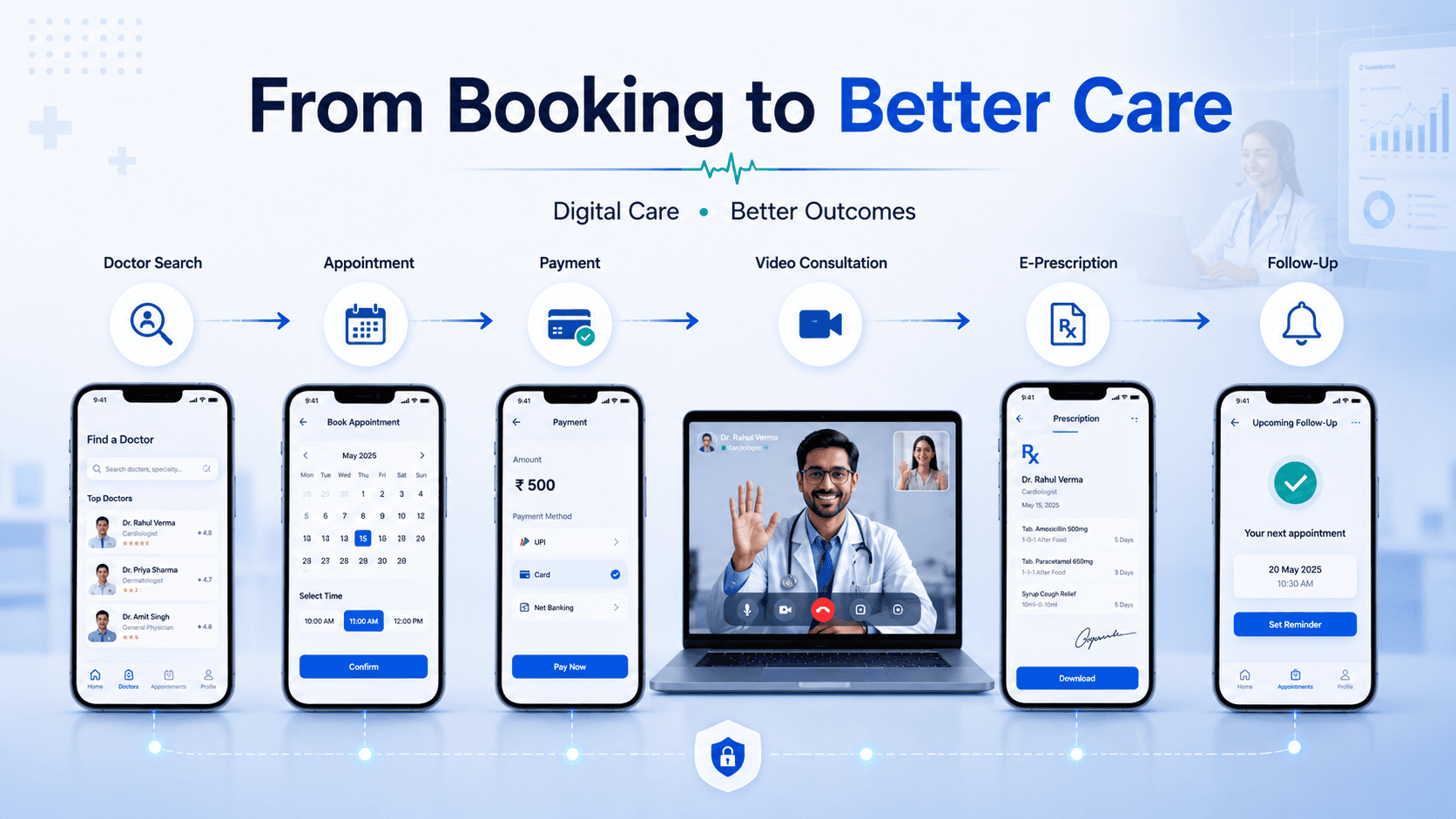
A successful telemedicine platform should connect the complete remote-care journey:
Discovery → Booking → Payment → Video Consultation → Prescription → Follow-Up
Murmu Software Infotech helps hospitals, clinics and healthcare startups build secure telemedicine MVPs, online doctor consultation platforms and complete healthcare software ecosystems.
Watch the Digital Healthcare Management System demo or schedule a personalized discussion about your telemedicine software requirements.
Planning a telemedicine platform? Request a live demo and project consultation.
Frequently Asked Questions
What is telemedicine software development?
Telemedicine software development is the process of designing and building secure web and mobile platforms for remote healthcare delivery. These platforms can connect patient registration, doctor scheduling, video consultations, payments, digital prescriptions, records and follow-up workflows.
What features should a telemedicine platform include?
A telemedicine platform should include secure authentication, patient and doctor profiles, appointment scheduling, doctor availability, video consultation, online payments, consultation notes, digital prescriptions, notifications, patient portals and administrative dashboards.
How does a telemedicine video consultation platform work?
A patient creates an account, selects a doctor and time slot, completes payment and joins a secure consultation room. The doctor reviews available patient information, conducts the consultation, records notes, approves a prescription and schedules follow-up care.
Is telemedicine software different from a video-calling application?
Yes. A video-calling application provides communication, while telemedicine software connects communication with healthcare-specific scheduling, patient records, payments, prescriptions, consent, doctor workflows, administration and follow-up care.
What should a telemedicine MVP include?
A focused telemedicine MVP should include patient and doctor registration, doctor availability, appointment booking, secure video consultation, online payments, basic consultation records, digital prescriptions and role-based dashboards.
How long does telemedicine software development take?
The development timeline depends on feature scope, web and mobile requirements, user roles, integrations, video infrastructure, security controls and approval processes. A defined MVP can be delivered faster than a multi-location enterprise telemedicine ecosystem.
How much does telemedicine software development cost?
Cost depends on platforms, features, video technology, user roles, payment gateways, HMS or EHR integrations, mobile applications, AI capabilities, cloud infrastructure, security controls and ongoing support. A workflow assessment is required for an accurate estimate.
Can telemedicine software integrate with an HMS or EHR?
Yes. Telemedicine platforms can integrate with HMS, EMR, EHR, CRM, LIMS, pharmacy and billing systems through available APIs, middleware, custom connectors or supported healthcare interoperability standards.
Can AI be integrated into telemedicine software?
Yes. AI can assist with patient intake, doctor discovery, medical-history summaries, voice-to-notes, documentation drafts, automated reminders and patient support. Clinical decisions and final approvals should remain with qualified healthcare professionals.
What security controls should telemedicine software support?
Security controls may include encryption in transit and at rest, role-based access, strong authentication, audit logs, patient consent, secure session management, backup, recovery, access monitoring and controlled data retention.
How can hospitals generate revenue through telemedicine?
Hospitals can offer paid online consultations, specialist appointments, second opinions, follow-up consultations, chronic-care programmes, mental-health services, medical tourism consultations and remote patient engagement.
How should a company choose a telemedicine development partner?
Evaluate the provider's healthcare workflow knowledge, telemedicine case studies, integration experience, security architecture, UX capabilities, MVP planning, cloud expertise, testing process, deployment support and long-term maintenance services.