Healthcare Website Development Company
In This Article
- Build a Patient Growth and Digital Care Platform
- Why Hospitals Need a Specialised Healthcare Website
- Healthcare Website as a Patient Growth Platform
- Essential Features of a Healthcare Website
- 1. Patient-Friendly UI and Mobile Experience
- 2. Doctor, Department and Treatment Pages
- 3. Online Appointment Scheduling
- 4. Telemedicine and Patient Portals
- 5. Healthcare CMS and Content Operations
- 6. Healthcare SEO, GEO and AEO
- 7. Security, Privacy and Accessibility
- What Affects Healthcare Website Development Cost?
- Choosing the Right Healthcare Website Development Company
- Build a Healthcare Website That Creates Measurable Value
Build a Patient Growth and Digital Care Platform
A hospital website should do more than display departments, doctors and contact details. It should help patients discover the right service, evaluate medical expertise, book an appointment, access virtual care and stay connected throughout their healthcare journey.
This is why choosing a specialised healthcare website development company matters. Healthcare organisations require patient-friendly design, reliable medical content, strong search visibility, secure integrations and scalable technology - not a generic business website template.
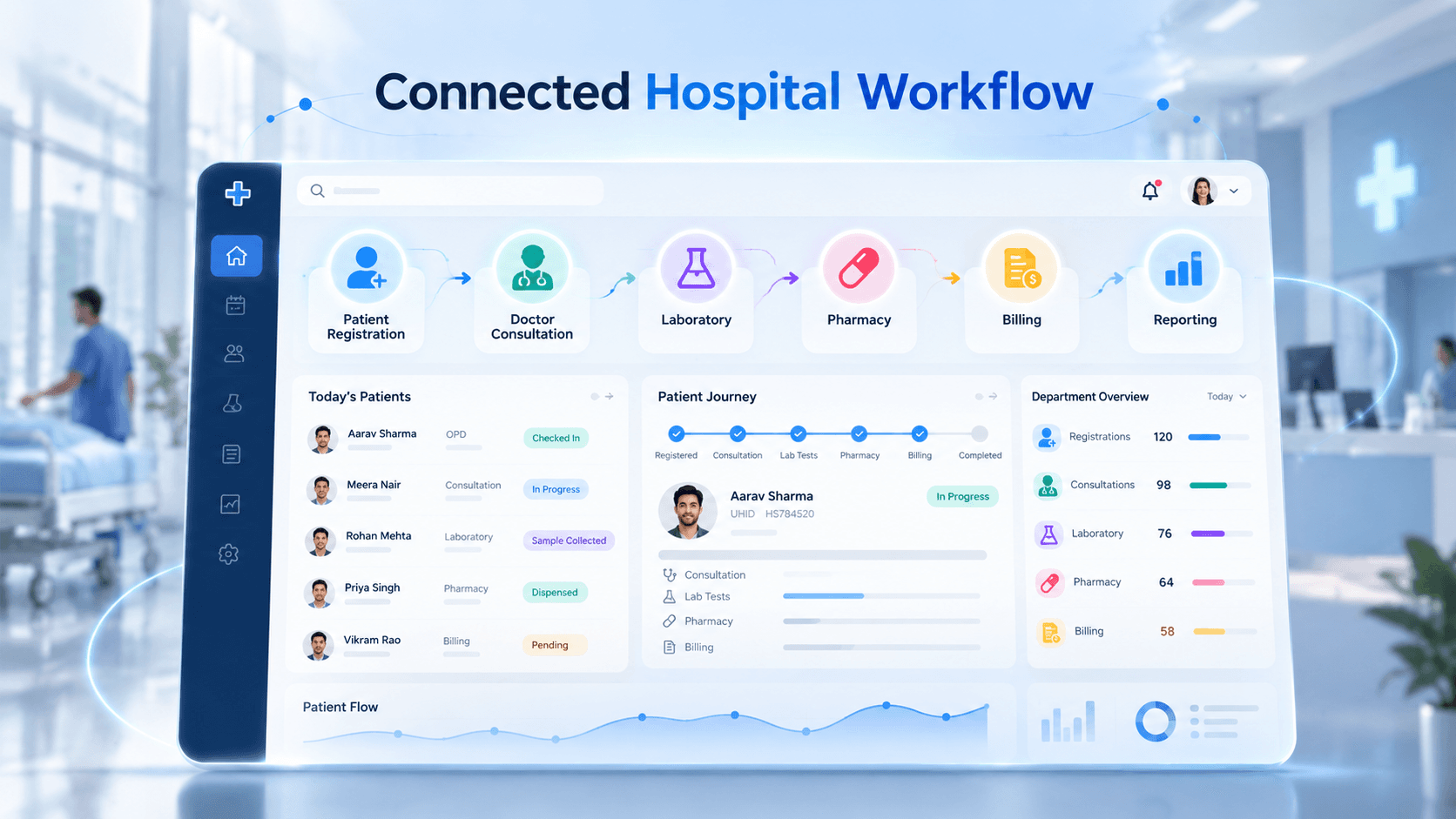
A modern healthcare website can connect doctor profiles, appointment scheduling, patient portals, telemedicine, healthcare CRM, hospital management systems and enterprise content management into one digital experience. Competitor research consistently positions online booking, responsive design, secure patient communication, healthcare system integration, CMS control and performance as core requirements for medical websites.
Why Hospitals Need a Specialised Healthcare Website
Patients often visit a hospital website before speaking to reception or entering the facility. They may be looking for:
- A doctor with the right specialisation
- Information about symptoms, conditions or treatments
- Consultation fees and available slots
- Emergency contact information
- Diagnostic or health-package details
- Online consultation options
- Directions to the nearest hospital location
- Evidence that the organisation is credible and trustworthy
A poorly organised website makes this journey difficult. Patients may find outdated doctor information, unclear navigation, slow pages, complicated forms or no direct appointment option.
A specialised hospital website development company designs around patient intent. The objective is to guide visitors from healthcare research to a meaningful action such as booking an appointment, requesting a callback, starting a teleconsultation or submitting an enquiry.
Transform Your Hospital Website Into a Patient Growth Platform
Healthcare Website as a Patient Growth Platform
A healthcare website should operate as the hospital’s digital front door and patient acquisition platform.
The ideal journey is:
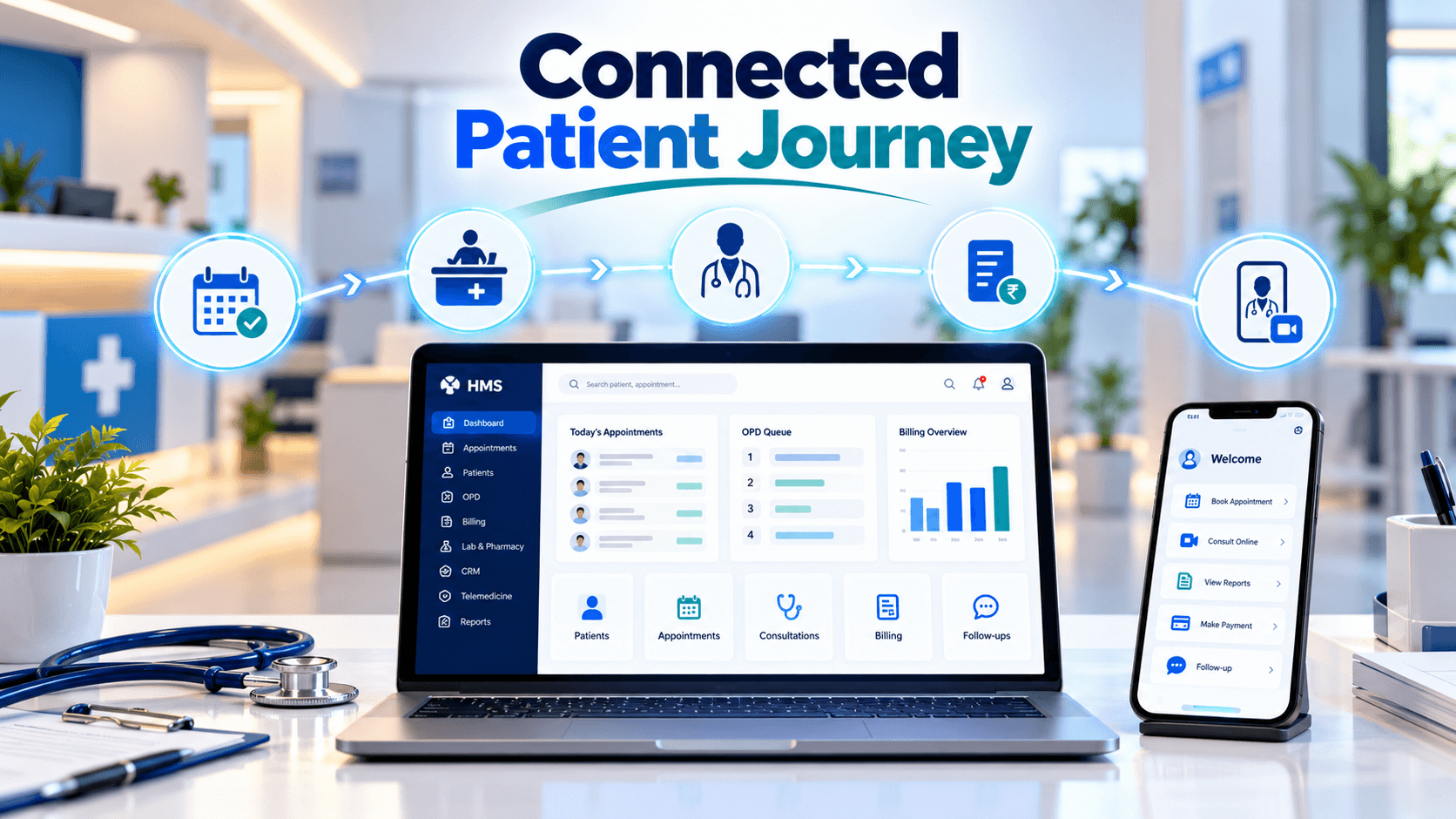
Patient Search → Service or Doctor Page → Trust Evaluation → Appointment Booking → CRM Follow-Up → Consultation
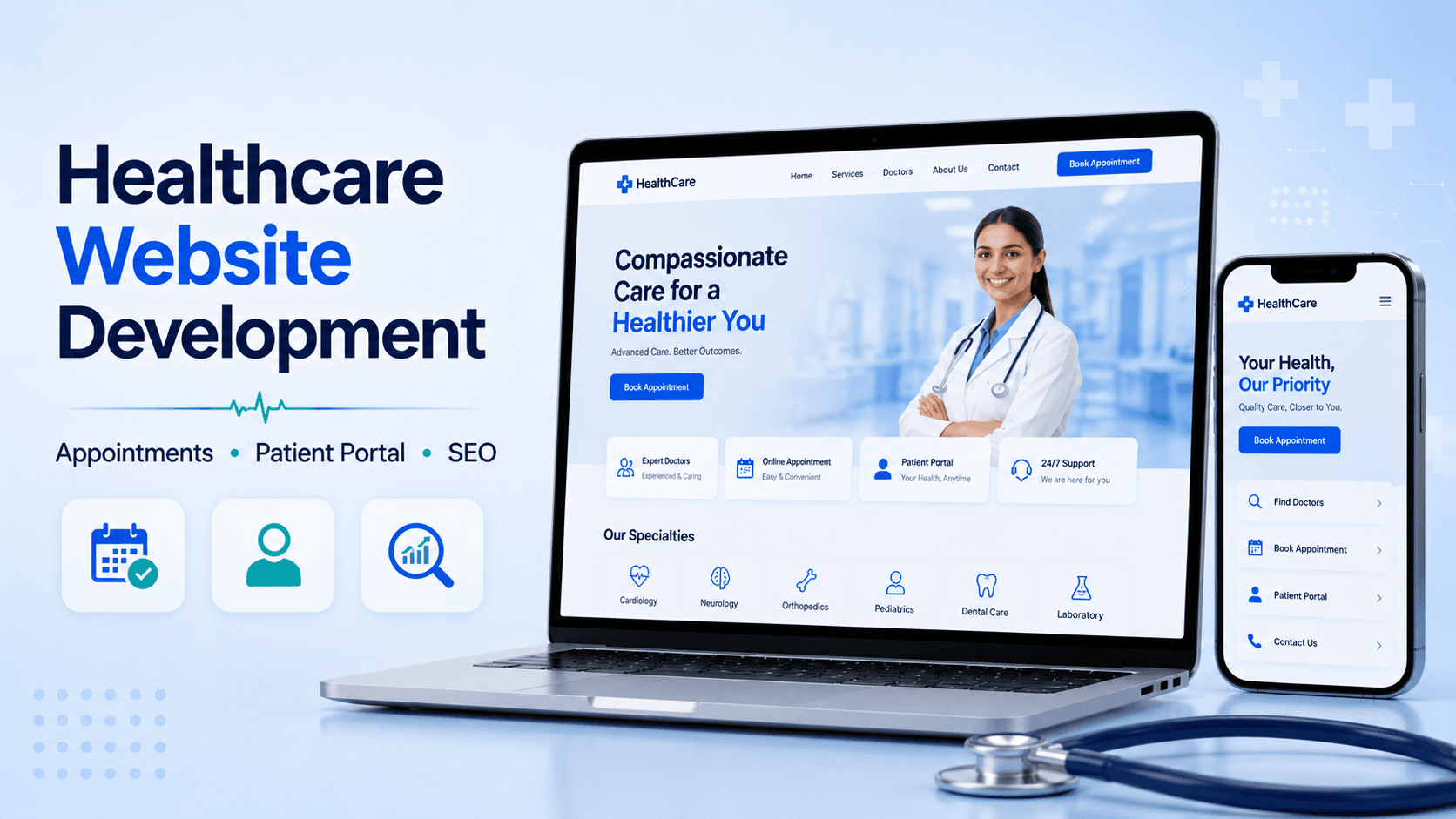
Our Healthcare Website and Digital Marketing Platform case study demonstrates this approach through doctor profiles, service landing pages, mobile-responsive design, appointment forms, WhatsApp integration, campaign pages, analytics and an SEO-ready content structure.
Connecting the website with a CRM or hospital information system also ensures that patient enquiries do not remain trapped in email inboxes or spreadsheets. Appointment APIs, lead forms, WhatsApp automation, call tracking and patient portals can create a more measurable acquisition and follow-up process.
Essential Features of a Healthcare Website
1. Patient-Friendly UI and Mobile Experience
Healthcare users may include elderly patients, caregivers, international visitors and people experiencing stress or discomfort. The interface must therefore be clear, accessible and easy to navigate.
A patient-focused website should provide:
- Mobile-responsive layouts
- Simple menus and search
- Clearly visible emergency information
- Readable typography
- Accessible forms
- Fast-loading pages
- Prominent appointment calls to action
- Multilingual content where required
Healthcare-focused competitors also emphasise responsive design, accessibility, mobile scheduling and user journeys adapted to different levels of health literacy.
2. Doctor, Department and Treatment Pages
Doctor and service content builds trust and improves search visibility.
Doctor profile pages should communicate:
- Specialisation
- Qualifications
- Experience
- Areas of expertise
- Hospital or clinic location
- Consultation availability
- Appointment options
Department, treatment and condition pages should answer the questions patients ask before choosing a provider. They should explain the service in understandable language and provide a clear next step.
A complete content structure may include departments, procedures, diseases, symptoms, diagnostics, health packages, patient stories, medical tourism and frequently asked questions.
3. Online Appointment Scheduling
Online appointment booking is one of the most commercially valuable healthcare website features.
Patients should be able to select:
- Hospital location
- Department
- Doctor
- Consultation type
- Date and time
- Physical or video appointment
The system can then send confirmation and reminder messages while updating the hospital’s CRM, HMS or scheduling platform. Competitor analysis highlights real-time doctor availability, automated confirmations, reminders and in-person or telemedicine booking as important capabilities.
4. Telemedicine and Patient Portals
A healthcare website can become the entry point for digital care.
Patients may use it to:
- Book an online consultation
- Join a secure video appointment
- Make a consultation payment
- Receive a digital prescription
- View reports and appointment history
- Schedule follow-up care
Our Telemedicine Software Development guide explains how booking, payments, video consultations, prescriptions and follow-ups can operate as one connected workflow.
For a broader implementation example, review our Telemedicine Software and Video Consultation Platform case study.
5. Healthcare CMS and Content Operations
Marketing and medical content teams should be able to update doctor details, service pages, blogs, announcements, health campaigns and location information without relying on developers for every change.
A suitable healthcare CMS may include:
- Reusable page components
- Structured doctor and treatment content
- Editorial approval workflows
- Multilingual publishing
- Role-based access
- SEO fields
- Media management
- Multi-site support
- Content scheduling
- API-based delivery
Large hospital groups and insurers may require an enterprise or headless CMS capable of supporting multiple websites, portals, brands and regions.
Our Enterprise Healthcare Platform Migration to Sitecore XM Cloud and Next.js case study covers reusable headless components, provider listings, healthcare portals, AI-powered search, personalisation and scalable content delivery. (Murmu Software Infotech)
You can also watch the Enterprise Healthcare Platform and AI Search project showcase.
6. Healthcare SEO, GEO and AEO
An attractive website creates limited value when patients cannot discover it.
A search-ready healthcare website should include:
- Service- and specialty-specific pages
- Location landing pages
- Doctor profile optimisation
- Fast performance and mobile usability
- Descriptive page titles and headings
- Internal linking
- Structured data
- Image alt text
- FAQs and direct answers
- Local SEO and Google Business Profile alignment
- Original, medically reviewed content
Competitor analysis increasingly treats SEO, local search, structured data, Core Web Vitals and patient-focused medical content as part of healthcare website development rather than a separate activity.
For AI and answer-engine visibility, content should provide concise factual summaries, clearly answer common patient questions and establish transparent authorship and editorial review.
Build a Smarter Healthcare Website That Converts More Patients
7. Security, Privacy and Accessibility
Healthcare websites may process appointment details, patient enquiries, reports or authenticated portal data.
Depending on the project, the architecture may require:
- HTTPS and encrypted data transmission
- Secure forms
- Strong authentication
- Role-based permissions
- Audit logging
- Consent management
- Secure hosting
- Data retention controls
- Backup and recovery
- Accessibility testing
Compliance depends on the complete deployment, data flow, vendors, organisational policies and target market. It should not be represented as a simple website feature or a one-time development checkbox.
What Affects Healthcare Website Development Cost?
The healthcare website development cost depends on:
- Number of doctors, departments and locations
- Custom design versus template implementation
- Content volume and medical review
- Appointment and payment functionality
- Patient portal requirements
- HMS, CRM, LIMS or EHR integrations
- Telemedicine capabilities
- Multilingual publishing
- Enterprise CMS requirements
- Data migration
- Security and accessibility controls
- SEO, analytics and marketing automation
- Maintenance and ongoing optimisation
A single-clinic website and a multi-hospital enterprise platform require very different budgets, timelines and technical architectures.
Choosing the Right Healthcare Website Development Company
Before selecting a development partner, evaluate whether the company can:
- Understand hospital and patient workflows
- Design around patient acquisition and care access
- Develop secure integrations
- Implement healthcare CMS platforms
- Build patient portals and telemedicine workflows
- Support SEO and content architecture
- Deliver accessible, mobile-first experiences
- Provide migration and ongoing support
- Demonstrate relevant healthcare case studies
Murmu Software Infotech provides healthcare website development, HMS, CRM, telemedicine, OPD, mobile applications, enterprise CMS and AI-enabled healthcare solutions.
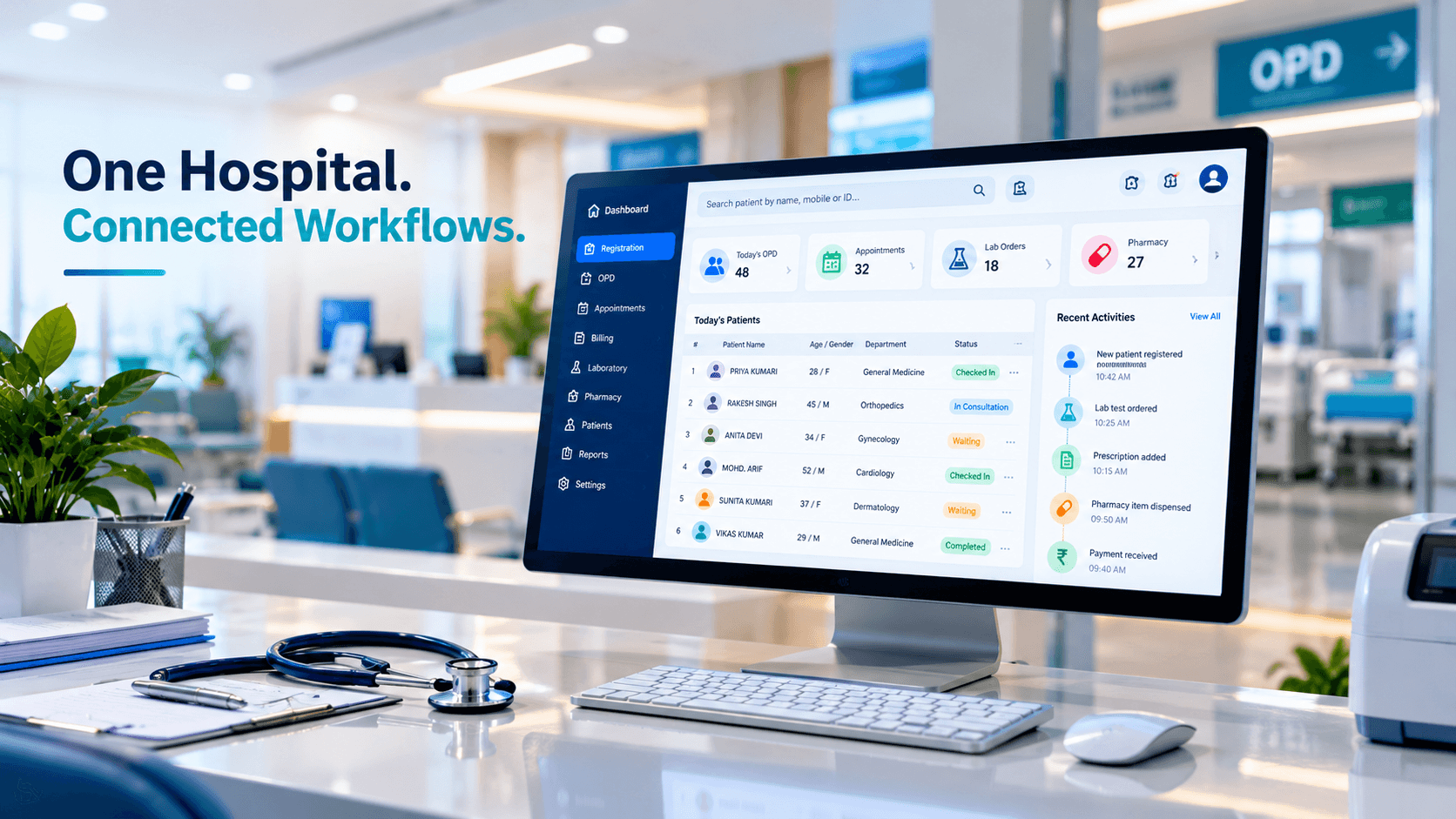
Explore our complete healthcare software capabilities, or see how our connected platform can turn your hospital into a digital growth engine. The platform combines a patient-growth website with HMS, CRM, telemedicine, OPD workflows and digital patient services.
Build a Healthcare Website That Creates Measurable Value
Your hospital website should not simply exist online.
It should help patients discover your services, trust your specialists, schedule care and remain connected before and after consultation.
A capable healthcare website development company can transform that website into a scalable patient acquisition, content, communication and digital-care platform.
Planning a hospital website, healthcare portal or enterprise CMS platform? Request a personalised website demo and digital healthcare strategy discussion.
Frequently Asked Questions
What does a healthcare website development company do?
A healthcare website development company designs, develops, integrates and supports digital platforms for hospitals, clinics, healthcare groups and medical businesses. Services can include websites, patient portals, doctor directories, appointment systems, telemedicine, enterprise CMS, CRM and hospital-system integrations.
What features should a hospital website include?
A hospital website should include doctor profiles, department and treatment pages, appointment booking, emergency information, location details, patient resources, telemedicine access, enquiry forms, mobile-responsive design and content-management capabilities.
How is a healthcare website different from a general website?
A healthcare website must address patient intent, medical-content organization, appointment workflows, privacy, accessibility, doctor discovery and integration with healthcare systems. It should guide patients toward appropriate care rather than only present company information.
How can a healthcare website generate more appointments?
A healthcare website can generate appointments through searchable doctor profiles, specialty pages, treatment content, local landing pages, prominent booking calls to action, real-time scheduling, campaign pages and structured follow-up through healthcare CRM.
Can a healthcare website integrate with an HMS or EHR?
Yes. A healthcare website can connect with HMS, EMR, EHR, CRM, LIMS, pharmacy and scheduling systems through available APIs, middleware, custom connectors or supported interoperability standards.
Can telemedicine be integrated into a hospital website?
Yes. Telemedicine integration can allow patients to find doctors, select available slots, pay consultation fees, join secure video consultations, receive digital prescriptions and manage follow-up appointments.
Which CMS is suitable for healthcare websites?
The right CMS depends on the number of websites, languages, locations, editors, integrations and personalization requirements. Hospitals may use platforms such as Sitecore, Sanity, Contentful, Optimizely, Umbraco, Drupal or WordPress according to project scope.
How does healthcare CRM connect with a website?
Healthcare CRM can capture enquiries and appointment requests from website forms, campaigns, calls and messaging channels. It can then manage reminders, follow-ups, feedback, communication history and patient engagement workflows.
What SEO capabilities should a healthcare website include?
Healthcare website SEO should include descriptive page titles, clear headings, doctor and service pages, location content, internal links, structured data, fast performance, mobile usability, image alt text and direct answers to patient questions.
How much does healthcare website development cost?
Cost depends on the number of pages, locations, doctors, custom design, CMS, content migration, appointment booking, patient portals, telemedicine, integrations, multilingual publishing, security controls and ongoing support.
How long does healthcare website development take?
The timeline depends on content volume, design complexity, approval workflows, system integrations, data migration, CMS configuration and testing. A focused hospital website is faster to deliver than a multi-location enterprise healthcare platform.
How should a hospital select a healthcare website development company?
Evaluate healthcare project experience, patient-journey knowledge, UX capabilities, CMS expertise, integration architecture, SEO implementation, security practices, accessibility, case studies, maintenance and post-launch support.