Sitecore CMS
Sitecore XM Cloud Migration for US Enterprises
PPrem M.5 Min Read
Enterprises should continue upgrading Sitecore XP/XM when the existing architecture still supports business requirements and the cost of modernization outweighs current limitations. A Sitecore XM Cloud migration now SitecoreAI is more appropriate when organizations want SaaS operations, headless delivery, independent frontend releases, Next.js, cloud scalability and a longer-term composable architecture. Migration normally requires content transformation, component redevelopment, integrations, SEO preservation and frontend modernization.
For US enterprises running mature Sitecore estates, the decision is rarely as simple as installing a newer version.
The real choice is:
Maintain and upgrade the existing architecture or use the next investment cycle to modernize it?
Murmu Software Infotech provides Sitecore XM Cloud Development Services for enterprises planning SitecoreAI/XM Cloud migration and headless modernization.
Start with your existing Sitecore version, components, content, integrations, personalization and frontend architecture before deciding what should migrate, rebuild or retire.
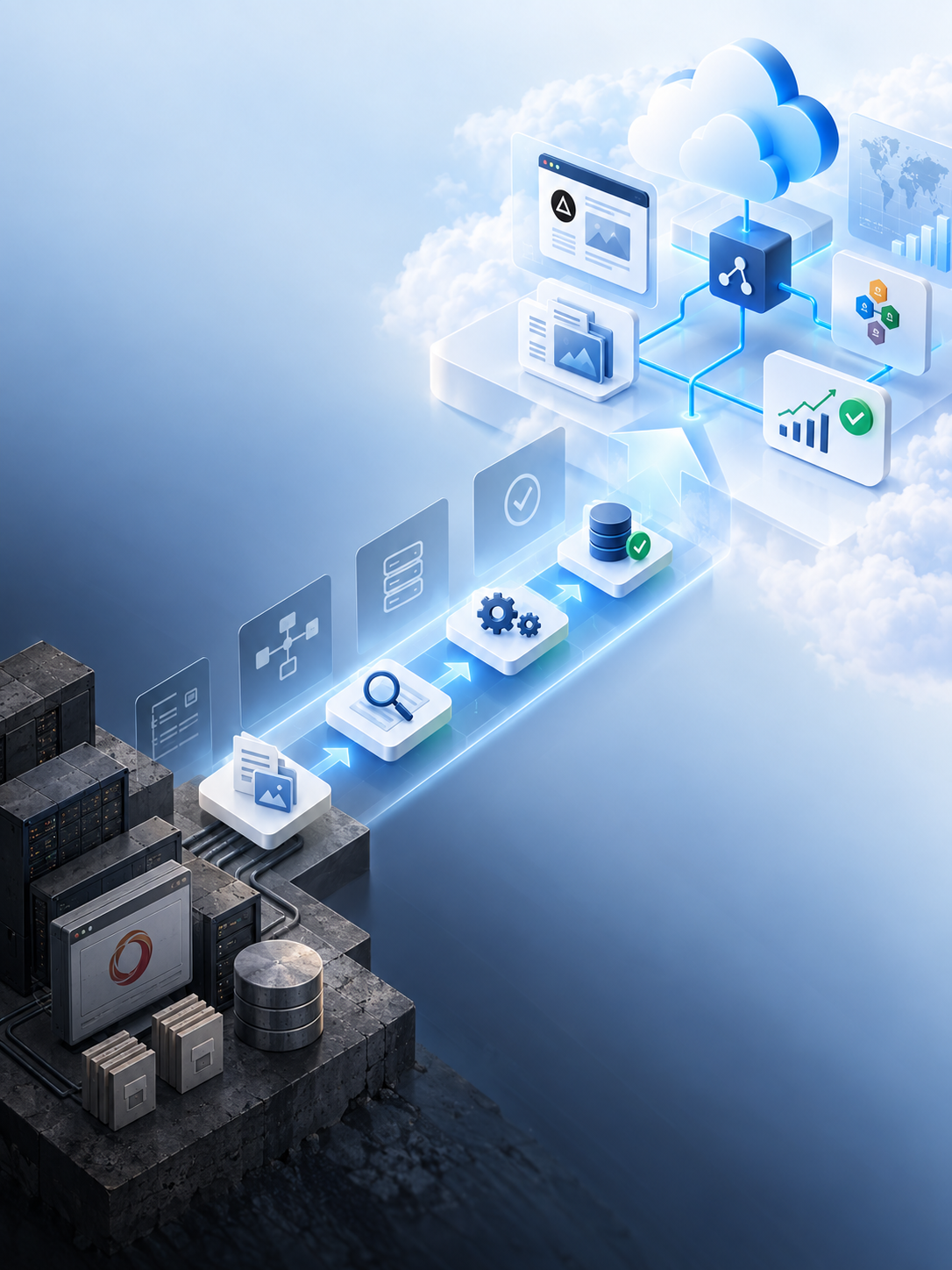
Move from XP/XM to SitecoreAI with structured migration, Next.js modernization, SEO protection and enterprise-ready cloud architecture.
The two approaches solve different problems.
| Sitecore XP/XM Upgrade | SitecoreAI / XM Cloud Migration |
|---|---|
| Preserves more existing architecture | Moves toward cloud-native SaaS |
| Lower transformation scope | Larger modernization opportunity |
| Retains traditional .NET patterns | Uses headless frontend architecture |
| Existing MVC may continue | MVC components generally require redevelopment |
| Infrastructure remains a responsibility | Core platform is SaaS managed |
| Suitable when current architecture works |
An upgrade can make sense when the existing platform remains stable, customizations still provide value and business requirements do not justify architectural change.
Migration becomes more attractive when infrastructure, upgrade complexity, deployment coupling or legacy frontend architecture is slowing delivery.
SitecoreAI previously known as XM Cloud moves the CMS toward a cloud-native SaaS and hybrid-headless operating model.
Key benefits include:
Sitecore manages the core SaaS platform, reducing the need to maintain traditional CMS infrastructure and perform large platform installations.
Frontend applications can be developed and deployed separately from the CMS.
Next.js, Content SDK, GraphQL and Experience Edge support modern frontend engineering.
Published content can be delivered through Experience Edge using globally distributed GraphQL endpoints.
SaaS updates reduce the long upgrade cycles associated with traditional self-managed Sitecore environments.
These benefits matter most when the organization is ready to change its development and content operating model.
Do not begin migration until you understand what depends on traditional Sitecore architecture.
Review:
Legacy features may need redesign rather than migration.
An organization with hundreds of MVC components and deeply coupled XP functionality has a very different migration path from an already-headless JSS implementation.
For organizations considering broader CMS modernization beyond Sitecore, Headless CMS Migration Services can help evaluate platform and architecture options.
Existing XM Cloud implementations commonly use JSS and Next.js.
However, Sitecore's current direction for new SitecoreAI development is Content SDK.
For existing JSS applications, migration planning should therefore answer:
Maintain → Upgrade → Refactor → Replace
Review custom JSS plugins, routing, data fetching, personalization, component factories, GraphQL queries and frontend hosting before choosing the migration approach.
For older or highly customized JSS applications, building a clean Content SDK application and moving capabilities incrementally can reduce risk compared with attempting a large in-place conversion.
A modern target architecture can look like:
SitecoreAI → Content SDK → Next.js → Experience Edge → Enterprise APIs
Content migration should improve the destination architecture instead of copying technical debt.
A structured migration includes:
Sitecore now also provides SitecoreAI Pathway for assisted migration from XM/XP and other websites, but customized enterprise implementations still require architecture and validation decisions around the automated migration process.
A technically successful migration can still become a business failure if organic traffic falls after launch.
Protect:
Run legacy and new environments in parallel before final cutover.
Compare:
URL → Content → Metadata → Redirect → Schema → Rendering → Analytics
SitecoreAI supports sitemaps, robots controls and URL redirect maps, but those features still need to be planned and validated correctly.
There is no universal timeline.
As a practical planning benchmark, a focused migration can often require approximately 2–5 months, while complex multilingual, multisite or heavily customized enterprise programs may take longer.
Timeline depends on:
Large programs are often safer when divided into controlled phases rather than one big-bang release.
A useful approach is:
Assessment → Foundation → Components → Content → Integrations → Validation → Cutover
Before approving migration, answer these questions:
Architecture: Which current features cannot move directly?
Components: How many MVC or legacy SXA components require redevelopment?
Content: What should migrate, transform or retire?
Frontend: Is the team ready for Next.js and Content SDK?
Personalization: Which XP experiences need redesign?
Integrations: Which APIs depend on existing servers or pipelines?
SEO: Have URLs and redirects been mapped?
DevOps: Are environments and deployment pipelines defined?
Testing: Is regression, performance and UAT coverage sufficient?
Operations: Who owns the platform after launch?
Migration risk drops dramatically when these questions are answered before development begins.
Not every enterprise should move immediately.
Choose XP/XM upgrade when the existing architecture still creates business value and modernization urgency is low.
Choose SitecoreAI/XM Cloud migration when SaaS operations, independent frontend delivery and headless architecture support the next stage of the roadmap.
Choose phased modernization when replacing everything at once introduces unacceptable risk.
For broader Sitecore implementation and architecture support, explore Sitecore CMS Development Services.
A successful migration should preserve valuable content and business capabilities while removing infrastructure burden and legacy architectural constraints.
Murmu Software Infotech supports US enterprises across Sitecore XP/XM assessment, SitecoreAI/XM Cloud migration, Content SDK, Next.js, component redevelopment, content migration, integrations, DevOps, SEO preservation and post-launch support.
Start with technical readiness before committing to a full transformation.
Plan Your XM Cloud Migration →
Upgrade XP when the existing architecture remains valuable and modernization urgency is low. Consider SitecoreAI/XM Cloud when SaaS operations, headless delivery and independent frontend releases better support the roadmap.
XM Cloud is now part of SitecoreAI. The XM Cloud name remains widely used in existing implementations, documentation, technical assets and enterprise migration searches.
Key benefits include SaaS platform management, reduced infrastructure responsibility, headless frontend flexibility, Content SDK, Next.js development, Experience Edge delivery and independent frontend deployment.
Content can be migrated, but XP-specific analytics, personalization, MVC components, custom modules, pipelines, integrations and server-dependent functionality usually require assessment and redesign.
A focused migration can often require approximately 2–5 months as a planning benchmark. Complex multisite, multilingual or highly customized programs can require significantly longer.
Traditional MVC components generally need redevelopment for the headless target architecture. Component logic should be mapped into modern frontend components using Sitecore-supported headless patterns.
New SitecoreAI projects should use Content SDK. Existing JSS applications can be maintained temporarily or migrated toward Content SDK based on their version and customization level.
Preserve important URLs, redirects, metadata, canonicals, structured data, internal links, hreflang, sitemaps, crawlable rendering and analytics, then validate them before production cutover.
Not always. XP personalization and xDB-dependent experiences should be inventoried and mapped to the appropriate SitecoreAI, Personalize or redesigned composable approach.
Assess Sitecore version, content, templates, renderings, custom modules, integrations, personalization, search, forms, frontend architecture, SEO, DevOps and migration dependencies before development begins.