Sitecore SEO, AEO and GEO Services for Enterprise CMS Websites
In This Article
- Sitecore SEO Services Need More Than Keywords
- Sitecore Technical SEO Starts With Crawlability and Indexation
- Sitecore Performance Optimization and Core Web Vitals
- Find What Is Blocking Sitecore Growth
- Sitecore AEO Turns Content Into Direct Answers
- Sitecore GEO Builds AI Citation Readiness
- Sitecore AI Search Optimization Needs Structured Content
- Schema Should Be Built Into Sitecore Templates
- How MSI Approaches Sitecore SEO, AEO and GEO
- Sitecore SEO Proof: Modern Search Needs Modern Architecture
- Business Benefits of Sitecore SEO, AEO and GEO
- Who Should Hire a Sitecore SEO Consultant?
- Request a Sitecore SEO Audit
Enterprise Sitecore websites can have thousands of pages, multiple languages, personalization rules, complex components and years of accumulated technical changes. Nevertheless, many still struggle with decreased rankings, slow Core Web Vitals, duplicate URLs, inconsistent metadata, weak schema and poor visibility in AI-generated answers.
The issue can no longer be solved through traditional SEO alone.
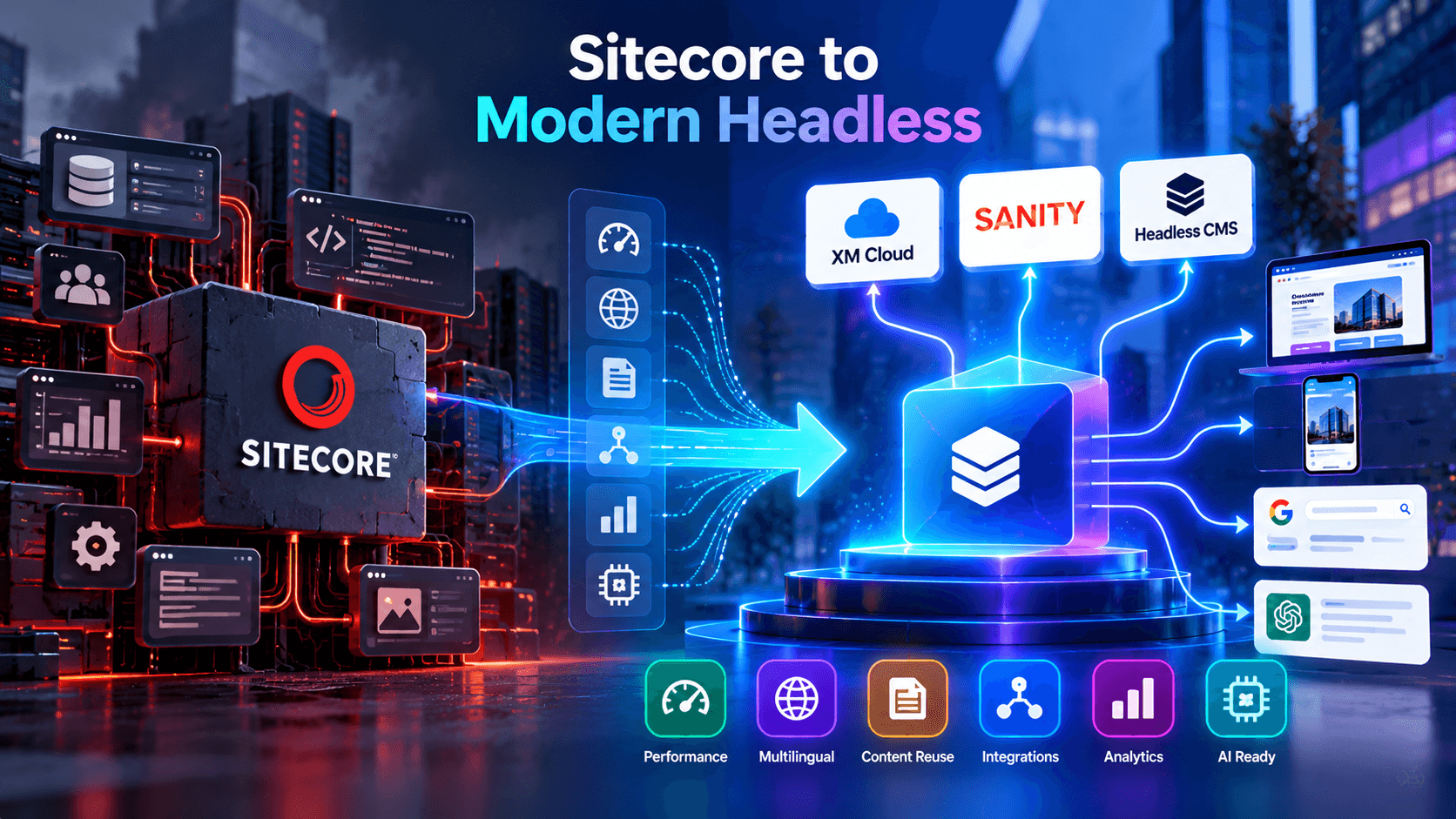
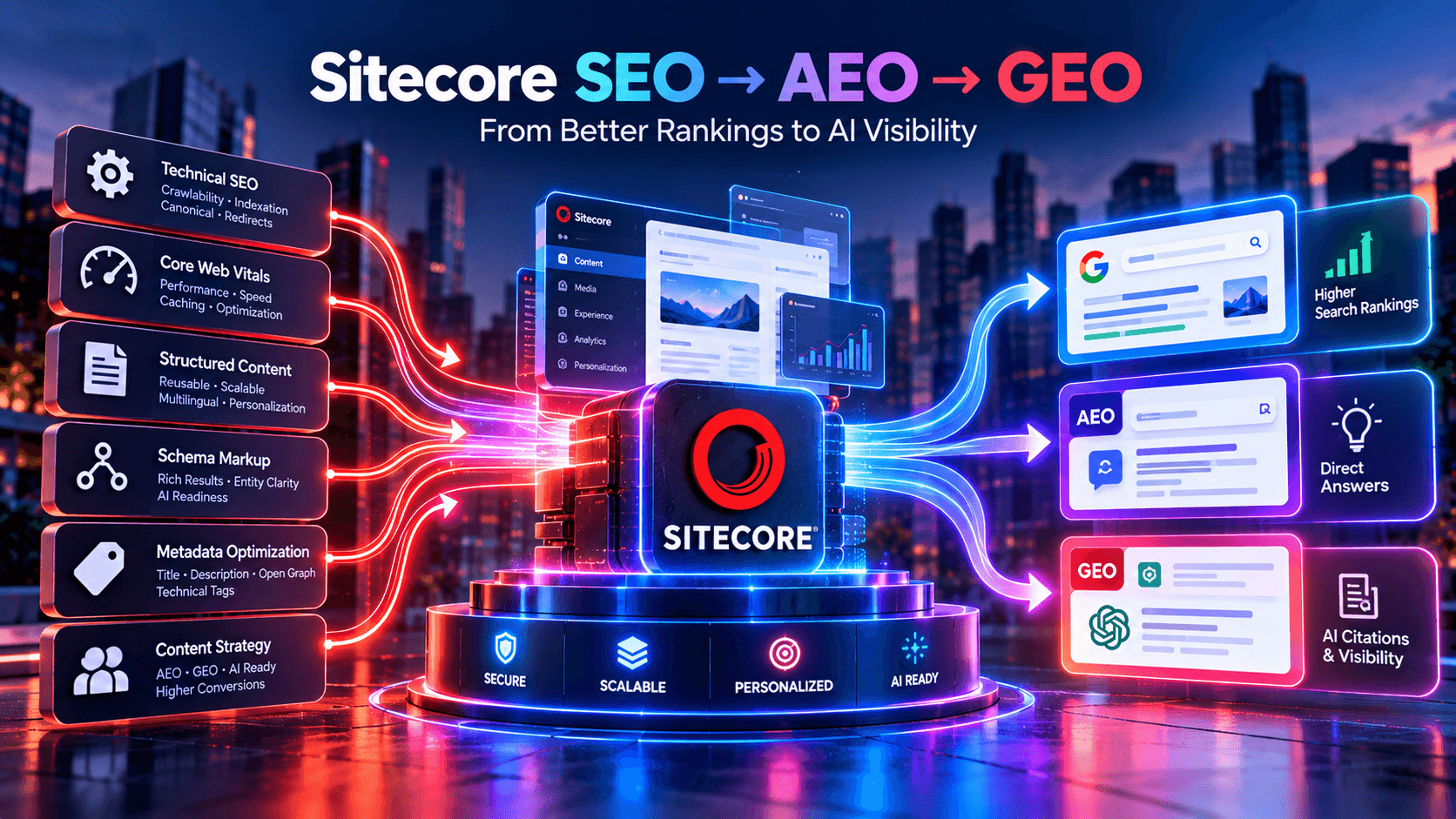
Modern Sitecore SEO services need to combine technical SEO, performance engineering, structured content, Answer Engine Optimization, Generative Engine Optimization and AI-search readiness.
For enterprises, the goal is increasingly broader: make content easier to rank, answer, discover, trust and cite.
Sitecore SEO Services Need More Than Keywords
Sitecore is a powerful enterprise CMS, but the platform itself does not guarantee organic performance.
SEO problems often develop at the implementation layer:
- Duplicate or parameterized URLs
- Incorrect canonical tags
- Weak XML sitemap governance
- Slow rendering
- Oversized JavaScript
- Poor caching
- Broken redirects
- Missing metadata
- Inconsistent internal linking
- Unstructured content
- Missing schema
- Weak multilingual SEO
A specialist Sitecore SEO service should therefore evaluate the CMS, frontend, content structure and technical delivery together.
A generic SEO checklist may identify that a page is slow. A Sitecore-specific audit should identify which rendering, API, image, personalization rule, caching layer or frontend dependency is causing it.
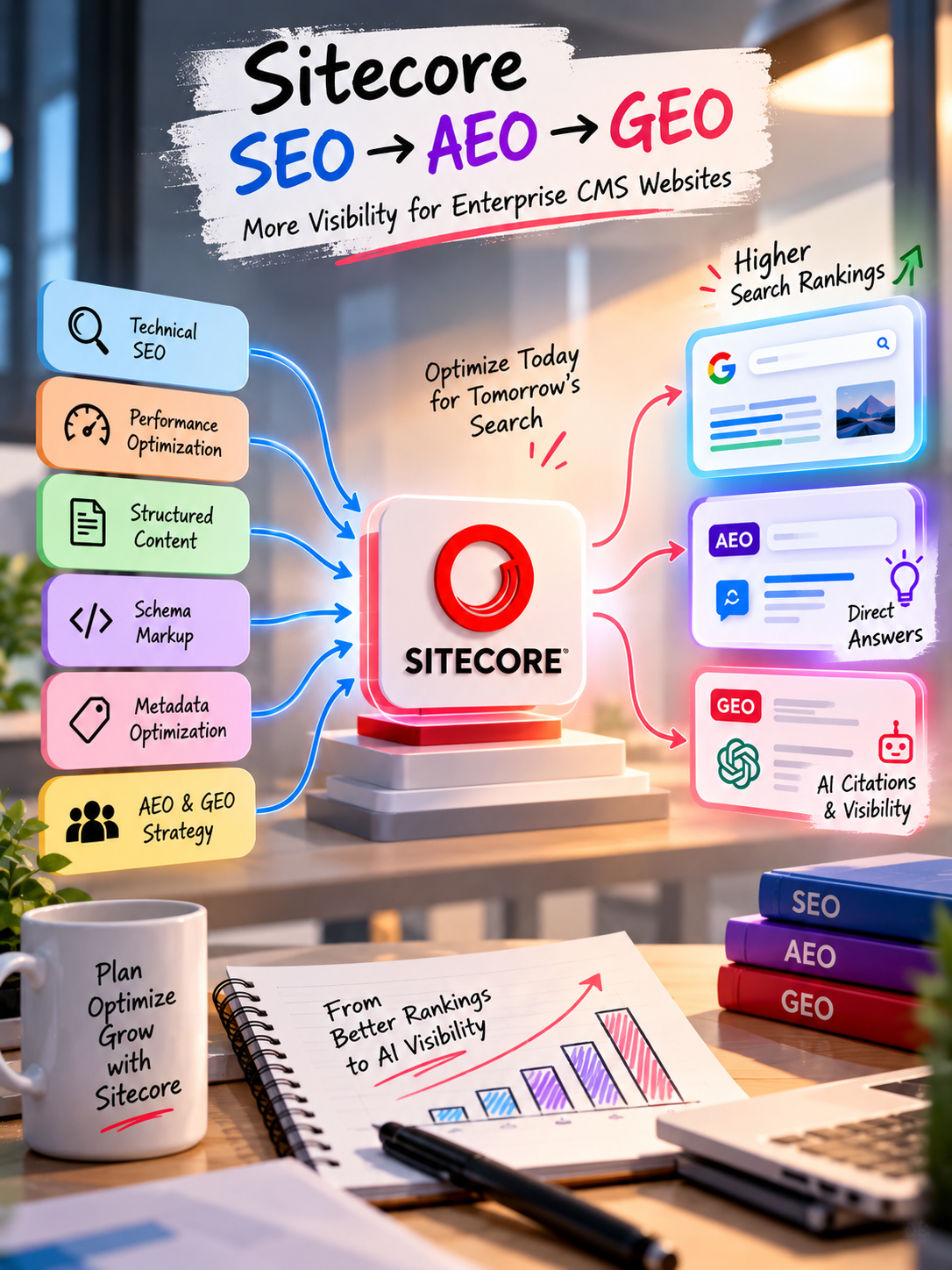
Turn Sitecore Into Search Growth
Fix technical SEO, performance, schema and content structure while strengthening Sitecore visibility across traditional search and AI-powered discovery.
Sitecore Technical SEO Starts With Crawlability and Indexation
Before adding more content, enterprises should verify that search engines can consistently discover the correct URLs.
A Sitecore technical SEO review should examine:
- robots.txt
- XML sitemaps
- robots directives
- canonical implementation
- redirect chains
- 404 and soft-404 pages
- staging URLs
- language variants
- duplicate pages
- pagination and parameters
- rendered HTML
A template-level configuration error can affect hundreds or thousands of pages.
That is why an enterprise Sitecore SEO audit should produce priorities, affected templates, technical owners and verification requirements not simply a spreadsheet of warnings.
Find Sitecore SEO Issues Before Rankings Keep Declining
Sitecore Performance Optimization and Core Web Vitals
Performance is another major Sitecore SEO issue.
Slow pages can originate from the CMS, frontend, APIs or third-party services.
Common causes include:
- Heavy JavaScript bundles
- Unoptimized media
- Slow server responses
- Inefficient renderings
- Poor CDN configuration
- Weak caching
- Excessive third-party scripts
- API latency
- Layout shifts
Effective Sitecore performance optimization should investigate Largest Contentful Paint, Interaction to Next Paint and Cumulative Layout Shift while tracing the underlying causes.
For headless Sitecore implementations this means that both the content delivery layer and the frontend application need to be investigated.
Where the SEO and engineering worlds meet. Enterprises that require furtherplatform work can combine SEO improvements with Sitecore CMS development services.
Find What Is Blocking Sitecore Growth
If rankings, Core Web Vitals or AI visibility are underperforming, identify the technical causes before adding more content.
Request Sitecore SEO Audit
Sitecore AEO Turns Content Into Direct Answers
Search journeys increasingly include direct answers rather than only lists of blue links.
Sitecore AEO focuses on structuring enterprise content so relevant answers can be understood and extracted quickly.
A useful Sitecore content model can include:
Question
Direct answer
Supporting explanation
Related entity
Supporting evidence
Instead of burying answers inside long rich-text components, enterprises can create reusable answer blocks.
These can support:
- Service pages
- Product pages
- FAQs
- Knowledge content
- Search interfaces
- Structured data
- AI-oriented experiences
Our Sitecore GEO and AEO optimization guide explains how answer-first components, entity clarity and structured content can extend traditional SEO.
Sitecore GEO Builds AI Citation Readiness
Sitecore GEO focuses on making content easier for generative systems to understand, evaluate and potentially reference.
This requires more than inserting AI keywords.
Useful GEO signals include:
- Clear entities
- Concise factual summaries
- Expert authorship
- Original evidence
- Case studies
- Consistent organization information
- Updated facts
- Structured relationships
- Relevant supporting sources
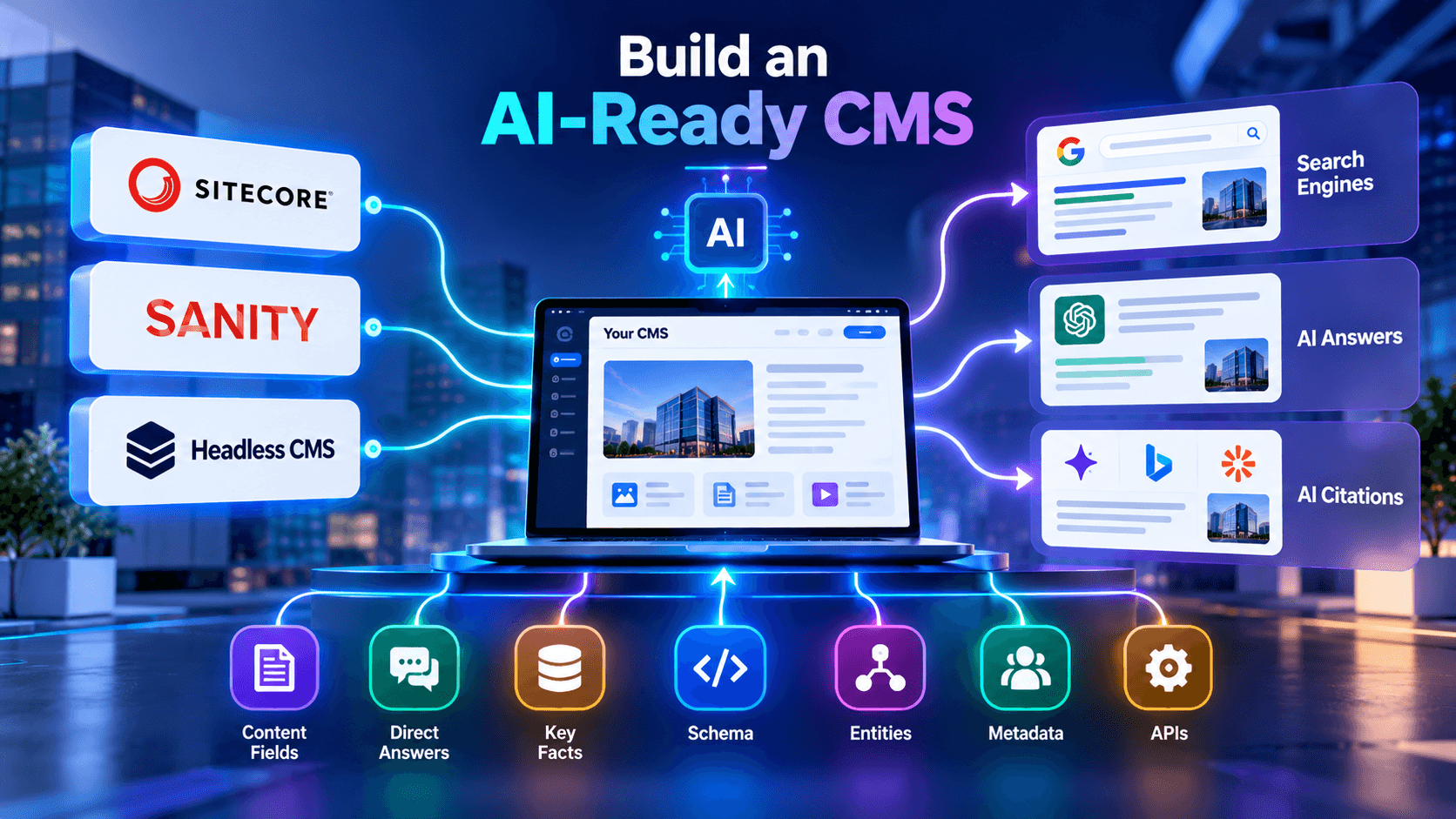
A Sitecore content model can create dedicated fields for facts, authors, entities, review dates and direct answers instead of leaving all information embedded in page copy.
No agency can guarantee an AI citation. GEO should improve clarity, authority, retrieval readiness and citation opportunities, not promise placements.
Sitecore AI Search Optimization Needs Structured Content
Sitecore AI search optimization works best when important information is stored predictably.
Enterprise templates can include fields such as:
- AI summary
- Key facts
- Direct answers
- FAQs
- Primary entity
- Service area
- Audience
- Author credentials
- Review date
- Schema type
These structures can support Google and Bing while also creating cleaner source material for answer engines and generative search.
This broader approach is part of AI search optimization, where SEO, AEO and GEO operate as one visibility strategy.
Schema Should Be Built Into Sitecore Templates
Structured data should not depend on editors manually adding JSON-LD to individual pages.
Sitecore implementations can generate schema from structured template fields.
For example:
- Article pages → Article schema
- Service pages → service-related structured data
- Author records → Person data
- Breadcrumbs → BreadcrumbList
- Organization information → Organization data
The schema must remain consistent with visible page content.
Template-level implementation improves governance and reduces inconsistency across large enterprise websites.
How MSI Approaches Sitecore SEO, AEO and GEO
Murmu Software Infotech combines Sitecore engineering with search optimization rather than treating SEO as a separate content-only activity.
An engagement can include:
Audit: crawlability, indexation, URLs, metadata, rendering, performance and content structure.
Prioritization: identify which issues affect templates, components or high-value pages.
Implementation: correct CMS logic, frontend output, schema, metadata, redirects and structured content.
AEO/GEO: introduce answer-ready sections, entities, facts and citation-ready content.
Verification: retest critical signals after deployment.
For enterprises that need continuous implementation and release assistance, Sitecore development support can extend the optimization work beyond the initial audit.
Turn Sitecore Into a Stronger AI Search Asset
Sitecore SEO Proof: Modern Search Needs Modern Architecture
A good example of such a project is enterprise healthcare modernization with Sitecore XM Cloud, Next.js, GraphQL, modern search, personalization, and composable delivery.
This project serves as a demonstration of enterprise search performance challenges, which are often architectural, not editorial.
Review the Sitecore XM Cloud healthcare and AI search case study for a practical example of modernizing content delivery and search across a complex Sitecore ecosystem.
Business Benefits of Sitecore SEO, AEO and GEO
A unified approach can help enterprises improve:
- Crawlability and indexation
- Core Web Vitals
- Search-engine understanding
- Metadata consistency
- Structured-data coverage
- Direct-answer readiness
- Content reuse
- AI-search visibility
- Organic landing-page quality
- Conversion paths
The objective is not simply more traffic.
It is to attract qualified visitors and make enterprise content easier to understand at every discovery layer.
Who Should Hire a Sitecore SEO Consultant?
A specialist Sitecore SEO consultant or technical SEO team is useful when your organization has:
- Large Sitecore XP, XM, SXA or headless estates
- Persistent Core Web Vitals problems
- Organic traffic losses
- Complex multilingual SEO
- Migration or redesign plans
- Missing schema
- Duplicate URLs
- Weak AI visibility
- Limited internal Sitecore SEO expertise
If generic SEO recommendations keep reaching your development backlog without being implemented correctly, the gap may be technical Sitecore expertise rather than strategy.
Request a Sitecore SEO Audit
Classic SEO is still essential but enterprise discovery is expanding.
Sitecore websites increasingly need:
Technical SEO + performance + structured data + AEO + GEO + AI-ready content
A strong Sitecore search strategy should improve how content is crawled, ranked, answered, understood and potentially cited.
Start with the Sitecore SEO services assessment to identify technical, content, performance and AI-visibility opportunities across your enterprise CMS.
Frequently Asked Questions
What are Sitecore SEO services?
Sitecore SEO services combine search optimization with Sitecore-specific technical implementation across crawlability, metadata, canonicals, redirects, performance, schema, structured content and frontend delivery.
What does a Sitecore SEO audit include?
A Sitecore SEO audit should review crawlability, indexation, XML sitemaps, canonicals, redirects, Core Web Vitals, caching, rendering, internal links, metadata, schema, multilingual SEO, AEO and GEO readiness.
Why is Sitecore technical SEO different from generic SEO?
Sitecore SEO issues can originate from templates, renderings, personalization, publishing, APIs, caching, headless frontends and CMS configuration, so implementation often requires Sitecore-specific technical expertise.
How do you improve Sitecore Core Web Vitals?
Improve media optimization, JavaScript delivery, caching, API performance, server response times, component rendering, CDN configuration, third-party scripts and layout stability.
What is Sitecore AEO?
Sitecore Answer Engine Optimization structures content around clear questions and concise direct answers so search and AI systems can identify relevant responses more easily.
What is Sitecore GEO?
Sitecore Generative Engine Optimization improves how AI systems understand an organization through clear entities, factual summaries, expert evidence, case studies, structured content and consistent information.
Does schema markup improve Sitecore SEO?
Schema can improve machine understanding of page types and entities when it accurately reflects visible content, but it does not guarantee rankings, rich results or AI citations.
How can Sitecore improve AI search visibility?
Use technically accessible pages, structured content, direct answers, key facts, entities, authorship, schema, evidence and consistent organization information.
When should an enterprise hire a Sitecore SEO consultant?
Hire specialist support when SEO improvements require changes to Sitecore templates, renderings, URLs, performance, headless delivery, multilingual configuration, schema or enterprise content architecture.
Can Sitecore SEO services guarantee Google rankings or AI citations?
No. Rankings and AI citations cannot be guaranteed. Sitecore SEO, AEO and GEO improve technical foundations, content quality, clarity, authority and discoverability to increase visibility opportunities.