EdTech & E-commerce Platform Case Study: Solar & Electrical Training App
In This Article
- The Challenge: Turning Technical Expertise Into a Digital Business
- The Solution: Learning + Commerce in One Mobile Experience
- Structured Solar and VFD Repair Training
- Strengthening Premium Content Protection
- Connecting Learning With E-commerce
- Integrated Digital Payments
- Centralized Admin Dashboard
- Dual Revenue Model
- Course Revenue
- Product Revenue
- Technology Architecture
- Business Impact
- Planning an EdTech or Training Commerce Platform?
Technical skills such as solar pump controller repair, VFD troubleshooting and electrical equipment maintenance are traditionally learned through workshops, field experience or in-person training.
For Seekoji Electric, that created an opportunity: turn years of practical repair expertise into a digital learning business while also helping learners access the components and equipment related to what they were studying.
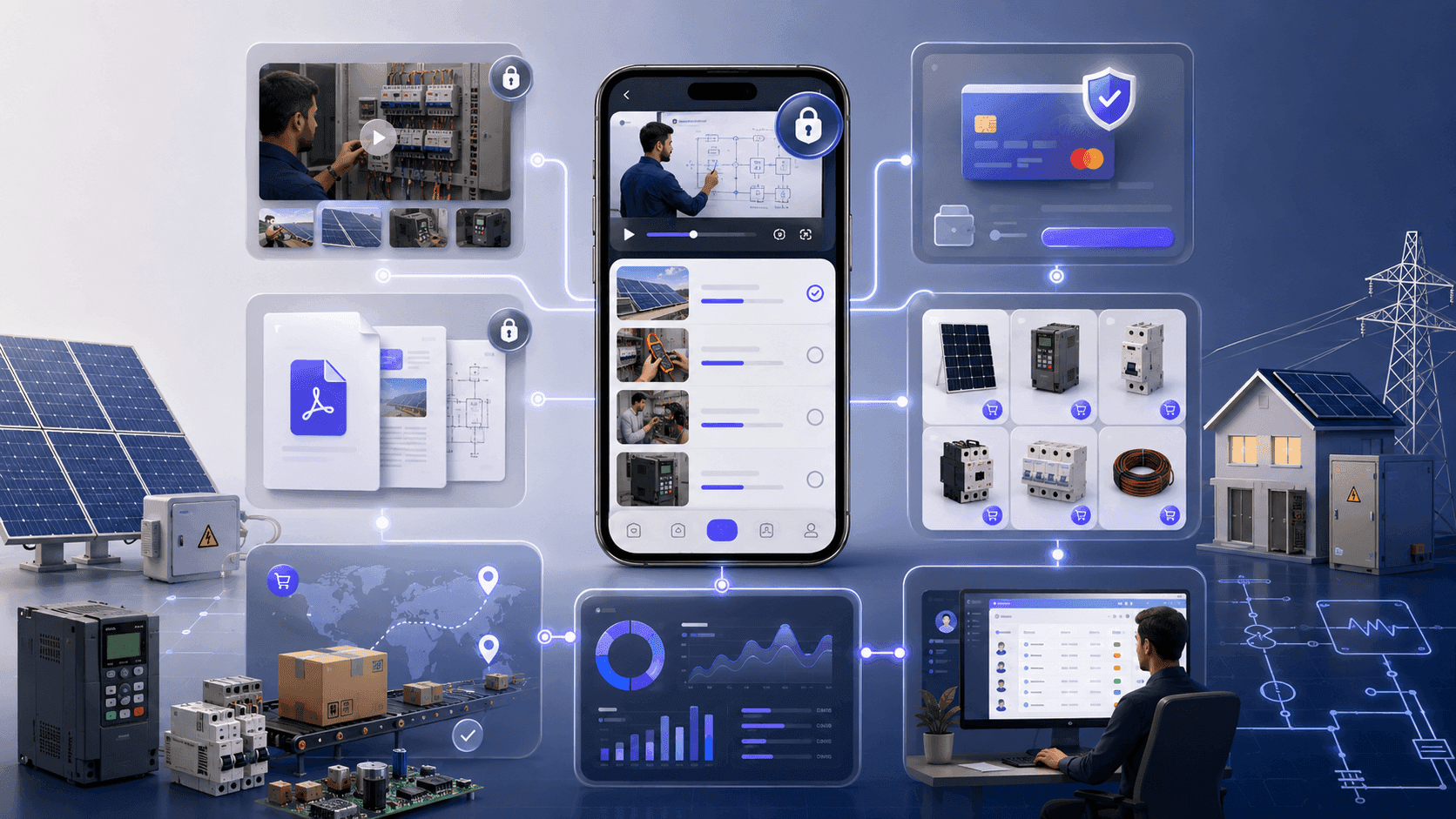
Murmu Software Infotech developed a hybrid EdTech and e-commerce platform combining mobile learning, paid courses, protected training content, electrical-product commerce, payments, technical utilities and centralized administration within one digital ecosystem.

Turn Expertise Into Digital Revenue
Launch a scalable learning-commerce platform with protected courses, digital payments, product sales, analytics, and centralized administration in one ecosystem.
The Challenge: Turning Technical Expertise Into a Digital Business
Seekoji Electric already operated in a specialized technical domain covering solar pump controllers, VFDs, solar drives and industrial electrical equipment.
The challenge was converting that practical knowledge into a scalable digital product.
The business needed more than a conventional Learning Management System.
Learners needed structured courses, video lessons and downloadable-reference-style learning materials. Premium training content also required stronger protection against unauthorized screenshots, recording and downloads.
At the same time, students learning to diagnose or repair equipment could also require related controllers, VFDs, motors and electrical components.
Managing learning, products, customers, payments, orders and content through disconnected systems would have created unnecessary operational complexity.
The objective therefore became clear: create a single platform where technical learning and commerce reinforce each other.
Turn Your Expertise Into a Scalable Learning Platform
The Solution: Learning + Commerce in One Mobile Experience
We developed Seekoji Electric as a React Native mobile learning application connected to a centralized administration platform and commerce backend.
The customer journey is intentionally simple:
Register → Choose Course → Pay → Learn → Use Technical Resources → Purchase Relevant Products
Users register using OTP-based authentication, browse available Basic and Advanced courses, complete payment through Razorpay and gain access to purchased learning content.
Training materials include expert-led video lessons, PDFs and practical resources designed around solar and electrical repair skills.
This allows Seekoji to convert specialist field knowledge into structured, self-paced digital education.
Structured Solar and VFD Repair Training
The learning system supports course organization around technical skill development rather than generic academic content.
Learners can access training related to areas such as solar pump controller repair, VFD repair, solar drives, motors and other electrical systems.
Courses can be divided into Basic and Advanced levels so users can select training according to their experience and requirements.
The app also includes technical utility features such as fault-code references and brand-specific categorization.
That makes the application more useful than a simple video library. It becomes a practical reference tool learners can return to while developing real repair skills.
Strengthening Premium Content Protection
Protecting technical course material was an important product requirement.
The mobile application therefore includes controls designed to restrict screenshots, screen recording and direct video downloads.
These measures help reduce casual copying and unauthorized redistribution of premium learning materials while giving the business greater control over paid intellectual property.
For businesses monetizing specialist knowledge, this layer is especially important because the value of the platform depends heavily on protecting original training content.
Connecting Learning With E-commerce
The e-commerce layer is what makes the Seekoji platform particularly distinctive.
Learners do not have to leave the ecosystem after studying a repair topic.
The platform can also offer relevant electrical and solar products such as:
- Solar motors
- Variable Frequency Drives
- Controllers
- Electrical components
- Related technical products
This creates a natural:
Learn → Understand → Implement → Purchase
journey.
Instead of treating education and commerce as unrelated businesses, the platform connects them around the learner's technical intent.
A user studying VFD troubleshooting, for example, can potentially move from educational content toward the components or equipment needed for practical implementation.
Integrated Digital Payments
Razorpay was integrated to support online transactions.
Users can purchase courses using payment methods such as UPI, cards and net banking.
The same digital-commerce foundation also supports the product-sales side of the platform.
Connecting payments directly with course access and order workflows reduces manual payment verification and creates a more streamlined digital purchasing experience.
Centralized Admin Dashboard
A hybrid platform also requires strong operational control behind the scenes.
The administration dashboard centralizes the management of:
Users | Courses | Videos | PDFs | Products | Inventory | Orders | Payments | Content | Analytics
Administrators can add or update courses, organize learning structures, upload training materials, manage products and categories, monitor orders and payment status, and update banners or announcements.
This gives Seekoji a single operational environment instead of requiring separate systems for learning and commerce.
Build an EdTech Commerce Platform That Drives Revenue
Dual Revenue Model
The platform supports two complementary revenue streams.
Course Revenue
Seekoji can monetize specialist knowledge by selling structured technical training programs.
Product Revenue
The same audience can purchase relevant electrical, solar and repair-related products.
This hybrid model turns the platform from a standalone training application into a broader digital technical-business ecosystem.
The client later confirmed that the course application helped Seekoji begin selling courses online while making its operations more organized.
Technology Architecture
The platform was developed using:
Mobile App: React Native
Backend: PHP Laravel
Database: MySQL
Payments: Razorpay
Deployment: Cloud infrastructure on Hostinger
The architecture connects mobile learning, commerce, payment processing and administration through a centralized backend.
Business Impact
Seekoji Electric transformed specialist repair knowledge into a digital learning product while establishing an additional commerce channel around the same technical audience.
The platform provides structured online learning, stronger premium-content protection, digital payments, centralized administration and two complementary monetization opportunities.
Most importantly, it demonstrates a broader product strategy:
Education becomes more valuable when it connects directly with practical tools, products and real-world implementation.
Planning an EdTech or Training Commerce Platform?
Murmu Software Infotech develops custom EdTech platforms, LMS applications, mobile learning apps, video course platforms, e-commerce systems, subscription products and knowledge-commerce solutions.
Whether you want to monetize professional expertise, technical training, coaching, certification programs or specialized industry knowledge, we can design a platform around your learning model, payments, content protection, commerce requirements and growth strategy.
Talk to our team to turn your expertise into a scalable digital learning business.
Frequently Asked Questions
What is a hybrid EdTech and e-commerce platform?
A hybrid EdTech and e-commerce platform combines digital learning with online product sales. Users can purchase courses, consume educational content and buy relevant tools or products within one connected digital ecosystem.
What was developed for Seekoji Electric?
Murmu Software Infotech developed a React Native mobile learning and e-commerce application with a centralized admin dashboard, Laravel backend, MySQL database, Razorpay payments, course management, product sales and technical learning utilities.
Can an EdTech app sell courses and physical products together?
Yes. A hybrid platform can sell paid digital courses while also offering related physical products. Seekoji combines solar and electrical training with the sale of motors, VFDs, controllers and electrical components.
How does the Seekoji learning platform work?
Users register using OTP, browse Basic or Advanced courses, purchase training through Razorpay, access videos and PDFs, use technical fault-code references and purchase relevant electrical products from the same platform.
Can an EdTech mobile app protect premium video content?
Yes. Mobile applications can implement controls that restrict screenshots, screen recording and direct content downloads. These measures strengthen protection against casual unauthorized copying, although no system can guarantee complete prevention of piracy.
What type of technical training does Seekoji provide?
The platform supports practical learning around solar pump controllers, VFDs, solar drives, electrical equipment and related repair skills through structured Basic and Advanced courses.
How can an EdTech platform generate multiple revenue streams?
An EdTech platform can generate revenue through course sales, subscriptions, certifications, product sales or related services. Seekoji uses a hybrid model combining paid technical training with electrical and solar product sales.
Can Razorpay be integrated into an online course app?
Yes. Razorpay can be integrated into mobile and web learning platforms to process course and product payments using supported methods such as UPI, cards and net banking.
What technology stack powers the Seekoji platform?
The documented platform uses React Native for the mobile application, PHP Laravel for backend services, MySQL for data storage, Razorpay for payments and Hostinger cloud infrastructure for deployment.
Can Murmu Software Infotech build custom EdTech and knowledge-commerce platforms?
Yes. Murmu Software Infotech develops custom LMS platforms, EdTech mobile apps, video course systems, e-commerce integrations, payment workflows, admin dashboards and knowledge-commerce products for businesses and training organizations.