How to Hire a Sitecore Developer in 2026 (Without Wasting Months or Money)
In This Article
- First, Know Which Sitecore You're Hiring For
- The Skills That Actually Matter
- Hiring Models: Which One Fits You?
- How to Vet a Sitecore Developer (A Practical Checklist)
- A Typical Scenario: Where Dedicated Developers Help Most
- Why Hire Sitecore Developers from Murmu Software Infotech
- A Simple Hiring Plan You Can Follow This Week
- Frequently Asked Questions
- How much does it cost to hire a Sitecore developer?
If you run a Sitecore website, you already know it's not a platform you hand to any good .NET person. Sitecore has its own architecture, its own conventions, and, since its move to SaaS, an entirely new way of building sites. Hire the wrong person and you'll feel it within weeks: slow publishing, broken personalization, a migration that keeps slipping.
This guide walks you through what to look for when you hire a Sitecore developer, what it really costs, how to test candidates, and when hiring a dedicated developer through a partner like Murmu Software Infotech makes more sense than recruiting in-house.
First, Know Which Sitecore You're Hiring For
This is the step most companies skip, and it's the most expensive mistake.
Sitecore today is effectively two worlds:
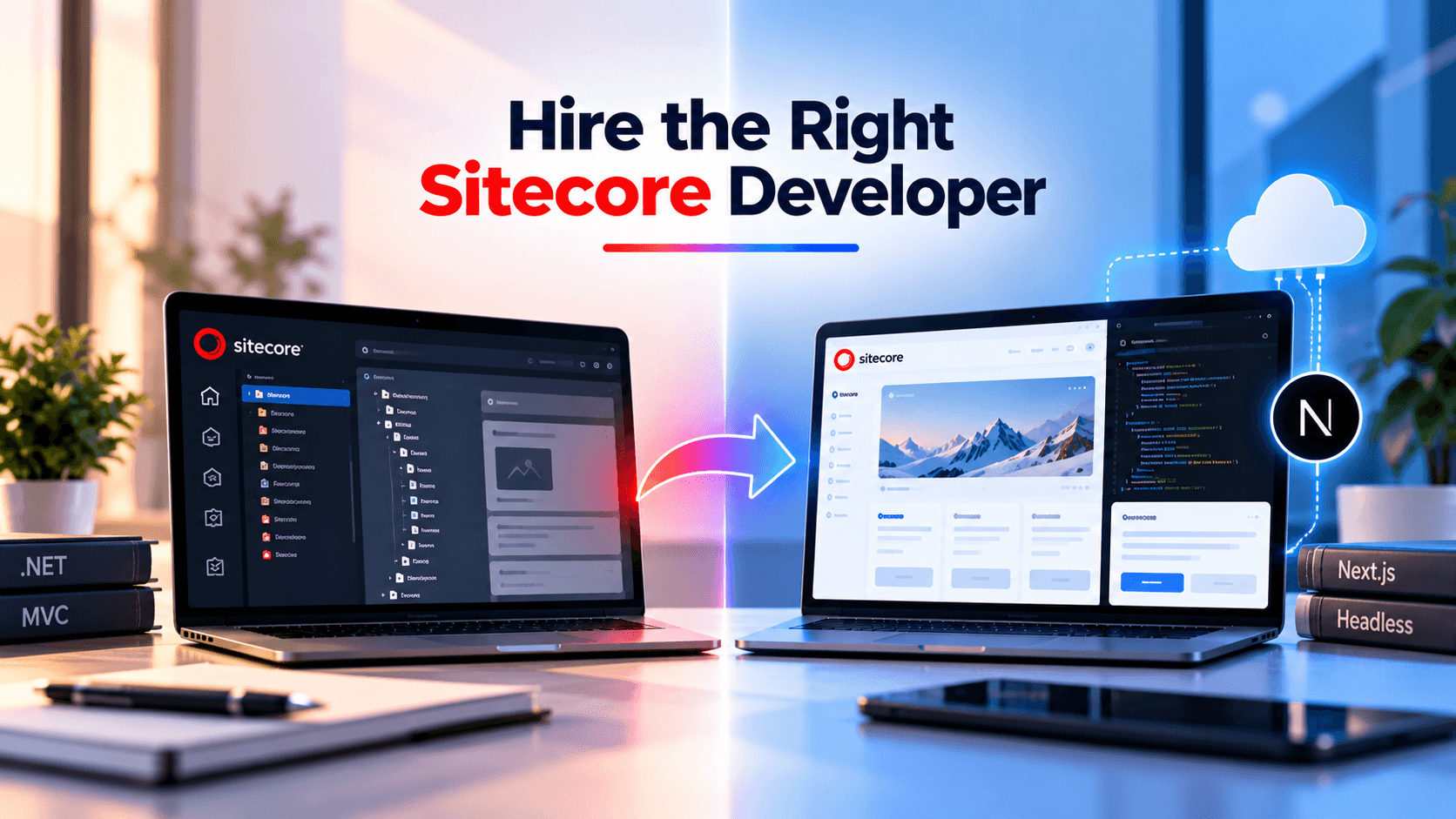
- · Sitecore XP / XM (the traditional platform): server-based, built mostly on ASP.NET MVC, with deep personalization and analytics. Many enterprises still run it.
- · SitecoreAI (formerly XM Cloud): Sitecore's modern SaaS CMS, which is headless. Front ends are usually built in Next.js and hosted on platforms like Vercel.
The skill sets overlap, but they are not the same. A developer with ten years of Sitecore 9 MVC experience may struggle with a headless Next.js build, and a strong React developer may know nothing about Sitecore templates or publishing pipelines.
The direction is clear, too. Sitecore has signalled that XM Cloud is the critical path on its roadmap, with new features primarily released there, even though XP isn't going away yet.
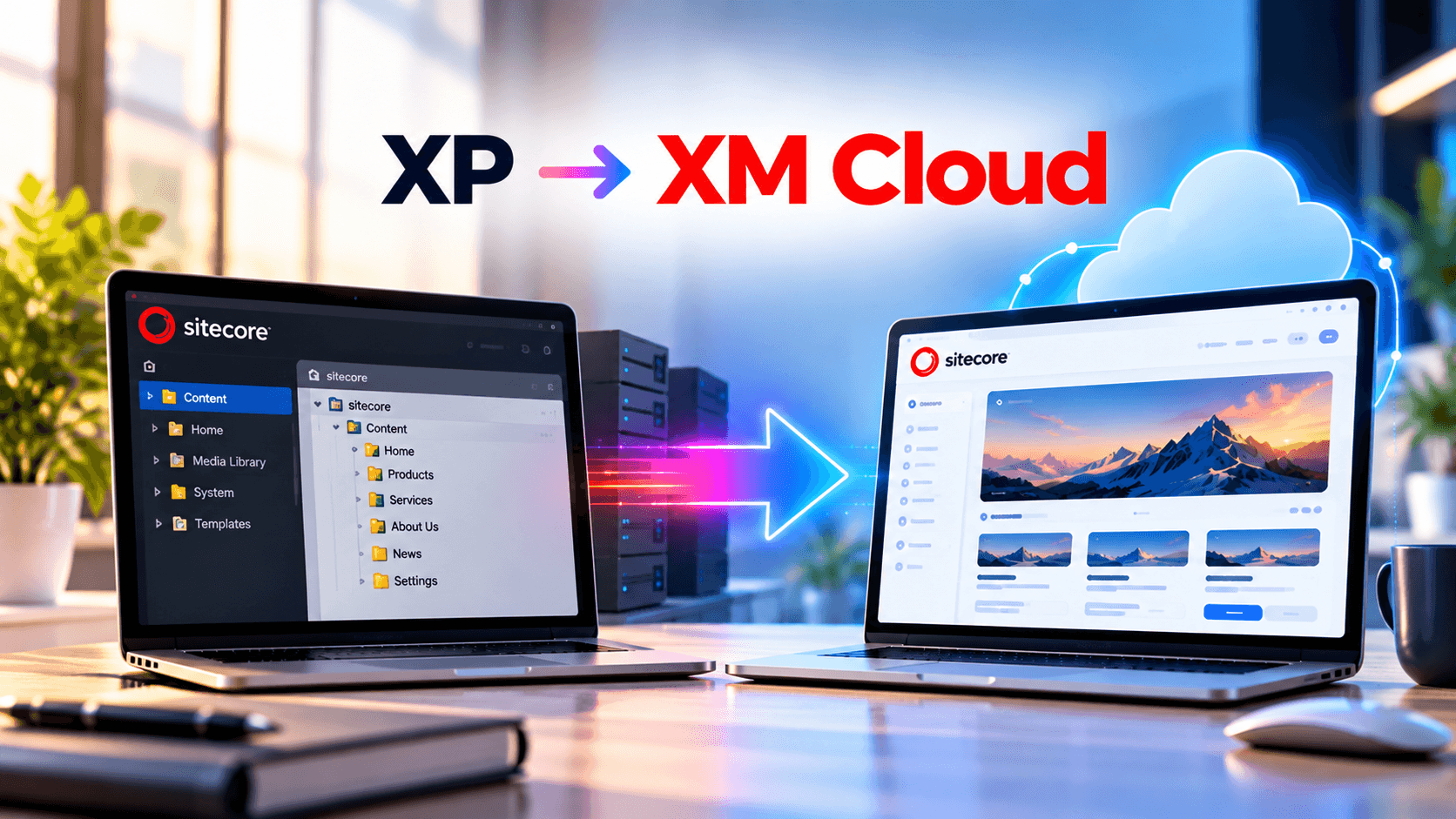
A real example: Michigan State University moved its sites from Sitecore XP to XM Cloud. Part of the reasoning was practical XP required campus-hosted servers and regular full-system upgrades at added cost, while XM Cloud is SaaS-hosted. A team planning a move like that needs developers who understand both the old system and the new one. Someone who only knows one side will slow the project down.
So before you write a job post, answer one question: are you maintaining XP, building on SitecoreAI, or migrating between them? Your answer decides who you should hire.

Hire Sitecore Expertise Without Delays
Get Sitecore developers matched to XP, XM Cloud, Next.js, migrations and enterprise delivery without wasting months on the wrong hire.
The Skills That Actually Matter
Every hiring page lists "Sitecore experience." That tells you nothing. Here's what to look for, mapped to the work.
For Sitecore XP / XM maintenance and enhancement
- · C# and ASP.NET MVC, since the platform runs on .NET
- · Helix architecture principles (how modules are structured so the solution doesn't turn into spaghetti)
- · SXA (Sitecore Experience Accelerator) for faster page and component building
- · Templates, layouts, renderings, workflows, and publishing
- · Experience with version upgrades (for example, 9.x to 10.x)
For SitecoreAI / XM Cloud and headless builds
- · Next.js and React, because that's where the front end lives
- · Sitecore JSS and headless services
- · Sitecore CLI and deployment through CI/CD pipelines
- · Hosting on Vercel or Node.js servers
Real job listings confirm this split. A recent US senior role asked for 5+ years of hands-on Sitecore development plus 2+ years specifically in XM Cloud (Headless + SXA). That second requirement is the one most candidates can't meet yet, which is why good XM Cloud developers are hard to find.
For migrations
- · Ability to audit an existing codebase and list what must be rebuilt
- · Content and template mapping
- · Converting MVC renderings into headless components
Migration is specialist work. Some agencies now use AI-assisted conversion to speed it up; AgencyQ, for example, says its accelerator converts legacy XP sites to headless Next.js up to 50% faster. Even then, experienced developers review and test every converted component. The tooling helps; it doesn't replace expertise.
Find Sitecore SEO Issues Before Rankings Start Dropping
Hiring Models: Which One Fits You?
- Full-time in-house
Best when Sitecore is core to your business and you have continuous, long-term work. Downside: slow to hire and expensive. - Freelancer
Fine for small fixes or a short task. Risky for anything business-critical, because there's no backup if they disappear mid-sprint. - Dedicated developer through a partner
You get a developer (or a team) working only on your project, but the partner handles hiring, infrastructure, and replacement. This is the model most mid-size businesses and agencies use when they need Sitecore skills quickly. - Project-based / fixed scope
Good for a defined deliverable such as an upgrade, a migration phase, or a new microsite. - White-label for agencies
If you're a digital agency in the US, UK, or UAE and your client wants Sitecore work you can't staff, a white-label partner delivers under your brand. Your client sees your agency; the partner's developers do the build.
How to Vet a Sitecore Developer (A Practical Checklist)
Interviews full of definitions don't reveal much. These do:
Ask them to walk through a real project.
"Tell me about a Sitecore site you built or upgraded. What broke, and how did you fix it?" Good developers talk about specific problems: publishing delays, caching issues, a rendering that killed page speed. Vague answers are a warning.
Ask about architecture.
"How would you structure a multi-site Sitecore solution for three brands?" You want to hear Helix, shared foundation modules, and separate project layers, not "I'd just copy the site."
Ask a version-specific question.
"What changes when we move from XP to XM Cloud?" A strong candidate will mention headless rendering, the loss of server-side xDB analytics, and rebuilding MVC components in Next.js.
Give a small paid test.
For example: build a simple component with a datasource template and make it editable in the page editor. Two to four hours of work tells you more than an hour of interview.
Check their deployment habits.
Ask how they deploy. "I copy files to the server" is a red flag. CI/CD pipelines and source-controlled serialization are what you want.
Red flags to watch for
- Says "Sitecore is just .NET" (it's much more)
- Has never worked on an upgrade or migration
- Can't explain the difference between XP and SitecoreAI
- Customizes core Sitecore files directly instead of extending them
- No interest in how content authors will use what they build
A Typical Scenario: Where Dedicated Developers Help Most
Picture a UK marketing agency. Their client runs Sitecore 9.3 on XP, support for the old version is ending, and the client has asked about moving to SitecoreAI. The agency's own team knows WordPress and React, but not Sitecore.
Their options: spend three to four months recruiting a senior Sitecore developer locally at £500+ a day, or bring in a dedicated offshore Sitecore developer who already knows both XP and headless, working under the agency's name. The second route gets an audit done within weeks, keeps the client relationship with the agency, and protects the margin.
This is a very common pattern, and it's exactly the kind of work dedicated Sitecore developers are built for.
Improve Sitecore Rankings, Performance and AI Search Visibility
Why Hire Sitecore Developers from Murmu Software Infotech
Murmu Software Infotech is an India-based software company that works across .NET, React, Next.js, and enterprise CMS platforms, including Sitecore. That combination matters, because modern Sitecore work needs both: strong .NET for the platform and strong Next.js for headless front ends.
When you hire Sitecore developers from Murmu Software Infotech, you get:
- Hands-on Sitecore tooling experience, including SXA, JSS, Helix/Habitat, and Sitecore MVC
- Both sides of the platform: support for existing XP/MVC builds and headless Next.js development for SitecoreAI
- Flexible models: dedicated developers, project-based work, or white-label delivery for agencies in the US, UK, and UAE
- Offshore cost advantage without the freelancer risk, with a company team behind every developer
- Time-zone overlap planning so your developer joins your stand-ups and works inside your tools (Jira, Slack, Azure DevOps, GitHub)
Whether you need one developer to clear a support backlog or a small team for a migration, you can hire Sitecore developers from Murmu Software Infotech and start with a short discovery call to scope the work.
A Simple Hiring Plan You Can Follow This Week
- Write down your platform and version (XP 10.x, SitecoreAI, or migrating)
- List the top three tasks for the first 90 days
- Choose your model: in-house, dedicated, project, or white-label
- Shortlist two or three candidates or partners
- Run the architecture question and a small paid test
- Start with a two-to-four-week trial before committing long-term
Frequently Asked Questions
How much does it cost to hire a Sitecore developer?
It depends on location and model. In the US, full-time Sitecore roles are being listed at around $95,000–$150,000 a year. UK contractors average about £500 a day. Offshore dedicated developers from India typically cost a fraction of that, which is why many companies and agencies use them for ongoing work.
Should I hire a Sitecore XP developer or an XM Cloud (SitecoreAI) developer?
If you're maintaining an existing XP site, hire for .NET, MVC, and Helix experience. If you're building new or planning to move to SaaS, prioritize Next.js, JSS, and headless experience. If you're migrating, you need someone who knows both.
How long does it take to hire a Sitecore developer?
Recruiting in-house can take months because the talent pool is small. Through a dedicated hiring partner like Murmu Software Infotech, a developer can usually be matched and onboarded much faster, often within days to a couple of weeks depending on your requirements.
Can a regular .NET developer learn Sitecore on the job?
They can, but not cheaply. Sitecore has its own architecture, publishing model, and best practices. For business-critical work, hire someone who already has Sitecore experience.
Can agencies hire Sitecore developers on a white-label basis?
Yes. Murmu Software Infotech works with agencies in the US, UK, and UAE, delivering Sitecore development under the agency's brand so the client relationship stays with the agency.
Frequently Asked Questions
How do I hire the right Sitecore developer in 2026?
Start by identifying whether you need support for Sitecore XP/XM, SitecoreAI or XM Cloud, or a migration between them. Then match the candidate's skills to that architecture instead of hiring based only on general .NET experience.
What skills should a Sitecore XP developer have?
A Sitecore XP or XM developer should typically understand C#, ASP.NET MVC, Helix architecture, SXA, templates, layouts, renderings, workflows, publishing and version upgrades.
What skills should an XM Cloud or SitecoreAI developer have?
For modern headless Sitecore work, look for Next.js, React, Sitecore JSS, headless services, Sitecore CLI, CI/CD deployment and experience with modern hosting environments.
What skills are needed for a Sitecore migration?
Migration work requires auditing the existing codebase, mapping templates and content, identifying features that must be rebuilt, and converting legacy MVC renderings into modern headless components where required.
Should I hire a full-time Sitecore developer or a dedicated developer?
Full-time hiring can fit businesses with continuous long-term Sitecore work, while dedicated developers through a partner can be useful when you need specialist skills quickly without managing recruitment and replacement internally.
Are freelancers suitable for Sitecore development?
Freelancers can work well for small or short-term tasks, but business-critical Sitecore projects may benefit from a team or partner that can provide continuity, backup and wider technical support.
How should I test a Sitecore developer before hiring?
Ask candidates to explain a real Sitecore project, answer architecture and migration questions, describe their deployment process and complete a small paid technical test related to components, templates or editing.
What are common red flags when hiring Sitecore developers?
Red flags include treating Sitecore as just .NET, having no migration or upgrade experience, being unable to explain XP versus XM Cloud, modifying core Sitecore files directly, or ignoring the content author experience.
Can agencies hire Sitecore developers on a white-label basis?
Yes. Agencies can use white-label Sitecore developers or teams to deliver development under the agency's brand while keeping the client relationship with the agency.
Should I hire a developer who knows both Sitecore XP and XM Cloud?
If you are migrating from a legacy XP or XM environment to XM Cloud or another headless architecture, experience across both traditional Sitecore and modern headless delivery is especially valuable.