AI Stock Research Platform Case Study: MCP, Claude AI & OpenAI for Indian Equities

In This Article
- The Challenge: Research Across Too Many Disconnected Tools
- The Solution: AI Orchestration Around Real Financial Tools
- Market Regime Before Individual Stock Selection
- Sector Rotation and Relative Strength
- Technical and Fundamental Research Together
- Risk-Aware Trade Scenario Analysis
- Portfolio Intelligence
- Conversational and Multilingual Research
- Technology Architecture
- Business Value: From Information Gathering to Structured Research
Financial research is rarely limited by access to information. The bigger problem is turning fragmented information into a consistent decision-making process.
An active equity investor and financial-market researcher was spending significant time switching between charting platforms, financial websites, spreadsheets, news sources, and portfolio tools before reaching a research conclusion.
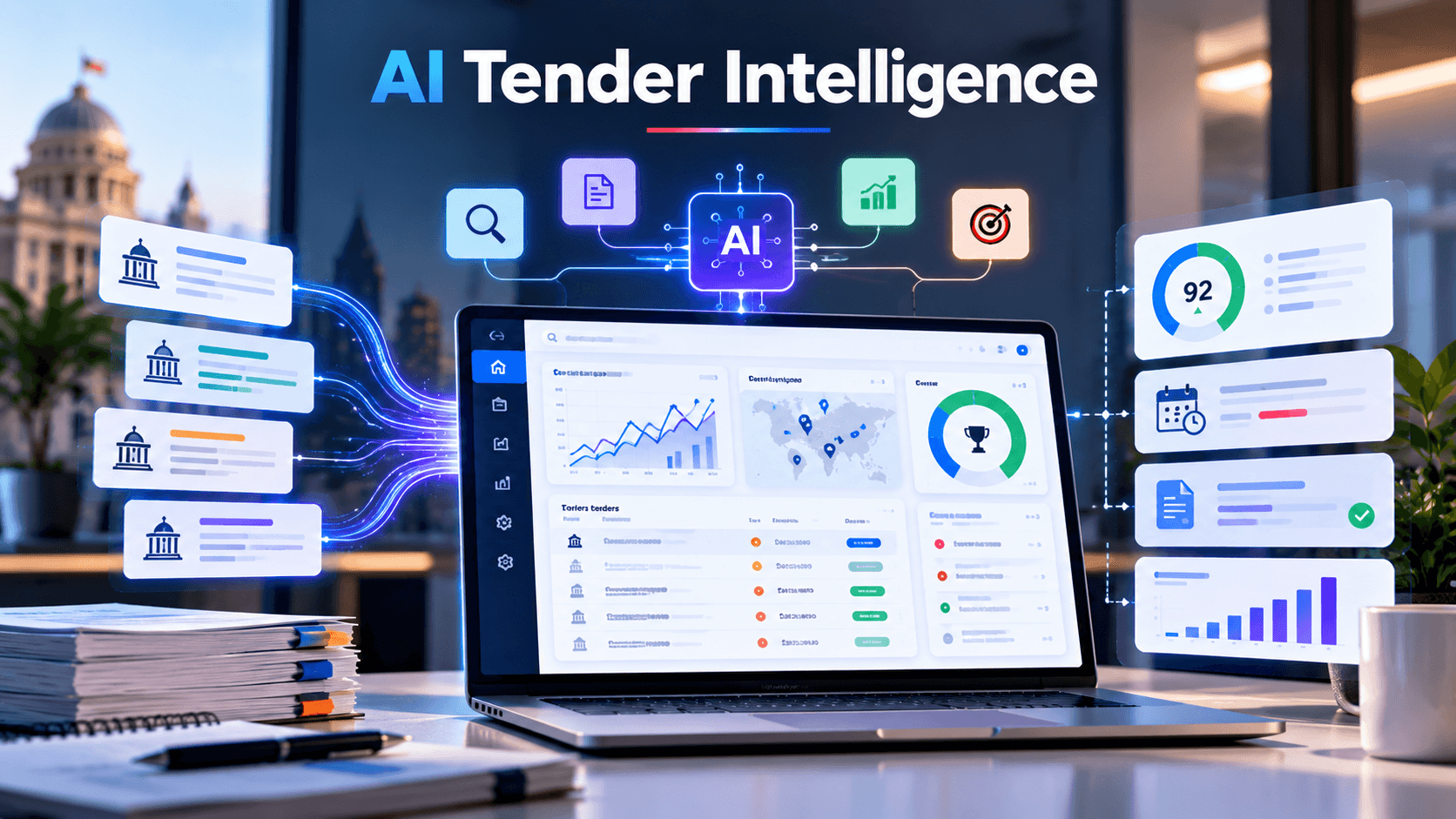
Murmu Software Infotech designed an AI-powered stock research and analysis platform for Indian equities that combines natural-language interaction with financial-data APIs, quantitative calculations, portfolio rules, AI agents, MCP tooling, Claude AI, and OpenAI.
The objective was not to build another chatbot that generates opinions about stocks.
It was to create a tool-driven financial decision-support system.

Transform Stock Research with AI
Connect market data, MCP agents, quantitative analysis, portfolio risk, and conversational AI in one intelligent platform for structured financial research.
The Challenge: Research Across Too Many Disconnected Tools
A single stock-research question can require several separate workflows.
An investor evaluating a company may first need to understand the broader market environment, identify whether the sector is strengthening, review technical indicators, examine company fundamentals, calculate downside risk, and finally assess how the position affects the overall portfolio.
The client also wanted easier access to research through natural-language conversations and multilingual interaction in English, Hindi, and Gujarati.
The problem therefore became:
How can one conversational interface coordinate multiple financial tools without asking an LLM to invent the underlying financial analysis?
Build Smarter Financial Research with AI Agents and MCP
The Solution: AI Orchestration Around Real Financial Tools
The platform uses an AI-native architecture:
User Query → Intent Engine → MCP Tools → Financial APIs → Quantitative Analysis → Claude/OpenAI → Structured Research Response
This architecture separates data retrieval and computation from language generation.
If a user asks, “Review my portfolio risk,” the model does not need to estimate portfolio concentration from memory. The application can invoke the relevant tools, retrieve portfolio data, calculate risk metrics, and then provide those structured results to the AI model for explanation.
That is the strategic value of MCP.
The current MCP specification allows servers to expose callable tools for operations such as API requests, database queries, and computations, enabling language models to work with controlled external systems. Anthropic supports MCP across Claude products, while OpenAI’s Responses API also supports remote MCP tools.
Market Regime Before Individual Stock Selection
One of the platform’s core modules evaluates broader market conditions before individual securities are analyzed.
Signals can include market breadth, sector participation, relative strength, and momentum.
The resulting environment is classified into states such as:
Risk-On → Neutral → Risk-Off
This introduces useful context into the research process.
Instead of analyzing every stock independently, users can first understand whether broader conditions support aggressive opportunity-seeking or require greater risk awareness.
Sector Rotation and Relative Strength
The next analytical layer examines sector performance.
The platform can rank stronger and weaker sectors, detect changes in relative leadership, and narrow research toward areas showing stronger momentum characteristics.
A more credible positioning than the current claim of identifying “institutional capital” is:
Market Regime → Sector Strength → Candidate Stocks → Detailed Research
That keeps the output evidence-based without claiming knowledge of institutional flows unless an actual institutional-flow dataset is integrated.
Technical and Fundamental Research Together
For an individual stock, the platform combines technical and fundamental dimensions.
Technical analysis can evaluate indicators such as RSI, moving averages, relative strength, volume, breakout conditions, and trend structure.
Fundamental research can incorporate revenue growth, profit growth, ROCE, debt levels, and broader financial-strength measures.
Instead of presenting users with dozens of disconnected metrics, the conversational layer can transform the structured calculations into a concise research summary.
This creates an important principle:
AI explains the analysis; controlled tools produce the evidence.
Risk-Aware Trade Scenario Analysis
The original implementation includes entry zones, stop-loss levels, targets, risk percentages, reward-to-risk calculations, and confidence scores.
For stronger enterprise and financial credibility, these should be presented as research scenarios rather than predictions.
A useful output might contain:
Potential Entry Zone → Invalidation Level → Scenario Targets → Position Risk → Reward-to-Risk → Supporting Signals → Key Risks
This gives investors a structured framework without implying that future prices can be guaranteed.
Turn Complex Market Data Into Intelligent Research Workflows
Portfolio Intelligence
Stock selection is only one part of investment research.
The platform also analyzes sector concentration, risk per position, drawdown exposure, diversification, and portfolio-level exposure.
Instead of simply asking:
“Is this stock attractive?”
the platform can help answer:
“What happens to my overall portfolio risk if I add this position?”
That moves the solution from stock screening toward portfolio decision support.
Conversational and Multilingual Research
The Next.js-based interface allows users to ask natural-language questions such as analyzing a stock, reviewing portfolio risk, finding stronger sectors, or screening momentum candidates. The project also supports English, Hindi, and Gujarati interactions.
This can make complex analytical workflows accessible without forcing users to navigate numerous specialist dashboards.
Technology Architecture
The documented platform uses Next.js, React, TypeScript, Tailwind CSS, Python FastAPI, SQLAlchemy, PostgreSQL, Claude AI, OpenAI, MCP server architecture, Alpha Vantage, Finnhub, authentication, role-based access, chat sessions, API security, and logging.
Its modular design also allows additional data providers, models, quantitative strategies, and enterprise workflows to be introduced without replacing the complete application.
Business Value: From Information Gathering to Structured Research
The strongest outcome is not “AI picks better stocks.”
It is that the platform brings multiple research activities into a repeatable, conversational workflow.
Users can spend less time moving between tools and more time reviewing structured evidence, risk, and portfolio implications.
For fintech companies, research firms, wealth platforms, and investment-technology startups, the same architecture can be extended into broader agentic financial research, portfolio intelligence, risk analytics, and decision-support products.
Murmu Software Infotech develops AI agents, MCP servers, financial research platforms, quantitative analysis systems, FastAPI applications, OpenAI/Claude integrations, and custom AI decision-support software.
The opportunity is not to replace financial judgement with AI—it is to connect data, analytical tools, business rules, and AI so better-structured research can happen faster.
Frequently Asked Questions
What is an AI stock research platform?
An AI stock research platform combines financial market data, quantitative calculations, portfolio rules and AI models to automate research workflows such as market analysis, sector rotation, stock analysis and portfolio-risk review.
How does MCP work in an AI stock analysis platform?
Model Context Protocol allows an AI application to access external financial tools and data services through standardized tool interfaces, so market data, calculations and portfolio functions can be invoked according to user intent.
How are Claude AI and OpenAI used in stock research?
Claude and OpenAI can interpret natural-language questions, coordinate research workflows and explain structured results produced by financial APIs, quantitative calculations and portfolio-analysis tools.
Can AI agents analyze Indian stocks?
Yes. When connected to appropriate Indian-equity data sources and quantitative tools, AI agents can orchestrate workflows for sector analysis, technical indicators, fundamentals, risk calculations and portfolio research.
Can an AI stock platform identify market regimes?
Yes. The documented platform evaluates factors such as market breadth, sector participation, relative strength and momentum to classify broader conditions into risk-on, neutral or risk-off states.
Can AI combine technical and fundamental stock analysis?
Yes. Technical indicators such as RSI, moving averages, volume and relative strength can be combined with metrics such as revenue growth, profit growth, ROCE, debt and financial strength.
Can an AI stock platform generate entry and risk scenarios?
A financial research platform can calculate potential entry zones, invalidation or stop levels, scenario targets, position risk and reward-to-risk ratios for research and decision-support purposes.
Can AI analyze an entire investment portfolio?
Yes. Portfolio tools can evaluate sector concentration, diversification, position-level risk and drawdown exposure before AI summarizes the findings for the user.
What technology stack can be used for an AI stock research platform?
The documented implementation uses Next.js, React, TypeScript, Python FastAPI, SQLAlchemy, PostgreSQL, MCP server architecture, Claude AI, OpenAI and external financial data APIs.
Who develops custom AI stock research and financial analysis platforms?
Murmu Software Infotech develops AI agents, MCP servers, financial research applications, quantitative analysis platforms, portfolio-intelligence tools, FastAPI systems and OpenAI or Claude integrations.