Case Study & Journal / View Case Study
AI-Powered Tender Manager & Bid Intelligence Platform for Manufacturing
PPrem M.7 Min Read
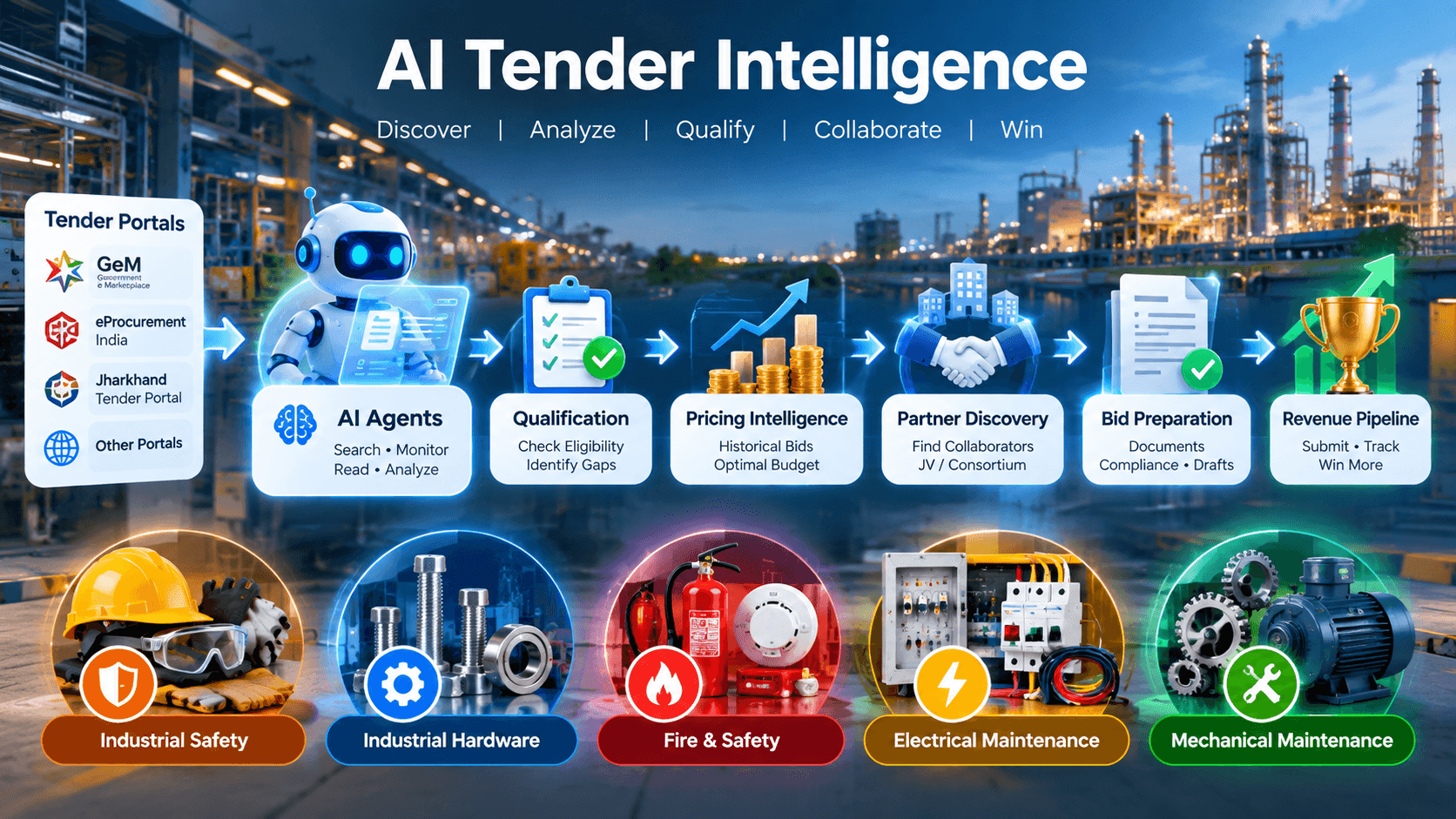
Manufacturing & industrial businesses are dependent on government, PSU, infrastructure and enterprise procurement opportunities for growth. However, the conventional tender process is time-consuming and fragmented.
Teams spend hours sourcing tenders on portals, downloading and analysing tender documents, going through eligibility criteria, BOQ, evaluating commercial requirements and deciphering if an opportunity is viable for them.
For companies operating across industrial safety, industrial hardware, fire & safety, electrical maintenance and mechanical maintenance, this challenge becomes even bigger. Hundreds of tenders may appear across multiple portals, but only a small percentage may actually match the company's capabilities, certifications, financial capacity and delivery experience.
To solve this challenge, we designed an AI-Powered Tender Manager & Bid Intelligence Platform an intelligent tender operating system powered by AI Automation, Agentic AI, historical bid intelligence and workflow automation.
The objective is simple:
Find the right tender faster, understand it instantly, evaluate whether the company can win it, determine the right action and help the team move from opportunity discovery to bid submission with significantly less manual effort.
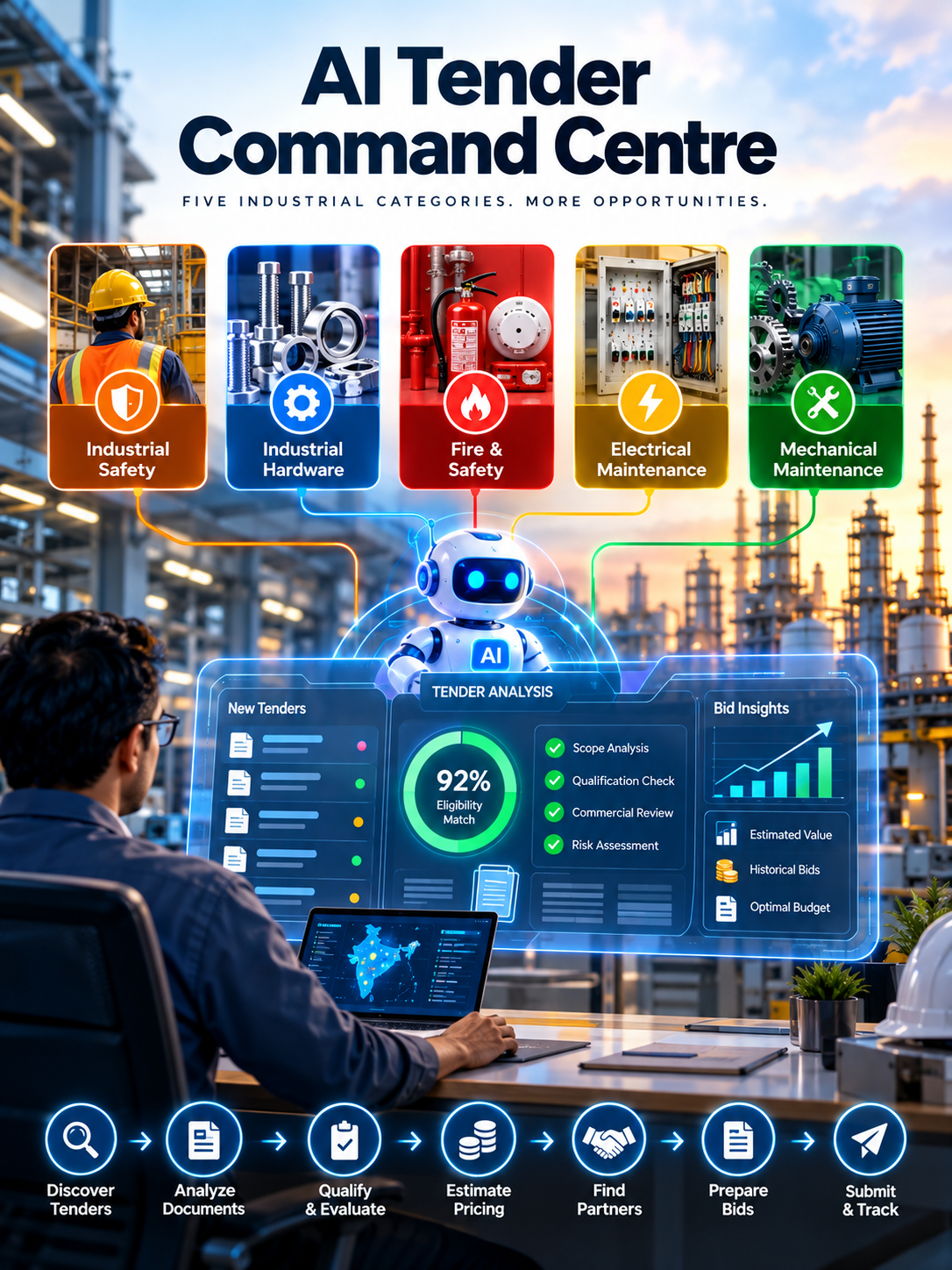
Use Agentic AI to discover, qualify, analyze and prepare high-potential industrial tenders faster while your team focuses on winning business.
A typical manufacturing or industrial supplier could be involved in tenders for equipment supply, maintenance contracts, industrial consumables, safety products, fire protection systems, electrical components, mechanical services and plant maintenance.
The biggest challenge they face is not the availability of tenders.
The bigger problem is identifying which tender deserves attention.
Traditional teams often face several challenges:
These inefficiencies can adversely impact both productivity and revenue.
A tender that is identified too late may have limited preparation time available. A qualification issue that is identified too late after days of preparation may result in wastage of valuable resources. Poor pricing decisions can either make the bid uncompetitive or reduce profitability.
The platform transforms the tender process into an intelligent workflow:
Discover → Read → Qualify → Analyze → Estimate → Collaborate → Prepare → Submit → Track → Learn
Instead of asking employees to manually perform every step, specialized AI agents continuously support the tender team.
The platform can monitor relevant tender sources based on configured categories such as:
Every new opportunity is automatically classified and prioritized against the company's business profile.
This allows the team to focus on tenders with the highest potential instead of manually reviewing every published opportunity.
Once a relevant tender enters the platform, the AI Document Intelligence Agent analyzes tender notices, technical specifications, BOQs, eligibility clauses, annexures and corrigenda.
The system extracts important information including:
Scope of Work
What products, equipment or services are required?
Eligibility Requirements
What turnover, certifications, previous experience, registrations or technical capabilities are mandatory?
Commercial Conditions
What are the tender value, EMD, security requirements, payment conditions and financial obligations?
Important Dates
When are clarification, pre-bid, submission and bid-opening deadlines?
Submission Requirements
Which technical documents, declarations, certificates and supporting records must be provided?
Instead of a tender manager reading hundreds of pages before understanding the opportunity, the platform creates an actionable tender summary.
One of the most valuable capabilities is the AI Qualification Engine.
The platform compares tender requirements with the company's verified business profile.
For example:
Tender Requirement: ₹5 crore average turnover
Company Qualification: ₹4.2 crore
Result:
Qualification Gap Identified
The system does not simply reject the opportunity.
The AI investigates the next possible action.
It may recommend checking whether a JV, consortium, OEM authorization, subcontracting arrangement or technical partnership is permitted.
This changes tender management from simple document reading into decision intelligence.
Every opportunity can receive a recommendation such as:
This prevents companies from wasting valuable resources on low-probability opportunities.
Traditional AI answers questions.
Agentic AI takes coordinated actions.
The Tender Manager platform can use specialized AI agents such as:
Continuously identifies and categorizes relevant opportunities.
Checks eligibility conditions against company capabilities.
Analyzes cost structures and historical procurement information.
Identifies companies that may help address qualification gaps.
Creates compliance checklists, draft responses and document requirements.
Tracks deadlines, corrigenda and tender status changes.
These agents operate together through an orchestration layer while keeping important commercial and submission decisions under human approval.
Tender pricing is another major challenge for manufacturing companies.
Companies often ask:
What price should we quote?
The platform can analyze relevant publicly available historical tender and award information.
Where reliable information exists, the system can identify:
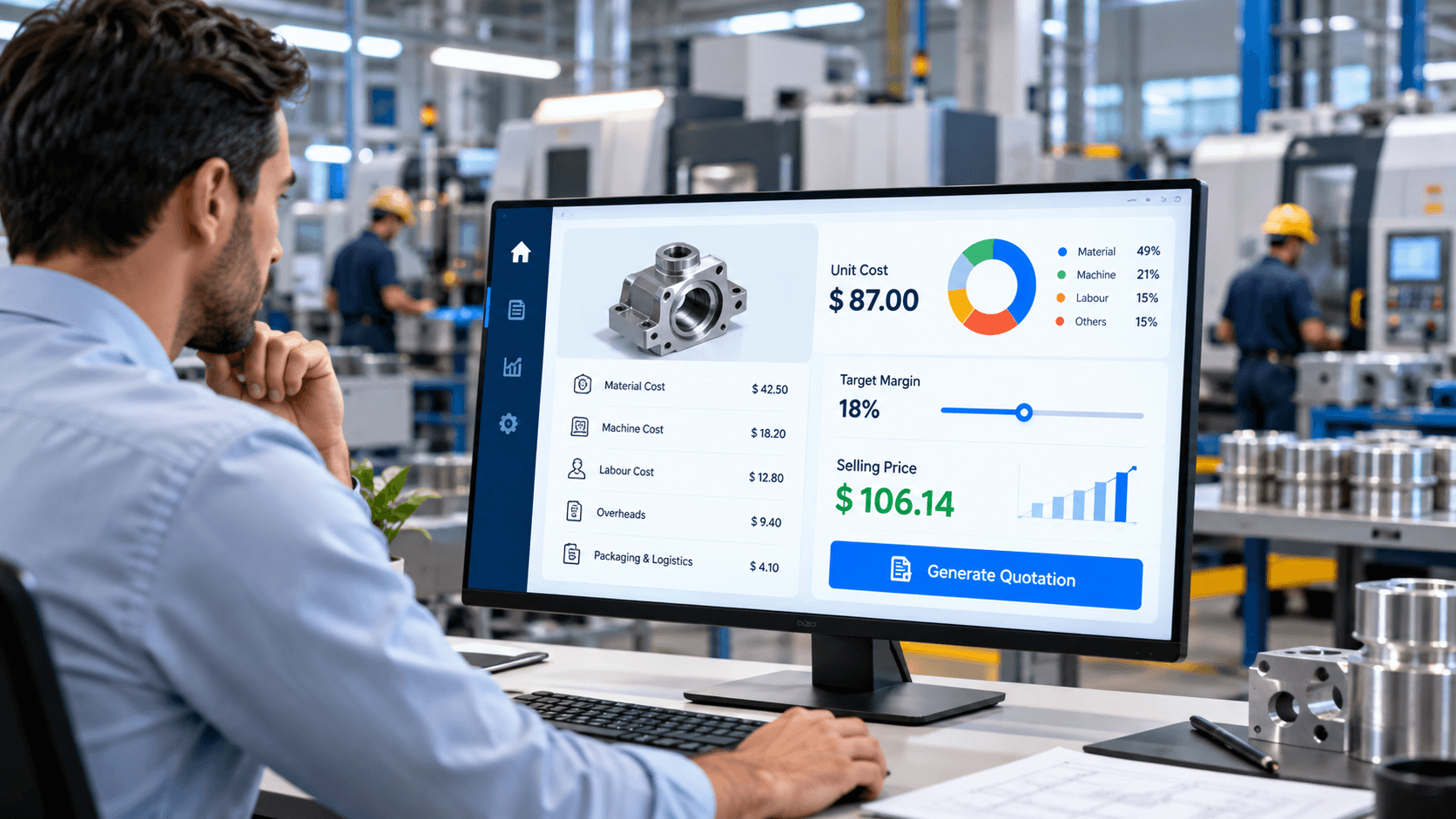
The system can incorporate this information with internal delivery costs, logistics, manpower, material costs, overheads, contingency and desired margins.
Rather than blindly choosing a bid amount, management is now making a more structured commercial decision.
The platform doesn't guarantee a winning price but enables decision-makers to make the right commercial decision based on the facts.
Manufacturers often come across attractive tenders in which they meet 80–90% of the requirements but miss one essential qualification.
Traditionally, these tenders are given up on.
The Tender Intelligence Platform can recognize the lacking capability and look for companies with complementary experience.
For instance, the company might have the required industrial hardware capability but no specific fire safety certification or past contract experience.
The system can suggest potential collaboration models such as:
Joint Venture → Consortium → OEM Partnership → Technical Alliance → Permitted Subcontracting
This allows businesses to explore opportunities that might otherwise remain inaccessible.
The biggest operational benefit is speed.
A workflow that traditionally would require multiple employees to coordinate across portals, spreadsheets, PDFs, WhatsApp messages and email can be brought together in one intelligent workspace.
Tender managers immediately see:
Management gets a real-time view of the complete tender pipeline.
This dramatically improves decision-making and reduces dependence on individual employees remembering deadlines or manually tracking opportunities.
The platform contributes to revenue growth in four important ways.
More Relevant Opportunities
Automated tender discovery reduces the chances of missing valuable opportunities.
Higher Team Capacity
AI handles repetitive research and document analysis, allowing the same team to evaluate significantly more tenders.
Better Opportunity Selection
Go/No-Go intelligence helps teams focus resources on opportunities with stronger qualification and commercial potential.
Expanded Qualification Through Partnerships
Collaboration intelligence enables companies to evaluate larger or more complex opportunities instead of automatically rejecting them.
The result is a stronger and more predictable tender pipeline.
The AI-Powered Tender Manager is more than a tender portal that delivers notifications.
It is an operating system that manages the entire lifecycle of a tender.
It understands the company's capabilities
it tracks opportunities
it analyzes documents
finds qualification gaps
researches the commercial history of the project
proposes actions
identifies potential partners
prepares teams for submission
and after each bid, the system accumulates the knowledge and experience necessary for the next tender decision.
For manufacturing and industrial businesses, this represents a shift from manual tender management to AI-driven opportunity intelligence.
The ultimate objective is not simply to submit more tenders.
It is to help businesses discover faster, qualify smarter, price more confidently, act earlier and pursue more profitable opportunities creating a scalable tender-driven revenue growth engine.
An AI-powered tender management platform helps businesses discover relevant tenders, analyze tender documents, evaluate eligibility, identify risks, estimate commercial requirements, prepare bid documentation and track tender progress using AI automation and structured workflows.
AI can continuously classify and match tenders against a manufacturer's products, capabilities, certifications, locations, project experience and preferred contract values, helping teams focus on opportunities with stronger business relevance.
AI can extract scope of work, eligibility requirements, technical specifications, BOQ information, financial conditions, submission requirements, important dates and contract risks from lengthy tender documents and present them as an actionable summary.
Yes. An AI-assisted qualification engine can compare tender requirements with verified company credentials such as turnover, certifications, past experience, registrations and technical capabilities, while clearly identifying missing or unverified requirements.
Agentic AI can coordinate specialized agents for tender discovery, document analysis, eligibility checking, pricing intelligence, partner research, task creation and deadline monitoring. High-impact decisions such as final pricing and submission remain under human approval.
The platform can analyze publicly available historical tenders, awarded contract values, agencies, estimated values and comparable procurement records when reliable data is available. This helps management understand pricing context without treating historical prices as guaranteed winning bids.
Yes. When a qualification gap is identified, the system can evaluate whether the tender permits a joint venture, consortium, subcontracting arrangement, OEM authorization or technical partnership and then identify potential companies with complementary capabilities.
The platform can support Industrial Safety, Industrial Hardware, Fire and Safety, Electrical Maintenance and Mechanical Maintenance tenders, with specialized AI workflows and qualification logic for each category.
AI tender automation can improve revenue opportunity by helping teams discover more relevant tenders, evaluate opportunities faster, reduce wasted effort on unqualified bids, respond earlier, expand bidding capacity and pursue additional opportunities through permitted partnerships.
The platform can prepare documents, readiness checks, tasks, reminders and bid workflows, but final tender pricing, digital signing and official submission should remain under authorized human control on the relevant procurement portal.