Development / Cloud Computing
Why Companies Choose an Offshore Technology Partner
PPrem M.7 Min Read
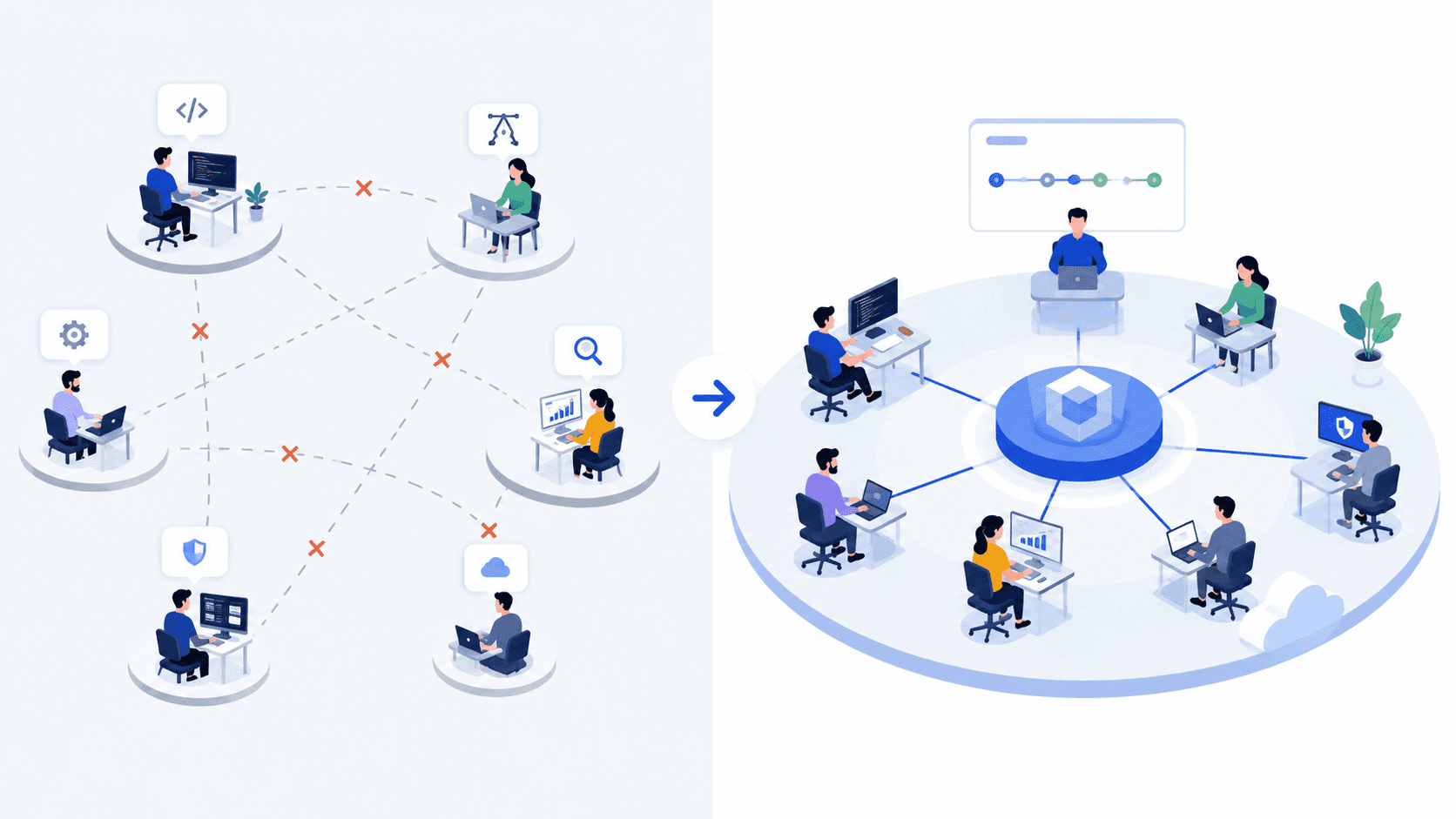
Hiring several specialist vendors can appear flexible at first.
One agency handles product design. Another builds the frontend. A separate team develops APIs. Someone else manages cloud infrastructure, quality assurance, artificial intelligence, CMS implementation or post-launch support.
However, as the number of vendors increases, so does the coordination burden.
Requirements move through multiple account managers. Architecture decisions are made in isolation. Bugs are passed between teams. Each provider protects its own scope, while the client remains responsible for connecting every dependency.
That is why many companies now prefer one accountable offshore software development partner over a collection of disconnected vendors.
The value is not simply lower development cost. It is reduced coordination risk, stronger technical continuity and clearer ownership from product discovery through launch and long-term growth.
A multi-vendor model may divide the work, but it does not automatically divide responsibility effectively.
When separate teams own design, frontend, backend, integrations and infrastructure, common problems include:
The client often becomes the system integrator, project manager and escalation point.
This coordination cost rarely appears in the original quotations. It appears later as meetings, rework, delayed approvals, integration failures and production issues.
Developers discussing unsuccessful outsourcing engagements frequently identify lost context, too many management layers, unclear accountability and treating remote teams as black boxes as major contributors to poor results. Experienced practitioners also note that successful offshore collaboration works better when remote engineers are treated as part of one product team rather than as an isolated delivery factory.

Replace fragmented vendors with one accountable offshore technology team for strategy, development, integrations, launch and ongoing product growth.
An offshore technology partner can bring product strategy, UI/UX, frontend engineering, backend development, QA, DevOps, cloud deployment and support under one delivery structure.
This gives the client one accountable team for:
The advantage is not that one company must possess every possible technology skill internally. The advantage is that one team remains responsible for the complete outcome.
A reliable partner does not respond to every problem with, That belongs to another vendor. It investigates the full workflow and coordinates the right technical response.
This business-first approach is an important selection factor. Strong offshore partners begin by understanding how the organisation operates, what has already failed and what success should look like before recommending technologies or timelines.
Building a complete internal product team can require hiring product managers, designers, frontend developers, backend engineers, QA specialists, cloud engineers and technical leaders.
Recruitment may take months, particularly when the company needs specialised capabilities such as:
Offshore development gives organisations access to a broader global talent pool and allows them to add or reduce capacity based on the product roadmap.
The reviewed offshore-development guides consistently identify access to specialised talent, scalability, faster team formation and reduced permanent hiring overhead as major reasons companies use offshore partners.
Murmu Software Infotech provides dedicated offshore development teams across custom software, SaaS, artificial intelligence, mobile applications, enterprise CMS, CRM, ERP, QA and DevOps.
A digital product is not a collection of independent screens.
The customer interface depends on backend APIs. APIs depend on database design, permissions and infrastructure. Integrations affect security and performance. Analytics depend on consistent event and data models. AI features depend on trusted data, monitoring and human controls.
When different vendors design these areas independently, the product may work as separate components but fail as a connected platform.
A single global technology partner can establish shared standards for:
This continuity becomes especially valuable after launch. The team that designed the architecture already understands the assumptions, trade-offs and technical debt behind the product.
Traditional outsourcing is often transactional: complete a defined task, deliver the files and move on.
An extended software development team works differently.
Its engineers participate in product discussions, sprint planning, demonstrations, architecture reviews and ongoing improvements. Over time, they develop an understanding of the customers, business model, workflows and technical roadmap.
That retained context reduces repeated explanation and improves decision-making.
The difference is significant. A vendor may deliver tickets. A technology partner helps determine which tickets should exist, which requirements need clarification and which implementation choices may create future risk.
Offshoring works best as a long-term team extension rather than a quick patch for unclear product requirements.
Digital agencies and consulting companies face an additional challenge: their clients may request services outside the agency’s internal expertise.
A reliable white-label development partner allows an agency to add custom software, AI, enterprise CMS, SaaS, mobile application and integration capabilities without recruiting a separate team for every opportunity.
The offshore partner works behind the agency’s brand while the agency maintains the client relationship.
This model can help agencies:
The strongest white-label relationships are not based on silently handing work to an unknown subcontractor. They depend on transparency, agreed communication channels, delivery standards and clear accountability between the agency and technology team.
India remains a major offshore software-development destination because of its large engineering ecosystem and broad technology expertise. Offshore hiring can help companies reduce recruitment, salary, infrastructure and employment overhead compared with building every capability locally.
However, choosing a software outsourcing company in India purely because it submitted the lowest quotation creates significant risk.
Low-quality engagements often involve:
Community discussions from experienced developers repeatedly emphasise that quality depends on paying for capable talent, reviewing the actual team and creating a collaborative one-team model.
The correct question is not, Which vendor is cheapest?
It is, Which partner can reduce total delivery risk while creating sustainable product value?
Before selecting a partner, assess more than its sales presentation.
Review whether the company can demonstrate:
Relevant case studies: Evidence of similar platforms, industries or integrations.
Named technical ownership: Clear access to developers, leads or architects not only account managers.
Transparent team structure: Visibility into who will actually perform the work.
Business understanding: The ability to challenge unclear or unnecessary requirements.
Delivery process: Defined discovery, milestones, demonstrations, QA and release management.
Security and IP controls: NDAs, access restrictions, code ownership and secure development practices.
Communication model: Agreed overlap hours, escalation paths, reporting and collaboration tools.
Continuity: A plan for knowledge retention, staffing changes and post-launch support.
Industry guidance recommends examining demonstrated experience, communication, cultural alignment, pricing transparency and whether the provider genuinely performs the responsibilities promised in the engagement.
Companies can review Murmu Software Infotech’s digital product case studies across healthcare, commerce, AI, SaaS, mobile applications and enterprise CMS before discussing a partnership.
Multiple vendors can work when a company has a strong internal technology leadership team capable of coordinating architecture, scope, security, integrations and releases.
Without that internal coordination capacity, adding more vendors often adds more risk.
A capable offshore technology partner provides one connected team, one delivery process and one accountable owner across the product lifecycle.
The strongest partnerships combine the strategic context of an internal team with the flexibility and specialised capabilities of a global delivery organisation.
Companies do not choose an offshore partner only to hire developers at a lower cost. They choose one to reduce coordination, retain product context, accelerate delivery and create clear accountability for the complete technology outcome.
Murmu Software Infotech supports startups, agencies, software companies and enterprises as an extended offshore product-development team from India.
Explore our partnership model:
https://murmusoftwareinfotech.com/white-label-software-development-partner
Email: contactus@murmusoftwareinfotech.com
Companies choose an offshore technology partner to access specialised engineering skills, expand delivery capacity, reduce permanent hiring overhead and maintain one accountable team across product discovery, design, development, testing, deployment and support.
One partner can coordinate architecture, dependencies, integrations, quality assurance and releases through a shared delivery process. Multiple vendors may create duplicated management, conflicting technical decisions, unclear ownership and delays between dependent teams.
An extended software development team is a remote engineering group that works alongside the client's internal product and technology teams. It participates in planning, development, demonstrations and long-term improvements while retaining knowledge of the product and business.
An offshore partner may provide product discovery, UI and UX design, web and mobile development, backend APIs, SaaS architecture, artificial intelligence, enterprise CMS, integrations, QA, DevOps, cloud deployment, maintenance and technical support.
Offshore development can reduce recruitment, employment, infrastructure and specialist hiring costs. The greatest savings often come from faster team formation, reduced vendor coordination and avoiding the need to maintain every technical capability internally.
Common risks include inconsistent architecture, repeated onboarding, delayed dependencies, duplicated project management, unclear defect ownership, weak documentation, security gaps and vendors blaming one another when integrations or releases fail.
Evaluate relevant case studies, the actual proposed team, technical leadership, communication practices, development process, quality assurance, security controls, intellectual-property terms, documentation standards, references and post-launch support.
A white-label development partner delivers software services behind an agency or consultancy's brand. This allows the agency to expand technical capabilities, accept larger projects and protect its client relationship without hiring a permanent team for every technology.
Yes, when the offshore partner has relevant architecture, security, integration, quality assurance and governance experience. Enterprise engagements require clear responsibilities, access controls, documentation, release processes and communication with internal stakeholders.
India offers a broad engineering talent pool across web, mobile, cloud, AI, SaaS and enterprise technologies. Companies should still choose partners based on team quality, accountability, relevant experience and delivery maturity rather than selecting only by price.