Sitecore Templates Explained: Best Practices for Scalable Content Architecture
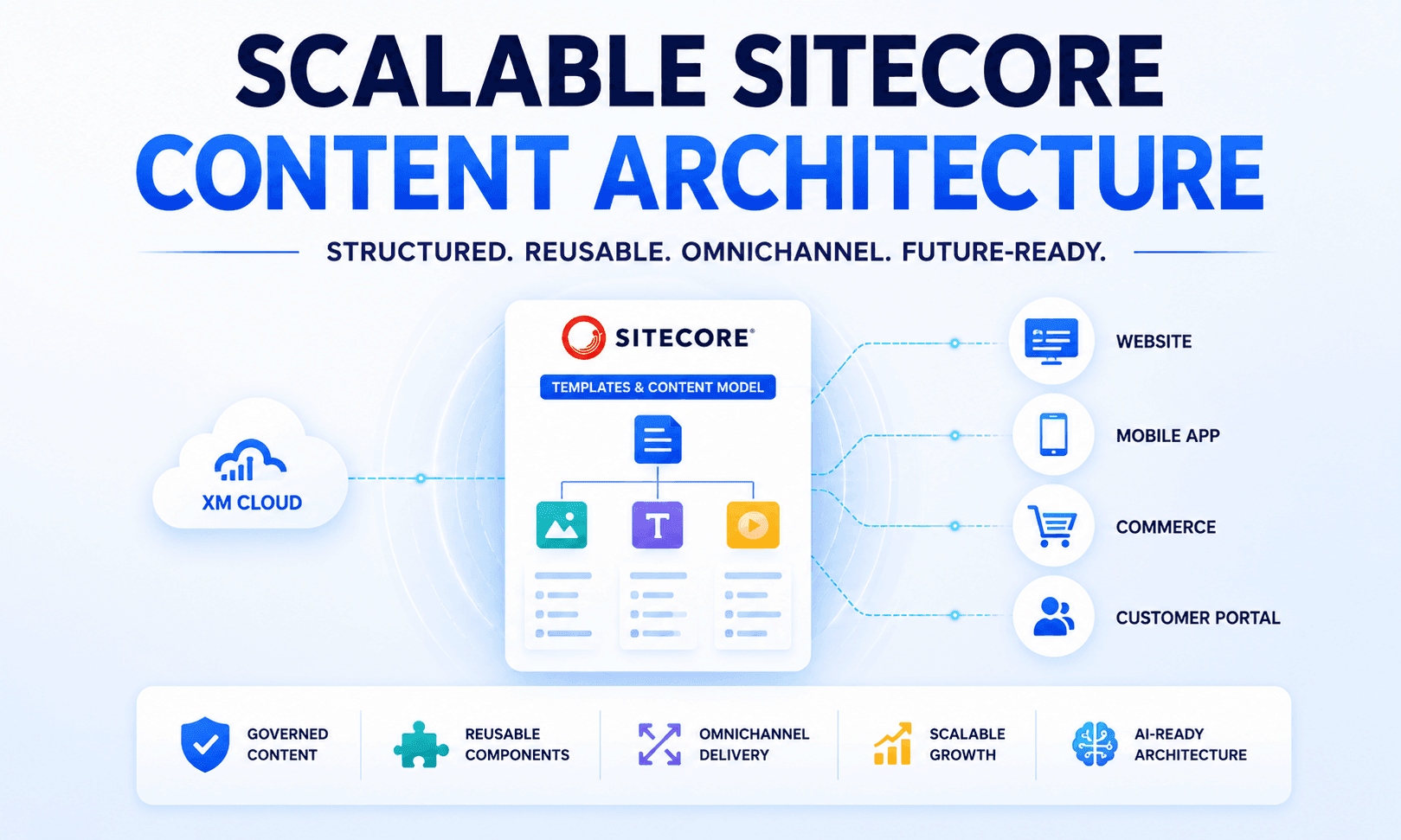
In This Article
- 1. Business Problem: Why Poor Content Architecture Creates Enterprise Challenges
- Content Duplication
- Limited Scalability
- Slow Content Operations
- Difficult Migration & Modernization
- 2. Why It Matters: Revenue, Growth & Enterprise Agility
- Faster Content Operations Improve Revenue
- Better Governance Improves Scalability
- Omnichannel Delivery Improves Customer Experience
- AI & Personalization Depend on Structured Data
- 3. What Are Sitecore Templates?
- Why Templates Matter
- Example of Template Usage
- 4. Sitecore Templates & Scalable Content Architecture
- Omnichannel Content Delivery
- Headless CMS Readiness
- AI & Personalization Enablement
- Faster Publishing Workflows
- Better SEO Governance
- 5. Best Practices for Sitecore Template Architecture
- ✔ Build Reusable Templates
- ✔ Use Modular Content Structure
- ✔ Standardize Field Naming
- ✔ Design for Omnichannel Delivery
- ✔ Plan for Future Scalability
- ✔ Avoid Deep Template Nesting
- ✔ Align Templates with Business Objectives
- 6. Traditional CMS vs Modern Sitecore Content Architecture
- Why Enterprises Are Moving Toward Structured Content Architecture
- 7. Sitecore XM Cloud & the Future of Structured Content
- Benefits of XM Cloud for Content Architecture
- ✔ Faster Scalability
- ✔ Better Omnichannel Flexibility
- ✔ AI-Ready Structured Content
- ✔ Reduced Operational Complexity
- 8. Why Choosing the Right Sitecore Partner Matters
- What Enterprises Should Look For
- ✔ XM Cloud Expertise
- ✔ Headless CMS Experience
- ✔ Enterprise Governance Capability
- ✔ AI & Personalization Knowledge
- 9. Why Enterprises Choose Murmu Software Infotech
- Explore Our Sitecore Services
- Final Thoughts
- Free Sitecore Architecture Consultation
- Get a Free Sitecore Strategy Consultation
Enterprise digital ecosystems are becoming increasingly complex.
Modern organizations manage:
- Multiple websites
- Omnichannel content delivery
- Personalized customer experiences
- AI-driven engagement
- Global digital operations
As digital ecosystems scale, poor content architecture quickly becomes a major operational problem.
This is why scalable Sitecore templates and structured content architecture are critical for enterprise success in 2026.
Modern enterprises using Sitecore CMS increasingly prioritize:
- Structured content governance
- Scalable template architecture
- Headless CMS readiness
- Omnichannel flexibility
- Faster content operations
- AI-ready digital ecosystems
Without a scalable architecture strategy, enterprises often face:
- Content duplication
- Poor governance
- Slow publishing workflows
- Difficult migrations
- SEO inconsistencies
- Omnichannel delivery challenges
This guide explains how Sitecore templates help enterprises build scalable content architecture and why strategic implementation matters for long-term digital transformation.
1. Business Problem: Why Poor Content Architecture Creates Enterprise Challenges
Many organizations initially build CMS ecosystems focused only on short-term publishing needs.
As digital ecosystems grow, these architectures become increasingly difficult to manage.
Content Duplication
Poorly designed CMS structures often create:
- Duplicate content
- Redundant fields
- Repetitive workflows
- Inconsistent data structures
This increases operational complexity significantly.
Limited Scalability
Modern enterprises must support:
- Multiple brands
- Regions
- Languages
- Websites
- Digital channels
Without scalable template architecture, content operations become inefficient.

Build Smarter Sitecore Architecture
Design scalable Sitecore content models with reusable templates, structured fields, headless readiness, stronger governance, and AI-ready content architecture.
Slow Content Operations
Unstructured CMS environments often create:
- Slow publishing workflows
- Governance issues
- Editorial confusion
- Delayed campaign execution
Omnichannel Delivery Challenges
Modern digital ecosystems require structured content capable of supporting:
- Websites
- Mobile apps
- Commerce platforms
- AI personalization
- API-driven delivery
Traditional content structures often fail to support omnichannel scalability.
Difficult Migration & Modernization
Poor architecture significantly increases:
- Migration complexity
- Upgrade risk
- Technical debt
- Operational cost
2. Why It Matters: Revenue, Growth & Enterprise Agility
Content architecture is no longer only a technical concern.
It directly impacts:
- Digital scalability
- Customer experience
- Operational efficiency
- SEO consistency
- Omnichannel growth
Organizations with scalable content architecture operate significantly more efficiently.
Faster Content Operations Improve Revenue
Build Scalable Enterprise Content Architecture with Sitecore
Agile publishing workflows improve:
- Campaign speed
- Content delivery
- Marketing agility
- Customer engagement
Better Governance Improves Scalability
Structured architecture enables enterprises to scale content operations globally.
Omnichannel Delivery Improves Customer Experience
Structured content is essential for delivering consistent experiences across multiple channels.
AI & Personalization Depend on Structured Data
Modern AI-driven ecosystems increasingly rely on structured content architecture for:
- Personalization
- Recommendations
- Intelligent delivery
- Behavioral targeting
3. What Are Sitecore Templates?
Sitecore templates define the structure and organization of content within Sitecore CMS.
Templates determine:
- Content fields
- Data types
- Content relationships
- Governance structure
- Reusability
- Scalability
They act as the foundation of enterprise content architecture.
Why Templates Matter
A properly designed template strategy helps enterprises:
- Standardize content
- Improve governance
- Reduce duplication
- Enable omnichannel delivery
- Simplify scalability
Example of Template Usage
Organizations often create reusable templates for:
- Articles
- Services
- Products
- Landing pages
- FAQ content
- Team profiles
- Commerce content
This improves operational consistency significantly.
4. Sitecore Templates & Scalable Content Architecture
Modern enterprises increasingly require scalable architecture capable of supporting future digital transformation.
Omnichannel Content Delivery
Structured templates allow content to be reused across:
- Websites
- Mobile apps
- Customer portals
- Commerce platforms
- API-driven experiences
This is critical for modern omnichannel delivery.
Headless CMS Readiness
Modern Sitecore ecosystems increasingly rely on:
- XM Cloud
- Headless architecture
- Next.js
- API-first delivery
Structured templates improve headless implementation significantly.
AI & Personalization Enablement
AI-powered personalization works more effectively when content is structured consistently.
Faster Publishing Workflows
Reusable templates improve:
- Content operations
- Editorial workflows
- Governance
- Publishing speed
Better SEO Governance
Structured architecture improves:
- Metadata consistency
- URL governance
- Internal linking
- Content discoverability
5. Best Practices for Sitecore Template Architecture
✔ Build Reusable Templates
Avoid creating highly specific templates unnecessarily.
Reusable architecture improves scalability and reduces duplication.
✔ Use Modular Content Structure
Modern enterprise ecosystems increasingly rely on component-based architecture.
This improves:
- Flexibility
- Reusability
- Omnichannel delivery
- Headless scalability
✔ Standardize Field Naming
Consistent naming improves:
- Governance
- Team collaboration
- Content operations
- Long-term maintainability
✔ Design for Omnichannel Delivery
Content should be structured for delivery across multiple platforms — not just websites.
✔ Plan for Future Scalability
Enterprises should design architecture capable of supporting:
- Future channels
- AI personalization
- Headless delivery
- Global expansion
✔ Avoid Deep Template Nesting
Overly complex inheritance structures increase operational complexity.
✔ Align Templates with Business Objectives
Content architecture should support long-term business goals — not only technical implementation.
6. Traditional CMS vs Modern Sitecore Content Architecture
| Capability | Traditional CMS | Modern Sitecore Architecture |
|---|---|---|
| Structured Content | Limited | Advanced |
| Omnichannel Delivery | Weak | Enterprise-grade |
| AI Readiness | Minimal | Strong |
| Headless Support | Limited | Advanced |
| Scalability | Moderate | High |
| Governance | Weak | Strong |
| Reusability | Limited | Extensive |
| Future Readiness | Low | High |
Why Enterprises Are Moving Toward Structured Content Architecture
Modern enterprise digital ecosystems increasingly require:
- Scalable governance
- Faster content operations
- Omnichannel delivery
- AI-powered personalization
- Cloud-native scalability
Traditional CMS architectures increasingly struggle to support these modern requirements.
7. Sitecore XM Cloud & the Future of Structured Content
Modern Sitecore ecosystems increasingly align with:
- Headless architecture
- Composable DXP
- AI-powered engagement
- Cloud-native delivery
- Structured content ecosystems
Sitecore XM Cloud accelerates this transformation significantly.
Benefits of XM Cloud for Content Architecture
✔ Faster Scalability
Cloud-native ecosystems support rapid enterprise growth.
✔ Better Omnichannel Flexibility
API-first architecture improves content reuse across channels.
✔ AI-Ready Structured Content
Modern personalization increasingly depends on structured data.
✔ Reduced Operational Complexity
Modern SaaS-native architecture simplifies infrastructure management.
8. Why Choosing the Right Sitecore Partner Matters
Scalable enterprise content architecture requires strategic planning and deep Sitecore expertise.
The right partner helps organizations:
- Reduce implementation risk
- Improve governance
- Optimize scalability
- Accelerate modernization
- Maximize long-term ROI
What Enterprises Should Look For
✔ XM Cloud Expertise
Modern implementation increasingly relies on cloud-native architecture.
✔ Headless CMS Experience
Modern ecosystems require:
- Next.js
- GraphQL
- API-first architecture
- Component-based delivery
✔ Enterprise Governance Capability
Large-scale ecosystems require strong governance planning.
✔ AI & Personalization Knowledge
Structured content increasingly supports intelligent customer experiences.
9. Why Enterprises Choose Murmu Software Infotech
At Murmu Software Infotech, we help enterprises build scalable Sitecore ecosystems using modern structured content architecture.
Our expertise includes:
- Sitecore CMS development services
- Sitecore XM Cloud implementation
- Headless CMS architecture
- Next.js development
- Omnichannel delivery
- AI-powered personalization
- Enterprise integrations
- Ongoing optimization & support
Explore Our Sitecore Services
- Sitecore CMS Development Services
- Sitecore Operations & Support Services
- Sitecore Rescue Mission Services
Final Thoughts
Modern enterprise digital experience increasingly depends on:
- Structured content architecture
- Omnichannel delivery
- AI-powered personalization
- Headless CMS ecosystems
- Cloud-native scalability
Poor content architecture creates long-term operational and scalability challenges.
Strategic Sitecore templates and scalable architecture planning help enterprises build future-ready digital ecosystems capable of supporting long-term growth, agility, and intelligent customer engagement.
For enterprise leaders, scalable content architecture is no longer just a CMS design decision — it is a foundational digital transformation strategy.
Free Sitecore Architecture Consultation
Planning a Sitecore implementation, XM Cloud migration, or structured content modernization initiative?
Get a Free Sitecore Strategy Consultation
✔ Content architecture assessment
✔ XM Cloud roadmap
✔ Headless CMS planning
✔ Omnichannel strategy guidance
✔ AI personalization readiness review
👉 Connect with our Sitecore experts and build a scalable, future-ready enterprise digital ecosystem.
Frequently Asked Questions
What is a Sitecore template?
A Sitecore data template defines the structure of content items by specifying their fields, field sections and inherited fields. It acts as the content model that determines what data an item can contain.
What is a Sitecore data template?
A Sitecore data template is a definition item that specifies the structure of content items, including field sections, fields, field types and inherited fields.
What is template inheritance in Sitecore?
Template inheritance allows a Sitecore template to inherit sections and fields from one or more base templates. This enables shared content structures to be defined once and reused across multiple templates.
What are base templates in Sitecore?
Base templates are reusable Sitecore data templates containing fields or sections shared by other templates. A template can inherit from multiple base templates, and the inherited sections and fields are combined with those defined directly on the template.
What are standard values in Sitecore?
Standard values are default values and settings defined for a data template. They can provide default field values, layout details, insert options and workflow settings for items created from the template.
What are Sitecore template fields?
Template fields define the individual data elements an item can contain and determine how authors enter and edit that data. Fields are organized into sections within a Sitecore data template.
What are insert options in Sitecore?
Insert options control which item types content authors can create beneath a specific Sitecore item. They help maintain a predictable content hierarchy and prevent authors from creating inappropriate item types.
How should Sitecore templates be designed for scalability?
Scalable Sitecore templates should use clear content models, reusable base templates, meaningful field names, minimal duplication, appropriate standard values and well-defined content relationships.
What is the difference between a Sitecore page template and a reusable content template?
A page template typically represents a page-level content item, while reusable content templates model content that can be shared across pages or channels, such as products, authors, promotions or structured content blocks.
How do Sitecore templates support headless and omnichannel content?
Well-structured templates separate content from presentation and define reusable, structured fields that can be delivered through APIs and consumed by websites, mobile applications and other digital channels.