How EdTech Platforms are Transforming Education in India
In This Article
- What are EdTech Platforms?
- The Rise of EdTech in India
- How EdTech Platforms are Transforming Education in India
- 1. Making Education More Accessible
- 2. Personalized Learning Experiences
- 3. Enabling Hybrid & Remote Learning
- 4. Improving Student Engagement
- 5. Digital Skill Development & Workforce Readiness
- Key Technologies Driving the EdTech Revolution
- Artificial Intelligence (AI)
- Cloud Computing
- Data Analytics
- Mobile Learning
- Virtual & Augmented Reality (VR/AR)
- Benefits of EdTech Platforms for Educational Institutions
- 1. Operational Efficiency
- 2. Scalability
- 3. Enhanced Learning Outcomes
- 4. Better Communication & Collaboration
- 5. Data-Driven Academic Decisions
- Challenges in the Indian EdTech Ecosystem
- Digital Divide
- Infrastructure Limitations
- Data Privacy & Cybersecurity
- Teacher Training & Adoption
- Opportunities for EdTech Growth in India
- Future Trends in EdTech Platforms
- Why Educational Institutions & Enterprises Must Invest in EdTech
- Final Thoughts
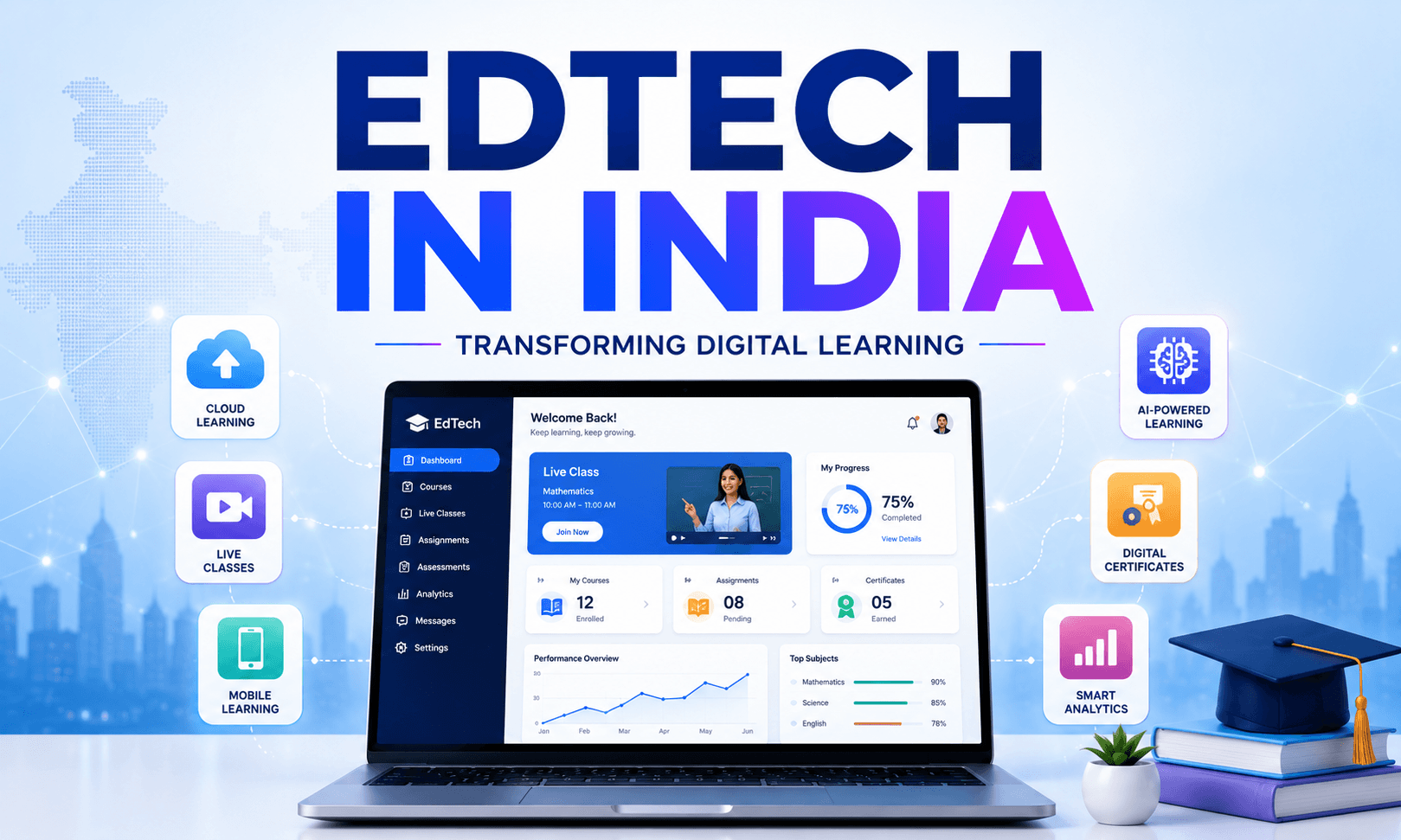
India’s education ecosystem is experiencing one of the most significant digital transformations in its history. The rise of EdTech platforms has fundamentally changed how students learn, teachers teach, and educational institutions operate.
From online classrooms and AI-powered learning systems to virtual assessments and personalized education experiences, educational technology is reshaping traditional learning models across schools, colleges, universities, coaching institutes, and corporate training environments.
The rapid adoption of smartphones, affordable internet connectivity, government-led digital initiatives, and evolving learner expectations have accelerated the growth of EdTech in India. What began as supplementary online learning has now become a strategic pillar of the country’s education and skill development ecosystem.
For educational institutions, technology leaders, founders, investors, and enterprise decision-makers, EdTech is no longer just an emerging trend — it is a transformational force driving the future of education.
In this article, we’ll explore:
- What EdTech platforms are
- How EdTech is transforming education in India
- Key technologies driving digital learning
- Benefits for institutions and learners
- Challenges and opportunities in the Indian EdTech sector
- Future trends shaping the education industry
What are EdTech Platforms?
EdTech (Education Technology) platforms are digital solutions designed to improve, automate, and enhance learning experiences through technology.
These platforms combine software, cloud infrastructure, artificial intelligence, analytics, and digital communication tools to deliver accessible and scalable education.
EdTech platforms support:
- Online learning
- Virtual classrooms
- Learning Management Systems (LMS)
- Student performance tracking
- Online assessments
- Skill development programs
- Corporate training
- AI-driven personalized learning
- Digital content delivery
Today, EdTech is empowering both academic institutions and enterprises to modernize education delivery and workforce learning.
The Rise of EdTech in India
India has one of the world’s largest student populations, creating massive demand for scalable and technology-driven education solutions.
Several factors have contributed to the rapid growth of EdTech in India:
- Increased internet penetration
- Affordable smartphones
- Remote learning adoption
- Demand for skill-based education
- Government digital education initiatives
- Growth of online certification programs
- Rising need for workforce upskilling
The pandemic further accelerated digital learning adoption, making online education mainstream across urban and rural regions.
As a result, India has become one of the fastest-growing EdTech markets globally.
How EdTech Platforms are Transforming Education in India
Ready to Build the Future of Digital Learning?
1. Making Education More Accessible
One of the biggest advantages of EdTech platforms is accessibility.
Students from remote and underserved regions can now access high-quality educational content through smartphones and internet-enabled devices.
Digital learning removes geographical barriers and allows learners to study anytime and anywhere.
This has significantly expanded educational opportunities across India.
2. Personalized Learning Experiences
Traditional classroom models often struggle to address individual learning needs.
Modern EdTech platforms use AI and analytics to deliver personalized learning experiences based on:
- Student performance
- Learning speed
- Skill gaps
- Behavioral patterns
- Engagement levels
Adaptive learning systems help improve knowledge retention and learner outcomes.
3. Enabling Hybrid & Remote Learning
EdTech platforms have enabled seamless hybrid and remote learning models.
Educational institutions can now offer:
- Live virtual classes
- Recorded sessions
- Online assignments
- Digital assessments
- Collaborative learning environments
This flexibility supports both academic continuity and modern learning preferences.
4. Improving Student Engagement
Interactive learning technologies significantly improve student engagement.
Features such as:
- Gamification
- Interactive quizzes
- AI tutors
- Video-based learning
- Real-time feedback
- Discussion forums
make learning more engaging and effective compared to traditional passive teaching methods.
5. Digital Skill Development & Workforce Readiness
India’s growing digital economy requires continuous workforce upskilling.
EdTech platforms are helping students and professionals acquire:
- Technical skills
- Industry certifications
- Professional training
- Leadership development
- Job-oriented learning
This aligns education more closely with industry requirements and employability.
Key Technologies Driving the EdTech Revolution
The rapid growth of EdTech in India is powered by several emerging technologies.
Artificial Intelligence (AI)
AI enables:
- Personalized learning
- Smart assessments
- Automated grading
- Learning analytics
- Intelligent tutoring systems
AI-driven learning experiences improve efficiency and student outcomes.
Cloud Computing
Cloud infrastructure enables scalable, secure, and accessible learning platforms without requiring heavy infrastructure investment.
Cloud-based systems support:
- Remote learning
- Multi-device access
- Real-time collaboration
- Centralized learning management
Data Analytics
Analytics help institutions monitor:
- Student performance
- Learning engagement
- Course completion rates
- Skill gaps
- Academic trends
Data-driven insights support better educational decision-making.
Mobile Learning
With widespread smartphone adoption in India, mobile-first learning has become essential.
Mobile learning enables:
- Anytime access
- Self-paced learning
- Push notifications
- Microlearning experiences
This significantly improves learner accessibility.
Virtual & Augmented Reality (VR/AR)
Advanced EdTech platforms are integrating immersive learning experiences using VR and AR technologies for simulations and interactive education.
Benefits of EdTech Platforms for Educational Institutions
1. Operational Efficiency
EdTech solutions automate administrative tasks such as:
- Attendance tracking
- Timetable management
- Online examinations
- Fee management
- Communication workflows
This reduces manual workload significantly.
2. Scalability
Digital learning platforms allow institutions to scale educational delivery efficiently across multiple campuses and large learner bases.
3. Enhanced Learning Outcomes
Interactive and personalized learning models improve student engagement, retention, and academic performance.
4. Better Communication & Collaboration
EdTech platforms strengthen communication between:
- Students
- Teachers
- Parents
- Administrators
through centralized digital ecosystems.
5. Data-Driven Academic Decisions
Institutions can leverage analytics to improve curriculum planning, performance management, and academic strategies.
Challenges in the Indian EdTech Ecosystem
While EdTech growth is accelerating, the sector still faces several challenges.
Digital Divide
Access to internet connectivity and digital devices remains limited in some rural and economically weaker regions.
Infrastructure Limitations
Educational institutions may face infrastructure and technology adoption barriers.
Data Privacy & Cybersecurity
Protecting student and institutional data is critical for EdTech platforms.
Teacher Training & Adoption
Successful digital transformation requires proper educator training and technology adoption support.
Opportunities for EdTech Growth in India
India’s EdTech sector presents enormous growth opportunities.
Key growth drivers include:
- Government digital education initiatives
- Growing online certification demand
- Corporate training expansion
- Skill-based learning adoption
- AI-powered education platforms
- Digital universities and virtual campuses
The future of Indian education will increasingly depend on scalable and intelligent digital learning ecosystems.
Future Trends in EdTech Platforms
The future of EdTech in India is evolving rapidly with advanced technologies and learner-centric models.
Emerging trends include:
- AI-powered personalized learning
- Gamified learning experiences
- Blockchain-based certifications
- AR/VR learning environments
- Microlearning platforms
- Adaptive assessments
- Predictive learning analytics
- Voice-enabled learning systems
Institutions adopting these innovations early will gain competitive educational advantages.
Why Educational Institutions & Enterprises Must Invest in EdTech
For founders, CEOs, CTOs, institutional leaders, and technology decision-makers, EdTech investment is now a strategic necessity.
Modern EdTech platforms help organizations:
- Improve learner engagement
- Scale educational delivery
- Enhance operational efficiency
- Enable remote learning
- Improve academic outcomes
- Support workforce development
As digital learning becomes mainstream, institutions that modernize early will remain more competitive and future-ready.
Final Thoughts
EdTech platforms are transforming education in India by making learning more accessible, personalized, scalable, and technology-driven.
From AI-powered learning systems and virtual classrooms to digital skill development and analytics-driven education, EdTech is reshaping the future of academic and professional learning across the country.
For educational institutions and enterprises looking to stay ahead in the digital era, investing in modern EdTech solutions is no longer optional — it is essential for sustainable growth and innovation.
Frequently Asked Questions
What is How EdTech Platforms are Transforming Education in India?
Discover how EdTech platforms are transforming education in India through AI-powered learning, virtual classrooms, LMS platforms, digital skill development, and smart education technology.