Sitecore Enterprise CMS: Features, Benefits & ROI Explained
In This Article
- 1. Business Problem: Why Traditional CMS Platforms Are Limiting Enterprise Growth
- Poor Digital Experience
- Scalability Challenges
- Slow Innovation & Deployment
- Limited AI & Personalization Capability
- High Operational Cost
- 2. Why It Matters: Revenue, Growth & Enterprise Competitiveness
- Personalized Experiences Improve Revenue
- Faster Digital Operations Improve Agility
- Omnichannel Consistency Builds Brand Trust
- AI-Driven Engagement Improves Customer Intelligence
- 3. What is Sitecore Enterprise CMS?
- What Makes Sitecore Different?
- 4. Core Features of Sitecore Enterprise Content Management
- Omnichannel Content Delivery
- AI-Powered Personalization
- Sitecore XM Cloud
- Headless CMS Architecture
- 5. Enterprise Benefits of Sitecore CMS
- Improved Customer Engagement
- Better Website Performance
- Global Scalability
- AI-Ready Digital Experience Platform
- Lower Operational Complexity
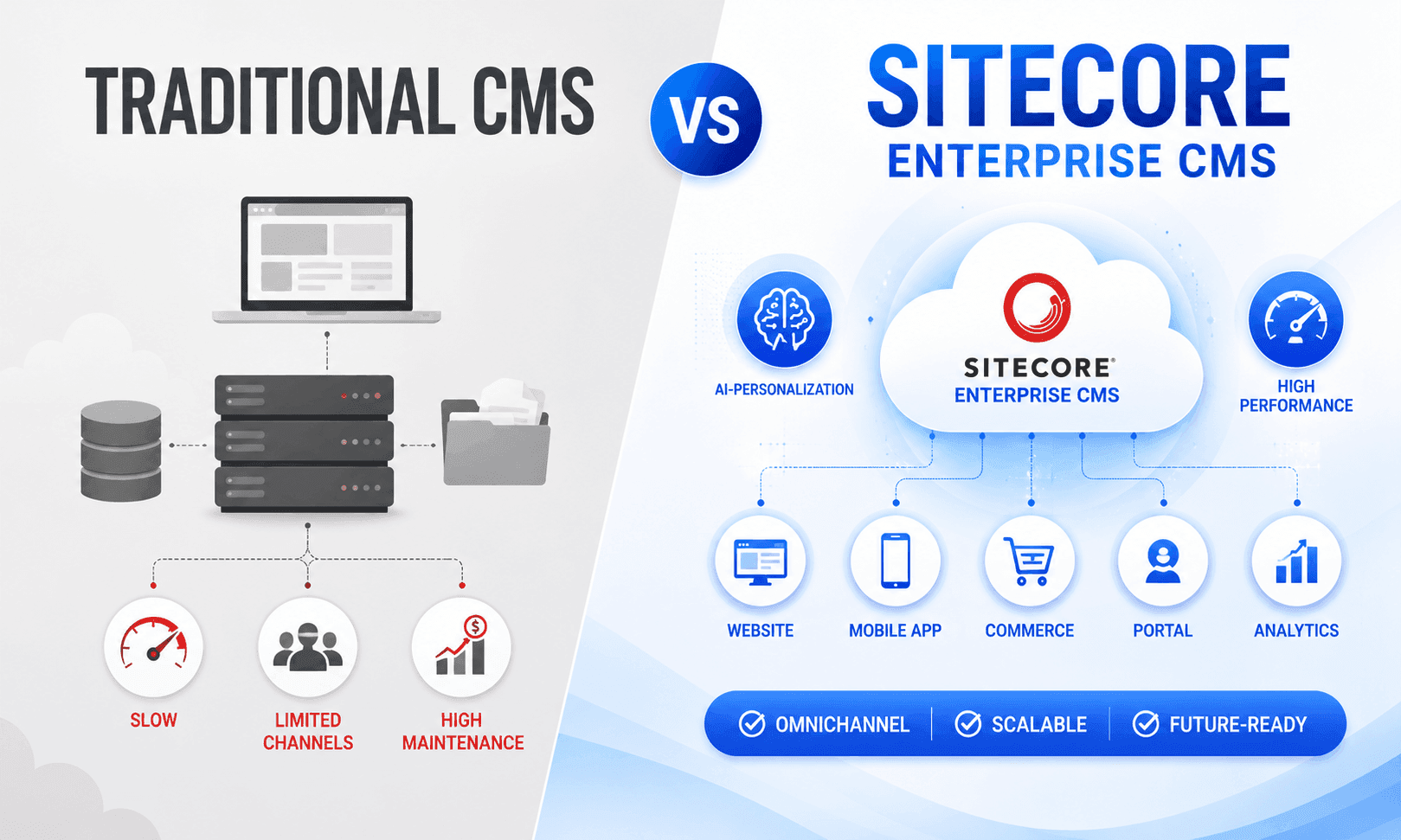
- 6. Traditional CMS vs Sitecore Enterprise CMS
- Why Enterprises Are Moving Toward Modern CMS Platforms
- 7. Understanding the ROI of Sitecore CMS
- Revenue Growth
- Scalability
- Lower Long-Term Maintenance Cost
- 8. Why Choosing the Right Sitecore Partner Matters
- What Enterprises Should Look For
- ✔ XM Cloud Expertise
- ✔ Headless CMS Capability
- ✔ AI & Personalization Experience
- ✔ Enterprise Integration Capability
- Large-scale ecosystems require strong enterprise integration expertise.
- 9. Why Enterprises Choose Murmu Software Infotech
- Explore Our Sitecore Services
- Final Thoughts
- Free Sitecore Enterprise Consultation
- Get a Free Sitecore Strategy Consultation
Enterprise organizations today operate in a highly competitive digital environment where customer experience directly impacts business growth.
Modern customers expect:
- Personalized digital journeys
- Omnichannel experiences
- Fast website performance
- AI-powered engagement
- Consistent content delivery
Traditional content management systems often struggle to support these growing enterprise demands.
This is why many global organizations are adopting Sitecore Enterprise CMS to modernize digital ecosystems and accelerate digital transformation initiatives.
The modern Sitecore enterprise content management platform goes beyond traditional website publishing. It enables enterprises to deliver scalable, AI-powered, omnichannel digital experiences that improve engagement and business performance.
For CEOs, CTOs, and enterprise technology leaders, understanding the features, benefits, and ROI of Sitecore content management software is essential for long-term competitiveness in 2026 and beyond.
This guide explains why enterprises invest in Sitecore CMS, how it improves digital operations, and what measurable business value organizations can expect.
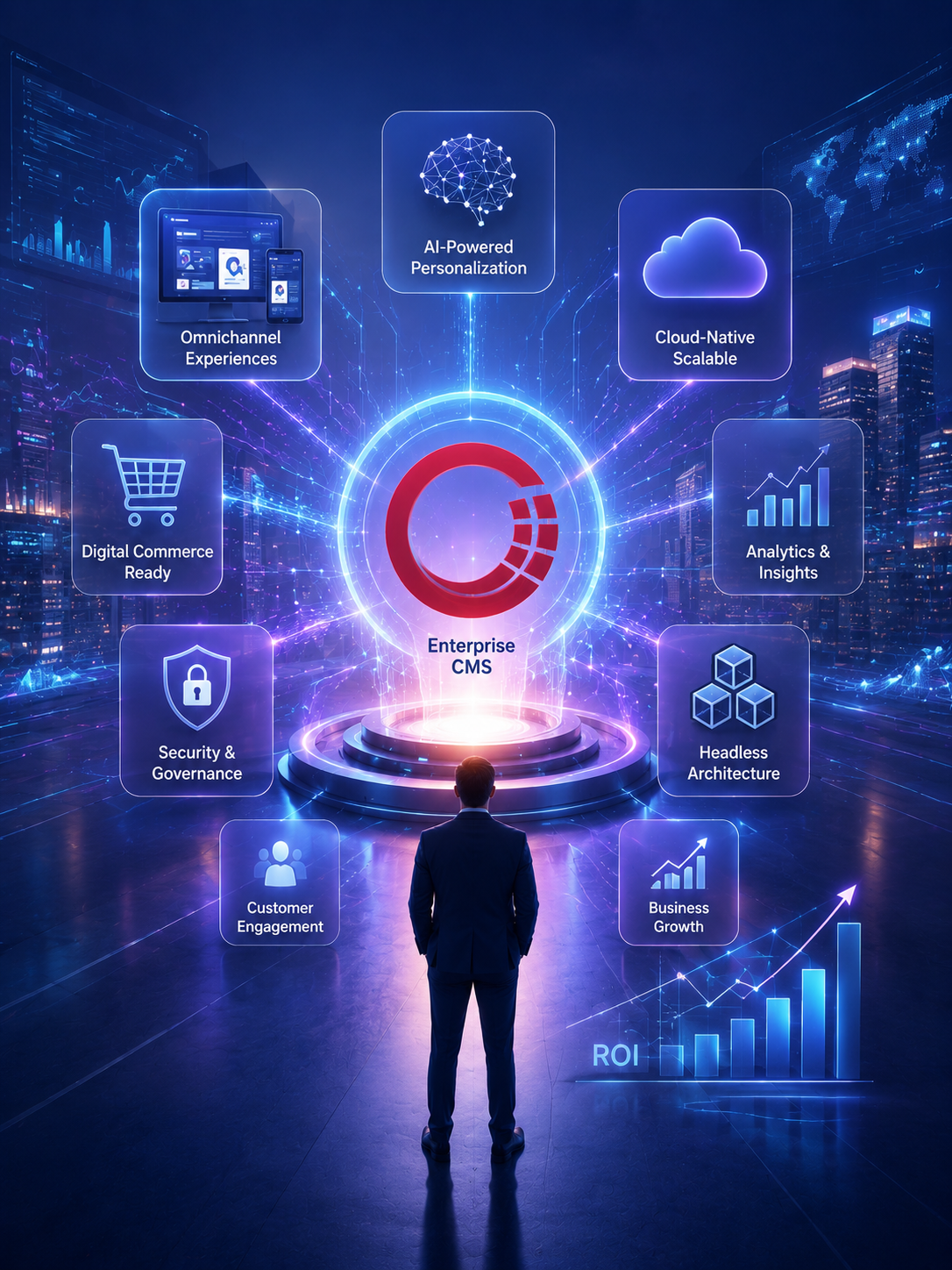
Turn Your CMS Into Growth
Build scalable, AI-powered digital experiences with Sitecore that improve engagement, agility, personalization, and measurable enterprise ROI.
1. Business Problem: Why Traditional CMS Platforms Are Limiting Enterprise Growth
Many enterprises still rely on legacy CMS systems designed primarily for basic content publishing.
These platforms increasingly create major operational and strategic limitations.
Poor Digital Experience
Modern customers expect intelligent, personalized experiences.
Traditional CMS systems often deliver:
- Generic content
- Slow user experiences
- Limited personalization
- Poor omnichannel consistency
This negatively impacts engagement and conversion rates.
Scalability Challenges
As organizations expand globally, traditional CMS platforms become difficult to scale across:
- Multiple regions
- Languages
- Brands
- Business units
- Digital channels
Slow Innovation & Deployment
Upgrade from Traditional CMS to Enterprise-Grade Sitecore Experience
Legacy systems often create:
- Long deployment cycles
- Complex upgrades
- High infrastructure dependency
- Slow content operations
This reduces organizational agility significantly.
Limited AI & Personalization Capability
Modern digital engagement increasingly depends on:
- AI-driven recommendations
- Behavioral targeting
- Real-time personalization
- Intelligent customer journeys
Many traditional CMS systems cannot support these capabilities effectively.
High Operational Cost
Legacy CMS environments increase:
- Infrastructure management
- Maintenance overhead
- Upgrade complexity
- Technical debt
This raises long-term operational costs substantially.
2. Why It Matters: Revenue, Growth & Enterprise Competitiveness
Enterprise digital experience is no longer only an IT initiative.
It directly impacts:
- Revenue growth
- Customer retention
- Brand loyalty
- Operational efficiency
- Market competitiveness
Organizations delivering superior digital experiences consistently outperform competitors.
Personalized Experiences Improve Revenue
Modern customers are more likely to engage with personalized content and relevant experiences.
AI-powered engagement improves:
- Conversion rates
- Customer loyalty
- Upselling opportunities
- User retention
Faster Digital Operations Improve Agility
Enterprises must rapidly launch:
- Campaigns
- Digital products
- Personalized experiences
- Multi-region content strategies
A scalable CMS platform accelerates these operations.
Omnichannel Consistency Builds Brand Trust
Customers expect seamless experiences across every digital touchpoint.
Disconnected experiences reduce customer trust and engagement.
AI-Driven Engagement Improves Customer Intelligence
Modern enterprises increasingly rely on AI-powered insights to optimize customer journeys and business performance.
3. What is Sitecore Enterprise CMS?
Sitecore Enterprise CMS is a scalable digital experience platform designed for large enterprises that require intelligent content management and personalized customer engagement.
Unlike traditional CMS systems, Sitecore combines:
- Enterprise content management
- AI-driven personalization
- Omnichannel delivery
- Headless architecture
- Analytics
- Marketing automation
- Cloud-native scalability
into one modern ecosystem.
What Makes Sitecore Different?
Sitecore is designed specifically for enterprise-scale digital transformation.
It enables organizations to manage and deliver personalized experiences across:
- Websites
- Mobile applications
- Commerce platforms
- Customer portals
- Global digital ecosystems
4. Core Features of Sitecore Enterprise Content Management
Omnichannel Content Delivery
One of the biggest advantages of Sitecore CMS is omnichannel content delivery.
Organizations can deliver consistent experiences across:
- Websites
- Mobile apps
- Commerce systems
- Portals
- Emerging digital platforms
This improves customer experience consistency significantly.
AI-Powered Personalization
Modern Sitecore ecosystems support:
- Real-time personalization
- Behavioral targeting
- AI-driven recommendations
- Intelligent customer journeys
These capabilities improve engagement and conversion rates.
Sitecore XM Cloud
Sitecore XM Cloud introduces:
- SaaS-native architecture
- Cloud scalability
- Reduced infrastructure complexity
- Faster deployment
- Modern composable architecture
This enables organizations to modernize digital ecosystems more efficiently.
Headless CMS Architecture
Modern Sitecore supports headless architecture using:
- Sitecore JSS
- Next.js
- GraphQL
- API-first delivery
This improves frontend flexibility, scalability, and website performance.
Enterprise Governance & Security
Sitecore supports enterprise-grade:
- Security
- Governance
- Compliance
- Multi-site management
- Global scalability
5. Enterprise Benefits of Sitecore CMS
Improved Customer Engagement
AI-powered personalization creates more relevant digital experiences.
Better Website Performance
Modern Sitecore architecture improves:
- Website speed
- Core Web Vitals
- SEO performance
- User experience
Global Scalability
Sitecore supports enterprise-scale multi-region ecosystems efficiently.
AI-Ready Digital Experience Platform
Organizations can build intelligent customer engagement strategies using AI-powered personalization.
Lower Operational Complexity
Cloud-native architecture reduces infrastructure management and operational overhead.
Faster Content Operations
Modern workflows improve content publishing agility and campaign execution speed.
6. Traditional CMS vs Sitecore Enterprise CMS
| Capability | Traditional CMS | Sitecore Enterprise CMS |
|---|---|---|
| Omnichannel Delivery | Limited | Enterprise-grade |
| AI Personalization | Basic | Advanced |
| Scalability | Moderate | High |
| Cloud-Native Support | Limited | Strong |
| Headless Architecture | Weak | Modern |
| Enterprise Governance | Moderate | Strong |
| Marketing Automation | Limited | Advanced |
| Future Readiness | Low | High |
Why Enterprises Are Moving Toward Modern CMS Platforms
Modern enterprises increasingly prioritize:
- AI-powered engagement
- Omnichannel delivery
- Headless architecture
- Cloud scalability
- Faster innovation
Traditional CMS systems increasingly struggle to support these modern requirements.
7. Understanding the ROI of Sitecore CMS
Enterprise leaders increasingly evaluate CMS investments based on measurable business outcomes.
Revenue Growth
Personalized digital experiences improve conversion rates and customer retention.
Operational Efficiency
Modern workflows reduce content management overhead and deployment complexity.
Scalability
Cloud-native architecture supports global growth more efficiently.
AI-Driven Optimization
Customer intelligence helps organizations improve marketing and engagement performance continuously.
Lower Long-Term Maintenance Cost
Modern SaaS-native architecture reduces infrastructure and upgrade management.
8. Why Choosing the Right Sitecore Partner Matters
Enterprise Sitecore implementation requires strategic expertise.
The right implementation partner helps organizations:
- Reduce implementation risk
- Improve scalability
- Optimize architecture
- Accelerate transformation
- Maximize ROI
What Enterprises Should Look For
✔ XM Cloud Expertise
Modern Sitecore implementation increasingly relies on cloud-native architecture.
✔ Headless CMS Capability
Scalable frontend architecture is critical for enterprise growth.
✔ AI & Personalization Experience
Modern engagement increasingly depends on intelligent customer experience strategies.
✔ Enterprise Integration Capability
Large-scale ecosystems require strong enterprise integration expertise.
9. Why Enterprises Choose Murmu Software Infotech
At Murmu Software Infotech, we help enterprises modernize digital ecosystems using scalable Sitecore architecture.
Our expertise includes:
- Sitecore CMS development services
- Sitecore XM Cloud implementation
- Headless CMS architecture
- AI-driven personalization
- Omnichannel delivery
- Next.js development
- Enterprise integrations
- Ongoing optimization & support
Explore Our Sitecore Services
- Sitecore CMS Development Services
- Sitecore Operations & Support Services
- Sitecore Rescue Mission Services
Final Thoughts
Enterprise digital experience is rapidly evolving toward:
- AI-powered engagement
- Omnichannel delivery
- Headless architecture
- Cloud-native scalability
- Intelligent personalization
Organizations relying on outdated CMS platforms increasingly struggle to compete in modern digital markets.
Sitecore enterprise CMS provides enterprises with the scalability, flexibility, and intelligence needed to deliver future-ready customer experiences.
For CEOs, CTOs, and enterprise technology leaders, investing in modern Sitecore enterprise content management architecture is no longer only a technology upgrade — it is a strategic business growth initiative.
Free Sitecore Enterprise Consultation
Planning a Sitecore implementation, XM Cloud migration, or enterprise modernization initiative?
Get a Free Sitecore Strategy Consultation
✔ Enterprise CMS assessment
✔ XM Cloud roadmap
✔ Headless architecture planning
✔ AI personalization strategy
✔ Omnichannel optimization insights
👉 Connect with our Sitecore experts and build a scalable, future-ready digital experience platform.
Frequently Asked Questions
What is Sitecore Enterprise CMS?
Sitecore Enterprise CMS is an enterprise digital experience platform that helps organizations manage content and deliver personalized, scalable and omnichannel digital experiences across websites, mobile applications, commerce platforms and customer portals.
What are the key features of Sitecore Enterprise CMS?
Key Sitecore Enterprise CMS features include omnichannel content delivery, AI-powered personalization, headless architecture, Sitecore XM Cloud, analytics, marketing automation, enterprise governance, security, multi-site management and global scalability.
How is Sitecore different from a traditional CMS?
Traditional CMS platforms primarily focus on publishing website content, while Sitecore provides enterprise-scale content management, personalization, omnichannel delivery, headless capabilities, analytics and cloud-native digital experience architecture.
What are the business benefits of Sitecore CMS?
Sitecore can help enterprises improve customer engagement, deliver more relevant digital experiences, scale across regions and channels, accelerate content operations, reduce operational complexity and support long-term digital transformation.
How does Sitecore improve personalization?
Sitecore supports personalized experiences through behavioral targeting, customer insights, relevant content delivery, AI-driven recommendations and intelligent customer journey capabilities.
What is the ROI of Sitecore Enterprise CMS?
The ROI of Sitecore can come from improved customer engagement, higher conversion opportunities, faster digital operations, scalable global delivery, lower operational overhead and reduced long-term maintenance complexity.
Is Sitecore XM Cloud suitable for enterprise businesses?
Yes. Sitecore XM Cloud is designed for modern enterprise content operations with SaaS-native architecture, cloud scalability, reduced infrastructure management, faster deployment and support for composable digital experiences.
Does Sitecore support headless CMS architecture?
Yes. Modern Sitecore implementations can use headless and API-first architecture with Sitecore JSS, Next.js, GraphQL and APIs to support flexible frontend development and scalable digital delivery.
Which businesses should use Sitecore Enterprise CMS?
Sitecore is particularly suitable for large enterprises and organizations that need personalization, multi-site management, multilingual content, omnichannel delivery, enterprise governance, global scalability and advanced digital experience capabilities.
How should enterprises measure Sitecore CMS ROI?
Enterprises should measure Sitecore ROI using business and operational metrics such as conversion performance, customer engagement, content publishing speed, campaign launch time, infrastructure costs, maintenance effort, digital scalability and revenue-related outcomes.