How Much Does It Cost to Build an E-Commerce Website in India?
In This Article
- Why Businesses Are Investing in E-Commerce Platforms
- Average E-Commerce Website Development Cost in India
- Key Factors Affecting E-Commerce Website Development Cost
- 1. Website Complexity
- Basic E-Commerce Website
- Mid-Level E-Commerce Platform
- Enterprise E-Commerce Ecosystem
- 2. Platform Selection
- SaaS Platforms
- Custom E-Commerce Development
- 3. UI/UX Design & Customer Experience
- 4. Mobile Responsiveness & Performance
- 5. Payment Gateway & Financial Integrations
- 6. Inventory & ERP Integration
- 7. Security Requirements
- 8. Scalability Expectations
- Additional E-Commerce Development Costs
- E-Commerce Development Timeline
- Why Indian Businesses Are Rapidly Investing in E-Commerce
- How to Optimize E-Commerce Development Costs
- Start with Clear Business Goals
- Prioritize MVP Development
- Invest in Scalable Architecture
- Choose the Right Technology Partner
- What CXOs Should Evaluate Before Approving E-Commerce Investments
- Future Trends in E-Commerce Development
- Final Thoughts
India’s e-commerce industry is growing at an unprecedented pace. From D2C brands and retail businesses to enterprise distributors and manufacturers, organizations across industries are rapidly investing in digital commerce platforms to reach wider audiences, improve customer experiences, and scale operations.
As online buying behavior continues to evolve, one of the most common questions business leaders ask is:
“How much does it cost to build an e-commerce website in India?”
For CEOs, founders, Managing Directors, CTOs, IT Heads, and enterprise decision-makers, understanding e-commerce development costs is essential before planning digital commerce investments.
The reality is that e-commerce website pricing can vary significantly depending on:
- Business size
- Platform complexity
- Number of products
- Custom features
- Integrations
- Security requirements
- Scalability goals
This guide provides a complete breakdown of e-commerce website development costs in India to help businesses make informed digital investment decisions.
Why Businesses Are Investing in E-Commerce Platforms
Consumer behavior has changed dramatically over the last few years.
Modern customers expect:
- Fast online purchasing
- Mobile-friendly experiences
- Secure digital payments
- Personalized shopping
- Real-time order tracking
- Seamless customer support
Businesses that fail to build strong digital commerce capabilities often struggle with:
- Customer acquisition
- Brand visibility
- Revenue scalability
- Market competitiveness
This is why organizations are investing heavily in:
- E-commerce websites
- D2C platforms
- B2B commerce portals
- Multi-vendor marketplaces
- Mobile commerce solutions
For modern enterprises, e-commerce is no longer optional — it is a strategic growth channel.
Average E-Commerce Website Development Cost in India
The cost of an e-commerce website depends heavily on business goals, functionality, and scalability requirements.
Below is a general pricing estimate:
| E-Commerce Website Type | Estimated Cost Range |
|---|---|
| Basic E-Commerce Website | ₹50,000 – ₹2,00,000 |
| Mid-Level Custom Store | ₹2,00,000 – ₹8,00,000 |
| Enterprise E-Commerce Platform | ₹8,00,000 – ₹50,00,000+ |
| Multi-Vendor Marketplace | ₹10,00,000 – ₹1 Crore+ |
| Custom B2B Commerce Portal | ₹15,00,000 – ₹80,00,000+ |
| AI-Powered Commerce Platform | ₹20,00,000 – ₹1.5 Crore+ |
These estimates vary depending on features, architecture, and long-term business objectives.
Key Factors Affecting E-Commerce Website Development Cost
1. Website Complexity
The biggest cost factor is platform complexity.
Basic E-Commerce Website
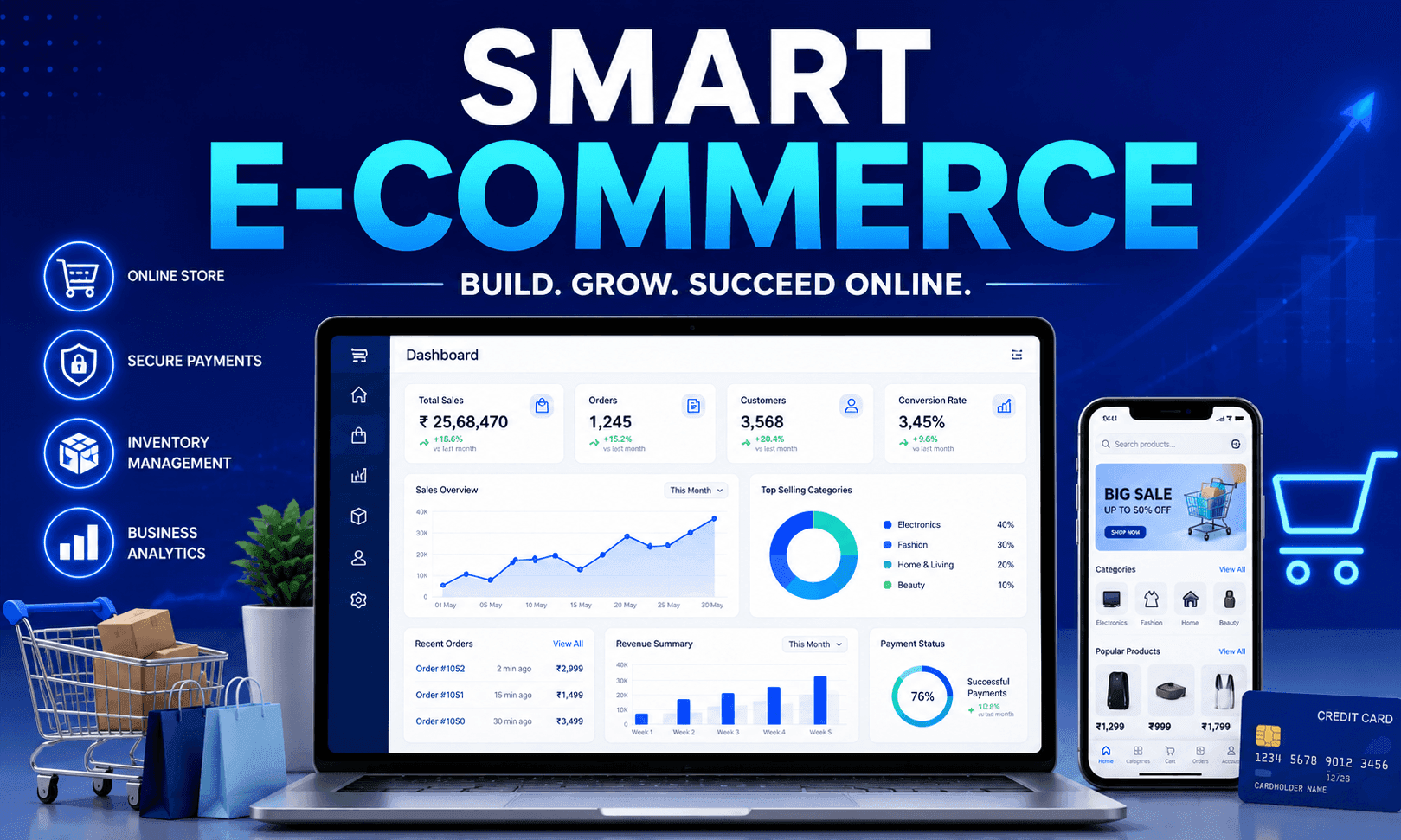
Transform Your Business with Future-Ready E-Commerce Solutions
Suitable for:
- Small businesses
- Startup brands
- Limited product catalogs
Typically includes:
- Product listings
- Shopping cart
- Payment gateway
- Basic admin panel
Mid-Level E-Commerce Platform
Designed for growing businesses requiring:
- Advanced filtering
- Customer accounts
- Inventory management
- CRM integration
- Marketing automation
- Analytics dashboards
These platforms require stronger architecture and customization.
Enterprise E-Commerce Ecosystem
Large enterprises often require:
- Multi-store management
- ERP integration
- AI recommendations
- Supply chain integration
- Advanced security
- Scalability infrastructure
- Omnichannel commerce
Enterprise commerce systems involve significantly higher development costs and longer implementation timelines.
2. Platform Selection
The technology platform chosen directly impacts pricing.
Businesses commonly choose:
- Shopify
- WooCommerce
- Magento
- Custom Laravel development
- Headless commerce architecture
- Enterprise cloud commerce platforms
SaaS Platforms
Platforms like Shopify offer:
- Faster deployment
- Lower initial costs
- Easier maintenance
But they may limit deep customization.
Custom E-Commerce Development
Custom platforms provide:
- Full ownership
- Advanced flexibility
- Enterprise integrations
- Scalability
However, they involve higher development investment.
For enterprise businesses, custom development often delivers stronger long-term ROI.
3. UI/UX Design & Customer Experience
Customer experience directly influences conversions and retention.
Modern e-commerce businesses invest heavily in:
- Premium UI design
- Mobile optimization
- Fast navigation
- Personalized experiences
- Checkout optimization
- Conversion-focused design
High-end UI/UX design improves:
- Customer engagement
- Sales conversions
- Brand trust
- Retention rates
For D2C brands and premium retailers, design becomes a major competitive differentiator.
4. Mobile Responsiveness & Performance
More than half of India’s e-commerce traffic now comes from mobile devices.
Businesses require:
- Mobile-first architecture
- Fast loading speeds
- Responsive design
- Performance optimization
- Progressive web app capabilities
Performance optimization significantly affects both development effort and infrastructure costs.
5. Payment Gateway & Financial Integrations
E-commerce platforms often integrate with:
- Razorpay
- PayU
- Stripe
- UPI systems
- Wallet solutions
- EMI platforms
Complex payment ecosystems require:
- Secure transaction management
- PCI compliance
- Fraud prevention systems
- Real-time payment synchronization
Security and compliance increase development complexity.
6. Inventory & ERP Integration
Modern e-commerce businesses require real-time operational visibility.
This often involves integrating with:
- ERP systems
- Inventory management tools
- Warehouse systems
- CRM software
- Shipping providers
Enterprise integrations increase:
- Development timelines
- API management effort
- Testing requirements
But they significantly improve operational efficiency.
7. Security Requirements
Cybersecurity is critical for online commerce platforms.
Businesses handling customer transactions require:
- SSL security
- Payment encryption
- Secure APIs
- Fraud monitoring
- Role-based admin access
- Data protection systems
Enterprise-grade security increases development and infrastructure investment but protects long-term business operations.
8. Scalability Expectations
Many businesses underestimate future growth requirements.
Scalable e-commerce platforms require:
- Cloud infrastructure
- Load balancing
- CDN integration
- Microservices architecture
- Database optimization
Future-ready architecture helps businesses avoid expensive platform rebuilds later.
Additional E-Commerce Development Costs
Many businesses only calculate initial website development costs and ignore operational expenses.
Additional costs may include:
- Hosting infrastructure
- CDN services
- Maintenance & support
- Security monitoring
- Marketing integrations
- SEO optimization
- Third-party app subscriptions
- Cloud scaling
Leadership teams should plan long-term digital commerce budgets strategically.
E-Commerce Development Timeline
The timeline depends on platform complexity.
| Website Type | Estimated Timeline |
|---|---|
| Basic E-Commerce Website | 2–4 Weeks |
| Mid-Level Platform | 2–4 Months |
| Enterprise Commerce Platform | 6–12 Months |
Large-scale enterprise commerce ecosystems often require phased deployment strategies.
Why Indian Businesses Are Rapidly Investing in E-Commerce
India’s digital economy is expanding rapidly due to:
- Rising smartphone penetration
- UPI adoption
- Digital payment growth
- Logistics innovation
- Increasing online shopping behavior
Businesses are realizing that digital commerce offers:
- Wider market reach
- Faster scalability
- Better customer insights
- Operational automation
- Revenue diversification
As competition increases, having a scalable and customer-focused e-commerce platform becomes essential.
How to Optimize E-Commerce Development Costs
Start with Clear Business Goals
Avoid unnecessary features during the initial launch phase.
Prioritize MVP Development
Launching with a Minimum Viable Product helps validate market demand faster.
Invest in Scalable Architecture
Future-ready platforms reduce long-term redevelopment costs.
Choose the Right Technology Partner
The right e-commerce development company improves:
- Delivery quality
- Platform scalability
- Security
- Customer experience
- Operational efficiency
Low-cost development often leads to performance issues, technical debt, and poor customer experience.
What CXOs Should Evaluate Before Approving E-Commerce Investments
Before investing in e-commerce infrastructure, leadership teams should evaluate:
- Revenue scalability
- Customer acquisition goals
- Integration requirements
- Security expectations
- Long-term ROI
- Omnichannel strategy
- Operational workflows
The most successful digital commerce businesses align technology investments directly with business growth objectives.
Future Trends in E-Commerce Development
E-commerce platforms are rapidly evolving with technologies such as:
- AI-powered personalization
- Voice commerce
- Headless commerce
- AR/VR shopping experiences
- Predictive analytics
- Omnichannel ecosystems
- AI customer support
Future-ready e-commerce businesses will focus heavily on automation, personalization, and customer experience innovation.
Organizations investing early in scalable digital commerce infrastructure will gain stronger market competitiveness.
Final Thoughts
Understanding How Much It Costs to Build an E-Commerce Website in India is essential for businesses planning long-term digital commerce growth.
E-commerce development costs are influenced by:
- Platform complexity
- Customization requirements
- Security standards
- Integrations
- Scalability goals
- User experience expectations
For CEOs, founders, CTOs, and enterprise leaders, an e-commerce platform should be viewed as a strategic business asset — not simply a website.
The right digital commerce ecosystem can:
- Increase revenue
- Improve customer experience
- Automate operations
- Expand market reach
- Accelerate business growth
The key is selecting the right technology strategy and development partner capable of building scalable, secure, and future-ready e-commerce solutions.
Frequently Asked Questions
What is How Much Does It Cost to Build an E-Commerce Website in India??
Discover the complete cost of building an e-commerce website in India. Explore pricing for Shopify, WooCommerce, custom e-commerce platforms, marketplaces, payment integrations, and enterprise online stores in 2026.