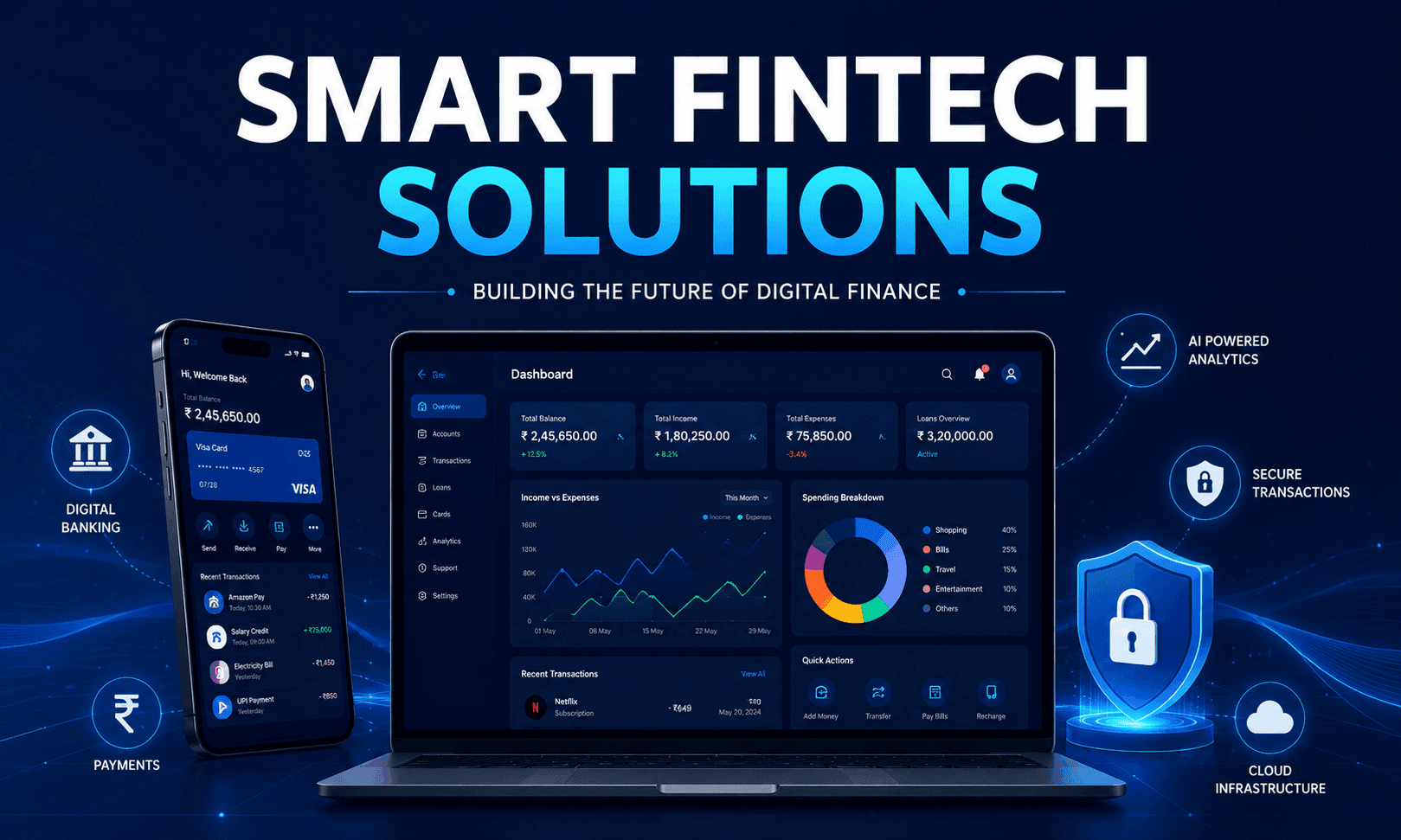
FinTech Software Development in India – Complete Guide for Startups & NBFCs

How Modern FinTech Solutions Are Transforming Digital Finance in 2026
India is rapidly becoming one of the world’s fastest-growing FinTech ecosystems. From digital payments and lending platforms to neobanking, wealth management, insurance technology, and NBFC automation, financial technology is reshaping how businesses and consumers interact with financial services.
As digital adoption accelerates, startups and NBFCs are investing heavily in FinTech software development to deliver secure, scalable, AI-driven, and regulation-compliant financial solutions.
In 2026, FinTech is no longer limited to mobile payment apps. Modern financial platforms now include:
- Digital lending systems
- Payment gateways
- Banking applications
- Investment platforms
- Insurance technology
- AI-powered fraud detection
- Blockchain integrations
- Financial analytics systems
- Loan management software
- Embedded finance solutions
For CEOs, CTOs, Managing Directors, Founders, Co-Founders, IT Heads, VPs, and financial business leaders, FinTech software is becoming a strategic business enabler that drives scalability, operational efficiency, customer engagement, and digital transformation.
This complete guide explains FinTech software development in India, key technologies, compliance requirements, development strategies, and how startups and NBFCs can build future-ready financial platforms.
What is FinTech Software Development?
FinTech software development refers to the process of building digital financial technology solutions that automate, simplify, and modernize financial services.
FinTech platforms are used across:
- Banking
- Lending
- Insurance
- Wealth management
- Digital payments
- NBFC operations
- Investment platforms
- Financial marketplaces
Modern FinTech systems combine:
- Cloud infrastructure
- Artificial Intelligence
- Secure APIs
- Automation
- Analytics
- Mobile-first experiences
- RBI-compliant security architecture
These technologies help financial businesses deliver faster, safer, and more scalable services.
Why FinTech is Growing Rapidly in India
India’s FinTech ecosystem is expanding due to several key factors:
- Growth of digital payments
- UPI adoption
- Smartphone penetration
- Financial inclusion initiatives
- RBI digital transformation support
- AI & cloud technology adoption
- Rising startup ecosystem
Consumers now expect:
- Instant financial transactions
- Mobile-first banking
- Digital lending
- Automated onboarding
- Personalized financial services
This demand is driving startups and NBFCs to modernize traditional financial systems.
Types of FinTech Software Solutions
Build Secure & Scalable FinTech Solutions for the Future
Digital Payment Platforms
Payment systems enable:
- UPI payments
- Wallet transactions
- QR code payments
- Merchant payment processing
- International payment integration
India’s digital payment ecosystem continues to grow rapidly.
Lending & Loan Management Software
NBFCs and lending startups use FinTech platforms for:
- Loan origination
- Credit scoring
- EMI management
- KYC verification
- Collection tracking
- Risk assessment
AI-powered lending systems improve approval speed and operational efficiency.
Neobanking Applications
Digital-first banking platforms provide:
- Online account management
- Expense tracking
- Virtual banking services
- Financial analytics
- Automated transactions
Neobanks are transforming customer banking experiences in India.
Insurance Technology (InsurTech)
Insurance software solutions help businesses manage:
- Policy issuance
- Claims processing
- Customer onboarding
- Fraud detection
- Digital documentation
Automation significantly improves insurance operations.
Wealth Management & Investment Platforms
FinTech investment platforms offer:
- Portfolio management
- Robo-advisory services
- Investment analytics
- Trading systems
- AI-powered financial insights
These platforms simplify investment accessibility for users.
Key Technologies Used in FinTech Software Development
Artificial Intelligence (AI)
AI is transforming financial services through:
- Fraud detection
- Predictive analytics
- Credit risk analysis
- Personalized recommendations
- Chatbots & virtual assistants
AI-powered systems improve efficiency and security significantly.
Cloud Computing
Cloud infrastructure enables:
- Faster scalability
- Better security
- Lower infrastructure costs
- High system availability
- Multi-region deployment
Cloud-native FinTech systems are becoming the industry standard.
Blockchain Technology
Blockchain improves:
- Transaction transparency
- Security
- Smart contracts
- Digital identity verification
Blockchain is increasingly used in payments and financial security solutions.
API Integrations
Modern FinTech ecosystems rely heavily on APIs for:
- Banking integrations
- Payment gateways
- KYC verification
- Credit bureau connectivity
- Financial data aggregation
API-driven architectures improve platform flexibility.
RBI Compliance & Security Requirements
Compliance is one of the most critical aspects of FinTech software development in India.
FinTech startups and NBFCs must follow:
- RBI guidelines
- KYC regulations
- AML compliance
- Data protection standards
- Payment security frameworks
- PCI DSS compliance
Strong compliance infrastructure improves business credibility and reduces regulatory risks.
Why Security is Critical in FinTech Platforms
Financial systems handle highly sensitive customer data and transactions.
Modern FinTech platforms require:
- End-to-end encryption
- Multi-factor authentication
- Fraud monitoring systems
- Secure cloud architecture
- Data backup systems
- Risk management frameworks
Cybersecurity directly impacts customer trust and operational continuity.
FinTech Software Development Process
1. Business Strategy & Market Research
Before development begins, businesses should define:
- Target audience
- Financial product model
- Compliance requirements
- Revenue strategy
- Technology roadmap
Clear business strategy improves long-term scalability.
2. UI/UX Design for Financial Applications
FinTech UX design must prioritize:
- Simplicity
- Trust
- Accessibility
- Mobile-first experiences
- Secure interactions
Customer experience directly impacts user adoption and retention.
3. MVP Development
Many startups begin with an MVP (Minimum Viable Product) to validate market demand.
MVP development helps businesses:
- Reduce initial investment
- Test product-market fit
- Collect user feedback
- Accelerate launch timelines
4. Core Platform Development
The development stage includes:
- Backend architecture
- Frontend interfaces
- Payment integration
- Security implementation
- API connectivity
- Database management
Scalable architecture is essential for future growth.
5. Testing & Security Validation
FinTech platforms require extensive testing including:
- Functional testing
- Security testing
- Compliance validation
- Load testing
- Penetration testing
Reliable testing reduces operational risks.
6. Deployment & Scaling
Cloud deployment ensures:
- High availability
- Performance optimization
- Business continuity
- Faster scalability
Post-launch optimization is equally important for long-term success.
Benefits of FinTech Software for Startups & NBFCs
Faster Customer Onboarding
Digital KYC and automated workflows reduce onboarding time significantly.
Operational Efficiency
Automation minimizes manual processes and improves productivity.
Better Customer Experience
Personalized financial services improve customer engagement and retention.
Data-Driven Decision Making
Real-time analytics help businesses monitor:
- Transactions
- Customer behavior
- Loan performance
- Risk management
Scalability
Cloud-native FinTech systems support rapid business expansion.
Challenges in FinTech Software Development
Despite rapid growth, businesses face challenges such as:
- Regulatory compliance
- Cybersecurity risks
- Legacy system integration
- Data privacy concerns
- High customer expectations
- Scalability requirements
Working with experienced FinTech development partners helps reduce implementation risks.
You can also explore our:
- [FinTech Software Development Services]
- [Custom Enterprise Application Development]
Emerging FinTech Trends in 2026
The future of FinTech in India is driven by:
- AI-powered finance
- Embedded finance
- Open banking
- Blockchain adoption
- Hyperautomation
- Digital lending innovation
- Voice-enabled banking
- Personalized financial ecosystems
Businesses adopting these technologies early will gain a strong competitive advantage.
Why Startups & NBFCs Must Invest in FinTech Software
For financial businesses, digital transformation is no longer optional.
Modern consumers expect:
- Faster transactions
- Mobile-first financial services
- Secure digital experiences
- Personalized engagement
FinTech platforms help organizations:
- Improve operational efficiency
- Scale faster
- Reduce costs
- Improve compliance
- Increase customer trust
For CEOs, CTOs, Managing Directors, and FinTech leaders, technology investment is directly linked to business growth and market positioning.
Final Thoughts
FinTech software development in India is transforming the future of banking, lending, insurance, and digital finance. As customer expectations continue to evolve, startups and NBFCs must build secure, scalable, and AI-powered financial ecosystems to remain competitive.
From digital lending and payment gateways to neobanking and financial analytics, FinTech technology is enabling businesses to deliver smarter, faster, and more customer-centric financial services.
Organizations that invest in modern FinTech infrastructure today will be better positioned for long-term growth in the digital economy.