What is Sitecore XM Cloud? Enterprise Benefits, Cost & Migration Strategy
In This Article
- 1. Business Problem: Why Enterprises Are Moving Away from Traditional CMS Platforms
- High Infrastructure & Maintenance Costs
- Slow Deployment & Time-to-Market
- Poor Scalability for Omnichannel Delivery
- Limited Frontend Flexibility
- AI & Personalization Limitations
- 2. Why It Matters: Revenue, Growth & Enterprise Competitiveness
- Better Customer Experience Drives Revenue
- Operational Efficiency Reduces Cost
- Faster Innovation & Agility
- AI & Personalization Improve Engagement
- 3. What is Sitecore XM Cloud?
- Key Features of Sitecore XM Cloud
- SaaS-Native Architecture
- Headless CMS Capability
- Modern Developer & Content Authoring Experience
- AI-Powered Personalization
- Omnichannel Content Delivery
- 4. Enterprise Benefits of Sitecore XM Cloud
- Faster Website Performance
- Reduced Infrastructure Complexity
- Faster Time-to-Market
- Better Scalability
- AI & Future-Ready Architecture
- 5. Sitecore XM Cloud Migration Strategy
- Step 1 — Platform Assessment
- Step 2 — Migration Planning
- Step 3 — Content & Component Modernization
- Step 4 — Frontend Development
- Step 5 — Testing & Optimization
- Step 6 — Ongoing Support & Governance
- 6. Hidden Costs Enterprises Should Consider
- Migration Complexity
- Integration Modernization
- Team Training & Change Management
- Performance Optimization
- 7. Traditional CMS vs Sitecore XM Cloud
- 8. Why Choosing the Right XM Cloud Partner Matters
- What Enterprises Should Look For
- ✔ XM Cloud Expertise
- ✔ Headless Architecture Capability
- ✔ Enterprise Migration Experience
- ✔ AI & Personalization Knowledge
- Explore Our Sitecore Services
- Final Thoughts
- Free XM Cloud Migration Consultation
- Get a Free XM Cloud Strategy Consultation
Enterprise digital experience is evolving rapidly. Organizations today are expected to deliver fast, scalable, personalized, and omnichannel experiences while reducing operational complexity and infrastructure overhead.
Traditional CMS platforms are struggling to keep up with these growing expectations.
This is why enterprises across industries are increasingly moving toward Sitecore XM Cloud.
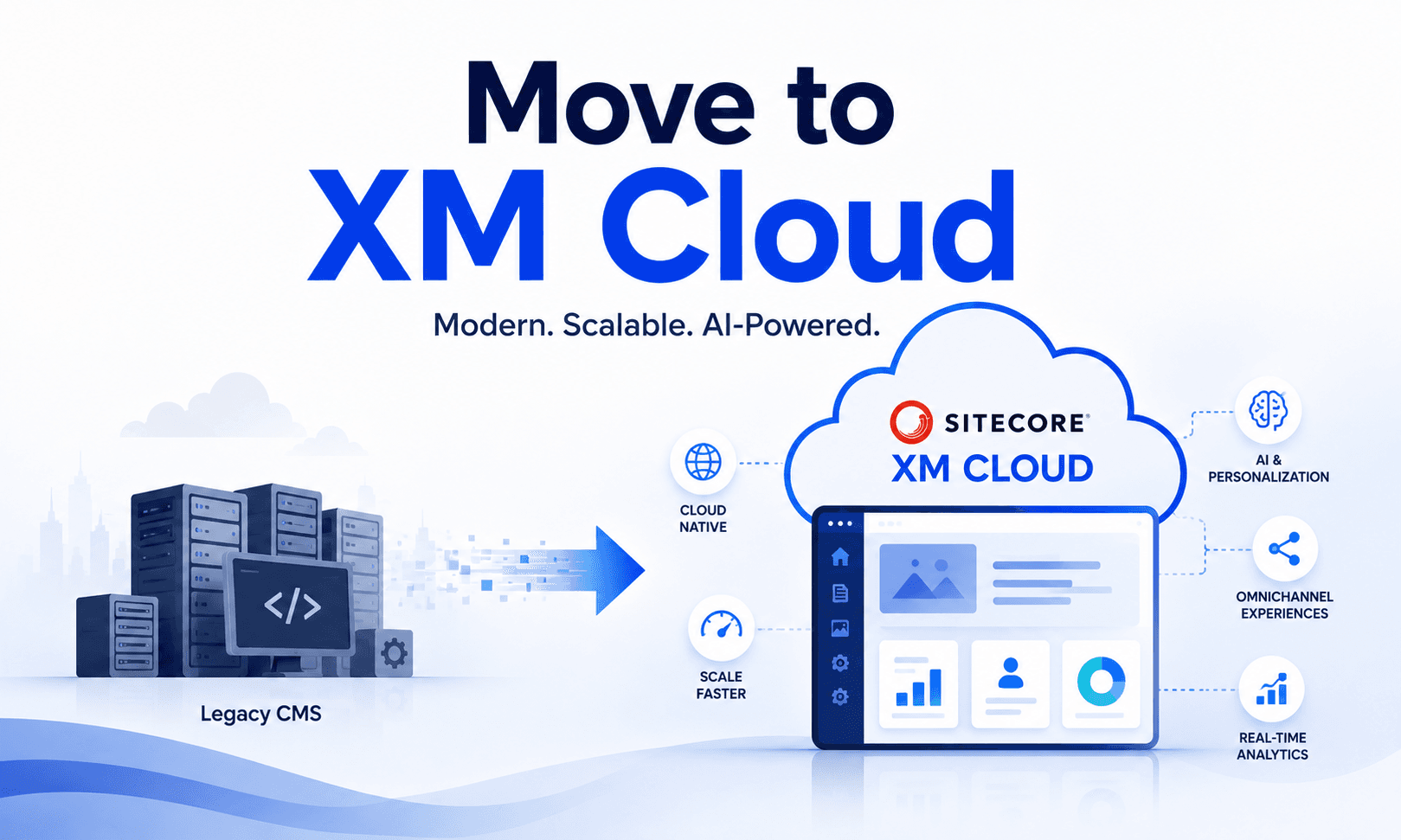
As Sitecore’s SaaS-native, cloud-based content management platform, XM Cloud is designed for modern enterprise digital ecosystems powered by headless architecture, AI-driven personalization, and composable technology stacks.
However, many organizations still ask critical questions:
- What exactly is Sitecore XM Cloud?
- Is it worth migrating from XP or XM?
- What are the hidden costs?
- How should enterprises plan migration?
- Who are the best Sitecore XM Cloud implementation partners?
This guide explains everything enterprise decision-makers need to know about Sitecore XM Cloud, including business benefits, migration strategy, implementation considerations, and long-term ROI.
1. Business Problem: Why Enterprises Are Moving Away from Traditional CMS Platforms
Many enterprise organizations still operate on traditional CMS or legacy Sitecore environments that were not designed for modern digital experience requirements.
This creates significant operational and scalability challenges.

Modernize Your Enterprise Without Limits
Move beyond legacy CMS complexity with XM Cloud, scalable headless architecture, faster delivery, and a future-ready migration strategy.
High Infrastructure & Maintenance Costs
Traditional CMS environments often require:
- Dedicated hosting
- Manual infrastructure management
- Frequent upgrades
- Ongoing DevOps support
As enterprise ecosystems grow, operational costs increase rapidly.
Slow Deployment & Time-to-Market
Legacy architectures make it difficult for businesses to launch new experiences quickly.
Marketing and digital teams often face delays due to:
- Monolithic architecture
- Complex deployments
- Limited flexibility
- Dependency on IT teams
Poor Scalability for Omnichannel Delivery
Modernize Your Enterprise with Sitecore XM Cloud
Modern enterprises need to deliver content across:
- Websites
- Mobile apps
- Portals
- Commerce platforms
- Digital touchpoints
Traditional CMS systems struggle to support true omnichannel experiences efficiently.
Limited Frontend Flexibility
Modern user experiences require high-performance frontend technologies such as:
- Next.js
- React
- API-first architecture
Traditional CMS platforms often restrict frontend innovation.
AI & Personalization Limitations
AI-powered customer experiences are becoming a competitive requirement.
Legacy CMS systems typically lack advanced capabilities for:
- Real-time personalization
- AI-driven recommendations
- Intelligent content operations
- Automated workflows
2. Why It Matters: Revenue, Growth & Enterprise Competitiveness
Digital experience is now directly connected to business performance.
The platforms enterprises choose impact:
- Revenue growth
- Customer engagement
- Operational efficiency
- Scalability
- Brand experience
Better Customer Experience Drives Revenue
Modern customers expect:
- Faster websites
- Personalized interactions
- Seamless omnichannel journeys
- Consistent digital experiences
Organizations unable to deliver these experiences lose engagement and conversions.
Operational Efficiency Reduces Cost
Modern SaaS-native platforms help enterprises reduce:
- Infrastructure expenses
- Maintenance overhead
- Deployment complexity
- Long-term technical debt
Faster Innovation & Agility
Modern cloud-native architecture allows businesses to:
- Launch faster
- Scale globally
- Deliver campaigns quickly
- Improve digital agility
AI & Personalization Improve Engagement
AI-powered digital experiences improve:
- Customer retention
- Conversion rates
- Engagement quality
- Content effectiveness
This is becoming a major competitive differentiator.
3. What is Sitecore XM Cloud?
Sitecore XM Cloud is Sitecore’s cloud-native SaaS content management platform designed for enterprise-scale digital experiences.
It combines:
- Headless CMS architecture
- Cloud-native scalability
- AI-powered capabilities
- Omnichannel delivery
- Modern frontend flexibility
Unlike traditional CMS platforms, XM Cloud separates content management from frontend rendering.
This allows organizations to build highly scalable and high-performance digital ecosystems.
Key Features of Sitecore XM Cloud
SaaS-Native Architecture
XM Cloud eliminates much of the infrastructure management complexity associated with traditional CMS environments.
Headless CMS Capability
Organizations can use modern frontend technologies like:
- Next.js
- React
- GraphQL
to create fast and scalable user experiences.
Modern Developer & Content Authoring Experience
XM Cloud improves collaboration between:
- Marketing teams
- Content authors
- Technical teams
AI-Powered Personalization
Sitecore’s evolving AI capabilities support:
- Intelligent recommendations
- Personalized customer journeys
- Automated workflows
- Smarter content operations
Omnichannel Content Delivery
Content can be delivered seamlessly across multiple digital touchpoints.
4. Enterprise Benefits of Sitecore XM Cloud
Organizations adopting XM Cloud often experience significant operational and business advantages.
Faster Website Performance
Modern headless architecture improves:
- Core Web Vitals
- SEO performance
- User experience
- Conversion rates
Reduced Infrastructure Complexity
SaaS-native deployment minimizes:
- Server management
- Upgrade overhead
- Hosting complexity
- Maintenance effort
Faster Time-to-Market
Marketing teams can launch campaigns faster without heavy technical dependencies.
Better Scalability
XM Cloud supports:
- Global delivery
- Enterprise traffic scaling
- Omnichannel expansion
- Future growth
AI & Future-Ready Architecture
Organizations gain access to evolving AI capabilities and composable digital experience architecture.
5. Sitecore XM Cloud Migration Strategy
Migration planning is critical for successful implementation.
Many enterprises underestimate the complexity of moving from traditional Sitecore environments.
Step 1 — Platform Assessment
Evaluate:
- Existing architecture
- Content structure
- Integrations
- Technical debt
- Scalability limitations
Step 2 — Migration Planning
Define:
- Headless strategy
- Frontend architecture
- Integration roadmap
- Deployment workflows
Step 3 — Content & Component Modernization
Legacy content structures often require modernization for headless architecture.
Step 4 — Frontend Development
Modern XM Cloud implementations commonly use:
- Next.js
- React
- GraphQL
Step 5 — Testing & Optimization
Ensure:
- Performance optimization
- SEO validation
- Security compliance
- Scalability readiness
Step 6 — Ongoing Support & Governance
Enterprise digital ecosystems require continuous optimization and governance.
6. Hidden Costs Enterprises Should Consider
While XM Cloud reduces infrastructure complexity, enterprises should plan carefully for implementation-related costs.
Migration Complexity
Migrating legacy environments can require:
- Content restructuring
- Architecture redesign
- Frontend redevelopment
Integration Modernization
Older integrations may require modernization to support API-first architecture.
Team Training & Change Management
Marketing and technical teams may need enablement for new workflows.
Performance Optimization
Headless architecture requires strong frontend optimization practices.
7. Traditional CMS vs Sitecore XM Cloud
| Capability | Traditional CMS | Sitecore XM Cloud |
|---|---|---|
| Scalability | Limited | Enterprise-grade |
| Infrastructure Management | High | Reduced |
| Headless CMS | Limited | Native |
| Omnichannel Delivery | Weak | Strong |
| AI Integration | Minimal | Advanced |
| Performance | Moderate | High-speed |
| Frontend Flexibility | Limited | Extensive |
| Future Readiness | Low | High |
8. Why Choosing the Right XM Cloud Partner Matters
Successful XM Cloud implementation requires specialized expertise.
The best Sitecore XM Cloud implementation partners help enterprises:
- Reduce migration risk
- Improve scalability
- Accelerate implementation
- Optimize performance
- Build future-ready architecture
What Enterprises Should Look For
✔ XM Cloud Expertise
Modern SaaS-native implementation experience is critical.
✔ Headless Architecture Capability
Strong expertise in:
- Next.js
- React
- GraphQL
- API-first architecture
✔ Enterprise Migration Experience
Large-scale migrations require strategic planning and execution.
✔ AI & Personalization Knowledge
Modern digital experience requires intelligent customer engagement capabilities.
9. Why Enterprises Choose Murmu Software Infotech
At Murmu Software Infotech, we help enterprises modernize digital experience ecosystems with scalable Sitecore XM Cloud solutions.
Our expertise includes:
- Sitecore XM Cloud implementation
- Headless CMS architecture
- Next.js development
- Enterprise migrations
- AI-powered personalization
- Ongoing optimization & support
Explore Our Sitecore Services
- Sitecore CMS Development Services
- Sitecore Operations & Support Services
- Sitecore Rescue Mission Services
Final Thoughts
Modern enterprise digital experience requires:
- Scalability
- Performance
- Omnichannel delivery
- AI-driven personalization
- Cloud-native architecture
Traditional CMS platforms increasingly struggle to support these demands.
Sitecore XM Cloud provides enterprises with a future-ready SaaS platform designed for modern digital ecosystems.
Organizations that modernize early will gain significant advantages in:
- Customer experience
- Operational efficiency
- Scalability
- Competitive positioning
The key to success is not only choosing the right platform—but also selecting the right implementation strategy and expert partner.
Free XM Cloud Migration Consultation
Planning a Sitecore XM Cloud migration or enterprise modernization initiative?
Get a Free XM Cloud Strategy Consultation
✔ Architecture assessment
✔ Migration roadmap
✔ Cost optimization insights
✔ Headless CMS strategy
✔ AI personalization recommendations
👉 Connect with our Sitecore XM Cloud experts and modernize your enterprise digital experience platform with confidence.
Frequently Asked Questions
What is Sitecore XM Cloud?
Sitecore XM Cloud is a SaaS-based, cloud-native headless content management platform designed for enterprise digital experiences. It separates content management from frontend delivery and supports modern architectures built with technologies such as Next.js, React, APIs, GraphQL, and Experience Edge.
What are the main benefits of Sitecore XM Cloud?
Key benefits include reduced infrastructure management, cloud-based scalability, automatic platform updates, headless architecture, faster frontend delivery, reusable content, flexible integrations, and support for modern enterprise digital experiences.
How much does Sitecore XM Cloud cost?
Sitecore XM Cloud costs vary based on licensing, implementation scope, content complexity, number of sites, integrations, frontend development, migration requirements, hosting architecture, and ongoing support. Enterprises should evaluate total cost of ownership rather than license pricing alone.
What factors affect the total cost of Sitecore XM Cloud?
Total cost is affected by Sitecore licensing, implementation, migration complexity, content volume, custom components, integrations, frontend development, testing, DevOps, training, support, and optional connected products or services.
Can Sitecore XP be migrated to XM Cloud?
Yes. Sitecore XP can be migrated to XM Cloud, but the process is usually an architectural modernization rather than a simple lift-and-shift. XP-specific features, MVC renderings, custom code, personalization, analytics, integrations, and content structures should be assessed and redesigned where necessary.
How do I migrate from Sitecore XP or XM to XM Cloud?
A typical migration includes discovery and assessment, architecture planning, content and media review, component mapping, headless frontend redevelopment, integration modernization, testing, deployment, validation, and post-launch optimization.
Is Sitecore XM Cloud a headless CMS?
Yes. Sitecore XM Cloud is designed around headless content delivery, allowing enterprises to manage structured content independently from frontend applications and deliver experiences through APIs to websites, applications, and other digital channels.
Why is Next.js used with Sitecore XM Cloud?
Next.js is commonly used as the frontend rendering layer for Sitecore XM Cloud because it supports modern React development, flexible rendering approaches, strong performance, SEO capabilities, and independently deployable frontend applications.
Is Sitecore XM Cloud suitable for enterprise organizations?
Yes. Sitecore XM Cloud is designed for enterprises that need scalable content management, multisite or multilingual delivery, modern integrations, independent frontend development, cloud-based operations, and a flexible digital experience architecture.
How long does a Sitecore XM Cloud migration take?
Migration timelines depend on the size and complexity of the existing platform. Content volume, legacy code, MVC components, integrations, personalization requirements, number of sites, languages, testing, and organizational approvals can all affect delivery time. A discovery assessment is the best way to estimate a realistic timeline.