What is an MCP Server? The Protocol Powering the Next Generation of AI Agents
In This Article
The Rise of AI Agents — and the Problem They Face
AI models like GPT-4, Claude, and Gemini have fundamentally changed what software can do. They can reason, write, summarise, and even generate code — all from a simple text prompt. But despite their remarkable capabilities, these models share a critical limitation: they are, by default, isolated.
Out of the box, a large language model (LLM) cannot browse the web, query your company's database, call a live API, or execute code. It only knows what was in its training data — and that data has a cutoff date. For businesses that want to build truly intelligent, real-time AI agents, this is a significant barrier.
Historically, developers worked around this by building custom integrations — writing bespoke glue code to connect each AI model to each external tool or data source. This approach works, but it doesn't scale. Every new tool requires new code. Every new AI model requires new adapters. The result is a fragile, expensive web of one-off integrations.
Enter the Model Context Protocol (MCP) — a new open standard designed to solve this problem once and for all, giving AI agents a universal, secure, and scalable way to interact with the world around them.
What is MCP (Model Context Protocol)?
The Model Context Protocol (MCP) is an open protocol that standardises how AI models communicate with external tools, data sources, and services. Introduced and open-sourced by Anthropic in late 2024, MCP provides a common language that any AI model can use to discover and interact with capabilities beyond its own training.
The best analogy is this: MCP is to AI agents what HTTP is to the web. Just as HTTP gave every browser and server a universal language for exchanging information — enabling the entire modern web — MCP gives every AI model and external service a universal language for exchanging context and capabilities.
Before MCP, connecting an AI to a tool meant writing custom integration code specific to that AI and that tool. With MCP, you build the integration once using the standard protocol, and any MCP-compatible AI model can use it immediately. This is a paradigm shift for the entire AI development ecosystem.
Since its open-source release, MCP has gained rapid adoption across the industry, with support from major AI platforms, developer tools, and enterprise software vendors — a clear signal that the ecosystem is converging on this standard.
What is an MCP Server?
Ready to Build Your AI-Powered Solution?
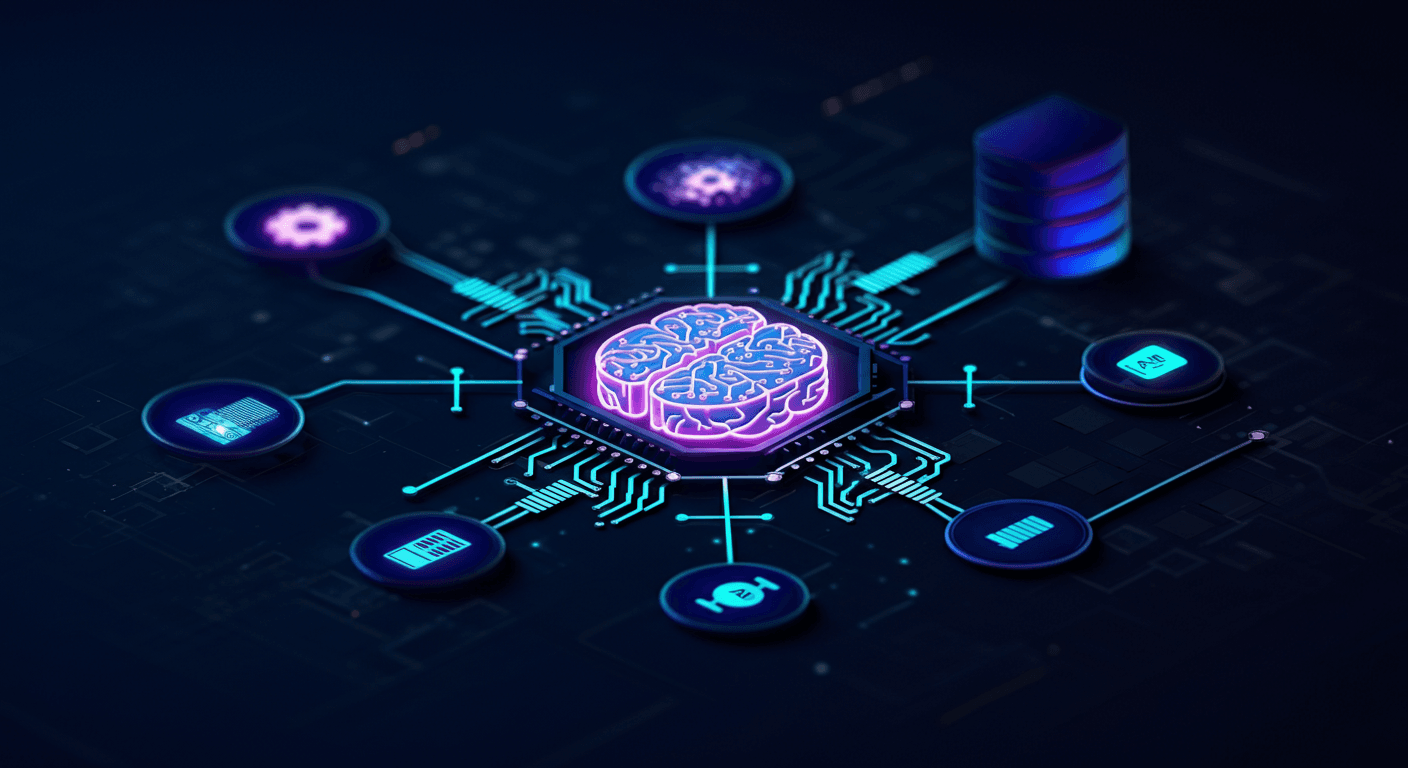
An MCP Server is a lightweight service that exposes tools, resources, and prompts to an AI model via the MCP protocol. Think of it as a bridge — it sits between the AI model (the MCP Client or Host) and the outside world, whether that's a database, a REST API, a file system, or any other external service.
An MCP Server exposes three core types of capabilities to the AI:
- Tools — Functions the AI can invoke to perform actions, such as querying a database, sending an email, calling an API, or running a calculation. Tools are the "hands" of the AI agent.
- Resources — Structured data the AI can read and reason over, such as documents, records, configuration files, or knowledge base articles. Resources give the AI access to relevant context without requiring it to memorise everything.
- Prompts — Pre-built prompt templates that guide the AI's behaviour for specific tasks. These allow teams to encode best practices and domain expertise directly into the MCP layer, ensuring consistent, high-quality AI outputs.
By packaging these capabilities into a standardised server, MCP makes it straightforward to extend an AI agent's abilities without modifying the model itself. You simply add a new MCP Server, and the AI gains new superpowers.
How Does an MCP Server Work?
Understanding the MCP architecture requires looking at three key components: the Host, the Client, and the Server.
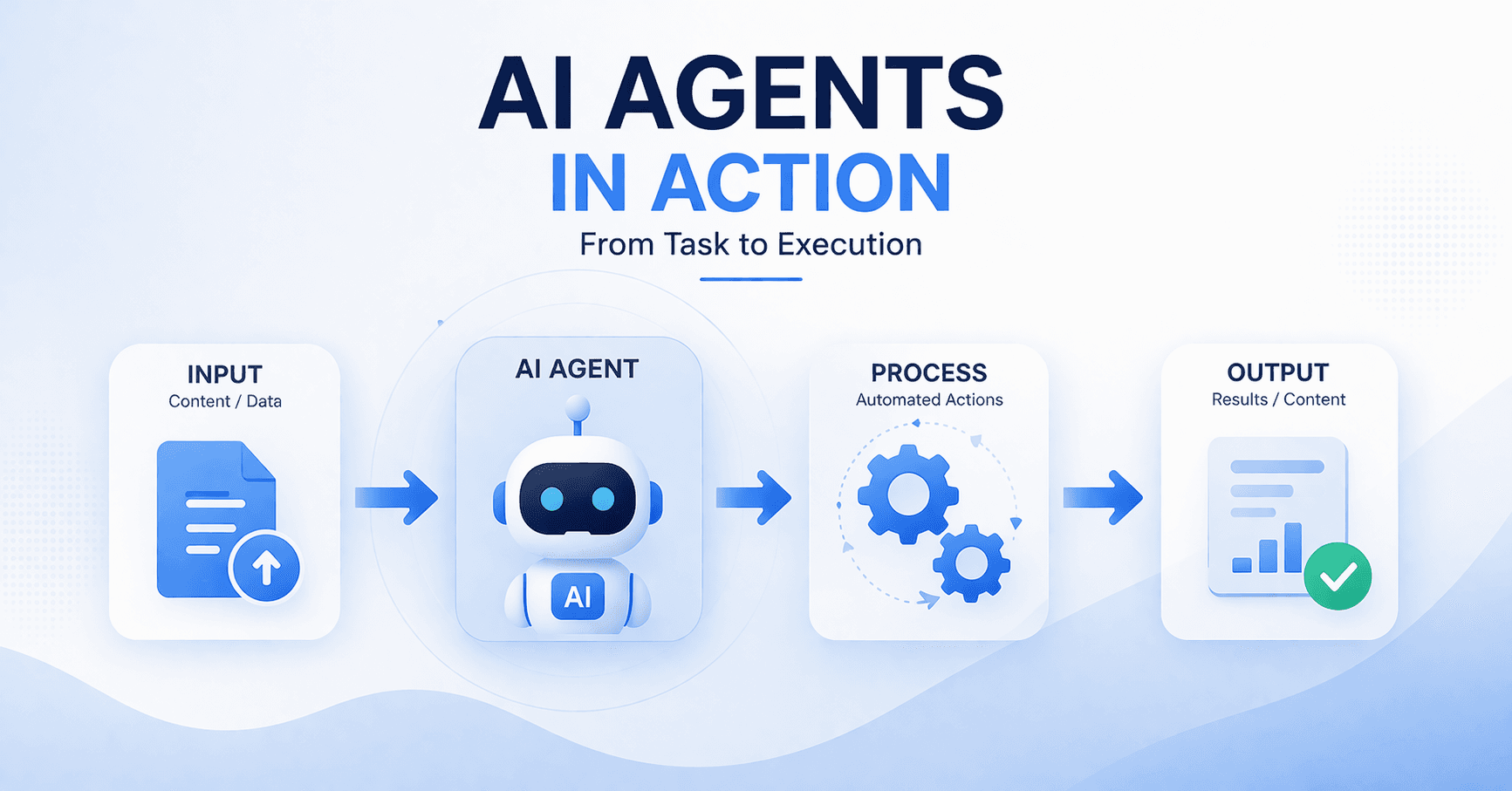
Here is the step-by-step flow of an MCP interaction:
- The AI Host (e.g. Claude Desktop, a custom AI application, or an agent framework) receives a user request and determines that it needs an external capability to fulfil it.
- The MCP Client (embedded within the Host) sends a structured request to the appropriate MCP Server, specifying which tool or resource is needed and providing the necessary parameters.
- The MCP Server receives the request, validates it, and executes the corresponding action — querying a database, calling an API, reading a file, and so on.
- The MCP Server returns a structured response back to the MCP Client, which passes it to the AI model as additional context.
- The AI model uses this enriched context to generate an accurate, informed response for the user.
MCP supports two primary transport layers to accommodate different deployment scenarios. For local integrations — such as a desktop AI application connecting to local tools — it uses stdio (standard input/output), which is fast and simple. For remote integrations — such as a cloud-hosted AI agent connecting to external APIs — it uses SSE (Server-Sent Events) over HTTP, which is scalable and network-friendly.
Real-World Use Cases of MCP Servers
The flexibility of MCP means it can be applied across virtually every industry and use case where AI agents need to interact with real-world systems. Here are some of the most impactful applications:
- Connecting AI to a company's internal database — enabling agents to query live business data, generate reports, and answer data-driven questions in real time.
- Letting AI agents browse the web or search documents — giving models access to up-to-date information beyond their training cutoff.
- Enabling AI to write and execute code — allowing developer-focused agents to build, test, and run software autonomously.
- Integrating AI with CRMs, ERPs, and billing systems — so AI agents can look up customer records, process orders, and manage accounts without human intervention.
- Building AI-powered customer support bots with live data access — enabling support agents to retrieve order status, account details, and knowledge base articles in real time.
- Automating workflows across SaaS tools — connecting AI agents to platforms like Slack, GitHub, Jira, Notion, and more to orchestrate complex, multi-step business processes.
Why MCP Matters for Businesses
For organisations investing in AI, MCP represents a fundamental shift in how AI capabilities are built and maintained. Here is why it matters:
- Standardisation — Instead of building and maintaining custom integrations for every combination of AI model and external tool, MCP provides a single, universal protocol. Build once, use everywhere.
- Security — MCP servers act as a controlled gateway. They define precisely what the AI can and cannot access, enforcing permissions and preventing unauthorised data exposure. Your sensitive systems stay protected.
- Scalability — Adding new tools or data sources to your AI agent is as simple as deploying a new MCP Server. There is no need to retrain or modify the underlying AI model.
- Vendor-agnostic — MCP is not tied to any single AI provider. It works with Claude, GPT-4, Gemini, Llama, and any other MCP-compatible model, giving your business the freedom to choose or switch AI providers without rebuilding your integrations.
MCP vs Traditional API Integration
You might be wondering: how is MCP different from simply calling a REST API? The distinction is significant.
Traditional API integration requires developers to write custom code for every connection between an AI model and an external service. Each integration is bespoke — it understands the specific data formats, authentication mechanisms, and error handling of that one API. When you add a new AI model or a new service, you often have to start from scratch.
MCP, by contrast, provides a universal adapter layer. Instead of writing N × M integrations (N models × M tools), you write N MCP Clients and M MCP Servers — and every combination works automatically. This is the same network effect that made HTTP so transformative for the web.
Crucially, MCP is designed specifically for AI agents, not just data exchange. It understands the concept of context — the AI's current task, conversation history, and reasoning state — and structures tool interactions accordingly. Traditional APIs simply move data; MCP moves intelligence.
How Murmu Software Can Help
At Murmu Software Infotech, we specialise in building custom AI solutions that go beyond off-the-shelf capabilities. Our team has deep expertise in designing and deploying MCP server integrations that connect your existing business systems — databases, CRMs, ERPs, SaaS platforms, and more — to powerful, production-ready AI agents.
Whether you want to automate repetitive workflows, build intelligent customer-facing chatbots, integrate AI into your existing software products, or explore what AI agents can do for your specific industry — our team can design, build, and deploy the right solution for your needs. We handle the complexity of MCP architecture so you can focus on the outcomes that matter to your business.
Frequently Asked Questions
What is What is an MCP Server? The Protocol Powering the Next Generation of AI Agents?
Discover what MCP (Model Context Protocol) servers are, how they work, and why they are transforming the way AI agents interact with tools, data, and APIs. A complete guide by Murmu Software Infotech.